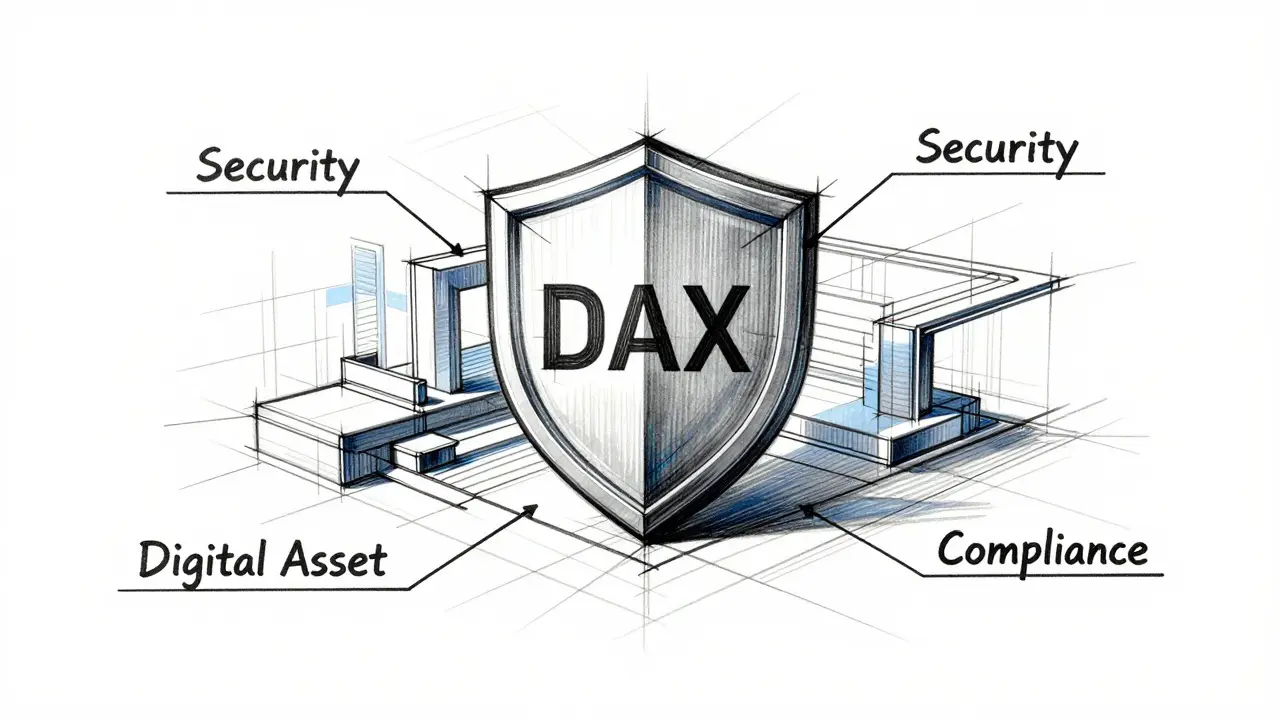
For years, Nigeria’s crypto market operated in a gray zone. You could trade Bitcoin or stablecoins on peer-to-peer platforms without worrying about a regulator breathing down your neck. That era is officially over. With the enactment of the Investments and Securities Act (ISA) 2025, which replaced the older 2007 framework, the Securities and Exchange Commission (SEC) now holds comprehensive authority over all digital assets. If you are planning to launch an exchange or operate as a Virtual Asset Service Provider (VASP) in Nigeria, understanding the new licensing landscape isn't just good practice-it's the only way to stay legal.
The shift is significant. The SEC no longer views crypto as a speculative gamble but as a regulated security class. This means the days of launching a platform with minimal oversight are gone. Instead, operators must navigate a structured process involving capital requirements, strict compliance protocols, and specific corporate documentation. Whether you are a local startup or a foreign entity targeting Nigerian users, the rules apply to you if you touch the Nigerian market. Here is what you need to know to get licensed and keep your doors open in 2026.
The Core License: Digital Asset Exchange (DAX)
The primary vehicle for operating legally is registration as a Digital Asset Exchange (DAX). This isn't just a badge; it’s a formal approval that proves your entity can handle the technical, legal, and financial weight of running a marketplace for digital tokens. To qualify, the SEC looks at more than just your business plan. They assess your entire operational capability, including your technology infrastructure, governance systems, and compliance frameworks.
You might wonder why the bar is so high. It comes down to trust. After years of scams and rug pulls, regulators want to ensure that any platform handling user funds has the muscle to protect them. The DAX license acts as a gatekeeper, filtering out fly-by-night operations while allowing serious players to compete in a transparent environment. Once you have this status, you gain the legitimacy needed to partner with banks, traditional financial institutions, and institutional investors who previously shied away from unregulated crypto venues.
Capital Requirements and Financial Health
Money talks in regulation, and the SEC demands proof that you have enough skin in the game. The minimum paid-up capital requirement for a DAX stands at ₦500 million (approximately $325,000 USD). This figure isn't just a number on paper; it must be verifiable. The SEC will check the source of these funds to ensure they aren't derived from illicit activities. You can hold this capital in bank balances, fixed assets, or investments in quoted securities, giving you some flexibility in how you structure your balance sheet.
On top of the base capital, you need a safety net. Operators must secure a fidelity bond covering at least 25% of the paid-up capital. In practical terms, that means a minimum fidelity bond of ₦125 million. This bond protects investors against fraud or mismanagement by the exchange. Think of it as insurance for the people trusting you with their assets. If you fail to maintain these levels, you risk losing your license, which would effectively shut down your operations overnight.
| Requirement | Minimum Value | Acceptable Forms |
|---|---|---|
| Paid-up Capital | ₦500 Million (~$325k USD) | Bank balances, Fixed Assets, Quoted Securities |
| Fidelity Bond | ₦125 Million (25% of Capital) | Insurance Policy |
| Financial Statements | Audited or Statement of Affairs | Required for New & Existing Entities |
Corporate Documentation and Setup
Before you even think about applying for the DAX license, your corporate housekeeping needs to be in order. The SEC requires a Certificate of Incorporation from the Corporate Affairs Commission (CAC). But it’s not enough to just have a generic company profile. Your Memorandum and Articles of Association (MEMART) must explicitly include objectives related to cryptocurrency exchange operations. If your articles say you are a "software consultancy" but you are actually trading Ethereum, you have a problem.
You’ll also need to submit specific CAC forms, including Form 1.1 and Form 7, along with audited financial statements. For newly incorporated entities that don’t yet have a full audit trail, a statement of affairs is acceptable. These documents serve as the foundation of your application. If there are discrepancies between what your corporate docs say and what you actually do, the application will likely stall. Make sure your legal team aligns your corporate structure with the SEC’s expectations before submitting anything.
The Accelerated Regulatory Incubation Programme (ARIP)
Getting a license used to be a slow, uncertain process. To fix this, the SEC launched the Accelerated Regulatory Incubation Programme (ARIP) in June 2024. This initiative was designed to fast-track approvals and provide clearer pathways for crypto businesses. It acknowledges that waiting too long for regulatory clarity drives innovation offshore or into the underground.
Since its inception, ARIP has already made waves. Only two Nigerian crypto startups, Quidax and Busha, have received provisional licenses under this scheme. They are the pioneers in this newly regulated space. At a workshop in December 2024, SEC officials signaled they intend to "move a lot quickly" throughout 2025 and beyond. This suggests that if you are ready, the window for early entry is still open. However, "provisional" doesn't mean "permanent." You must meet ongoing compliance standards to convert this status into a full, permanent license.

Compliance: AML, KYC, and Operational Restrictions
Licensing is just the start. The real work happens in daily operations. Under the new framework, you must implement robust Anti-Money Laundering (AML) and Combating the Financing of Terrorism (CFT) controls. While the ISA 2025 doesn't spell out every procedural detail, it places crypto firms firmly under SEC oversight, which mandates these obligations. You need effective Know Your Customer (KYC) policies that identify and verify every customer. Anonymous transactions are out. The SEC wants to monitor flows, partly for tax purposes, which means your data architecture needs to support detailed reporting.
There are also specific operational restrictions you need to respect. Licensed exchanges are prohibited from providing direct or indirect financial assistance to investors, officers, or employees for trading on their own platforms. This prevents conflicts of interest where insiders might manipulate prices using company funds. Additionally, the "No Objection Rules" require you to get prior SEC approval before listing any new virtual or digital asset. This creates a gatekeeping mechanism for listings, ensuring that only vetted tokens make it onto your platform. If you are a foreign operator targeting Nigerian users via email, agents, or promotions, you fall under these same rules. There is no loophole for non-residents who actively engage the local market.
Market Impact and Future Outlook
Why does all this matter? Because the market is changing. Research by Busha found that nearly half of 1,500 surveyed Nigerian crypto users cited security concerns as their main barrier to adoption. The SEC’s framework directly addresses this fear by introducing formal oversight. For legitimate businesses, this builds trust. For scammers, it raises the cost of doing business.
However, this shift introduces friction. Moving from informal peer-to-peer trading to supervised systems adds layers of compliance. Payment processing may slow down due to stringent AML/KYC checks. Cross-border payments, which were once easy through decentralized channels, now face new hurdles. Yet, for many, the trade-off is worth it. Licensed platforms offer a safer alternative to risky P2P transfers, especially when dealing with inflation and exchange rate volatility. As the SEC continues to expand its licensing framework and potentially introduce crypto-specific taxation, Nigeria is positioning itself as a competitive, structured destination for digital asset investment. The future is regulated, and those who adapt now will lead the next phase of growth.
What is the minimum capital required to start a crypto exchange in Nigeria?
The minimum paid-up capital requirement is ₦500 million (approximately $325,000 USD). This amount must be verified by the SEC and can be held in bank balances, fixed assets, or quoted securities. Additionally, you must secure a fidelity bond of at least 25% of this capital.
Can foreign companies operate a crypto exchange in Nigeria?
Yes, but they must comply with the same licensing requirements as local entities. If a foreign operator actively targets Nigerian investors through agents, promotions, or direct emails, they fall under the jurisdiction of the Nigerian SEC and must obtain the appropriate Digital Asset Exchange license.
What is the Accelerated Regulatory Incubation Programme (ARIP)?
ARIP is a program launched by the SEC in June 2024 to fast-track the licensing process for crypto businesses. It provides a clearer pathway for startups to obtain provisional licenses, aiming to reduce regulatory uncertainty and encourage innovation within the formal market.
Do I need permission to list a new token on my exchange?
Yes. Under the "No Objection Rules," cryptocurrency exchanges must obtain prior approval from the SEC before trading any new virtual or digital asset. This ensures that listed tokens meet certain regulatory standards before being made available to investors.
How does the new law affect existing unlicensed exchanges?
Existing unlicensed exchanges must now seek registration as a Digital Asset Exchange (DAX) to continue operating legally. The SEC has indicated a commitment to accelerated approvals, but operators should assume that continuing to operate without a license carries significant legal and financial risks, including potential penalties under the stricter provisions of the ISA 2025.