Imagine running a global crypto exchange and suddenly realizing that your entire business model in Europe is illegal because you missed a specific filing deadline. For many crypto companies, this isn't a hypothetical nightmare-it’s the reality of operating under the Markets in Crypto-Assets (MiCA) regulation. As of June 2026, MiCA is no longer just a proposal on paper; it is the law of the land across all 27 European Union member states. If you serve customers in the EU, you don’t have a choice. You either comply or you leave.
This guide cuts through the legal jargon to tell you exactly what MiCA demands from your business, how much it will cost to get compliant, and where the hidden traps are. Whether you’re a startup launching a utility token or an established exchange looking to expand into Frankfurt or Paris, understanding these rules is the difference between thriving and shutting down.
What Exactly Is MiCA?
MiCA stands for Markets in Crypto-Assets. Formally known as Regulation (EU) 2023/1114, it is the first comprehensive regulatory framework specifically designed for crypto-assets in the world. Before MiCA, crypto businesses faced a fragmented mess of 27 different national regulations. One country might ban certain tokens while another ignored them entirely. This patchwork made it nearly impossible to scale legally across Europe.
MiCA changes that by creating a single set of rules for the entire EU. It covers everything from stablecoins to utility tokens and the services provided by exchanges and custodians. The regulation entered into force on June 9, 2023, but its implementation was staggered. Stablecoin rules kicked in on June 30, 2024, while the requirements for Crypto-Asset Service Providers (CASPs) and other assets became fully effective on December 30, 2024. By now, the grace period is over. There is no more 'waiting to see how it goes.'
The core goal of MiCA is threefold: protect consumers from scams and collapses, ensure financial stability, and foster innovation by providing legal clarity. According to Ari Redbord, Head of Legal at TRM Labs, MiCA is arguably the most comprehensive legal framework for crypto globally. But 'comprehensive' doesn't mean 'easy.' It means detailed, strict, and non-negotiable.
Who Needs to Comply? Understanding CASPs
If your business provides any of the following services to EU residents, you are likely classified as a Crypto-Asset Service Provider (CASP):
- Operating a crypto exchange platform
- Custody and administration of crypto-assets
- Executing orders on behalf of clients
- Placing orders on behalf of clients
- Underwriting the issuance of crypto-assets
- Providing investment advice on crypto-assets
To operate as a CASP, you must obtain authorization from a national competent authority in one of the 27 EU member states. Once authorized, you benefit from the 'passporting' mechanism. This allows you to operate in all other EU countries without needing separate licenses. This is a huge advantage compared to the pre-MiCA era, where companies had to navigate individual bureaucracies in each country.
However, getting that initial license is tough. You need a registered office within the EU, at least one director resident in the member state where you apply, and significant capital reserves. The minimum capital requirement is €100,000 for most services, but it jumps to €150,000 if you provide order execution services. On top of that, you must prove you have robust anti-money laundering (AML) procedures, business continuity plans with a maximum tolerable downtime of 72 hours, and data security protocols that meet NIS2 Directive standards.
The Stablecoin Trap: Stricter Rules for Pegged Assets
If your business involves issuing or managing stablecoins, pay close attention. MiCA treats stablecoins differently based on their type and size. There are two main categories:
- Electronic Money Tokens (EMTs): These are pegged 1:1 to a single fiat currency, like the euro. They must hold 1:1 reserves in high-quality liquid assets, primarily euro-denominated deposits.
- Asset-Referenced Tokens (ARTs): These aim to maintain a stable value by reference to multiple currencies, commodities, or other assets. They face even stricter scrutiny.
Here’s the kicker: if your stablecoin has a market capitalization exceeding €1 billion, or if it serves more than 15 million average active users annually, it is classified as a 'significant' stablecoin. This triggers enhanced supervision directly from the European Securities and Markets Authority (ESMA). Significant issuers must undergo quarterly stress tests, maintain higher reserve quality, and ensure daily redemption rights for holders.
Dr. Garrick Hileman from Blockchain.com warned that the 15 million user threshold could stifle innovation by subjecting rapidly growing platforms to disproportionate burdens before they achieve sustainable revenue. For large players like Tether or Circle, this means constant oversight. For smaller projects, it creates a ceiling on growth unless they are prepared for massive compliance overhead.

Costs and Timelines: What to Expect
Compliance is not free. Based on data from 2024 and early 2025, here is what you should budget for:
| Expense Category | Estimated Cost Range | Notes |
|---|---|---|
| Initial Capital Requirement | €100,000 - €150,000 | Held in reserve, not spent |
| Legal & Consulting Fees | €50,000 - €150,000 | For whitepaper preparation and licensing |
| AML/KYC Software | €80,000 - €200,000/year | Ongoing annual cost |
| Whitepaper Approval Process | €35,000 - €150,000 | Varies by complexity (utility vs. stablecoin) |
| Total Initial Setup | €500,000 - €1.2 million | Including personnel and infrastructure |
Time is also money. A survey by Norton Rose Fulbright found that 68% of crypto businesses took between 6 and 9 months to get their CASP authorization. Luxembourg and France were faster, averaging 5.2 months, while Germany and Italy dragged on for 8.7 months. Plan accordingly. Don’t expect a quick turnaround.
The Whitepaper Requirement: No More Vague Promises
Every crypto-asset issuer must publish a whitepaper approved by the relevant national authority. This isn’t a marketing brochure. It’s a legal document that must include:
- Technical specifications of the project
- Business model and roadmap
- Risk factors (technical, operational, financial)
- Environmental impact assessment
- Governance structure and team details
The environmental impact disclosure is a new hurdle. Under Article 59(1)(h), issuers must publicly share information on the environmental impact of their crypto-asset activities. For proof-of-work chains, this means detailing energy consumption. For proof-of-stake, it’s less intensive but still requires reporting. In late 2024, ESMA published updated technical standards clarifying these requirements, making it easier for validators to report accurately. Ignoring this can lead to rejection of your whitepaper, as seen in cases with BaFin in Germany, where some projects faced multiple rejections due to insufficient environmental data.
Market Abuse and Penalties: Stay Clean
MiCA introduces strict market abuse provisions. Insider dealing, market manipulation, and false trading are prohibited. The penalties are severe: fines can reach up to twice the profit gained or loss avoided. This aligns crypto markets with traditional financial markets, signaling that regulators take integrity seriously.
Additionally, the Travel Rule applies. Transactions above €1,000 must include sender and receiver information. Anonymous wallets are effectively banned for regulated services. This increases privacy concerns for some users but reduces illicit finance risks. Your systems must be able to track and report these transactions seamlessly.
Global Implications: Passporting and Equivalence
One of MiCA’s biggest benefits is the passporting right. Once licensed in one EU country, you can operate everywhere. This has led to a surge in applications in jurisdictions with streamlined processes, like Luxembourg and Malta. However, non-EU companies face a dilemma. Many have chosen to establish EU subsidiaries to comply, while others geo-block EU users entirely. As of late 2024, 42% of non-EU crypto businesses created EU entities, while 28% blocked access.
Looking ahead, Switzerland and the UK are negotiating regulatory equivalence agreements with the EU. If successful, this could allow passporting between these regions, expanding market access further. Preliminary agreements are expected by mid-2026. Keep an eye on these developments, as they could reshape your expansion strategy.
Next Steps for Your Business
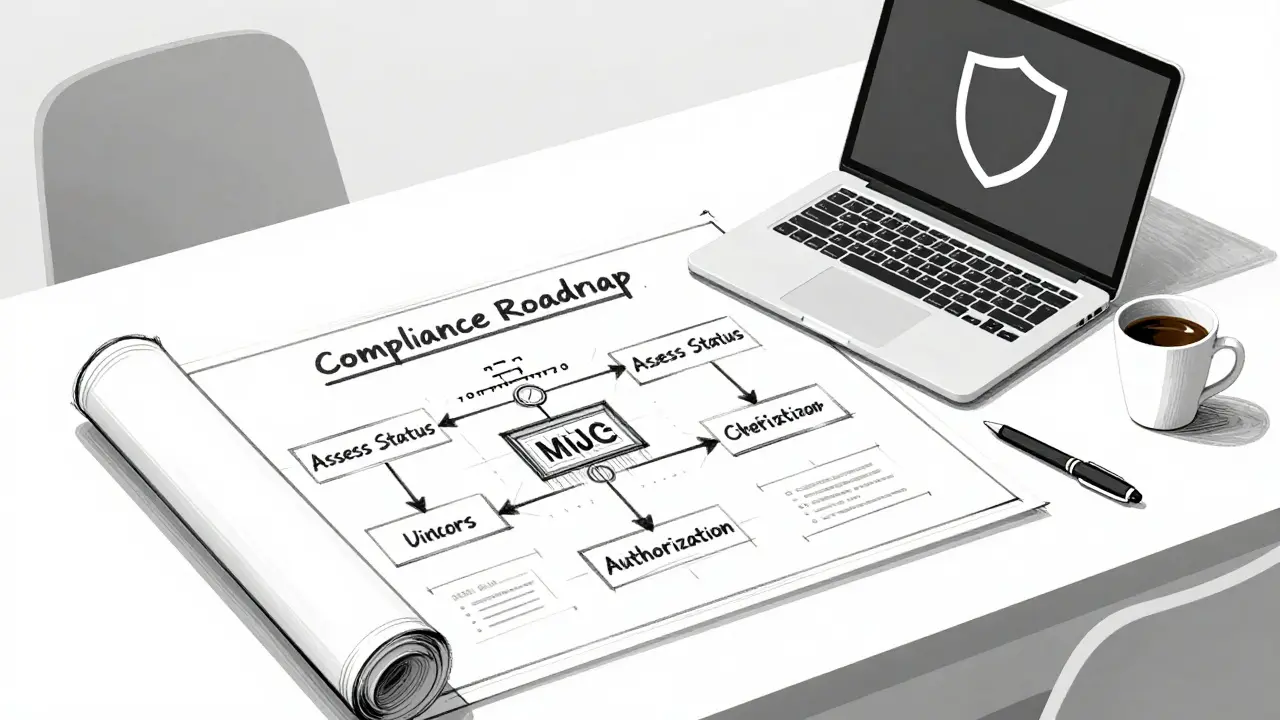
If you haven’t started, begin now. Here’s a checklist:
- Assess your status: Are you a CASP? Do you issue stablecoins?
- Choose your jurisdiction: Pick an EU member state for licensing. Consider speed and cost.
- Build your team: Hire an EU-resident director and a compliance officer with CAMS certification.
- Prepare documentation: Draft your whitepaper and AML policies.
- Invest in tech: Implement AML screening and transaction monitoring tools.
- Apply for authorization: Submit your application and prepare for a 6-9 month review process.
MiCA is not going away. It’s here to stay. Embrace it as a competitive advantage. Companies that comply early gain trust, access to institutional capital, and a clear path to scale across Europe. Those that ignore it risk heavy fines or being shut out of the largest digital asset market in the world.
Does MiCA apply to decentralized finance (DeFi) protocols?
Currently, MiCA primarily targets centralized entities like exchanges and issuers. DeFi protocols fall into a gray area. However, if a DeFi protocol has a identifiable operator or issuer who provides services to EU residents, they may still be considered a CASP. Regulators are watching closely, and future guidelines may clarify this further.
Can I use my existing US license to operate in the EU?
No. MiCA requires a specific EU-based authorization. While the US and EU are discussing equivalence, there is currently no automatic recognition of US licenses. You must apply for a CASP license in an EU member state.
What happens if I fail to comply with MiCA?
Non-compliance can result in severe penalties, including fines up to twice the profit gained, suspension of services, and criminal charges for directors. National competent authorities have broad powers to enforce rules.
How does MiCA affect NFTs?
NFTs are generally excluded from MiCA if they do not represent a financial instrument or a stablecoin. However, if an NFT grants access to underlying assets or represents ownership of a real-world asset, it may fall under other EU regulations like MiFID II. Always consult legal counsel.
Is MiCA only for large companies?
No. MiCA applies to all crypto-asset service providers and issuers serving EU residents, regardless of size. However, smaller firms may find the compliance costs challenging. Some choose to partner with larger compliant entities instead of seeking their own license.