The name MM Finance (Polygon) sounds official. It mentions Polygon - a well-known, fast, and low-cost blockchain used by major DeFi platforms. You might assume it's another decentralized exchange like QuickSwap or SushiSwap. But here’s the truth: MM Finance (Polygon) as a crypto token - MMF - doesn’t exist as a real project. It’s a ghost. A zero-value token with no supply, no trading volume, and no credible backing. If you’re wondering whether to trade, invest, or even use it, the answer is simple: avoid it.
What Is MM Finance (Polygon) Really?
There’s a real platform called mm.finance. It’s a legitimate decentralized exchange (DEX) built on Polygon. It lets users swap tokens, provide liquidity, and earn rewards. It’s been around for years. It has real users. It processes about $15 million in trades every day. It’s updated regularly. It has a clean, functional interface. And it has no native token.
Now, somewhere online, someone created a fake token called MMF - short for MM Finance (Polygon). It uses the same name, same branding, same domain structure. But it’s not connected. Not even remotely. The contract address - 0x22a31bD4cB694433B6de19e0aCC2899E553e9481 - is empty of value. No liquidity. No transactions. No developers. Just a smart contract sitting there like a locked door with no key.
The Red Flags Are Everywhere
If you check CoinMarketCap, Binance, or Crypto.com, you’ll see the same pattern for MMF:
- Circulating supply: 0
- 24-hour trading volume: $0 to $30 (sometimes)
- Market cap: $0
- Rank: #7443 (out of thousands)
- Price: $0.000006646 - but that’s meaningless without supply
A token with zero circulating supply isn’t broken. It’s dead. You can’t trade something that doesn’t exist. You can’t stake it. You can’t use it to pay fees. You can’t add it to your wallet and expect it to do anything. It’s a placeholder. A digital ghost.
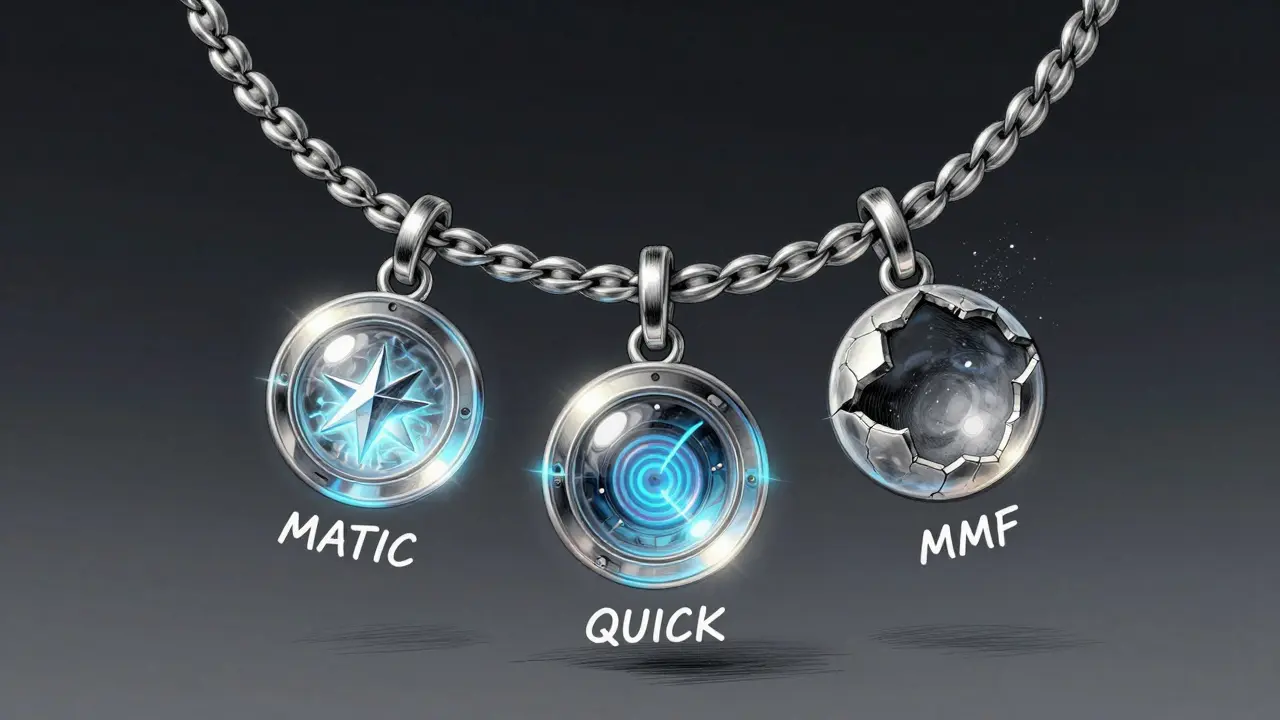
Compare that to real Polygon-based tokens:
- QUICK (QuickSwap): $128M market cap, active trading, real team
- SUSHI (SushiSwap): $215M market cap, used across chains
- MATIC (Polygon): $5.8B market cap, powers 7.8 billion daily transactions
MMF doesn’t even come close. It’s not just small - it’s non-existent.
Why Does This Token Even Exist?
This isn’t a technical glitch. It’s a scam pattern. Scammers create fake tokens with names that sound like real projects - especially ones tied to popular blockchains like Polygon, Solana, or Ethereum. They pump the price on low-volume exchanges, lure in new users with promises of “early access,” then vanish. The contract often has hidden functions: minting more tokens, freezing wallets, or transferring ownership. TokenSniffer gives MMF a 0/10 safety score for exactly that reason.
Reddit users have been warning people since 2023. One user, u/CryptoSkeptic89, wrote: “Tokens with circulating supply of 0 are either scams or dead projects - avoid MMF.” No one’s come back to say, “I bought it and made money.” No testimonials. No support channels. No Discord. No Twitter updates. Just silence.
What About Those Price Predictions?
You might see sites like DigitalCoinPrice claiming MMF could hit $0.000127 by 2027 - a 1,800% increase. That sounds tempting. But here’s the catch: you can’t predict growth from zero. If a token has no liquidity, no users, and no development, any price forecast is fiction. It’s like predicting the value of a house that was never built.
Compare that to Polygon’s native token, MATIC. Experts predict its price based on real metrics: adoption by Robinhood and Meta, zkEVM upgrades, enterprise partnerships, and daily transaction volume. MMF has none of that. Zero code commits on GitHub. Zero team members listed. Zero press releases. Zero audits.
Can You Trade MMF? Should You?
Technically, yes - if you find an exchange that lists it. But here’s what happens when you try:
- You send ETH or USDC to buy MMF.
- You get tokens - but they’re worthless.
- You can’t sell them because no one wants to buy.
- Your wallet shows “MMF: 1,000,000 tokens” - but the value is $0.
- You lose gas fees. You lose time. You lose trust.
There are no liquidity pools for MMF on Uniswap, SushiSwap, or QuickSwap. PolygonScan shows no transactions in the last 90 days. The contract is frozen. It’s not inactive - it’s abandoned.
The Real MM Finance Is Still Running - Without a Token
Here’s the twist: the real MM Finance DEX is still alive. It’s updated. It’s secure. It’s used. But it doesn’t need a token. It works perfectly fine using existing assets like USDC, MATIC, or DAI. There’s no reason for it to create one. And it hasn’t.
The fake MMF token is a parasite. It latches onto the reputation of a real platform to trick people into thinking it’s part of the ecosystem. That’s not innovation. That’s fraud.
How to Avoid This Kind of Scam
If you’re looking at any crypto project with “Polygon” in the name, ask yourself:
- Does it have a verified contract on PolygonScan?
- Is there a real circulating supply (not zero)?
- Is there liquidity on a major DEX?
- Is there a team with real names and LinkedIn profiles?
- Is it listed on CoinMarketCap or CoinGecko with real volume?
- Does the project have a GitHub with recent commits?
If even one answer is “no,” walk away. Especially if the market cap is $0. That’s not a mistake. That’s a warning.
Final Verdict: Don’t Touch MMF
MM Finance (Polygon) - the token - is not a crypto exchange. It’s not a project. It’s not an investment. It’s a trap. It has no value. No utility. No future. The real MM Finance DEX is trustworthy. The fake MMF token is not.
If you’ve already bought MMF, don’t chase losses. Don’t hope for a rebound. The data doesn’t lie: zero supply, zero volume, zero activity. This token is dead. The only thing left to do is move on.
Stick to platforms with transparency. Use tokens with real usage. And never assume a name means legitimacy. In crypto, names are the first thing scammers copy.
Is MM Finance (Polygon) a real crypto exchange?
The real MM Finance is a legitimate decentralized exchange on Polygon, but it doesn’t have a native token. The token called MMF is not affiliated with it and is a scam. Do not confuse the two.
Can I trade MMF on Binance or Coinbase?
No. MMF is not listed on Binance, Coinbase, or any major exchange. It only appears on obscure, low-traffic platforms that list worthless tokens. Trading it is risky and pointless.
Why does MMF have a price if its supply is zero?
The price you see is meaningless. With zero circulating supply, there’s no real market. The price is either a glitch, a fake metric from a low-volume exchange, or a manipulation tactic to lure buyers. It has no economic foundation.
Is MMF a good long-term investment?
No. A token with zero supply, zero trading volume, and zero developer activity has no chance of recovery. Weiss Crypto Ratings and other experts agree: tokens like this have zero investment value.
How do I know if a Polygon-based token is real?
Check its contract on PolygonScan for liquidity, verify its supply on CoinMarketCap, look for active GitHub commits, and confirm it’s listed on major DEXs like QuickSwap or SushiSwap. If it lacks any of these, it’s likely fake.



John Fuller
1 March, 2026 . 02:14 AM
Zero supply. Zero volume. Just move on.
Lucy Simmonds
2 March, 2026 . 00:53 AM
I knew it!! I KNEW IT!! They're using Polygon's name to trick people!! It's all part of the deep state crypto plot!! I told my cousin last week!! He didn't listen!! Now he's broke!! And the government knows!! They let this happen!!
Maggie House
2 March, 2026 . 09:15 AM
This is so helpful!! I was just about to buy some MMF because it looked cheap!! Thank you for breaking it down so clearly!! I'm so glad I checked before spending anything!!
Dana Sikand
3 March, 2026 . 12:49 PM
Bro this is exactly why I stopped trusting anything with 'Polygon' in the name after that one time I got rug-pulled by 'PolySwap' last year. I thought I was being smart buying into something that sounded legit. Turns out I was just another sucker. The fake tokens are getting so good at copying real ones now. I check every contract like it's my job. No supply? No liquidity? No way. I don't even look at the price anymore. If it's not on CoinGecko with real volume, it's trash. Period.
Robert Kromberg
3 March, 2026 . 18:00 PM
I appreciate the clarity here. It's easy to get confused when things look so similar. The real MM Finance is doing good work without a token. That's actually kind of refreshing in this space.
Alyssa Herndon
4 March, 2026 . 00:02 AM
It's strange how much trust we put in names. We assume if it sounds official it must be real. But crypto doesn't work that way. A name is just a label. What matters is what's underneath. And here? Nothing.
Ifeanyi Uche
4 March, 2026 . 05:14 AM
You people are too soft. This is not just a scam its a moral failure. People are dying in Nigeria because they cant afford food and some rich guy in California is making fake tokens to steal from the poor. This is evil. I report this to the police. You should too. No more excuses.
Shannon Black
4 March, 2026 . 20:16 PM
The distinction between the legitimate DEX and the counterfeit token is both technically and ethically significant. One operates with transparency; the other preys on ignorance.
Richard Cooper
5 March, 2026 . 19:21 PM
LMAO they made a token called MMF and nobody noticed? I'm crying. Next they'll make a coin called 'GoogleCoin' and people will buy it because it's on a blockchain.
Dee Resin
6 March, 2026 . 20:32 PM
Oh wow a token with $0 supply and $30 volume. I'm sure it'll be the next Bitcoin. I mean, why not? It's got a .finance domain. That's like a stamp of approval from the crypto gods.
Tanvi Atal
8 March, 2026 . 09:48 AM
Zero supply means zero value. No need to overthink it. This is why most people lose money. They overcomplicate simple things.
Sony Sebastian
9 March, 2026 . 10:06 AM
The MMF token is a textbook example of a honeypot contract. The lack of liquidity pools, absence of audits, and zero GitHub activity are all red flags that scream MEV extraction. This isn't a scam-it's a sophisticated exploit vector targeting retail traders with low financial literacy. You're not buying a token-you're funding a smart contract trap with reentrancy and minting functions. The contract address is a honeypot with a 100% rug-pull probability. Don't even think about interacting with it.
Brian Lemke
11 March, 2026 . 06:53 AM
This is the kind of breakdown we need more of. Real DEXs don't need tokens to function. They just need good code, real users, and transparency. The fake MMF is like someone slapping a Nike logo on a flip-flop and selling it as limited edition. It's not just wrong-it's insulting to people who actually build things.
Mae Young
12 March, 2026 . 09:47 AM
So... let me get this straight. A platform with real usage, real volume, real updates... doesn't have a token. And somehow, a ghost token with zero supply, zero activity, and zero credibility... is the one people are chasing? Oh wow. I just got a new favorite example of human irrationality. I'm writing this in my journal.
Trenton White
13 March, 2026 . 01:18 AM
Interesting how the real project thrives without a token. It makes you wonder why so many others feel the need to create one.
Michael Teague
13 March, 2026 . 11:00 AM
I saw this token on my phone app. Thought it was new. Checked the supply. Zero. Walked away. Good thing I didn't click buy.
kati simpson
13 March, 2026 . 17:14 PM
I just want to say that I really appreciate how you took the time to explain this. I'm new to crypto and I get confused so easily. I thought maybe MMF was a new feature or something. Now I know to always check the supply first. And the contract. And the volume. And the team. And the GitHub. And... yeah. I'm going to check everything now. Thanks for helping me not lose money.
Cory Derby
15 March, 2026 . 05:52 AM
It's important to remember that not every project needs a token to be valuable. The real MM Finance is proof that utility can exist independently of tokenomics. This is a lesson in distinguishing between innovation and speculation.
Colin Lethem
17 March, 2026 . 01:08 AM
I just checked PolygonScan. No transactions in 90 days? Bro that's not inactive. That's tombstone territory. I've seen dead contracts with more action than this. This isn't a token. It's a digital ghost story.
Jeremy buttoncollector
18 March, 2026 . 02:57 AM
The MMF token is a manifestation of the postmodern crypto paradox: a symbolic asset with no material basis, existing solely as a signifier of perceived legitimacy. It's semiotic parasitism at its finest. The real MM Finance DEX operates in the realm of utility, while MMF exists in the hyperreal-its value derived not from function, but from mimicry. We're not dealing with a scam. We're dealing with a philosophical critique of blockchain's obsession with tokenization.
Amanda Markwick
19 March, 2026 . 21:10 PM
This is why I love crypto communities. Someone takes the time to lay it all out so clearly. I'm sharing this with my sister-she's been looking at MMF and asking if it's a good investment. Now she knows. Thank you for being the voice of reason.
Sriharsha Majety
20 March, 2026 . 18:04 PM
I was confused too until I checked polygon scan. No tx. No liquidity. Just empty. I just ignore these now. If its not on coin gecko with real volume its not worth my time
Tabitha Davis
21 March, 2026 . 18:44 PM
Ohhh so THIS is why my cousin keeps talking about MMF? I thought he was just high. Now I know. He's not high. He's being scammed. I'm sending him this link right now. And then I'm making him watch 3 hours of crypto scam documentaries. He's getting educated whether he likes it or not.
Vishakha Singh
22 March, 2026 . 03:00 AM
Thank you for this thorough explanation. It is crucial that newcomers to the ecosystem are guided with clarity and precision. The integrity of decentralized finance depends on informed participation.
John Fuller
22 March, 2026 . 03:45 AM
The real one doesn't need a token. The fake one needs you to believe it does.