Imagine selling Bitcoin for a $500,000 profit and handing over exactly zero dollars to the tax man. For most investors in Western countries, that scenario sounds like a fantasy-or worse, a criminal offense. But if you are a tax resident of the United Arab Emirates is a Middle Eastern country offering 0% personal income tax on cryptocurrency gains for residents, it is your legal reality.
As of June 2026, the UAE remains one of the few places on Earth where individual investors pay no personal income tax on capital appreciation from digital assets. This isn't a loophole; it's written into law. Whether you are trading Ethereum, staking Solana, or flipping NFTs, the government doesn't take a cut of your profits. However, "tax haven" status comes with strings attached. You can't just fly in, trade for a week, and claim residency. There are strict rules about physical presence, reporting frameworks, and corporate structures that you need to understand before packing your bags.
Who Qualifies for 0% Crypto Tax?
The headline figure-0%-is only true if you meet specific criteria. The UAE does not tax citizens based on their nationality but rather on their tax residency. To benefit from this regime, you must be recognized as a tax resident of the UAE.
Here is how the Federal Tax Authority (FTA) generally determines this:
- Physical Presence: You typically need to spend at least 183 days per calendar year within the UAE. If you split your time evenly between Dubai and London, you likely remain a UK tax resident and owe taxes there.
- Residency Visa: You must hold a valid UAE residency visa. Tourist visas do not count. Common options include employment visas, investor visas, or the popular Golden Visa program.
- Economic Ties: Your center of vital interests should be in the UAE. This includes having a home, family, or primary business operations located locally.
If you satisfy these conditions, your personal crypto gains are untaxed. This applies to spot trading, long-term holding, and even rewards from staking or yield farming, provided these activities are considered personal investment rather than a structured business operation.
Personal vs. Business: Where the Line Blurs
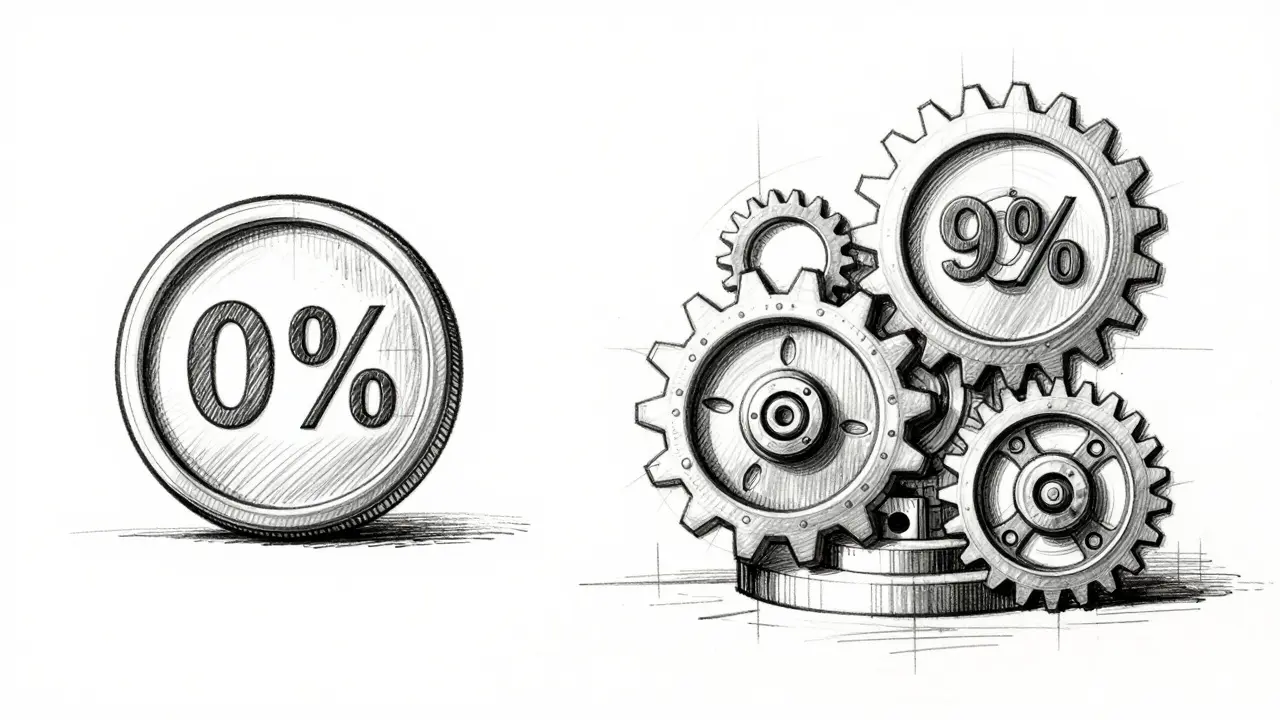
This is where many new expats make costly mistakes. While individuals pay 0% on personal gains, businesses face different rules. In 2023, the UAE introduced a 9% corporate tax rate on taxable profits exceeding AED 375,000 (approximately $102,000 USD).
So, are you an individual investor or a business? The FTA looks at the nature of your activity:
- Individual Investor: You trade occasionally, manage your own portfolio, and do not offer services to others. Your gains are personal capital appreciation. Tax Rate: 0%.
- Crypto Business: You run a mining farm, operate a crypto exchange, provide advisory services, or trade with high frequency and sophistication that resembles professional dealing. Tax Rate: 9% on profits above AED 375,000.
If you incorporate a company to hold your crypto, you might think you're safe. But if that company is deemed to have "adequate substance" in the UAE and generates qualifying income, it could still fall under corporate tax unless it qualifies as a Qualifying Free Zone Person (QFZP). QFZPs can enjoy 0% corporate tax on qualifying income, but they must adhere to strict de minimis limits and maintain real economic presence in designated free zones like the Dubai International Financial Centre (DIFC) or Abu Dhabi Global Market (ADGM).
The New Reality: CARF and Reporting
Don't let the 0% tax rate fool you into thinking the UAE is a black box. Transparency is increasing rapidly. On September 20, 2025, the Ministry of Finance announced the adoption of the Crypto-Asset Reporting Framework (CARF) is an international standard for automatic exchange of information on crypto-assets.
CARF is based on the OECD's Common Reporting Standard (CRS). Here is what it means for you:
- Data Collection: Crypto service providers (exchanges, custodians, wallet providers) operating in the UAE must collect detailed data on account holders' transactions.
- Automatic Exchange: Starting January 1, 2027, the UAE will automatically share this data with other participating countries. The first actual exchange of data is scheduled for 2028.
- No More Hiding: If you are a tax resident of another country (e.g., Germany, France, Canada) but try to use the UAE to hide assets, CARF will expose you. Your home country will receive reports of your UAE-based crypto holdings.
This framework ensures that while the UAE offers tax efficiency, it maintains integrity with global anti-money laundering (AML) standards. It protects legitimate investors who properly establish residency while closing doors for illicit actors.
How It Compares to Other Jurisdictions
To appreciate the value of the UAE's policy, compare it to major economies. The difference isn't marginal; it's life-changing for high-net-worth individuals.
| Country | Tax Type | Rate Range | Notes |
|---|---|---|---|
| UAE | Personal Income Tax | 0% | For tax residents; no wealth/inheritance tax |
| Germany | d>Income Tax | Up to 42% | 0% after 1-year holding period for private sales |
| United States | Capital Gains Tax | 15% - 37% | Plus potential Net Investment Income Tax (3.8%) |
| United Kingdom | Capital Gains Tax | 10% - 20% | Higher rates apply to residential property gains |
| Australia | Income Tax/Capital Gains | Up to 45% | CGT discount available if held >1 year |
In the US, a high earner selling crypto could see nearly 40% of their profit vanish. In the UAE, that same person keeps 100%. This disparity is why thousands of crypto millionaires relocated to Dubai and Abu Dhabi between 2021 and 2025.
Steps to Establish Residency for Tax Benefits
You cannot simply declare yourself a resident. You need proof. Here is the practical roadmap used by most successful relocations:
- Choose a Visa Pathway:
- Golden Visa: 10-year residency for investors (minimum AED 2M investment), professionals, or outstanding students. This is the gold standard for stability.
- Freelancer Visa: Available through free zones like DIFC or ADGM. Lower cost, but requires annual renewal and proof of income.
- Property Owner Visa: Buy property worth minimum AED 2M to get a 2-10 year visa depending on value.
- Secure Housing: Rent or buy a property. Lease agreements serve as proof of address for bank accounts and residency applications.
- Open a Local Bank Account: Major banks like Emirates NBD or FAB require significant documentation. Be prepared to explain the source of your crypto funds due to AML regulations.
- Maintain Physical Presence: Track your days. Use flight records, hotel bookings, and utility bills to prove you spent 183+ days in the UAE during the tax year.
- Sever Ties with Previous Residence: Cancel driver's licenses, close local bank accounts, and notify your previous country's tax authority that you are no longer a resident. This step is critical to avoid double taxation claims.
The process typically takes 3 to 6 months. Costs range from $10,000 for basic freelancer setups to $50,000+ for Golden Visa legal fees and investments.

Pitfalls and Risks to Avoid
Even with 0% tax, risks exist. Ignoring them can lead to fines or loss of residency.
- VAT on Services: While capital gains are tax-free, Value Added Tax (VAT) at 5% may apply to certain crypto-related services. For example, if you provide consulting services paid in crypto, VAT applies. Commercial mining operations also face VAT scrutiny.
- Source of Funds Documentation: When buying property with crypto, developers and banks will demand rigorous AML checks. You must prove your coins were acquired legally. Keep detailed records of all wallet addresses, transaction hashes, and purchase dates.
- Home Country Exit Taxes: Some countries impose "exit taxes" when you renounce residency. For instance, the US may tax unrealized gains on your entire portfolio upon expatriation. Consult a cross-border tax specialist before moving.
- Business Classification Errors: If you trade too frequently, the FTA may reclassify you as a business, triggering the 9% corporate tax. Keep a clear separation between personal investment accounts and any business entities.
Future Outlook: Will 0% Last?
As of mid-2026, the UAE shows no intention of introducing personal income tax. The government relies on oil revenues, tourism, and corporate taxes for funding. Personal income tax has historically been politically unpopular and economically unnecessary for the state's current model.
However, the regulatory environment is tightening. With CARF implementation starting in 2027, expect more stringent KYC (Know Your Customer) requirements from exchanges. The era of anonymous crypto trading is ending globally, and the UAE is aligning itself with OECD standards to maintain its reputation as a serious financial hub.
For now, the window remains open. The combination of 0% personal tax, world-class infrastructure, and a booming tech ecosystem makes the UAE a top destination for crypto wealth preservation. But success depends on proper planning, not just luck. Treat your relocation as a strategic business move, document everything, and stay compliant with both local and international reporting rules.
Do I need to pay tax on crypto gains if I am a tourist in the UAE?
No, you do not pay UAE tax because you are not a UAE tax resident. However, you will likely owe taxes in your home country on those gains. The UAE's 0% rate only applies to individuals who establish official tax residency by living there for at least 183 days a year.
Is staking income taxed in the UAE?
For individual residents, staking rewards are generally treated as personal investment income and are not subject to personal income tax. However, if staking is conducted as part of a commercial business activity, it may fall under the 9% corporate tax regime if profits exceed AED 375,000.
What is CARF and how does it affect me?
CARF (Crypto-Asset Reporting Framework) is a new regulation requiring crypto exchanges and custodians in the UAE to report user transaction data to the government. This data will be shared automatically with other countries starting in 2028. It ensures transparency but does not change the 0% tax rate for legitimate residents.
Can I keep my US citizenship and live in the UAE tax-free?
The UAE will not tax you, but the United States taxes based on citizenship, not residency. As a US citizen, you must file IRS forms and pay taxes on worldwide income regardless of where you live. You may qualify for the Foreign Earned Income Exclusion, but crypto gains often still trigger tax liabilities. Consult a US expat tax specialist.
How much does it cost to get a UAE Golden Visa?
Costs vary based on the pathway. Real estate investors must buy property worth at least AED 2 million ($545,000). Business investors need a minimum capital of AED 2 million. Legal and processing fees typically add $5,000 to $15,000 to the total expense.


Craig Swanson
2 June, 2026 . 06:52 AM
Listen up, you need to stop dreaming about Dubai and look at the reality of your home country's tax code. If you are a US citizen, moving to the UAE does not magically erase your IRS obligations because they tax by citizenship, not residency. You will still file forms and pay taxes on worldwide income unless you qualify for specific exclusions which rarely cover large crypto gains. Do not let these glossy guides fool you into thinking you can just pack your bags and keep every penny. The exit tax alone could wipe out your portfolio before you even land in Dubai.
Bill Gunn
3 June, 2026 . 07:11 AM
Craig is absolutely right about the US situation 🇺🇸 but for everyone else, this is huge news! The CARF implementation is the real game changer here though. It means the days of hiding assets are officially over. Exchanges will be reporting everything automatically starting in 2028. So if you are planning to move, make sure your paperwork is pristine. No more shady offshore accounts. Transparency is the new black 💼✨
Crystal Davis
3 June, 2026 . 18:47 PM
You are all missing the nuance of the corporate tax threshold. The article mentions AED 375,000 which is roughly $102k USD. Most serious traders will blow past that number in a single month during a bull run. Once you cross that line, you are no longer an individual investor in the eyes of the FTA. You become a business entity subject to 9% corporate tax. It is not free money. It is a regulated financial hub with strict compliance requirements. Read the fine print or get audited.
Barclay Chantel
4 June, 2026 . 13:58 PM
Ah yes, the usual herd mentality flocking to the desert like moths to a flame. Everyone thinks they are a sophisticated investor when they are really just gambling with leverage and hoping the government won't notice. The pretension of calling oneself a 'digital nomad' while paying for expensive visas to avoid basic civic duties is exhausting. Real wealth comes from building value, not playing geography arbitrage games with your tax bill.
Hadleigh Edwards
4 June, 2026 . 20:54 PM
I have been following the regulatory changes in the Middle East for quite some time now and it is fascinating to see how quickly the landscape is shifting towards legitimacy. What used to be seen as a wild west frontier for cryptocurrency is now becoming one of the most structured environments in the world. This is actually a very positive development for long term holders because it provides stability and clarity. When regulations are clear, institutional money flows in, which drives prices up for everyone involved in the ecosystem.
mark valmart
6 June, 2026 . 07:31 AM
man i just want to know if i can rent a place in dubai and call it a day. do i really need to spend 183 days there? thats almost half the year. seems like a lot of hassle for zero tax if im already making decent cash back home. maybe ill just keep my head down and hope nobody notices my small gains lol
Diana Morris
7 June, 2026 . 13:44 PM
stop being lazy mark. if you dont want to move then stay home and pay taxes. its that simple. people who complain about rules usually fail anyway. just get the visa and shut up about it. action beats intention every time.
Dianne Wright
8 June, 2026 . 06:14 AM
oh please diana you sound so intense. nobody wants to hear your aggressive pep talks. i was just asking a question. why does everyone have to be so mean on reddit. it drains my energy just reading comments like yours. i feel attacked for no reason
Christina Pearce
9 June, 2026 . 01:21 AM
I think Mark has a valid point about the effort required. Eighteen days sounds manageable but when you factor in the cost of living in Dubai plus the visa fees it adds up quickly. For someone with modest gains the math might not work out. I would love to see a breakdown of the actual monthly costs versus tax savings for different income brackets. That would help clarify who this strategy is truly for.
Miss Masquer
10 June, 2026 . 19:09 PM
As someone who has lived in both North America and the Middle East I can tell you that the cultural adjustment is significant but rewarding. The UAE offers a unique blend of traditional values and ultra modern infrastructure. However you must respect local laws and customs. Crypto is accepted but public behavior matters. Building a life there requires patience and genuine integration into the community rather than just treating it as a tax shell. The connections you make will be far more valuable than the tax savings.
Joshua Alcover
11 June, 2026 . 15:19 PM
The geopolitical implications of such mass migration of capital are profound. We are witnessing the erosion of national sovereignty through fiscal competition. When individuals prioritize personal enrichment over communal contribution we undermine the social contract that binds civilized societies together. The United States must reconsider its extraterritorial taxation policies to remain competitive in this new paradigm of global mobility.
trisya hazriyana
13 June, 2026 . 02:10 AM
lol joshua put down the philosophy book. nobody cares about your grand theories. we just want to keep our money. the system is rigged anyway so why not play smart. sarcasm aside the guide is solid. just dont expect sympathy if you mess up the paperwork.
Debbie Lewis
13 June, 2026 . 23:57 PM
Ive been watching this space for years and its interesting to see how the narrative shifts. First it was wild west then regulation then now its mainstream adoption. Dubai is just leading the charge. I doubt many retail investors will actually move but the high net worth crowd definitely will. Just curious if anyone has tried the freelancer visa route yet?
Eric Grosso
15 June, 2026 . 18:49 PM
hey guys i read this article and it seems pretty legit but im confused about the staking part. if i stake my eth am i considered a business or an investor? the lines seem blurry to me. also spelling errors everywhere in my brain right now sorry about that. just trying to understand the basics before i do anything stupid
Edith Mair
16 June, 2026 . 23:01 PM
Eric you need to consult a professional not ask random strangers on the internet. Staking rewards are generally treated as income in many jurisdictions. In the UAE if it is passive it is likely fine but if you are running a node farm or offering services it gets complicated. Do not guess with your finances. Get advice from a qualified tax advisor who specializes in crypto.
Sam Dashti
18 June, 2026 . 17:04 PM
I think the biggest hurdle for most people is the emotional attachment to their home countries. We grow up believing that paying high taxes is a virtue or a duty. But in the digital age borders are becoming less relevant. My cousin moved to Dubai last year and he says the quality of life has improved dramatically. He spends more time with his family and less time worrying about the IRS. It is a lifestyle change as much as a financial one.
Joe Clements
20 June, 2026 . 06:37 AM
Hey Sam that sounds great for your cousin. I wish I had the courage to make such a big move. I am currently stuck in a job that pays well but leaves no room for growth. Maybe I should start looking into the Golden Visa requirements. Does anyone know if remote work counts towards economic ties?
Rosie Morris
21 June, 2026 . 05:45 AM
i heard u need to show proof of income for the freelancer visa. its not just about working remotely. u need to register with a free zone. its kinda expensive but totally worth it if u r making good money. dont forget to track ur flights tho. the 183 days rule is strict.
lorna erni
22 June, 2026 . 03:52 AM
Let us not forget the environmental impact of all this relocation. Flying back and forth to maintain residency creates a massive carbon footprint. While we celebrate financial freedom we should also consider our ecological responsibility. Perhaps investing in local green initiatives in Dubai would balance out the emissions from frequent travel. Sustainability should be part of the conversation.
stalin brian
24 June, 2026 . 03:51 AM
lorna u r always talking about environment. chill out. people move for money. if they want to buy trees later they can. right now they need to secure their future. the climate argument is valid but secondary to survival and prosperity. lets focus on the legal aspects first.
saradee dee
25 June, 2026 . 00:24 AM
Oh my goodness this is such exciting news! I was just reading about how hard it is to manage taxes across multiple countries. Imagine the peace of mind knowing you keep every dollar you earn. It feels like a dream come true for creative professionals and traders alike. I hope more countries follow this example because it encourages innovation and risk taking. Thank you for sharing this detailed guide!
Dana Rapoport
26 June, 2026 . 01:52 AM
Sara enthusiasm is contagious but remember due diligence is key. The framework is robust but requires strict adherence. Consider the long term implications of severing ties with your home country. It is a significant life decision that affects healthcare education and social security benefits. Reflect deeply on what truly matters to you beyond immediate financial gain.