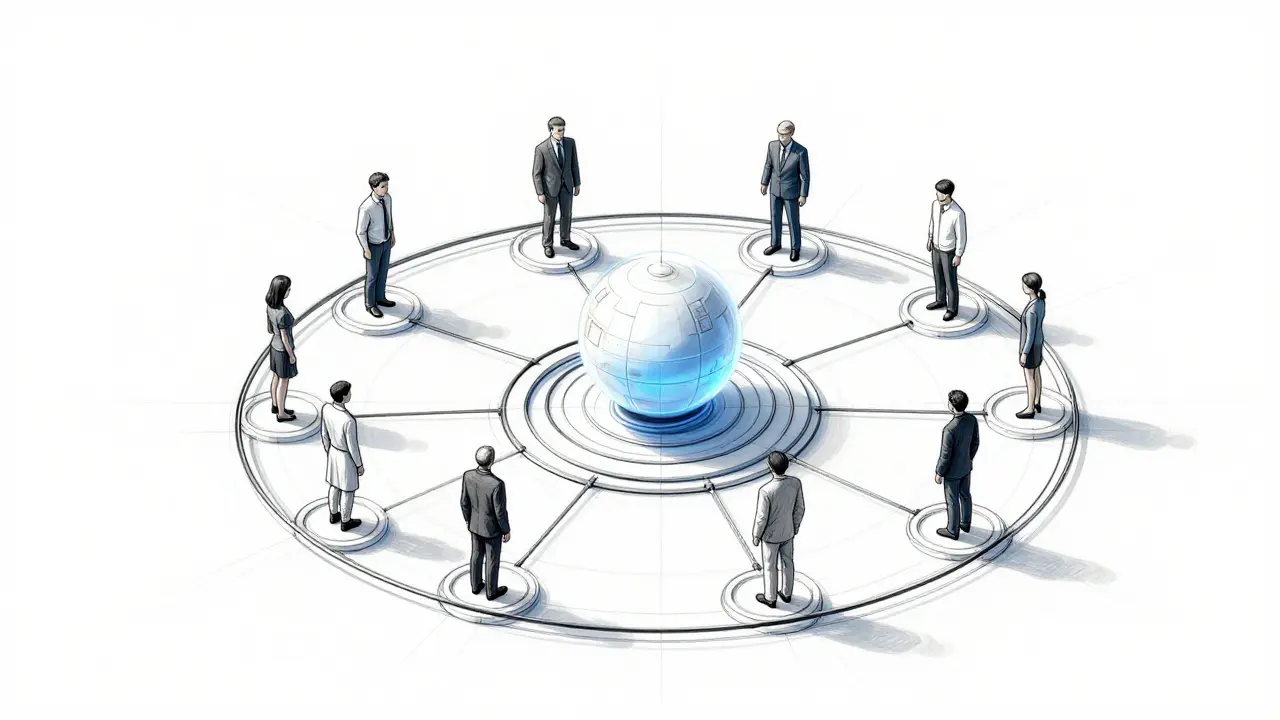
Imagine a world where you don't have to fight a massive corporation to get your claim paid after a car accident. Instead, you're part of a small group of trusted drivers who've pooled their money together. If someone in the group has a wreck, the pool pays out. If there's money left at the end of the year, it doesn't go to a CEO's bonus-it goes back to you or to a charity you actually care about. This isn't a utopian dream; it's the core of Peer-to-Peer Insurance, a model that is fundamentally changing how we handle risk by removing the middleman.
For decades, the insurance industry has operated on a "black box" system. You pay a premium, and the company uses a complex algorithm to decide how much of that money stays in their pocket and how much goes to claims. P2P insurance flips the script. By leveraging the sharing economy and modern tech, it lets people with similar risk profiles self-organize. While the global market for this was valued at around USD 63 billion in 2023-a tiny fraction of the USD 7.2 trillion traditional industry-it's growing at over 30% annually. People are tired of the lack of transparency and are looking for a fairer way to protect their assets.
| Feature | Traditional Insurance | P2P Insurance |
|---|---|---|
| Profit Motive | Company retains unused premiums | Funds returned to members or charity |
| Transparency | Opaque underwriting and payouts | Real-time fund balances and visibility |
| Risk Grouping | Broad, diverse risk pools | Siloed pools of similar risk profiles |
| Claims Process | Often adversarial (Adjusters) | Community-driven or automated |
How P2P Insurance Actually Works
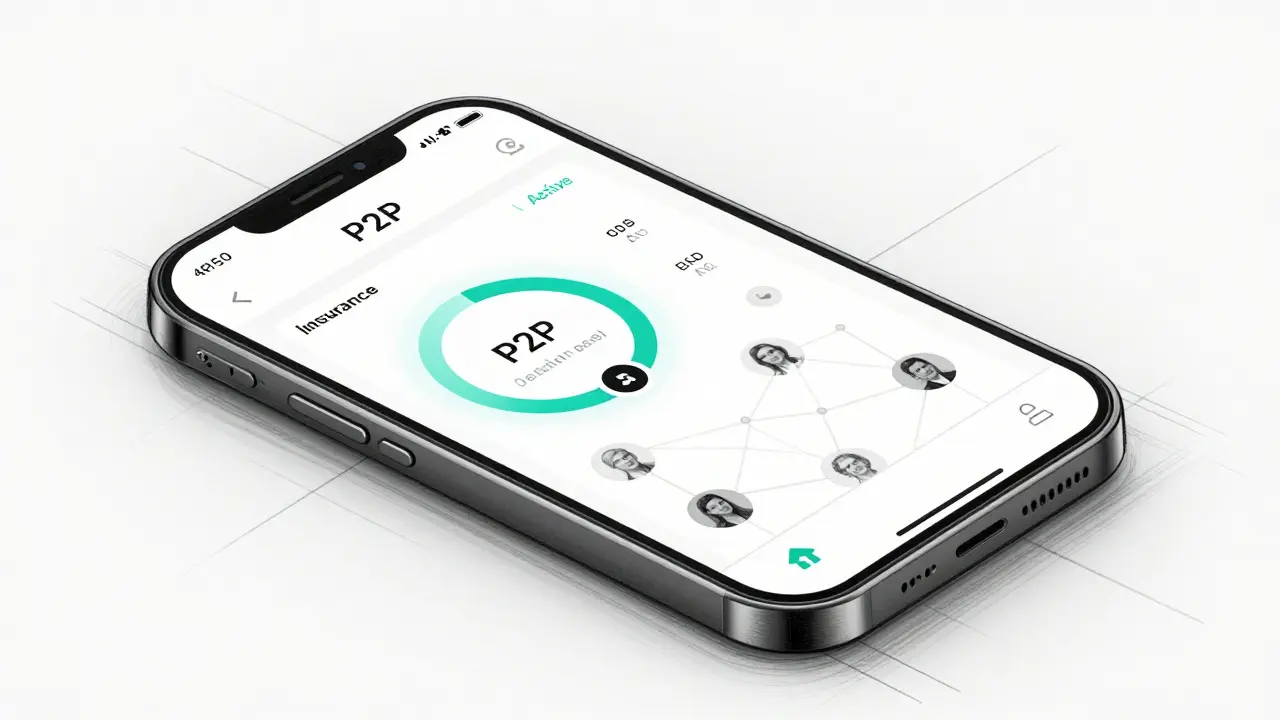
At its simplest, Peer-to-Peer Insurance is a model where individuals pool their capital to self-organize and self-administer coverage. Instead of a corporate entity acting as the sole arbiter of truth, the community manages the risk. You join a "pool" of people who are like you-perhaps you're all freelance designers in the same city or homeowners in a specific neighborhood.
The process usually follows a specific flow: members agree on the rules for what constitutes a valid claim, contribute a fixed premium to a shared fund, and use a digital platform to track the money. Because these models strip away the massive overhead of skyscrapers, thousands of employees, and aggressive marketing budgets, the premiums are often lower. When a claim is filed, the pool pays it out. If the pool runs dry because of a catastrophic event, a Reinsurer is a specialized insurance company that provides insurance to other insurers to cover extreme losses and steps in to cover the difference.
Choosing Your Model: Broker vs. Company
Not all P2P models are built the same. Depending on how much risk you're willing to take, you'll encounter two main structures.
First, there's the Insurance Broker Model. In this setup, the P2P group handles the small, frequent claims using their own pooled money. For the "big stuff"-like a house burning down-the broker has a traditional insurance company on standby. The broker doesn't charge a massive fee; they typically make their money through commissions from the big insurer. This is great for things like gadget insurance or small liability coverages where the risks are predictable.
Then there's the Insurance Company Model. Here, a professional firm manages the entire operation for a flat fee. They provide the infrastructure, handle the legal compliance, and manage the reinsurance. While this feels more like "standard" insurance, it offers more comprehensive coverage for the group. The trade-off? It can be slightly more expensive because you're paying for that professional management.
The Tech Engine: Blockchain and Smart Contracts
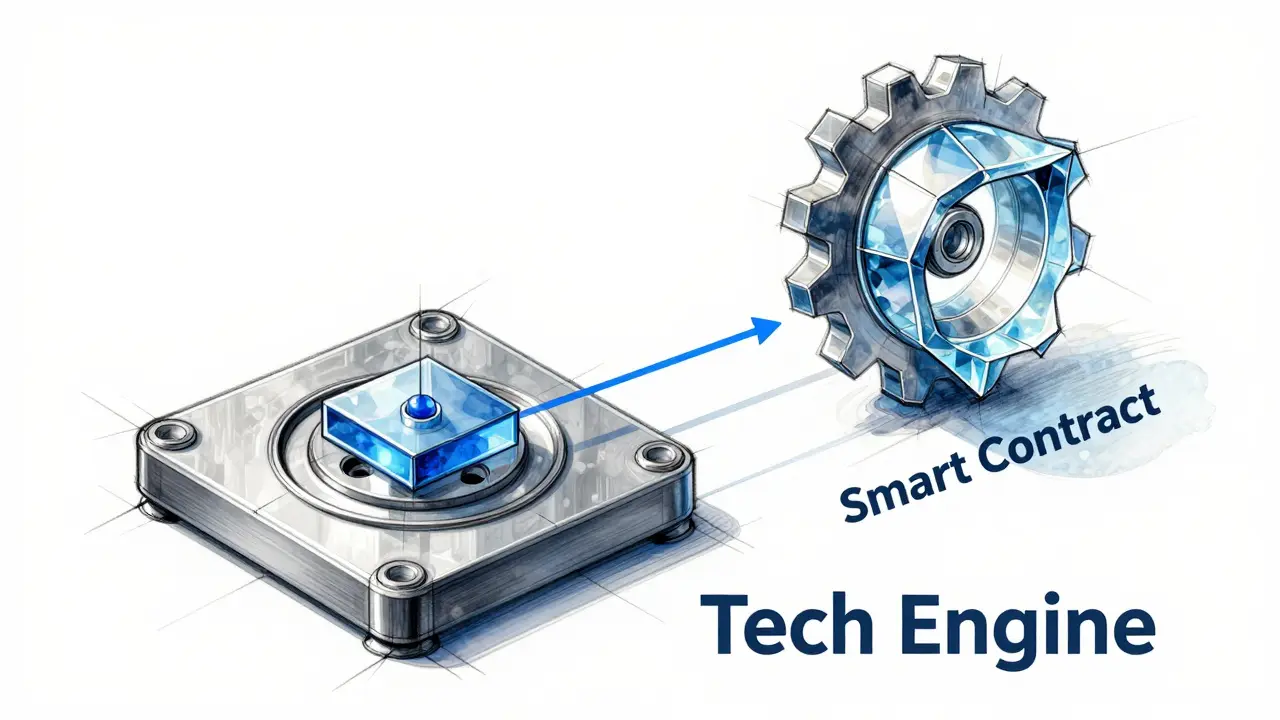
You can't have a modern P2P system without a serious tech stack. This is where the blockchain knowledge comes into play. To avoid the "trust issue" (i.e., worrying that the pool manager will run away with the money), many P2P models use Blockchain is a decentralized, distributed ledger technology that records transactions across many computers to ensure transparency.
The real magic happens with Smart Contracts is self-executing contracts with the terms of the agreement directly written into lines of code which automatically trigger payouts. For example, imagine a P2P flight insurance pool. The smart contract is connected to a flight database. If the database shows your flight was canceled for more than 4 hours, the contract automatically sends the payout to your wallet. No forms, no phone calls, no arguing with a claims adjuster. This removes the conflict between the insurer and the policyholder entirely.
Who Benefits Most from This Shift?
While anyone can use P2P insurance, some groups find it life-changing. Take microbusinesses-companies with fewer than 10 employees. Traditionally, these tiny firms are ignored by big brokers because they aren't "profitable enough" to spend time on. However, they are perfect for P2P models. They are easier to underwrite and often share very specific, similar risks.
Companies like Lemonade is an InsurTech company that uses AI and behavioral economics to offer P2P-inspired insurance and Friendsurance is a European P2P insurance provider that allows users to form insurance circles with friends have shown that when you combine AI with a community focus, you can settle claims in seconds rather than months. By grouping low-risk individuals together, the system creates a "virtuous cycle" where safe behavior is rewarded with lower costs.
The Roadblocks: Why Isn't Everyone Doing This?
If P2P is so much better, why are we still paying Geico or State Farm? The truth is, there are some steep hurdles. The biggest is regulatory compliance. Insurance is one of the most heavily regulated industries in the world. Most laws were written for giant companies with massive capital reserves, not for a group of 50 friends on a blockchain. Navigating these laws is a nightmare for startups.
There's also the "Cold Start" problem. A P2P pool is only as strong as its members. If you have a pool of ten people and three of them have major claims in the same month, the pool collapses unless there's a massive reinsurance backup. Building a large enough, high-quality pool of users takes time and significant marketing spend.
Is P2P insurance legal in my country?
It depends. In the US, the National Association of Insurance Commissioners (NAIC) provides guidelines, but laws vary by state. In Europe, several P2P models are fully operational. Always check if the provider is backed by a licensed reinsurer to ensure you're actually covered.
What happens if the pool runs out of money?
This is where reinsurance comes in. Reputable P2P models don't just rely on the member pool. They pay a portion of the premiums to a secondary insurance company (a reinsurer) that guarantees a payout if the pool's funds are exhausted by a catastrophic event.
Do I have to trust the other people in my pool?
Not necessarily. While some models let you choose friends and family, others use AI to match you with people who have similar risk profiles. Blockchain and smart contracts further reduce the need for trust by making the payout rules objective and transparent.
How is the payout decided in a P2P model?
Depending on the platform, payouts are either automated via smart contracts (based on data triggers) or decided by a vote of the community members based on pre-agreed eligibility criteria.
Is P2P insurance more expensive than traditional insurance?
Generally, no. By cutting out the overhead of traditional insurance corporations and reducing the incentive for fraudulent claims (since you're effectively stealing from your peers, not a faceless company), P2P models often offer more competitive premiums.
Next Steps and Troubleshooting
If you're looking to move into a P2P model, start by auditing your current needs. If you're a freelancer or a microbusiness owner, look for "InsurTech" platforms that specifically target your niche. Before signing up, ask the provider two critical questions: Who is the reinsurer? and How are unused premiums handled?
If you find that a P2P pool doesn't offer the level of coverage you need for a primary residence or a high-value asset, consider a hybrid approach. Use traditional insurance for catastrophic losses and a P2P pool for smaller, more frequent risks. This gives you the security of a giant corporation with the cost-savings and fairness of a community-driven model.



Jimmy vasquez
1 May, 2026 . 01:31 AM
This is a great breakdown of how P2P actually works in practice. For anyone looking into this, definitely check out how the underwriting process differs because some platforms use behavioral data which can actually lower your costs if you're a safe driver or homeowner.
Abhishek Verma
2 May, 2026 . 04:25 AM
Oh sure, let's just trust a group of random internet strangers with our life savings. Truly a foolproof plan for when everything goes wrong. I'm sure the blockchain will magically fix the fact that people are generally dishonest.
Robert Smith
2 May, 2026 . 17:27 PM
Sounds like a win 🚀💰
Gabrielle Danis
3 May, 2026 . 16:20 PM
The distinction between the broker model and the company model is crucial. Many consumers overlook the role of the reinsurer, but without that institutional backstop, the volatility of a small pool would make these products entirely unviable for primary coverage.
Emily A
3 May, 2026 . 19:10 PM
It is honestly amusing that people think smart contracts solve the trust issue. Code is only as good as the person who wrote it, and bugs in these contracts have led to millions in losses across the DeFi space. Anyone who believes a line of code is safer than a regulated legal entity is simply naive.
Nitin Gupta
5 May, 2026 . 12:43 PM
I agree with the points on microbusinesses. In my experience, smaller firms often face prohibitive costs with traditional insurers who don't understand their specific operational risks. A peer-led model could really level the playing field for small entrepreneurs.
Rushell Perry
6 May, 2026 . 11:23 AM
just think about how much stress this takes off a small biz owner no more fighting with an adjuster who has never seen your industry before it really is about community support
its me
7 May, 2026 . 02:41 AM
We must ask ourselves if we are truly ready to relinquish the safety of the state for the whim of a digital collective. There is a moral imperative to ensure that the vulnerable aren't just cast aside by a 'risk profile' algorithm determined by a handful of programmers.
Amanda Macy
7 May, 2026 . 22:33 PM
The shift from corporate profit to community benefit is an interesting social experiment. It changes the relationship from adversarial to collaborative, though it requires a high level of social cohesion to function without friction.
Alex Mazonowicz
9 May, 2026 . 12:12 PM
This is the future!!! I love seeing tech being used to actually help people instead of just making billionaires richer!!!! Keep pushing for this!!!!
Veronica Bago
9 May, 2026 . 21:19 PM
This sounds super chill, honestly. I like the idea of the money going back to a charity I actually like instead of some corporate void.
Barbara Jones
10 May, 2026 . 14:07 PM
definitly sounds like a better way to do things if u can find a good pool... just hope the tech doesnt glitch out lol
Gabby Puche
11 May, 2026 . 13:14 PM
Right? Just a bit of faith in the system! 🌟 Love the vibe of helping each other out! ✨
Rain Richardsson
12 May, 2026 . 00:22 AM
Makes total sense. Glad to see this.
Felix Eduardo Velasquez
12 May, 2026 . 08:32 AM
From a systemic perspective, the biggest hurdle isn't the tech but the legal framework. Insurance is a promise of future payment, and the law requires a specific type of solvency to guarantee that promise. Blockchain provides transparency, but it doesn't provide capital. Until we see a legal shift in how reserves are handled for decentralized pools, these will remain niche products for low-stakes risks. It is a philosophical battle between the agility of the new economy and the stability of the old world. Most people value stability when their house is on fire.
Carli Bates
13 May, 2026 . 08:57 AM
oh wow a blockchain for insurance... because that's exactly what the world needs more of... another way for people to lose money because they forgot a password or a contract had a typo... truly revolutionary stuff
Ipsita Seal
14 May, 2026 . 20:10 PM
Whatever, sounds like a lot of work to set up.
Lloyd I
15 May, 2026 . 23:42 PM
Let's get together and find a way to implement this for local freelancers! It would be awesome to have a community-led safety net that actually rewards us for being professional and low-risk!
Jan Conrad
16 May, 2026 . 06:07 AM
I wonder how the AI matching actually works to ensure the risk profiles are truly similar without creating a bubble of people who are all prone to the same systemic risk. If everyone in a pool is a freelance designer in the same city, a local disaster could wipe out the whole pool simultaneously.
Kathleen Warren
17 May, 2026 . 05:18 AM
That's a really good point about the local risk. I think the reinsurance mentioned in the post is the key here. It's kind of like having a friend help you out, but knowing there's a bigger bank in the background just in case everything goes wrong at once. It's a nice balance.