You’ve probably seen the dog-themed tokens taking over your feed. But when you hear about Ton Inu, or TINU, you might wonder if it’s just another copycat or something with actual utility. The short answer? It’s a high-risk, low-liquidity meme token built on The Open Network (TON) that tries to blend Shiba Inu vibes with Telegram’s massive user base. Before you buy in, you need to understand exactly what this coin does, why its price swings wildly, and whether it has any legs left in the current market.
This guide breaks down the reality behind Ton Inu. We’ll look at how it works, where you can trade it, and the red flags experts are waving right now. If you’re looking for a quick flip, this info will help you manage risk. If you’re looking for a long-term hold, you’ll want to pay close attention to the liquidity issues discussed below.
What Exactly Is Ton Inu (TINU)?
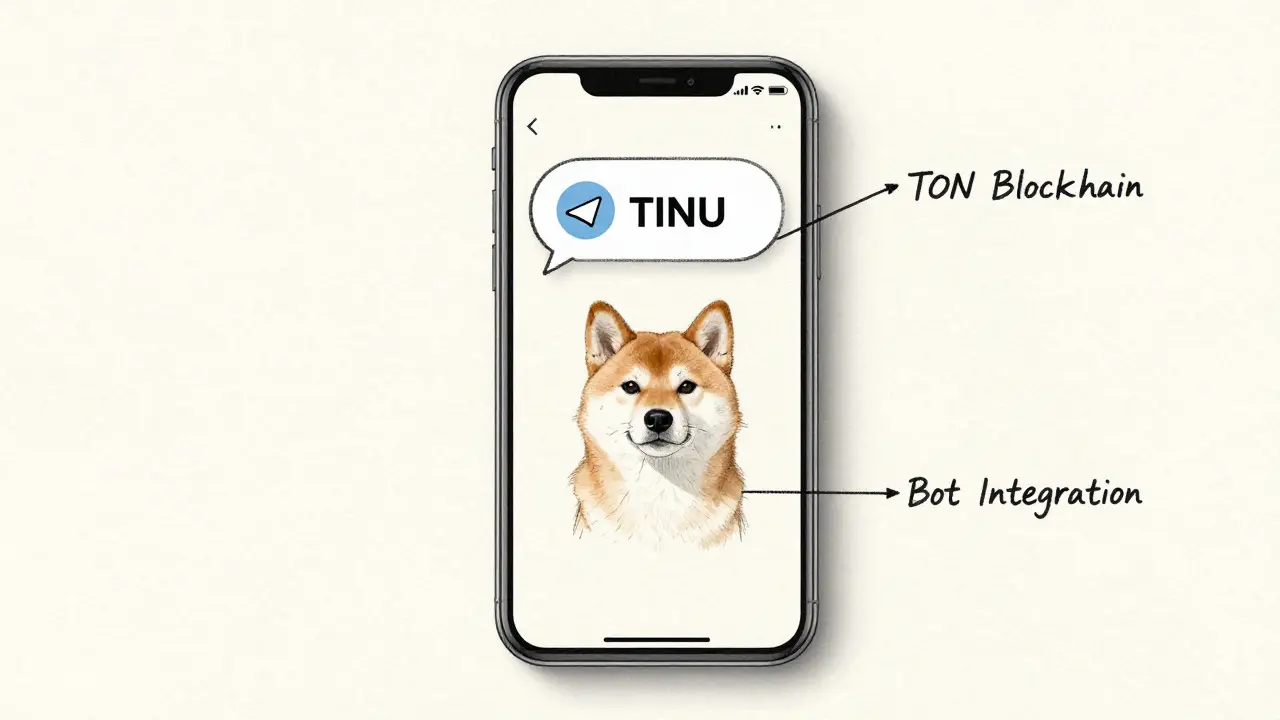
Ton Inu is a utility token operating on The Open Network (TON) blockchain, launched as a meme-inspired cryptocurrency that combines Shiba Inu-themed branding with Telegram-integrated functionality. Unlike many meme coins that live exclusively on Ethereum or Solana, TINU was built specifically to ride the wave of Telegram’s popularity. Telegram has over 800 million monthly active users, and developers have been rushing to integrate crypto features directly into chats.
The idea behind TINU is simple: make it easy for people to buy, sell, and check token legitimacy without leaving the messaging app. It uses specialized bots within Telegram to handle tasks like scanning contracts for scams and executing trades automatically. This integration is its main selling point. However, being "Telegram-friendly" doesn’t automatically make a coin valuable. It just means the friction to enter the market is lower. For beginners, this ease of access can be dangerous because it masks the underlying volatility and lack of deep market support.
How Ton Inu Works on the TON Blockchain
To understand TINU, you first need to understand its home: The Open Network (TON). TON is a layer-1 blockchain known for high speed and low costs. Transactions on TON average around 5.2 seconds, and fees often stay under $0.0003 per transfer. This makes it ideal for micro-transactions and frequent trading, which fits the meme coin model perfectly.
TINU operates as a token variant on this network. Here is how the mechanics play out for a user:
- Wallet Setup: You don’t need complex hardware wallets. A compatible software wallet like Tonkeeper or OpenMask is sufficient. These are mobile-first apps designed for ease of use.
- Trading via Bots: Instead of logging into a centralized exchange website, you interact with Telegram bots. These bots allow you to scan QR codes for token verification and execute buys/sells directly in chat windows.
- Staking Options: Some platforms, like Bitget, have offered staking options for TINU. Users could lock up their tokens for periods ranging from 7 to 180 days to earn variable Annual Percentage Yields (APY), typically between 1.5% and 8.7%. However, these programs come and go based on project activity.
The technical barrier to entry is low. You need Telegram version 9.5 or higher and a small amount of capital-experts suggest at least $50 just to overcome slippage issues. But low barriers mean anyone can join, which also means anyone can exit quickly, leading to instability.
Market Reality: Price, Volume, and Liquidity Traps
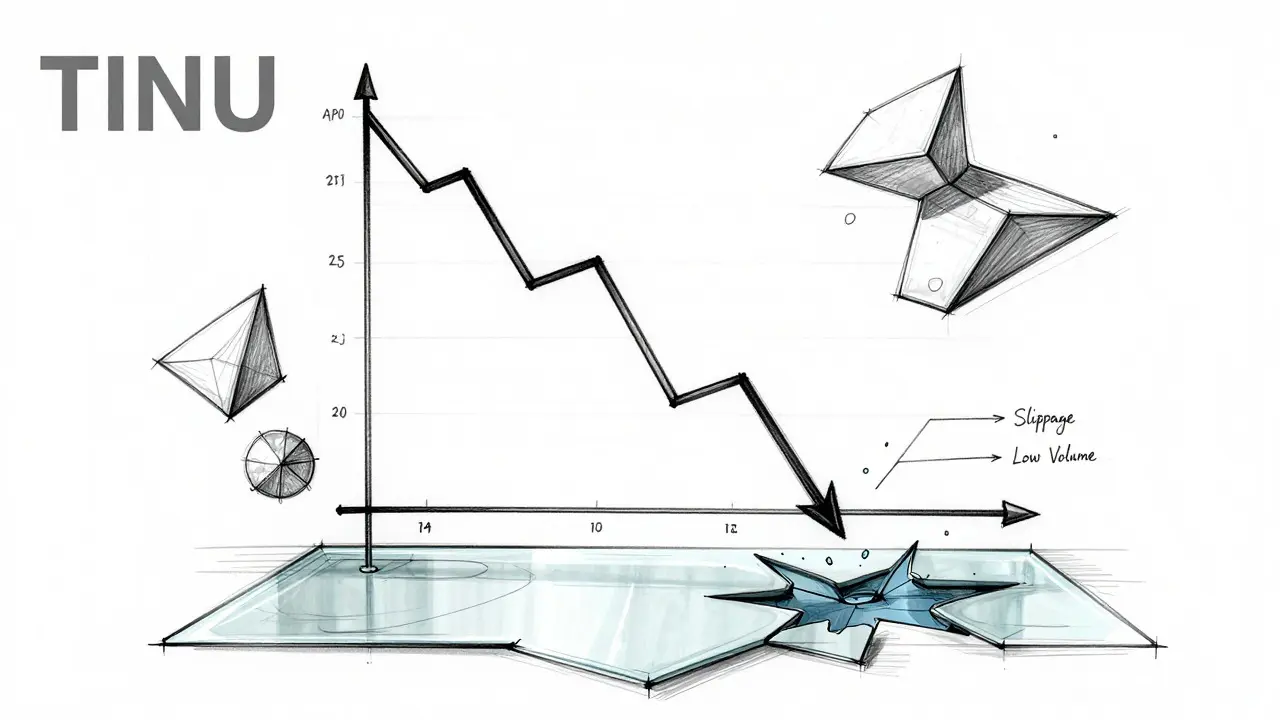
If you check different data sources, you’ll see conflicting numbers. This isn’t a glitch; it’s a sign of fragmented liquidity. As of late 2025, CoinGecko reported TINU trading around $0.0001194 USD with a 24-hour volume of roughly $254. Meanwhile, other aggregators like TradeSanta showed prices near $0.00034371 with slightly higher volumes. Why the difference?
Liquidity is spread thin across very few exchanges. TINU only had three active markets listed on major trackers. When liquidity is this shallow, even small trades can move the price drastically. Imagine trying to sell a house by only showing it to three people. If one person offers half price, that becomes the market rate. With TINU, verified trades showed slippage rates of 30% to 50% on orders above 500,000 tokens. That means if you tried to sell $100 worth of TINU, you might only receive $60 after the transaction settled due to the lack of buyers at your desired price.
| Metric | Ton Inu (TINU) | Shiba Inu (SHIB) | Dogecoin (DOGE) |
|---|---|---|---|
| Market Cap (Oct 2025) | <$500,000 | $9.8 Billion | $14.3 Billion |
| 24-Hour Volume | $250 - $6,700 | $1.2 Billion | High Billions |
| Yearly Performance | -96.92% | -62.3% | -58.7% |
| Primary Chain | TON | Ethereum | Dogecoin Chain |
| Risk Score (CoinGecko) | 9.7/10 (Extreme) | Low-Medium | Low-Medium |
As the table shows, TINU is in a completely different league than giants like Dogecoin or Shiba Inu. Those coins have billions in daily volume, meaning you can sell millions of dollars worth without crashing the price. TINU does not. Its all-time high was $0.0055 during its launch phase. Since then, it has declined nearly 97% against Bitcoin. This performance indicates that early investors have largely exited, leaving latecomers holding the bag.
Red Flags: Concentration, Sentiment, and Delisting Risks
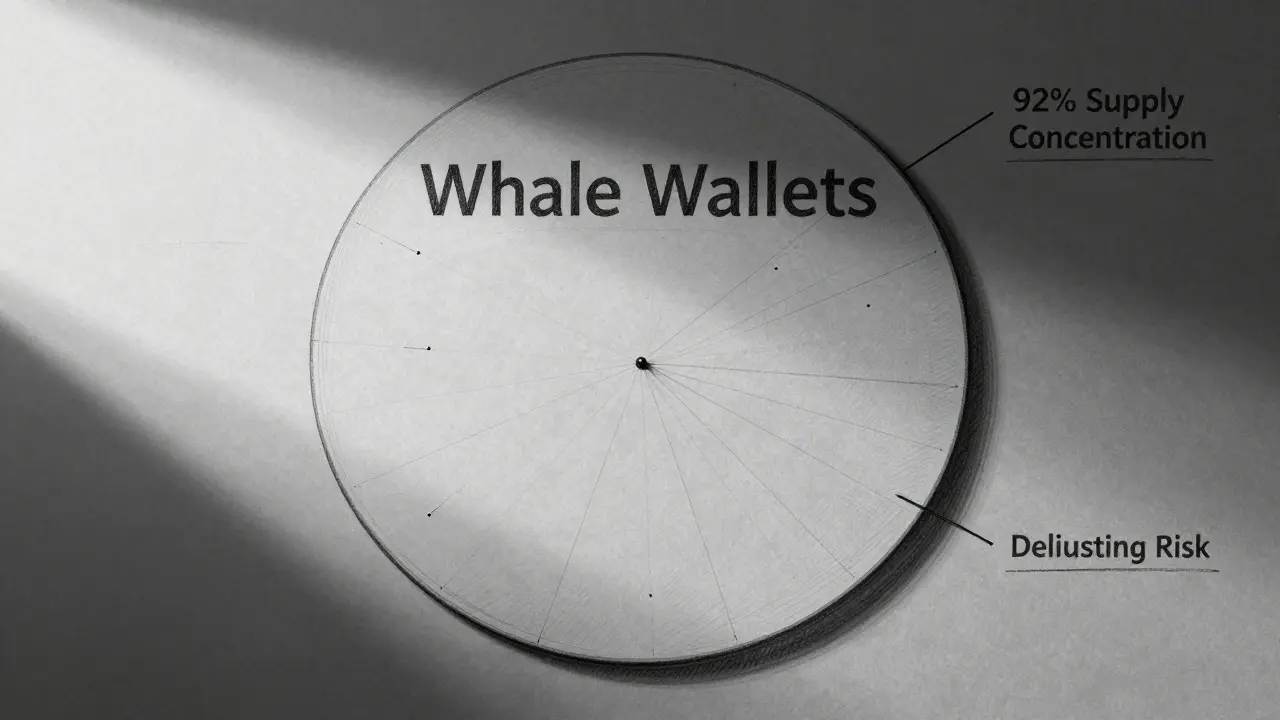
Before buying any micro-cap coin, you must look at who holds it. Research from Bitget’s team revealed a worrying statistic: 92% of TINU’s total supply is concentrated in just 12 wallets. In crypto terms, this is called a "whale-heavy" distribution. If one of those 12 wallets decides to sell, they can dump the entire market. There is no institutional adoption to cushion the blow.
User sentiment reflects this danger. On community forums like Reddit and Trustpilot, reviews are polarized but lean heavily negative. Common complaints include:
- Impossible Exits: Users report that selling large amounts causes catastrophic slippage, effectively trapping their funds.
- Bot Reliability: Core Telegram bots used for trading had an uptime of only 68% in September 2025. If the bot goes offline, you cannot trade.
- Scam Allegations: Anonymous feedback on Coinbase showed 94% negative sentiment, with terms like "dead project" and "scam" appearing frequently.
Experts are equally skeptical. Maria Chen, a market analyst at CoinGecko, noted in October 2025 that TINU exhibits classic signs of a low-liquidity pump-and-dump scheme. She pointed out that 87% of trades occur on unregulated offshore exchanges, making it hard to track real ownership. Furthermore, the SEC issued warnings in October 2025 about Telegram-integrated tokens with manipulated liquidity, which likely contributed to TINU’s removal from major US-facing platforms.
Is Ton Inu Still Viable in 2026?
The outlook for TINU in 2026 is bleak. The project promised an NFT marketplace integration by Q3 2025, but audits by BeInCrypto found no progress. More critically, Bitget terminated TINU trading pairs in October 2025 due to insufficient liquidity. Without major exchange support, the coin relies solely on decentralized swaps and Telegram bots, both of which are prone to failure and high fees relative to the asset's value.
Messari, a leading crypto research firm, projected a "near-certain delisting from all major exchanges within 6 months" based on declining trading activity. Their data showed a 73% reduction in volume since July 2025. Historically, 92% of low-cap meme coins become completely illiquid within 18 months of launch. TINU is following this pattern closely.
While the Telegram integration concept is innovative, TINU lacks fundamental utility beyond speculation. It doesn’t offer governance rights, staking rewards that beat inflation significantly, or a unique product that generates revenue. It is purely a speculative vehicle riding on the brand recognition of dogs and Telegram. As newer, better-funded native meme coins on TON (like NOT and DOG) capture 89% of the ecosystem’s meme coin market cap, TINU is being squeezed out.
Practical Steps: How to Interact Safely (If You Must)
If you still decide to experiment with TINU, treat it as entertainment money-cash you are willing to lose entirely. Here is how to minimize damage:
- Start Small: Never invest more than $50-$100 initially. This amount is enough to test the waters but too small to cause financial ruin if the bot fails or liquidity vanishes.
- Use Reputable Wallets: Download Tonkeeper or OpenMask from official app stores. Avoid links sent via private DMs in Telegram, as phishing is rampant.
- Check Slippage Tolerance: When swapping, set your slippage tolerance carefully. Expect to lose 10-30% of your value on the trade itself due to low liquidity.
- Verify Bot Uptime: Check community channels before trading. If the primary trading bot is offline, wait. Don’t try to force transactions through unofficial mirrors.
- Have an Exit Plan: Decide your profit target before you buy. If you double your money, take it off the table immediately. Greed kills in low-liquidity markets.
Remember, documentation for TINU is poor. The GitHub repository hasn’t been updated since March 2025, and there is no official whitepaper. You are relying on community-moderated channels with around 3,200 members. This lack of transparency is a significant risk factor.
Frequently Asked Questions
What is the total supply of Ton Inu (TINU)?
The total supply of Ton Inu is fixed at 1,000,000,000 (1 billion) tokens. However, circulating supply data can be unreliable, with some exchanges reporting zero circulation despite active trading, suggesting significant token lockups or reporting errors.
Where can I buy Ton Inu (TINU)?
TINU is primarily traded via Telegram bots integrated with TON wallets like Tonkeeper. It has limited listings on centralized exchanges, with Bitget having terminated its trading pairs in late 2025 due to low liquidity. Most remaining volume occurs on smaller, offshore decentralized platforms.
Is Ton Inu a scam?
While not officially labeled a scam by regulators, TINU exhibits many characteristics of high-risk speculative assets. Experts cite suspicious volume patterns, extreme whale concentration (92% held by 12 wallets), and poor documentation. User reviews frequently mention difficulty selling tokens without massive losses, leading many to label it a "pump-and-dump" scheme.
Why is the price of TINU so volatile?
Volatility stems from extremely low liquidity. With only a few thousand dollars in daily trading volume, small buy or sell orders can move the price by 30-50%. Additionally, the token is concentrated among a few large holders, allowing them to manipulate the market easily.
Does Ton Inu have any real utility?
Currently, TINU’s utility is minimal. It was designed to integrate with Telegram bots for easy trading and contract scanning. However, with the bots often offline and the project lacking further development (such as the promised NFT marketplace), its utility is largely theoretical. It functions primarily as a speculative meme coin rather than a functional tool.
What is the future of Ton Inu in 2026?
The future looks uncertain. Analysts predict near-certain delisting from major exchanges due to declining volume and regulatory scrutiny. With no new developments and strong competition from other TON-based meme coins like NOT and DOG, TINU is likely to face continued decline in value and relevance.