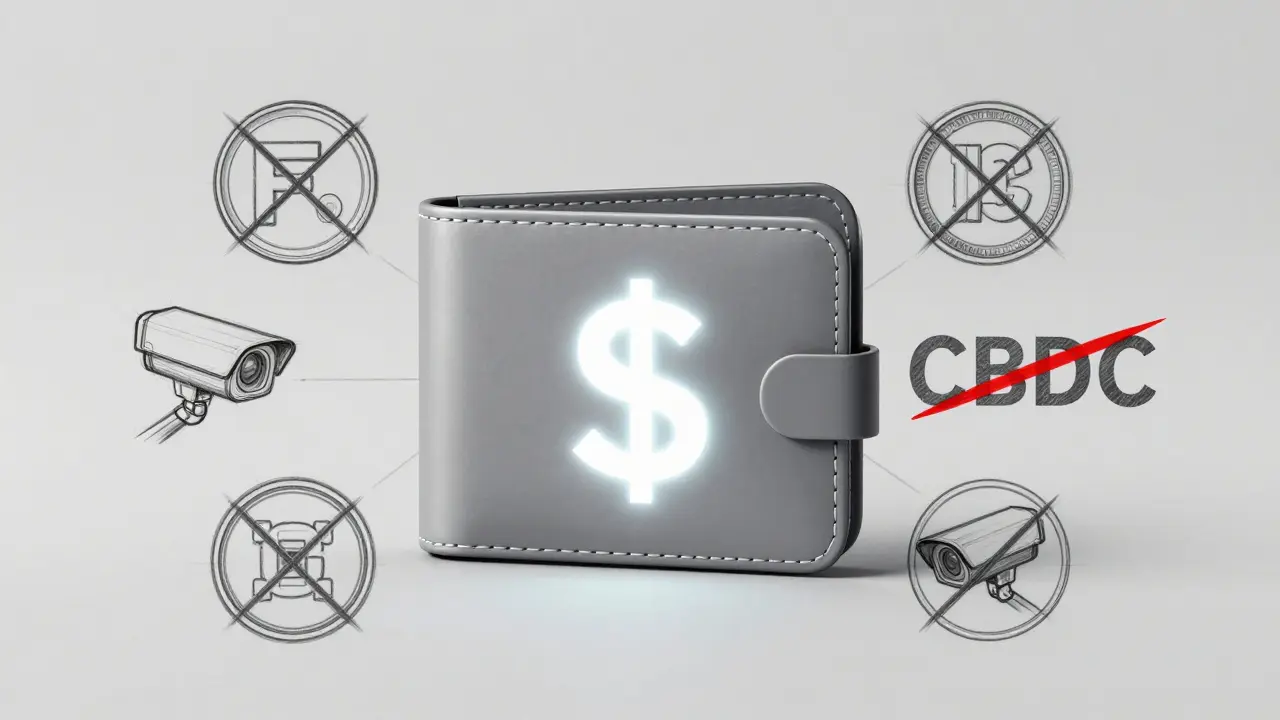
Global CBDC Adoption Tracker
CBDC Development Status
The U.S. is now the only major economy that has completely halted CBDC development while 134 countries globally are exploring digital currencies.
Launched
Countries with live CBDCs
Piloting
Countries running live pilots
Exploring
Countries exploring CBDC development
CBDC Status by Country
| Country | Status | Notes |
|---|---|---|
| China | Launched | Digital yuan used by millions |
| Nigeria | Launched | eNaira launched in 2021 |
| Jamaica | Launched | JAM-DEX launched in 2022 |
| European Union | Piloting | Digital euro pilot in progress |
| Turkey | Piloting | Central bank digital currency in testing |
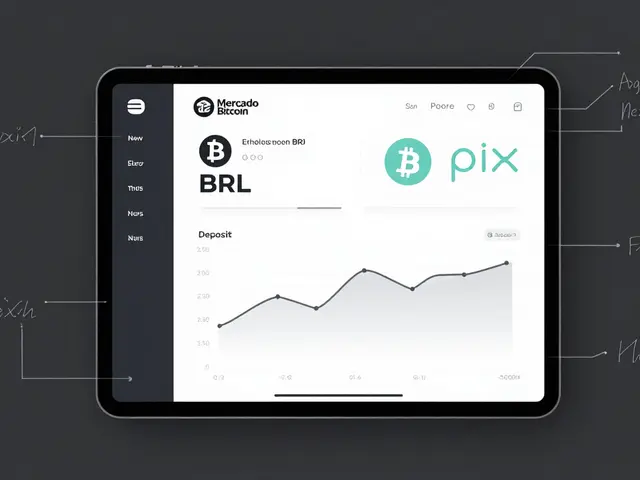
| Brazil | Piloting | Project PIX integration |
| India | Piloting | Digital Rupee in pilot phase |
| South Africa | Piloting | Project Khokha testing |
| United States | Halted | Officially stopped development in 2025 |
| Japan | Exploring | Project mBridge |
| Canada | Exploring | Project Jasper |
| South Korea | Exploring | Project Inthanon |
The U.S. government has officially stopped working on a digital dollar. Not delayed. Not paused. Stopped. President Donald Trump signed Executive Order 14178 in early 2025, shutting down every federal project related to a central bank digital currency (CBDC). No more research. No more pilots. No FedCoin. The digital dollar is dead - at least for now.
What Was the Digital Dollar Supposed to Be?
The digital dollar, sometimes called FedCoin, wasn’t just a fancy app. It was meant to be a government-backed digital version of the U.S. dollar, issued directly by the Federal Reserve. Unlike Bitcoin or Ethereum, it wouldn’t be decentralized. It would be as real as the cash in your wallet - just digital. You could hold it in a Fed-run wallet, send it instantly to anyone, and it would be backed by the full faith and credit of the United States. The Biden administration had been pushing hard on this since 2022. Executive Order 14067 called for the highest priority on CBDC research. The Treasury Department formed a team with the Fed, White House, National Security Council, and even the Office of Science and Technology Policy. They were testing how a digital dollar could help with payments, reduce costs, and give the U.S. more control over global finance. But by 2025, all of that was erased. The new administration didn’t just change direction - it slammed the door.Why Did the U.S. Stop?
There’s no official white paper explaining the decision, but the clues are clear. The biggest concern? Surveillance. Right now, U.S. banks file over 26 million reports to the government every year on customer transactions. That’s not just about fraud. It’s about tracking money flows, suspicious activity, and even small purchases that raise red flags. A digital dollar would have made this even easier. Every transaction could be logged, tagged, and monitored in real time. That’s a scary thought for many Americans. Even if the intention was to fight crime or deliver stimulus faster, the potential for abuse is real. The U.S. already has one of the most intrusive financial surveillance systems in the developed world. Adding a government-controlled digital currency on top of that felt like crossing a line. Another reason? Political ideology. The new administration favors private innovation over government control. Instead of building a digital dollar, they’re pushing for clearer rules around private stablecoins - digital tokens pegged to the U.S. dollar, issued by companies like Circle or Paxos. The idea is: let the market solve this, not the Fed.Where Does the U.S. Stand Compared to the Rest of the World?
The U.S. isn’t just behind. It’s alone. As of 2025, 134 countries are working on CBDCs. That’s up from 114 just two years ago. Fifty-three countries are running live pilots. Eleven have already launched full CBDCs - including Nigeria, Jamaica, the Bahamas, and Zimbabwe. The European Central Bank is deep into its digital euro pilot. China’s digital yuan is already used by millions. Even Turkey and Brazil are moving faster than the U.S. ever did. The G-20? Nineteen of the world’s largest economies are exploring CBDCs. The U.S. is the only one that’s completely shut down its efforts. This isn’t just about technology. It’s about power. CBDCs let governments control how money moves. They can program payments - say, send out stimulus only if it’s spent on groceries, not alcohol. They can cut out intermediaries, making cross-border payments faster and cheaper. The Bank for International Settlements says wholesale CBDCs could enable something called “tokenization” - turning assets like real estate or stocks into digital tokens that trade instantly. The U.S. is opting out of all of that.
What Does This Mean for Businesses and Investors?
For banks and financial firms, the U.S. halt creates a gap. State Street, one of the world’s biggest asset managers, said having a high-quality digital cash asset is key to scaling institutional interest in digital assets. Right now, institutional investors can’t easily move billions in digital form using a trusted, sovereign currency. They’re stuck with private stablecoins - which are risky. If a company like Tether or Circle goes under, your money might vanish. One workaround? Fnality International. It’s a private consortium backed by State Street and other big banks. It’s building a system to settle USD transactions on blockchain using digital tokens. It’s not a CBDC. It’s not government-backed. But it’s the closest thing the U.S. will get to one. The problem? It’s not the same. A CBDC is issued by the Fed. It’s legal tender. It’s the safest form of digital money possible. A private stablecoin? It’s a promise. And promises can break.Will Private Stablecoins Fill the Void?
Maybe. But they’re not a perfect replacement. The U.S. government is now focusing on regulating stablecoins instead of creating a CBDC. That means clearer rules, maybe even federal licensing for issuers. But regulation doesn’t equal trust. People still worry about who controls the money behind the token. Is it backed 1:1 with real dollars? Is it audited? What happens if the issuer gets hacked or goes bankrupt? The Fed’s digital dollar would have solved all of that. It would have been as safe as a bank deposit - but digital, instant, and programmable. Without it, the U.S. financial system is stuck in the middle. You’ve got cash, you’ve got bank transfers, you’ve got credit cards, and now you’ve got private digital tokens that are fast but risky. It’s messy. It’s inefficient. And it’s not how the rest of the world is building its future.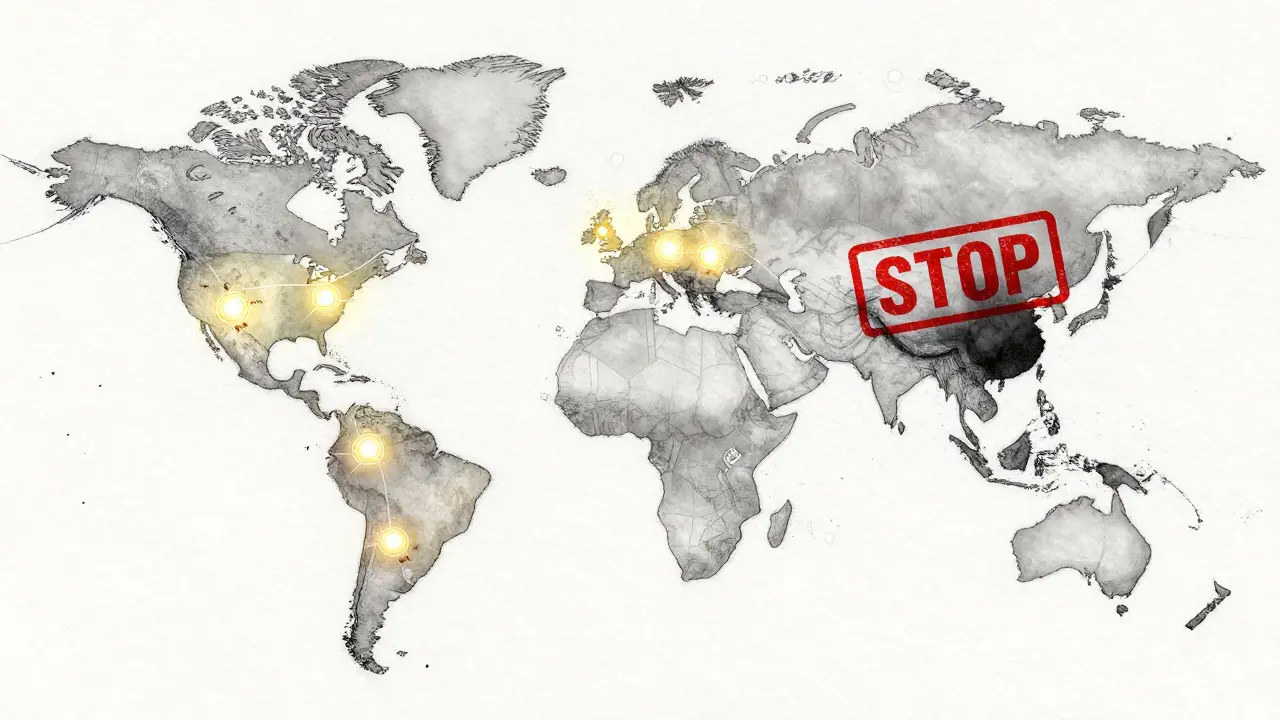
What’s Next for the U.S.?
The halt doesn’t mean the idea is gone forever. Future administrations could revive it. But for now, the door is closed. The Federal Reserve Chair, Jerome Powell, has publicly said he won’t issue a CBDC while he’s in office. That’s a strong signal. Even if Congress passed a law tomorrow, the Fed wouldn’t act. The real question is: what happens when other countries start using CBDCs to settle trade, bypass the dollar, and build new financial networks? If China, the EU, and India are trading in digital yuan, digital euro, and digital rupee - all programmable, all sovereign - will the U.S. dollar still be the world’s reserve currency? The U.S. is betting that private innovation will win. That companies like Fnality, Circle, and others will build a better system than the government ever could. It’s a gamble. And right now, the rest of the world is playing a different game.Why This Matters to You
You might think, “I don’t use crypto. Why should I care?” Because this isn’t just about crypto. It’s about how money works. If you ever send money overseas, pay taxes, get government benefits, or use a digital wallet - you’re on the front lines of this shift. The U.S. is choosing a path where your money stays tied to old systems: banks, wires, delays, fees. Other countries are building faster, cheaper, smarter systems. The digital dollar was supposed to be the U.S. answer to that. Now, the U.S. has no answer at all. The world is moving forward. The U.S. is standing still.Is the digital dollar completely canceled?
Yes, under Executive Order 14178 signed in 2025, all U.S. government efforts to develop a central bank digital currency (CBDC) have been halted. The Federal Reserve has confirmed it will not issue a digital dollar while current leadership remains in place.
Why did the U.S. stop working on a digital dollar?
The main reason is concern over financial surveillance. The U.S. already collects millions of transaction reports each year. A digital dollar would have given the government even more control over how people spend money, raising civil liberties concerns. The administration also prefers letting private companies lead innovation rather than the government.
Are other countries still developing digital currencies?
Yes. As of 2025, 134 countries are exploring CBDCs, with 53 running live pilots and 11 having fully launched them. Major economies like the EU, China, Japan, and Brazil are all ahead of the U.S. The digital euro and digital yuan are already in testing or use by millions.
What’s replacing the digital dollar in the U.S.?
Private stablecoins - digital tokens backed by the U.S. dollar - are being promoted as the alternative. Companies like Circle and Paxos are developing them, and the government is working on new regulations. A consortium called Fnality International is also building a private system to settle USD transactions on blockchain.
Can I use a digital dollar today?
No. There is no U.S. digital dollar available to the public. The project has been officially halted. The closest thing available are private stablecoins, which are not issued or backed by the government.
Will the U.S. ever launch a digital dollar in the future?
It’s possible, but unlikely in the near term. The current administration has made it clear it opposes CBDCs. The Federal Reserve Chair has pledged not to issue one while he’s in office. Any future revival would require a major political shift.

Bhoomika Agarwal
2 December, 2025 . 05:04 AM
Wow, so America’s too scared to even try digital money? 🤦♀️ Meanwhile, India’s UPI handles 10 billion transactions a month and we didn’t need a government wallet to do it. You guys are stuck in 2005 while the rest of the world is flying. #DigitalDollarDead
Katherine Alva
3 December, 2025 . 06:31 AM
I get the surveillance fears... but man, it’s like refusing to install smoke detectors because you’re scared the fire department might show up. A digital dollar could’ve helped seniors get stimulus without waiting weeks. Now we’re stuck with private tokens that could vanish tomorrow. 😔
Nelia Mcquiston
4 December, 2025 . 12:49 PM
I think the real issue isn’t the tech-it’s the trust gap. People don’t trust the Fed anymore, and they don’t trust Big Tech either. So we’re left with this weird limbo where no one’s in charge, and everyone’s just hoping someone else fixes it. Maybe the answer isn’t government or private... but something in between?
Mark Stoehr
5 December, 2025 . 04:15 AM
Lmao so the fed is too weak to make a digital dollar but theyll still track your coffee purchases? you really think the banks arent already watching you? wake up sheeple
Shari Heglin
6 December, 2025 . 04:22 AM
The decision to halt CBDC development is constitutionally defensible, given the Fourth Amendment implications of real-time transactional monitoring. However, the absence of a sovereign digital currency may undermine monetary sovereignty in an increasingly tokenized global economy.
Akash Kumar Yadav
7 December, 2025 . 00:35 AM
America thinks it's too cool for CBDCs? Bro, China's digital yuan is already being used in rural villages to pay for goats and rice. We're not just ahead-we're on a different planet. You're not protecting freedom, you're just clinging to paper like it's a security blanket.
Joe B.
7 December, 2025 . 08:21 AM
Let’s be real-private stablecoins are just a Trojan horse for Wall Street to keep control. Fnality? That’s not innovation, that’s a cartel. And if you think Circle or Paxos won’t freeze your account because you said something they don’t like on Twitter, you’re delusional. The Fed’s digital dollar was the only thing that could’ve been truly neutral. Now we’re handing over the keys to billionaires who think they’re Robin Hood.
Rod Filoteo
7 December, 2025 . 20:14 PM
This is all a distraction. The digital dollar was never about payments-it was about tracking dissent. They wanted to know who bought guns, who donated to protest groups, who searched for ‘how to resist inflation.’ This isn’t about money. It’s about control. And thank god Trump saw through it. #DeepStateCrypto
Layla Hu
9 December, 2025 . 08:57 AM
I just hope whoever’s building Fnality doesn’t lock people out of their funds. I’ve seen too many crypto platforms disappear overnight. I just want something safe.
Nora Colombie
9 December, 2025 . 18:29 PM
You people are so naive. The digital dollar wasn’t about surveillance-it was about POWER. And now you’re letting private corporations control your money? That’s worse. At least the Fed is accountable to Congress. Circle? Who even owns them? Some crypto bro in Miami? You’re trading one monster for another.
Greer Dauphin
10 December, 2025 . 07:34 AM
Honestly? I’m kinda glad they stopped it. I don’t want the government knowing I bought 12 packs of toilet paper during the pandemic. But... I also miss the idea of instant, free, global transfers. Maybe the answer is a hybrid? Like, a Fed-backed wallet that you can opt into? Just a thought 😅
Tatiana Rodriguez
10 December, 2025 . 11:53 AM
Let’s not pretend this is about freedom. This is about ideology. The new administration doesn’t believe in public infrastructure. They think everything should be a startup. But money isn’t a startup. It’s the foundation of society. You don’t let venture capitalists decide if your child’s social security payment gets delayed because their blockchain server crashed. We’re not building apps here-we’re building trust. And right now, we’re throwing away the most trusted currency in history because someone thinks ‘private innovation’ sounds cooler than ‘public good.’
Darlene Johnson
11 December, 2025 . 12:31 PM
This is just step one. Once they kill the digital dollar, they’ll come for cash next. You think they don’t want every transaction traceable? You think they don’t want to disable your debit card if you ‘spend wrong’? This isn’t policy-it’s the beginning of the end of financial autonomy. They’re already testing it in Europe. Wake up.
Ivanna Faith
11 December, 2025 . 15:37 PM
I mean... if you’re gonna have a digital currency, why not just go full crypto? Bitcoin is decentralized, immutable, and truly free. A FedCoin? That’s just fiat with a blockchain logo. You’re not modernizing-you’re rebranding tyranny
Ziv Kruger
13 December, 2025 . 07:17 AM
The real tragedy isn’t the halt-it’s that we never asked the right question. Not ‘should we have a digital dollar?’ but ‘what kind of society do we want to live in?’ One where money is a tool for control-or one where it’s a tool for freedom? We chose control by default. And now we’re surprised when people don’t trust the system.