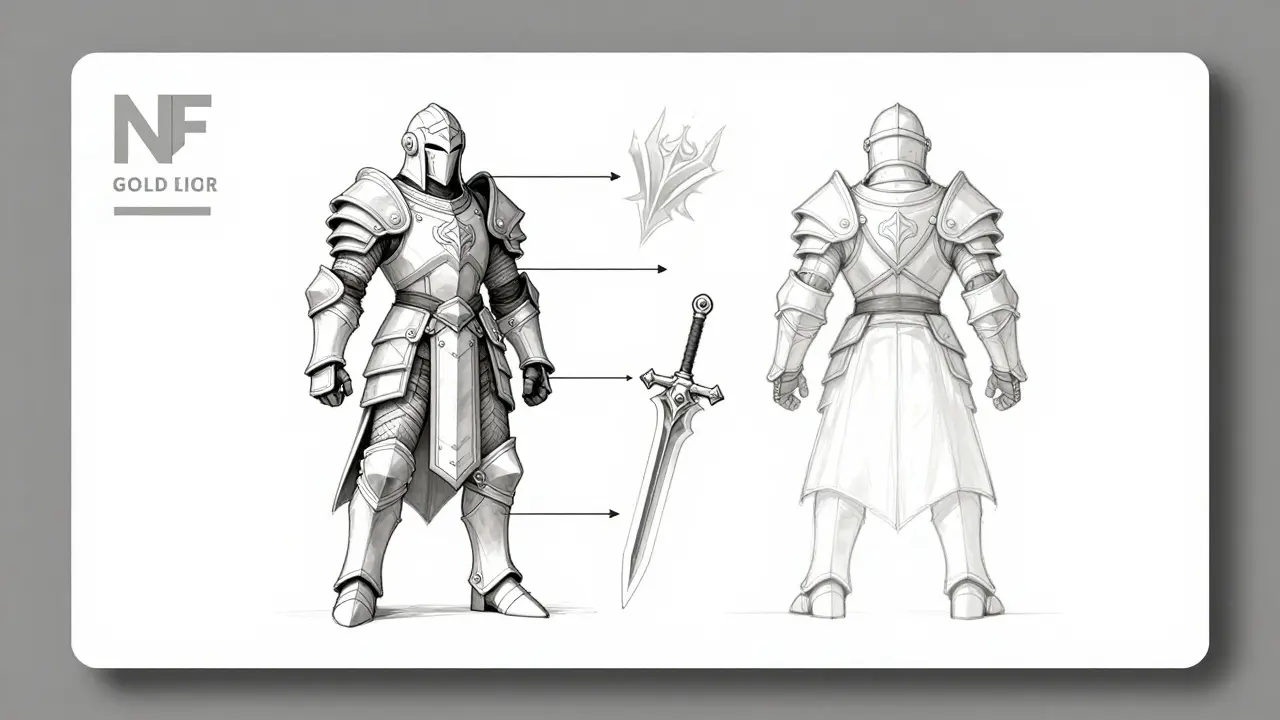
Remember the hype around Play-to-Earn games in 2021 and 2022? It felt like everyone was talking about making money while playing video games. Then the bubble burst, prices crashed, and many projects vanished. If you’ve seen the ticker HEC pop up recently, you might be wondering if this is another dead project or something with actual staying power.
Heroes Chained is a fantasy action RPG that tries to fix what went wrong with early crypto gaming. Instead of just handing out tokens for clicking buttons, it focuses on real-time combat, collectible NFT heroes, and a "Game First" philosophy. The native currency, HEC, powers this ecosystem. But before you buy or play, you need to know exactly what this token does, where its price has been, and whether there’s any life left in it today.
What Is Heroes Chained (HEC) Actually Used For?
At its core, Heroes Chained is a blockchain-based game where you act as a Guild Master. You gather heroes, build your team, and fight in real-time battles. The HEC token isn’t just a speculative asset; it’s the fuel for the entire game economy.
Here is how HEC functions inside the ecosystem:
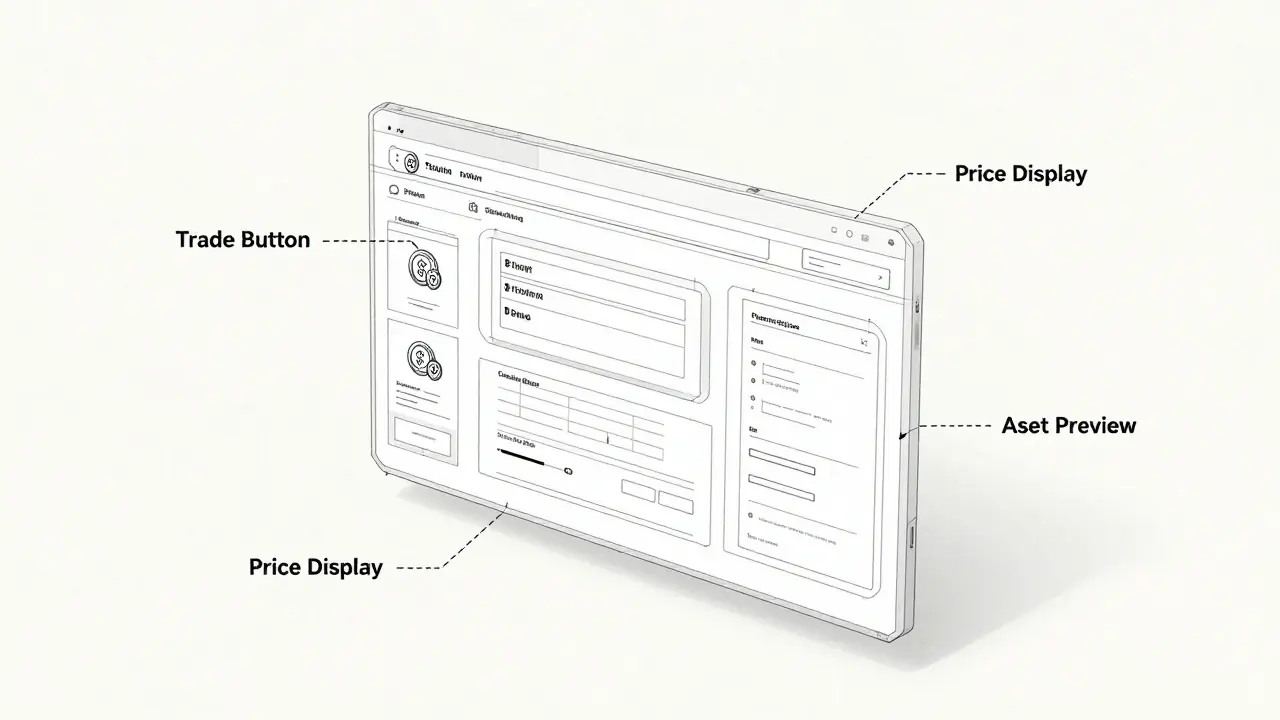
- In-Game Currency: You use HEC to trade NFT items, resources, and heroes on the marketplace. It’s the standard medium of exchange between players.
- Governance Voting: Holding HEC gives you a voice. Players can stake their tokens to vote on game decisions, such as balancing changes, new content priorities, or economic parameters.
- Deflationary Mechanism: The token has a fixed supply. Any burns or permanent locks reduce the circulating amount over time, which theoretically supports value if demand stays steady.
This dual role-currency plus governance-is common in mature Web3 projects, but it only works if people are actually playing the game. Without active users buying items and voting, the token loses its utility.
The Rise and Fall: Price History and Volatility
To understand HEC today, you have to look at where it started. The project launched its Initial DEX Offering (IDO) in January 2022. At that time, the public sale price was $0.35 per HEC. The market was hot, venture capital was flowing into GameFi, and investors were optimistic.
Things got even hotter shortly after. The token hit an all-time high (ATH) of roughly $3.31. That’s a massive return-about 9.47x the initial price. Back then, HEC was riding the wave of the broader crypto bull market and the specific frenzy around play-to-earn games.
Then came the crash. Like almost every other GameFi token from that era, HEC suffered a severe drawdown. As of mid-2026, the price hovers around $0.0016 to $0.0028, depending on the exchange. This represents a drop of nearly 99.95% from its peak.
| Milestone | Date/Period | Price (USD) | Context |
|---|---|---|---|
| IDO Public Sale | Jan 2022 | $0.35 | Initial launch price |
| All-Time High (ATH) | 2022 | $3.31 | Peak of GameFi hype cycle |
| Current Price (Approx.) | June 2026 | $0.0016 - $0.0028 | Post-bear market stabilization |
This volatility is extreme. If you bought at the IDO and held through the peak, you saw huge gains followed by devastating losses. Today, HEC is considered a micro-cap asset with very low liquidity. This means large trades can significantly move the price, and it’s harder to enter or exit positions quickly without slippage.
Tokenomics: Supply and Distribution
One of the few stable facts about HEC is its supply structure. Unlike inflationary tokens that print more coins to pay rewards, HEC is deflationary by design.
- Total Supply: 100,000,000 HEC (Fixed cap)
- Max Supply: 100,000,000 HEC
- Circulating Supply: Approximately 55 million HEC
About half of the total supply is currently in circulation. The rest is locked in various allocations. During the IDO, 20% of the supply went to private and pre-sale investors, while only 4% was available to the public. This imbalance is typical for 2021-2022 launches but raises questions about sell pressure when vesting periods end.
The remaining supply is distributed among the team, ecosystem development, liquidity pools, and future rewards. Because the total supply is capped, any tokens burned through gameplay mechanics or transaction fees permanently reduce availability. However, with current trading volumes often dipping below $20,000 in 24 hours, burn rates are likely minimal right now.
Who Is Behind Heroes Chained?
A crypto project is only as good as its team. Heroes Chained is led by two key figures who work full-time on the project:
- Mev Dinç: Executive Producer
- Onur Can Çayli: Art Director
These leaders aim to bridge traditional high-quality game design with blockchain ownership. Their goal is to move away from the "click-and-earn" model that plagued earlier GameFi titles. Instead, they focus on engaging real-time combat and strategic guild management.
The project also attracted notable backers during its fundraising phase. Investors include OKX Ventures, Infinity Ventures Crypto, Yield Guild Games (YGG), LD Capital, and Kyros Ventures. Having YGG on board was significant because YGG is one of the largest DAOs focused on gaming assets. However, investor backing doesn’t guarantee long-term success, especially if the product fails to retain users.

Where Can You Buy or Trade HEC?
If you’re looking to buy HEC today, you’ll face some hurdles. Major centralized exchanges (CEXs) like KuCoin, Coinbase, and Crypto.com track the price and market data for HEC, but they do not support direct spot trading for most users.
This means you likely need to use decentralized exchanges (DEXs) or smaller platforms to acquire the token. Here’s what you should know:
- Liquidity Issues: With daily volumes often under $20,000, finding enough buyers or sellers at your desired price can be difficult.
- Wallet Compatibility: HEC is an EVM-compatible token. You’ll need a wallet like MetaMask or Trust Wallet to store it and interact with the game.
- Chain Verification: While industry reports suggest HEC operates on Avalanche or similar EVM chains, always verify the contract address from official sources before transferring funds. Scams thrive in low-liquidity markets.
Because major exchanges haven’t listed it for easy trading, onboarding requires more technical knowledge than buying Bitcoin or Ethereum. This barrier limits the user base to experienced crypto traders rather than casual gamers.
Is Heroes Chained Worth Your Time in 2026?
Let’s be honest. HEC is no longer a trending token. Its market cap sits around $80,000-$90,000, which is negligible compared to the multi-trillion dollar crypto market. Social sentiment is mixed, with limited media coverage and a small community of dedicated holders.
However, the "Game First" approach still has merit. If Heroes Chained delivers a genuinely fun RPG experience, it could attract organic growth independent of crypto speculation. The deflationary tokenomics provide a floor against infinite inflation, and the governance aspect gives holders agency.
But consider the risks:
- High Speculation: The price has dropped 99% from its peak. Recovering to even $0.35 would require a 100x increase, which is extremely unlikely without a major viral event.
- Low Liquidity: You might struggle to sell large amounts without crashing the price further.
- Competition: The GameFi space is crowded with newer, better-funded projects.
If you’re a gamer interested in blockchain ownership, try the game first. Play for fun, and see if the mechanics hold up. If you’re an investor, treat HEC as a high-risk, micro-cap bet. Only allocate funds you can afford to lose entirely. Do not chase the past highs; focus on whether the current product has sustainable utility.
What blockchain is Heroes Chained (HEC) built on?
While official documentation should be consulted for the latest details, HEC is widely reported to operate on an EVM-compatible chain such as Avalanche. This allows it to interact with wallets like MetaMask and leverage fast, low-cost transactions essential for gaming.
Can I earn money playing Heroes Chained?
The project promotes a "Play-and-Earn" model rather than pure "Play-to-Earn." This means earnings are tied to skillful gameplay, winning battles, and trading valuable NFT heroes. However, given the current low token price and liquidity, potential earnings are minimal compared to the 2022 peak.
Why did the HEC token price drop so much?
HEC experienced a classic boom-and-bust cycle. It surged during the 2021-2022 GameFi hype, reaching an ATH of $3.31. When the broader crypto market entered a bear phase and interest in speculative gaming tokens waned, the price collapsed. Low liquidity and lack of major exchange listings accelerated the decline.
Is Heroes Chained a scam?
There is no evidence suggesting Heroes Chained is a scam. It has a known development team, verified venture capital backers like OKX Ventures and YGG, and a functioning game client. However, being legitimate doesn't mean it's a safe investment. It remains a high-risk, low-liquidity asset.
How do I get started with Heroes Chained?
First, set up an EVM-compatible wallet like MetaMask. Next, acquire HEC tokens via a decentralized exchange or supported platform. Finally, connect your wallet to the Heroes Chained game launcher. Always verify contract addresses from official channels to avoid phishing scams.