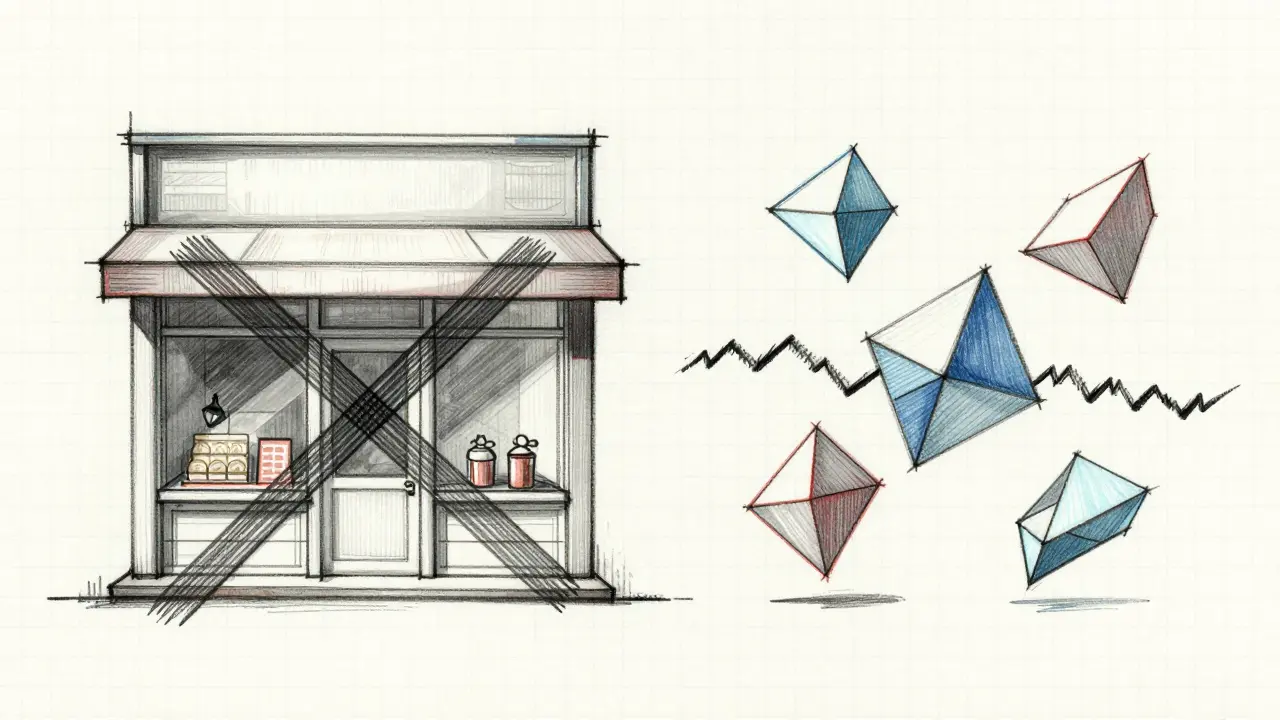
Here is the short answer: For 99% of businesses in Russia, no. You cannot legally accept cryptocurrency as payment for domestic goods and services. However, there is a narrow exception for large corporations conducting international trade.
If you are running a local shop, a restaurant, or a small startup, trying to accept Bitcoin for a sale is a violation of current banking regulations. But if you are a major exporter selling gas or metals overseas, the rules change significantly. As of April 2026, the landscape is defined by strict separation between internal commerce and external settlements, driven heavily by sanctions pressure and financial stability concerns.
The Absolute Ban on Domestic Crypto Payments
Russian law treats cryptocurrency specifically as property, not money. This distinction is critical because it determines how the law applies to your transactions. Under Federal Law No. 259-FZknown as the Digital Financial Assets Act, which came into full effect in early 2021, businesses are strictly prohibited from using crypto as payment within Russia.
You might wonder why they made this rule. The Bank of Russiathe central banking institution of the Russian Federation responsible for monetary policy argues that allowing crypto payments undermines the ruble’s status as the sole legal tender. In October 2025, First Deputy Governor Vladimir Chistyukhin explicitly stated at a strategic session that all crypto transactions between residents outside the special regime carry criminal penalties. This isn't just about tax; it is about maintaining financial sovereignty.
This means if you own a bakery in Saint Petersburg, accepting Ethereum for bread is illegal. If a customer tries to pay you in stablecoins, you must refuse them. The enforcement is aggressive. Local authorities and banks have been instructed to flag unusual crypto-related activity. In June 2025, the retailer TechnoPoint had its bank accounts frozen for 45 days after attempting to settle domestic sales with Bitcoin. That precedent makes clear that the risk for small and medium enterprises (SMEs) is effectively account termination.
The Experimental Legal Regime (ELR)
While domestic use is banned, cross-border trade operates differently. This is where the Experimental Legal Regime (ELR)a specialized framework permitting select companies to conduct cross-border crypto settlements comes into play. Created in 2024 and expanded by amendments to Federal Law No. 115-FZ, the ELR allows approved businesses to accept crypto for international exports.
Why did the government create this? Western sanctions have disrupted traditional SWIFT channels. Finance Minister Anton Siluanov confirmed in late 2025 that crypto helps restore order to the sector by enabling sanctioned industries to move value globally. By September 2025, 247 companies were participating in the ELR program. These businesses process approximately $2.3 billion in monthly transactions.
This pathway is designed for large-scale industrial players, not local vendors. Extractive industries like oil, gas, and metals account for 82% of these legal transactions. Companies like Norilsk Nickel report that crypto settlements reduce payment processing time from two weeks down to four hours for Asian contracts. The ELR essentially functions as a sanction-busting tool for the national economy rather than a consumer feature.
Requirements for Business Eligibility
Getting into the ELR isn't easy. The barrier to entry is incredibly high. To even apply, a business must register as a "Qualified Investoran investor meeting minimum capital thresholds to access restricted financial markets."
| Requirement | Standard Business | ELR Participant |
|---|---|---|
| Minimum Capital | No limit (but low funds) | ₽100 million ($1.24M) |
| Annual Income Proof | N/A | ₽50 million required |
| Crypto Payment Status | Illegal Domestically | Legal for Cross-Border Only |
| Reporting Frequency | Standard Tax Filing | Daily via ESIS System |
| Approved Assets | None | BTC, ETH, XRP only |
The requirements aren't just about having cash. You must verify that your capital sits in securities or deposits. Beyond finance, you need technical compliance. As of November 2025, only three assets are whitelisted for settlement: Bitcoin (BTC), Ethereum (ETH), and Ripple (XRP). You cannot choose obscure tokens. Furthermore, every transaction over 600,000 rubles must be reported to the Unified State Information System (ESIS) within five business days. Starting January 2026, tax authorities cross-reference these reports directly with banking data, closing loopholes used previously.

Compliance Costs and Infrastructure
Even if you meet the capital requirements, the operational setup costs are steep. A typical implementation timeline for ELR-compliant businesses takes around 112 days. Total setup costs range from ₽3.8 million to ₽7.2 million ($47,000-$89,000). This includes:
- Integration with licensed wallet providers (only 17 entities are approved).
- Purchase of blockchain analytics software (minimum ₽1.2 million annually).
- Quarterly compliance audits costing approximately ₽350,000 each.
- Staff training on GOST R standards for dual-factor authentication.
The infrastructure mandates KYC protocols verified by Rosfinmonitoringthe federal body overseeing anti-money laundering compliance in Russia. Every transaction undergoes forensic analysis. A false positive alert from the monitoring system doesn't just cause a delay; it triggers a manual verification process adding 2-3 days to your settlement time. According to the Ministry of Finance's assessment, 68% of participants face these false positives initially.
Global Regulatory Contrast
How does this compare to the rest of the world? Russia’s approach is unique in its duality: absolute domestic prohibition paired with highly restricted international allowance. Most countries treat crypto either fully as a regulated asset or restrict it entirely.
In the European Union, the MiCA FrameworkMarkets in Crypto-Assets regulation providing legal clarity for crypto operations fully legalizes crypto payments for businesses effective December 2024. A coffee shop in Berlin can legally accept stablecoins without becoming a "qualified investor." In the US, businesses can accept crypto under IRS Notice 2014-21, provided they handle the taxation correctly.
Russia stands closer to China’s model, which banned domestic payments but permits institutional mining/export. However, unlike India's shifting policies, Russia has tightened restrictions recently. The World Bank ranked Russia's framework as "high risk" in late 2025 due to inconsistent enforcement. The primary difference is the purpose: the EU and US allow adoption for innovation and convenience; Russia allows it strictly for survival against sanctions.

Penalties for Non-Compliance
If you attempt to bypass these rules, the penalties are severe. Advertising that your business accepts crypto can lead to administrative fines ranging from 50,000 to 300,000 rubles under Article 15.25 of the Administrative Offenses Code. Actual unregistered usage risks criminal charges under Article 23 of Federal Law No. 115-FZ.
The most common penalty for non-ELR businesses is immediate account freezing by Rosfinmonitoring. In July 2025, the Sakhalin restaurant chain lost ₽18 million when its processor was blocked for insufficient documentation. Banks are instructed to cut ties with merchants flagged for illicit transfers. The risk isn't theoretical; it is a daily operational reality monitored by the Central Bank's automated systems tracking 1.2 million transactions daily.
Future Outlook: 2026 Changes
As we move through April 2026, signs point toward slight adjustments. The Ministry of Finance and Central Bank agreed in November 2025 to potentially abandon the "superqual" investor classification in favor of a tiered system. Deputy Finance Minister Ivan Chebeskov indicated the strict capital thresholds might lower for specific sectors, though no final legislation passed yet.
However, monitoring is getting tighter. The 2026 framework mandates deeper data integration between tax authorities and banks. While some hope this streamlines compliance, it also means the "gray zone" where private deals happened is disappearing. The long-term projection by Higher School of Economics suggests a 40% probability of expanded domestic permissions by 2027 if trade success continues. Until then, the divide remains sharp: big exporters get the green light; everyone else stays off the grid.
Can a small retail store accept Bitcoin in Russia today?
No. Small businesses are strictly prohibited from accepting cryptocurrency for domestic sales. Doing so violates the Bank of Russia directives and can result in frozen bank accounts and heavy fines. Only Large Enterprises under the ELR program are exempt for cross-border trade.
What cryptocurrencies are allowed for businesses?
Currently, only three assets are approved for the Experimental Legal Regime: Bitcoin (BTC), Ethereum (ETH), and Ripple (XRP). Using other tokens for settlement puts your transaction outside the protected legal framework.
How much capital is needed to participate in the ELR?
You must hold at least ₽100 million ($1.24 million) in securities or deposits and prove ₽50 million in annual income. This threshold effectively excludes 99.8% of SMEs in Russia.
Is it legal to advertise crypto payment options?
For domestic transactions, advertising crypto acceptance carries administrative penalties of up to 300,000 rubles. Only ELR-participating firms may publicize their ability to receive cross-border crypto settlements.
Will domestic crypto bans be lifted soon?
It is unlikely before 2027. While a tiered system is being proposed to lower entry barriers, the Bank of Russia maintains a hard line against crypto functioning as 'money' domestically to protect the ruble's status.




Deepak Prusty
3 April, 2026 . 05:32 AM
The distinction regarding property status is key here. Most people think crypto is currency but legally it is digital asset property. The banking regulations are specifically designed to prevent ruble destabilization. You cannot ignore Federal Law No. 259-FZ when setting up payment gateways. Small businesses simply do not qualify for these exemptions under any current clause. Compliance is non-negotiable for anyone holding a commercial license. The Central Bank monitors these transfers daily via automated systems. Ignoring this leads to frozen assets very quickly. I have seen several local startups fail because they didn't read the fine print. It is a clear cut regulatory stance.
Brooke Herold
4 April, 2026 . 04:57 AM
The international trade aspect is quite fascinating actually. Many export industries rely heavily on these channels now. It is strange how domestic rules differ so much from global protocols. I wonder if tourists can even pay hotels in crypto anymore. The separation seems rigid but necessary for sanctions evasion perhaps. Financial sovereignty takes priority over consumer convenience apparently.
sekhar reddy
5 April, 2026 . 08:55 AM
This is absolutely insane regulations!!! Why punish small business owners for wanting modern payments?? It feels like they are punishing progress. My friends tried to accept BTC and got shut down immediately. The government doesn't care about innovation just control. It is so unfair for normal people while big corps get deals. This system is broken beyond repair honestly.
Trish Swanson
6 April, 2026 . 07:46 AM
That is a harsh view considering the context. Sanctions drive these types of policies significantly. Economic stability requires tight controls sometimes. You have to look at the bigger geopolitical picture. Personal inconvenience does not outweigh national security here.
Suzanne Robitaille
7 April, 2026 . 01:48 AM
Philosophy aside the legal text is unambiguous. The definition of legal tender remains exclusive to the ruble. Any deviation puts liability directly on the merchant. Risk assessment is part of doing business in complex jurisdictions. Trustworthiness in the market relies on following these statutes.
June Coleman
8 April, 2026 . 12:32 PM
Honestly you would think they learned something from past attempts. Nothing changes until the world forces their hand. We see the same patterns everywhere really.
Emily 2231
8 April, 2026 . 13:46 PM
Total financial suppression disguised as regulation.
Arlen Medina
8 April, 2026 . 23:21 PM
People forget that the state protects its own money supply. Allowing crypto undermines that completely. It is obvious why they ban it domestically. We should respect their sovereign decisions regardless.
Taylor Meadows
9 April, 2026 . 05:45 AM
Your perspective ignores the practical impact on merchants. They suffer for policies made by elites far away. It is always the little guy who pays the price eventually. You sound too defensive of authority figures here.
Patty Levino
10 April, 2026 . 06:24 AM
Compliance frameworks exist to protect everyone involved. Following the ESIS reporting requirements avoids most penalties. It is about transparency rather than restriction truly.
Alexandra Lance
12 April, 2026 . 04:35 AM
The elite get to play with crypto while we starve 🙄😤. Typical power moves from the top down. Only those with millions get access to the system. The rest of us deal with old fashioned banks.
Lauren Gilbert
12 April, 2026 . 19:14 PM
The situation regarding cryptocurrency adoption in Russia reveals a complex interplay between technological advancement and strict regulatory control that defines the current economic landscape. It is important to understand that the legal framework distinguishes sharply between domestic transactions and cross-border settlements. This distinction was not created lightly but was shaped by years of financial pressure and external geopolitical sanctions. Large corporations benefit from the Experimental Legal Regime which allows them to maintain liquidity despite Western restrictions on traditional banking channels. Small businesses do not enjoy this privilege and remain subject to immediate enforcement actions if they attempt to bypass the central bank directives. The cost of compliance is prohibitively high for most entrepreneurs who lack the initial capital required for certification. Furthermore the monitoring systems used by Rosfinmonitoring are incredibly aggressive and often flag legitimate transactions as suspicious activities requiring manual review. This creates a bottleneck that slows down business operations significantly during critical settlement periods. The whitelist of approved assets limits flexibility further by restricting choices to only three major tokens without room for stablecoin alternatives. Tax authorities cross reference data constantly to close loopholes that were previously utilized by private entities to hide value movement. As we move forward into 2026 the likelihood of loosening these domestic bans remains low due to ongoing concerns about monetary sovereignty. The ruble must remain the primary medium of exchange within national borders according to the highest officials. While innovation is celebrated elsewhere Russia prioritizes stability over convenience in this specific domain. This approach isolates the domestic market from global crypto trends effectively creating two parallel economies. Future policy shifts might occur but only if external trade conditions change drastically enough to justify broader adoption. Until such time the status quo remains firmly entrenched against widespread retail usage.
Sonya Bowen
14 April, 2026 . 01:30 AM
A comprehensive summary of the barriers currently in place. The tiered system proposal offers little hope for immediate relief. Patience seems the only strategy for smaller operators right now.
Carol Prates
15 April, 2026 . 04:53 AM
The risk factors are definitely higher than reported. Banks act on automated alerts without human oversight often. False positives destroy trust instantly.
Hugo Lopez
16 April, 2026 . 14:33 PM
Great breakdown of the ELR requirements 😊👍. The capital threshold is really steep for sure. Most SMEs will never qualify unfortunately.
Carmelita Gonzales
17 April, 2026 . 01:21 AM
Yes agreed. High barrier to entry remains. Just observing the market dynamics.
Nicholas Whooley
18 April, 2026 . 04:35 AM
It appears the regulatory trajectory is stable. Changes will likely follow established precedents closely. One should plan accordingly.
Joshua Aldrich
19 April, 2026 . 09:18 AM
Yea i thiink same thing. No chaneg soon proably.