Imagine making a large trade without the bots sniffing out your move and front-running you. That is the promise of SecretSwap, a decentralized exchange built on the Secret Network blockchain that prioritizes user privacy and protection from MEV attacks. In the world of DeFi, where transparency often feels like a double-edged sword, SecretSwap offers a shield. But here is the catch: does that shield come with too much weight? As we navigate through mid-2026, the landscape of private trading has shifted. You need to know if this platform actually works for your wallet or if it’s just another experimental protocol gathering dust.
I’ve spent weeks digging into the mechanics, the liquidity issues, and the real-world usability of SecretSwap. The short answer? It’s a brilliant piece of technology that struggles with the harsh reality of market adoption. If you are looking for deep liquidity and instant execution like you get on Uniswap, you might be disappointed. But if you are paranoid about data leaks and bot attacks, this might be exactly what you need. Let’s break down whether SecretSwap is ready for prime time.
How SecretSwap Actually Works
To understand why SecretSwap is different, you first have to look at the engine under the hood. Most decentralized exchanges (DEXs) operate on public blockchains like Ethereum or Solana. Every transaction is visible to everyone. Bots scan the mempool-the waiting room for transactions-and see big orders coming in. They jump ahead of you, buy the asset, push the price up, and sell it back to you at a profit. This is called front-running, and it costs regular traders millions of dollars every year.
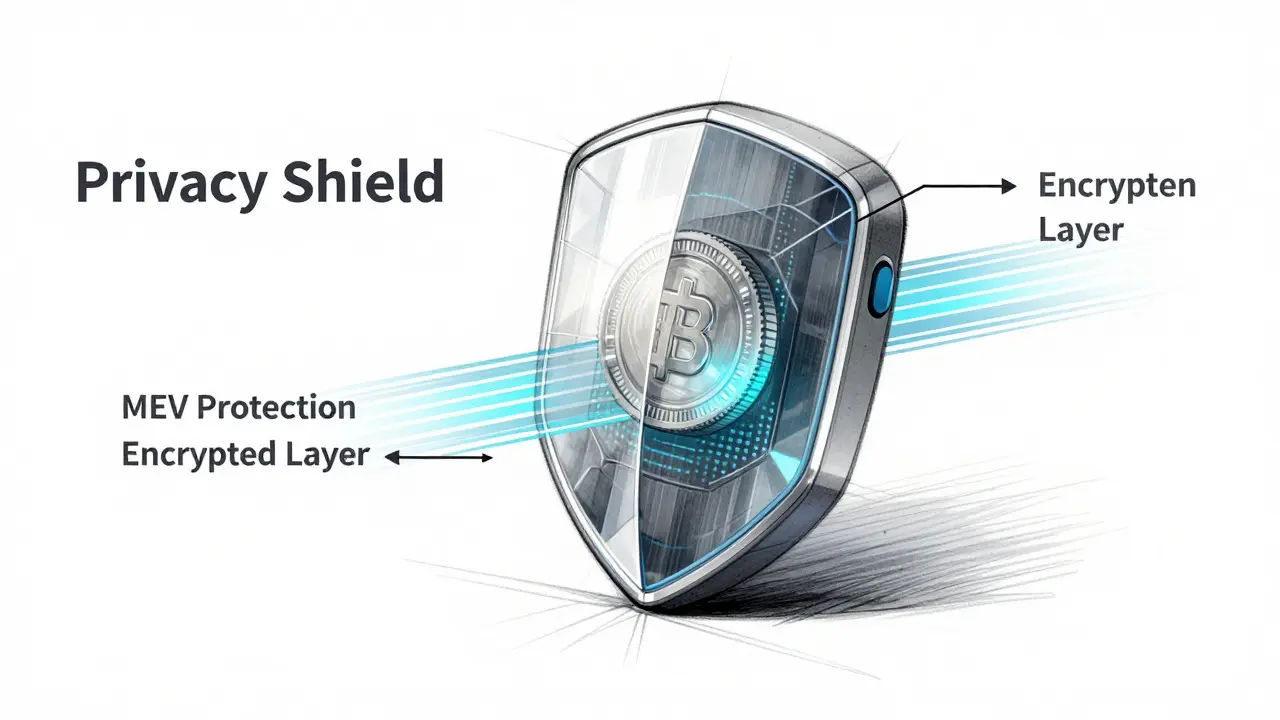
Secret Network is a blockchain layer designed for confidential computing, allowing smart contracts to run with encrypted data. SecretSwap sits on top of this network. When you make a trade, your order details are encrypted. The AMM (Automated Market Maker) algorithm matches your trade without ever knowing who you are or how much you are buying until after the swap is complete. It uses secure enclaves-specialized hardware environments-to process these calculations privately.
This means two things for you:
- No Front-Running: Bots can’t see your order before it executes, so you get the price you expect.
- Total Privacy: Your balance and transaction history are hidden from public view, unlike standard ERC-20 tokens.
It sounds perfect, right? But there is a reason why this isn’t the default for every crypto trader yet. The complexity comes with a cost in terms of speed and ecosystem integration.
The Liquidity Problem: Why Data Matters
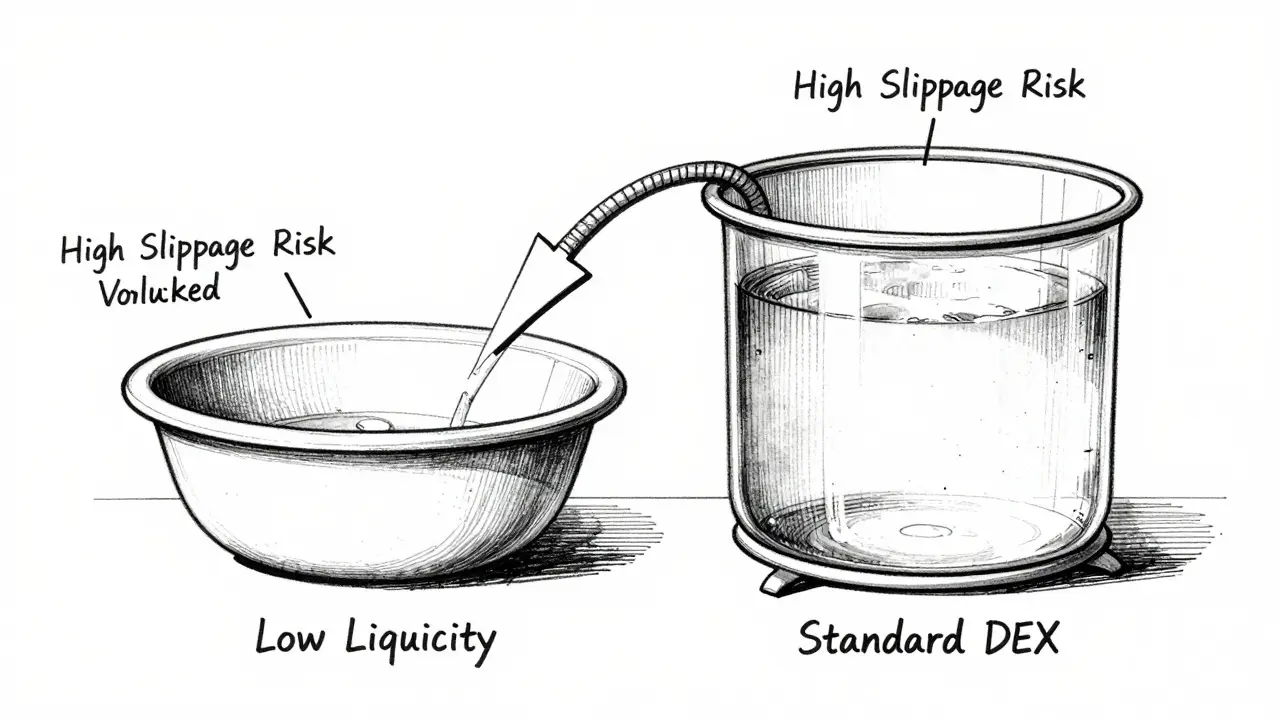
Here is where the rubber meets the road. I checked CoinMarketCap and other aggregators for SecretSwap’s current status as of July 2026. The result? An "Untracked Listing." What does that mean for you? It means there is no reliable, independent data on trading volume or reserves. For a DEX, liquidity is life. Without deep liquidity pools, you face high slippage. Slippage is the difference between the price you saw when you clicked "swap" and the price you actually got.
If you try to move $10,000 worth of assets on a pool with only $50,000 in total value, you will likely eat up 5% to 10% of your capital in slippage. On major platforms like Uniswap or SushiSwap, those same trades happen with less than 0.5% slippage because billions of dollars flow through them daily. SecretSwap’s lack of tracked volume suggests either very low usage or technical barriers preventing data aggregation. Either way, it raises a red flag for serious traders.
| Feature | SecretSwap | Standard DEX (e.g., Uniswap) |
|---|---|---|
| Privacy Level | High (Encrypted Orders) | Low (Public Ledger) |
| Front-Running Risk | Near Zero | High (MEV Bots Active) |
| Liquidity Depth | Low/Untracked | Very High |
| Data Transparency | Opaque | Fully Transparent |
| Ecosystem Integration | Limited (Secret Ecosystem Only) | Broad (Cross-Protocol) |
When you trade on SecretSwap, you are betting on privacy over convenience. If you are moving small amounts or holding obscure tokens, this might not matter. But for active day trading, the lack of liquidity is a significant hurdle.
Getting Started: The User Experience
Using SecretSwap isn’t as simple as logging into Binance or Coinbase. There is no email sign-up, no KYC (Know Your Customer) verification, and no customer support chatbot. You are on your own. Here is what you need to do to get started:
- Set Up a Web3 Wallet: You’ll need a wallet compatible with the Secret Network, such as Keplr or Firot. These wallets manage your keys and sign transactions.
- Acquire SCRT Tokens: To pay for gas fees (transaction costs) on the Secret Network, you need SCRT. You can buy this on centralized exchanges like KuCoin or Binance and bridge it over.
- Bridge Your Assets: If you want to trade ETH or USDT privately, you must bridge them onto the Secret Network. This converts them into SNIP-20 tokens, which are the privacy-preserving version of standard assets.
- Connect to SecretSwap: Visit the official SecretSwap interface and connect your wallet. Double-check the URL to avoid phishing sites-a common risk in DeFi.
Once connected, the interface looks similar to other DEXs. You select the token pair, enter the amount, and set your slippage tolerance. Because of the encryption, the confirmation step might feel slightly slower than on Ethereum Layer 2 solutions. Also, remember that once you bridge assets out of the Secret ecosystem, they lose their privacy cloak. The privacy is only maintained while the assets stay within the Secret Network.
The SEFI Token: Governance and Utility
Every DeFi protocol needs a governance token, and SecretSwap uses SEFI, the native token used for voting on protocol upgrades and fee structures. Holding SEFI gives you a say in how the platform evolves. However, accessibility is a major pain point. Major centralized exchanges do not currently list SEFI for direct purchase. You have to find it on smaller DEXs or peer-to-peer markets, which adds friction and risk.
This lack of mainstream listing limits the token’s utility. In mature ecosystems, governance tokens are liquid and easy to acquire. With SEFI, you are entering a niche market. If you are interested in holding SEFI, you need to be comfortable with lower liquidity and potentially higher volatility. Always check the latest listings on CoinGecko or CoinMarketCap, as these statuses change frequently.
Security Risks and Pitfalls
Privacy is great, but it also hides mistakes. On a public chain, if you send funds to the wrong address, you can sometimes trace it or use recovery tools. On SecretSwap, errors are harder to diagnose. Here are the specific risks you need to watch out for:
- Smart Contract Bugs: Like all DeFi protocols, SecretSwap relies on code. If there is a bug in the encryption logic or the AMM formula, funds could be locked or stolen. While the Secret Network itself has been audited, the specific implementation of SecretSwap should always be verified by recent audit reports.
- Phishing Attacks: Since there is no central authority, scammers create fake websites that look identical to SecretSwap. Always bookmark the official site and never click links from social media DMs.
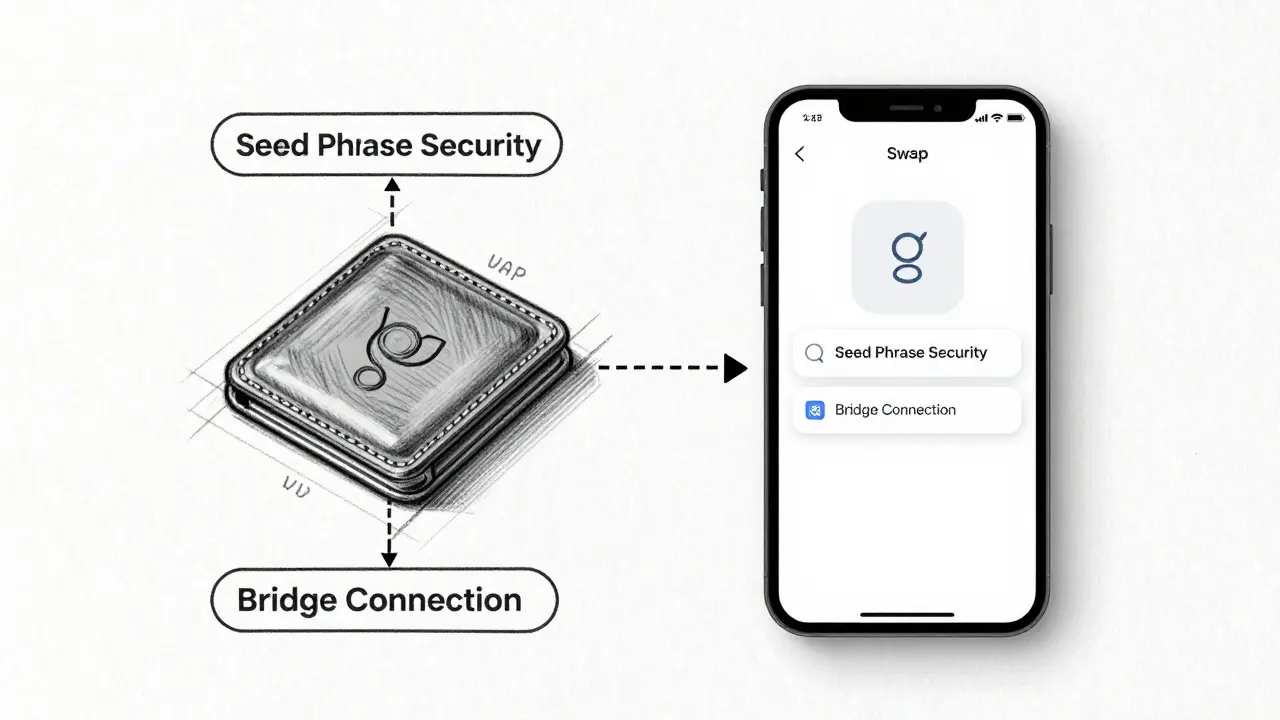
- Wallet Security: You hold your own keys. If you lose your seed phrase, your money is gone forever. There is no "Forgot Password" button. Use a hardware wallet like Ledger or Trezor for larger amounts.
- Bridging Risks: Moving assets between chains involves trusting bridge protocols. Bridges have historically been targets for hackers. Ensure you are using the official Secret Bridge or a reputable third-party service.
The trade-off is clear: you gain freedom from surveillance but lose the safety net of centralized oversight. Are you disciplined enough to manage your own security?
Is SecretSwap Right for You in 2026?
Let’s be honest. For the average crypto holder who just wants to swap some Bitcoin for Ethereum, SecretSwap is probably overkill. The friction of bridging, the learning curve of Web3 wallets, and the liquidity constraints make it impractical for daily use. Established DEXs on Arbitrum or Base offer faster, cheaper, and easier trading.
However, SecretSwap shines for specific users:
- High-Net-Worth Individuals: If you are moving large sums and want to avoid market impact and public scrutiny, the privacy features are invaluable.
- Privacy Advocates: If you believe financial data should remain personal, SecretSwap aligns with your values.
- MEV Victims: If you have lost money to front-running bots on other platforms, SecretSwap offers a technical solution to that problem.
The future of SecretSwap depends on the broader adoption of the Secret Network. The network’s recent push into "Secret AI"-using confidential computing for AI models-could bring new demand for the ecosystem. If more apps build on Secret, liquidity will follow. Until then, treat SecretSwap as a specialized tool, not your primary trading hub.
Is SecretSwap safe to use?
SecretSwap is built on the secure infrastructure of the Secret Network, which uses advanced encryption. However, like all DeFi platforms, it carries smart contract risks. Additionally, because you manage your own keys, human error (like sending funds to the wrong address) is a significant risk. Always start with small amounts to test the waters.
Why is SecretSwap volume untracked?
Due to its privacy-first design, transaction data is encrypted. This makes it difficult for standard aggregators like CoinMarketCap to scrape and verify volume data automatically. This doesn't necessarily mean there is no volume, but it does mean you cannot easily verify liquidity depth before trading.
Can I buy SEFI token on Coinbase?
As of mid-2026, major centralized exchanges like Coinbase and Binance do not list the SEFI token. You typically need to acquire it through decentralized exchanges on the Secret Network or via peer-to-peer trading platforms.
What is the difference between SecretSwap and Uniswap?
Uniswap operates on public blockchains where all transactions are visible. SecretSwap operates on the Secret Network, encrypting transaction details to hide balances and trade sizes. Uniswap has higher liquidity and ease of use; SecretSwap offers superior privacy and protection against front-running bots.
Do I need KYC to use SecretSwap?
No. SecretSwap is a non-custodial decentralized exchange. You simply connect your Web3 wallet. There is no identity verification required, which enhances privacy but also means no recourse if you lose access to your wallet.