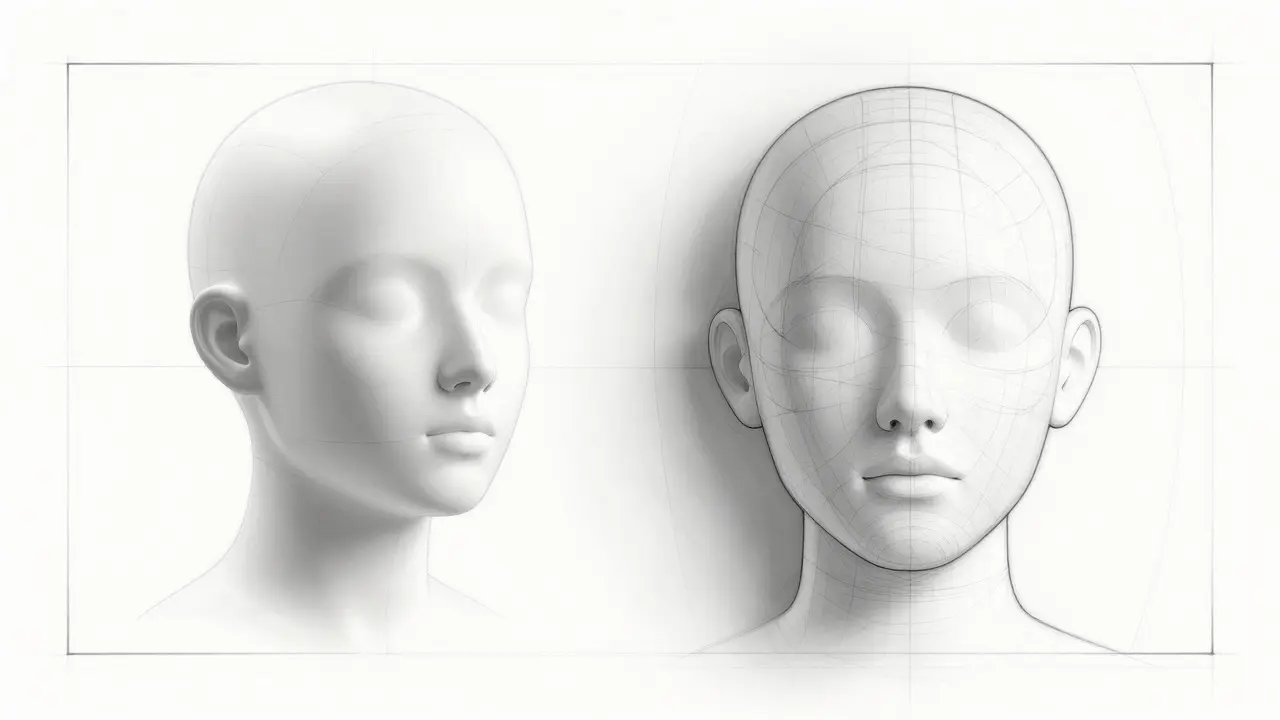
UV unwrapping is a fundamental step in 3D graphics. It's the process of converting a 3D model's surface into a 2D layout so textures can be applied properly. Without it, your favorite game characters would look like messy blobs. The Unwrella-IO software offers three main methods: Hard Surface, Organic, and Mosaic. Each handles different types of geometry.
UV unwrapping is a technique used in 3D graphics to map textures onto 3D models by converting them into 2D coordinates. This process is critical for texture artists. It allows them to paint detailed surface materials onto complex 3D geometry by "flattening" three-dimensional surfaces into manageable 2D layouts.UV Unwrapping in 3D Graphics
Hard Surface Unwrapping Mode
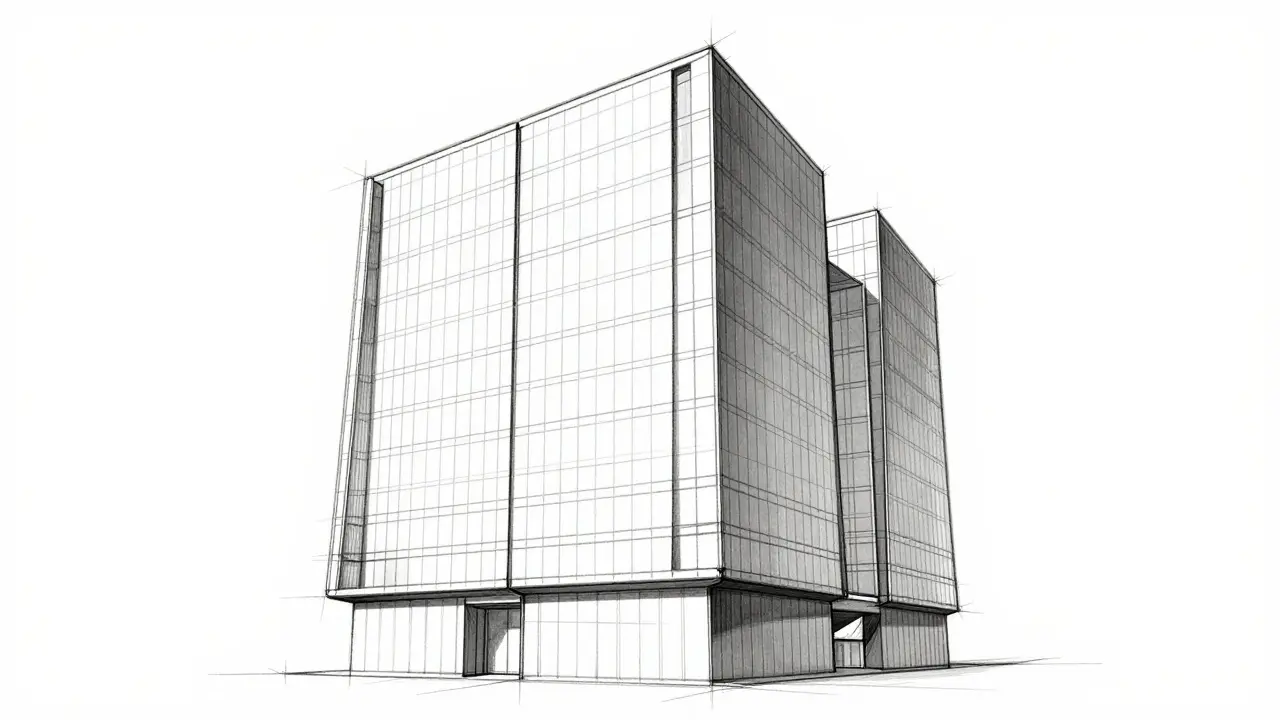
This mode targets sharp, well-defined, angular geometry like buildings, office furniture, and sci-fi designs. It uses angle detection to calculate UVs quickly with minimal stretching. For example, when creating a realistic cityscape for a video game, Hard Surface unwrapping ensures that each building's facade maps perfectly without distortion.
Organic Unwrapping Mode
Designed for smooth, flowing shapes like characters and creatures. It analyzes surface curvature and automatically places UV seams along natural transitions. This creates efficient UV charts with minimal distortion. Think of a character's face in a movie - organic unwrapping ensures the skin texture looks natural without weird stretches.
Mosaic Unwrapping Mode
For irregular, complex surfaces that don't fit Hard or Organic methods. Think photogrammetry scans or rough 3D models. This mode minimizes stretching while keeping UV chart numbers low. For instance, when scanning a broken vase with a 3D camera, Mosaic unwrapping handles the messy geometry effectively.
UV Unwrapping Workflow
Professional UV unwrapping follows a four-step process. First, create an initial auto UV map. Then, strategically split UV shells by placing cutlines (seams) on the mesh. This step is crucial - poor seam placement can lead to texture distortion. Next, unwrap the pre-cut shells. This involves unfolding the 2D layout while maintaining minimal stretching. Finally, rotate, scale, and pack them into UDIM spaces. UDIM (UV Directory Image Map) is a standard for organizing texture atlases across multiple tiles. Advanced artists use "squared" UV shells - straightening edges on sleeves or pants cuffs - to make textures tile better and pack more efficiently. For example, when designing a shirt for a game character, squared UV shells ensure the pattern aligns perfectly across seams.
| Mode | Best For | Key Features |
|---|---|---|
| Hard Surface | Architectural, industrial designs | Sharp edges, minimal stretching, fast calculation |
| Organic | Characters, creatures, natural objects | Automatic seam placement, smooth curvature analysis |
| Mosaic | Photogrammetry scans, irregular surfaces | Low UV chart count, handles triangulated geometry |
Phase Unwrapping in Time-of-Flight Cameras
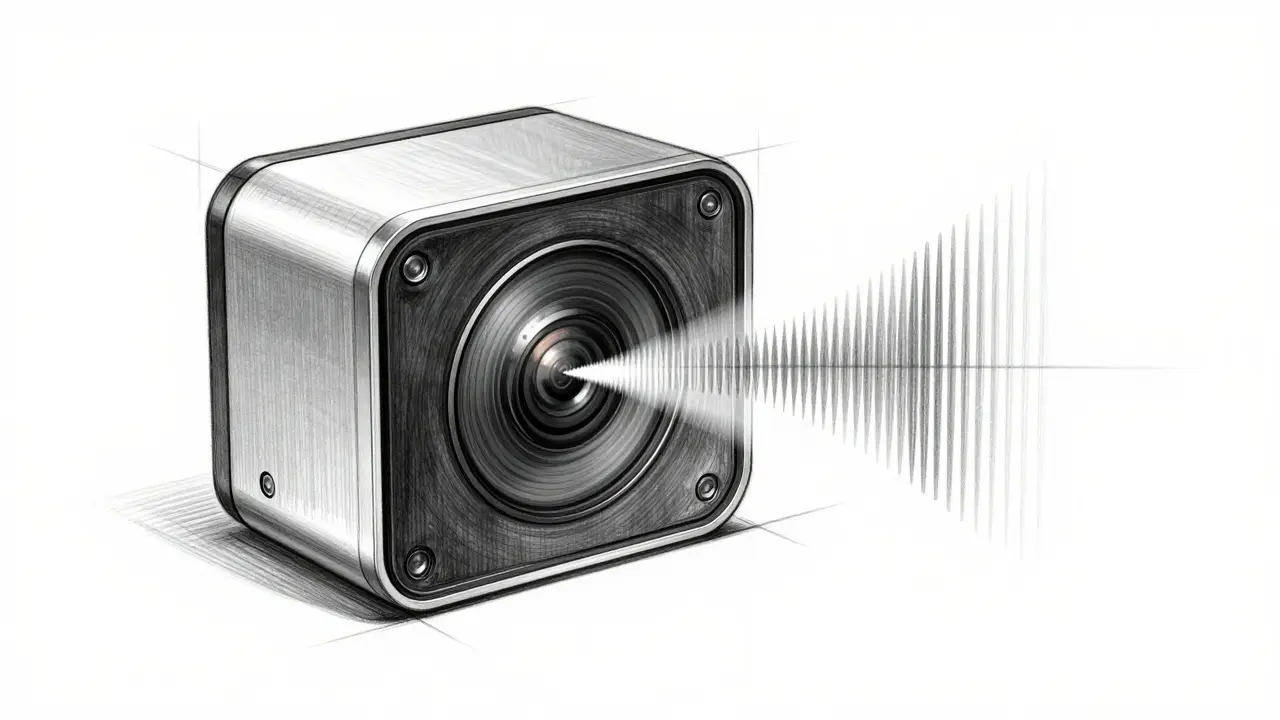
Phase unwrapping solves measurement errors in depth cameras. These cameras send light pulses and time reflections to measure distance. But phase wrapping can cause errors - like measuring an object as closer than it is. Microsoft's multi-frequency method uses multiple light frequencies to fix this. By comparing phase measurements from different frequencies, the system calculates the correct distance.
Phase unwrapping is a critical measurement correction technique in indirect Time-of-Flight (iToF) depth cameras. For example, using frequencies like 75MHz, 90MHz, and 120MHz, the greatest common divisor (GCD) of 15MHz allows measurements up to 10 meters. This approach is essential for autonomous vehicles needing accurate depth sensing.Advanced Phase Unwrapping Techniques
Researchers like Droeschel et al. combined frequencies and spatial data. Lawin et al. added amplitude and neighboring pixel data to reduce noise. These methods ensure accurate depth measurements even in low-light conditions. For instance, in a self-driving car, phase unwrapping helps the vehicle see obstacles correctly in fog or rain. In industrial settings, phase unwrapping enables precise measurements for quality control. A factory using time-of-flight cameras can inspect car parts with millimeter accuracy. Without phase unwrapping, these measurements would be unreliable due to phase wrapping errors.
Industry Applications
UV unwrapping is vital in video games, film VFX, and architectural visualization. Major 3D software like Autodesk Maya, Blender, and 3ds Max include UV unwrapping tools. In fact, production pipelines often spend 20-40% of modeling time on UV unwrapping. Instagram uses UV unwrapping to render 3D filters. The platform processes millions of daily requests using these techniques. Similarly, Tesla's self-driving cars rely on phase unwrapping for accurate depth perception in various weather conditions. Architecture firms use UV unwrapping to create realistic building visualizations. For example, when designing a skyscraper, accurate texture mapping ensures materials like glass and steel look authentic. In film production, studios like Pixar rely on advanced UV unwrapping for characters in animated movies. Each frame of a Pixar film requires precise UV mapping to maintain visual consistency across scenes.
Future Developments
The future of unwrapping involves AI. Neural rendering and procedural texture generation systems are merging with traditional techniques. Companies like NVIDIA use neural networks to automate UV unwrapping for complex models. This reduces manual work from hours to minutes. In AR applications, real-time unwrapping allows dynamic texture adjustments as users move. For instance, when placing a virtual object in your living room, the system unwraps textures instantly to match the environment. As these technologies evolve, unwrapping will become faster, smarter, and more accessible for creators worldwide.
Frequently Asked Questions
What is UV unwrapping?
UV unwrapping is the process of converting a 3D model's surface into a 2D layout for texture mapping. It's essential for applying detailed textures to 3D objects without distortion. Without this step, textures would appear stretched or misaligned.
How does phase unwrapping work in depth cameras?
Phase unwrapping corrects errors in depth measurements caused by phase wrapping. Using multiple light frequencies, the camera compares phase data to determine the correct distance. For example, Microsoft's method uses frequencies like 75MHz and 90MHz to calculate the ambiguity interval, allowing accurate measurements up to 10 meters.
Why is UV unwrapping important in gaming?
In gaming, UV unwrapping ensures characters and environments have realistic textures. Without proper unwrapping, textures would stretch or repeat awkwardly. For example, a character's face needs smooth UV mapping to avoid unnatural skin textures during close-up shots.
What's the difference between Hard Surface and Organic UV unwrapping?
Hard Surface unwrapping is for angular objects like buildings or machinery. It uses angle detection to minimize stretching. Organic unwrapping handles smooth shapes like characters, placing seams along natural transitions. For instance, a robot's arm would use Hard Surface, while a human character uses Organic.
Can wrapping and unwrapping apply outside of tech?
Yes! The concept applies to everyday situations. Unwrapping a gift reveals what's inside, while wrapping protects it. In business, "wrapping" data means encrypting it for security, and "unwrapping" decrypts it. These processes exist in both physical and digital contexts.
How does GCD affect phase unwrapping?
The greatest common divisor (GCD) of modulation frequencies determines the maximum measurable distance. For example, with frequencies 75MHz, 90MHz, and 120MHz, the GCD is 15MHz. This allows measurements up to 10 meters before phase wrapping occurs. Higher GCD values enable longer-distance measurements in depth-sensing systems.




perry jody
6 February, 2026 . 20:45 PM
This is such a cool topic! 🤩 UV unwrapping is like magic for 3D models. Hard Surface mode is perfect for buildings. No more stretched textures! 😄
Paul Jardetzky
6 February, 2026 . 23:00 PM
This is spot on! 🚀 The Hard Surface mode is perfect for architecture. I use it all the time for my projects. Love the details!
Udit Pandey
7 February, 2026 . 03:47 AM
The UV unwrapping process is a testament to Indian engineering prowess. Our nation has contributed significantly to this field. The Mosaic mode is particularly innovative. We should be proud.
Ryan Chandler
8 February, 2026 . 11:04 AM
Absolutely! India's role in 3D tech is incredible. The Mosaic mode is a game-changer for photogrammetry. 🌟
Ajay Singh
9 February, 2026 . 14:49 PM
This is awesome tech cant wait to see more applications #FutureIsHere
Michael Sullivan
11 February, 2026 . 01:58 AM
This is basic stuff. Anyone can do UV unwrapping. The real challenge is in phase unwrapping for autonomous vehicles. 🤦♂️ But honestly, most people don't get it. Just saying.
Reda Adaou
12 February, 2026 . 09:20 AM
Actually, UV unwrapping is more complex than it seems. It requires precision. But you're right about phase unwrapping being tricky. Good point.
Sharon Lois
13 February, 2026 . 00:49 AM
Phase unwrapping? More like phase 'unwrapping' of our privacy. They're using these cameras to track us. Always. #Conspiracy
Josh Flohre
15 February, 2026 . 00:28 AM
Your statement is incorrect. UV unwrapping is far from basic. It's a highly specialized skill. You clearly don't know what you're talking about.
Alisha Arora
15 February, 2026 . 01:39 AM
This is way too complicated. Why can't they just make it simple? I don't understand why we need all this. It's just a waste of time.
Shruti Sharma
16 February, 2026 . 02:36 AM
This is way too technical. I dont get it. Why do we need all this? Just make it simple. 🤷♀️
Brittany Novak
16 February, 2026 . 13:44 PM
Phase unwrapping is actually a tool for government surveillance. They use it to track your location. It's all part of the plan. Read between the lines.
Brittany Coleman
18 February, 2026 . 09:22 AM
I see where you're coming from, but that's a stretch. Phase unwrapping is about accuracy in depth sensors. It's not about surveillance. Let's keep things factual.
laura mundy
19 February, 2026 . 12:40 PM
This is all just hype. UV unwrapping is outdated. We should focus on newer technologies. Nothing new here.
Jacque Istok
20 February, 2026 . 09:59 AM
Oh, really? UV unwrapping is still essential. Without it, 3D models would look terrible. Maybe you should look into it before dismissing it.
Mendy H
20 February, 2026 . 16:06 PM
This article is so basic. Anyone with half a brain knows about UV unwrapping. The real challenge is in the advanced phase unwrapping techniques. But this is just for beginners.
sabeer ibrahim
22 February, 2026 . 06:25 AM
Phase unwrapping is critical for autonomous vehicles. Without it, self-driving cars would be useless. This is basic stuff. You should know this.
Deeksha Sharma
23 February, 2026 . 00:08 AM
This is fascinating! The intersection of technology and creativity is where the future lies. UV unwrapping isn't just technical; it's an art. Let's keep pushing boundaries!
Taybah Jacobs
24 February, 2026 . 10:55 AM
Your perspective is insightful. UV unwrapping indeed bridges technical and artistic elements. It's a testament to human ingenuity.
Mrs. Miller
25 February, 2026 . 00:22 AM
Yes, it's amazing how something so technical can be art. But let's be real, it's still just math. 🤷♀️
Katie Haywood
26 February, 2026 . 07:48 AM
Oh wow, UV unwrapping. So important. I mean, who wouldn't want their textures to look stretched? 😒 But seriously, this is cool stuff.
Matt Smith
26 February, 2026 . 12:02 PM
Stretching textures? That's the whole point! Without stretching, everything would look boring. 😂
Paul Gariepy
27 February, 2026 . 02:31 AM
Hello!! This is a great article!!! However, I think you missed something about the UDIM system... wait no, no, it's covered. But maybe check the seams again.
Robin Ødis
28 February, 2026 . 16:41 PM
This article is missing key points. For instance, the role of GCD in phase unwrapping is crucial. Without understanding the greatest common divisor, you can't properly calculate the ambiguity interval. It's all about precision. And this article glosses over it. Shameful.
aryan danial
1 March, 2026 . 07:06 AM
Ah yes, the GCD! Such a fundamental aspect. However, you fail to mention that the frequencies used must be carefully selected to avoid aliasing. This is basic knowledge for anyone in the field. The author clearly lacks depth.