
Imagine a world where you don't have to jump through ten different hoops just to move your assets between different blockchain networks. For a long time, decentralized exchanges were stuck in their own silos-Uniswap lived here, PancakeSwap lived there. But Velodrome v3 is a cross-chain decentralized exchange (DEX) infrastructure built on Unichain that aims to unify liquidity across multiple networks. By merging the power of Velodrome and Aerodrome, this platform isn't just another place to swap tokens; it's an attempt to solve the 'tragedy of the commons' in DeFi by rewarding long-term holders over short-term mercenaries.
The Secret Sauce: How ve(3,3) Actually Works
If you've used a standard DEX, you know the drill: you provide liquidity, you earn a bit of interest, and then you leave as soon as a higher-paying platform appears. This "mercenary capital" kills protocols. Velodrome v3 uses a ve(3,3) mechanism to stop this bleed. Essentially, it combines the vote-escrow model from Curve Finance with the staking approach of Olympus DAO.
Here is the breakdown of the cycle: you lock your VELO token to receive veVELO (vote-escrowed tokens). These veVELO tokens aren't for trading; they are for power. You use them to vote on which liquidity pools should receive the most rewards. If you're a liquidity provider in that pool, you make more money. If you're a voter, you earn the trading fees generated by those pools. It creates a loop where the protocol's growth directly benefits those who are committed to its long-term success.
Performance and Trading Metrics
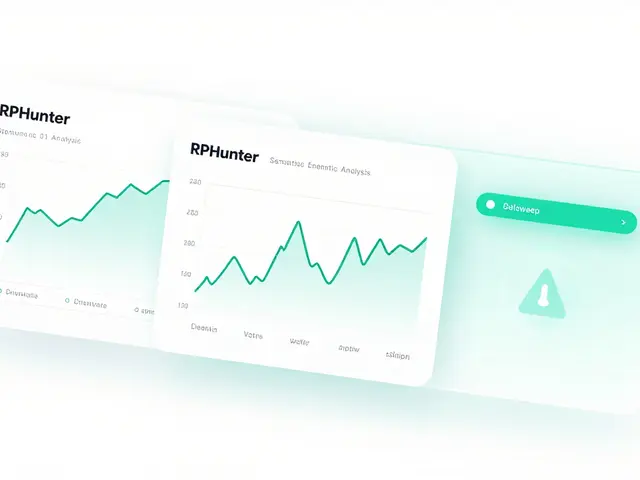
When you're swapping thousands of dollars, you care about two things: speed and slippage. In recent tests, Velodrome v3 has shown a surprising edge over the giants. For instance, traders on Reddit have reported slippage around 0.3-0.5% for $10k trades, which is roughly half of what some see on Uniswap V3 for the same volume. This is largely thanks to the Unichain architecture, which keeps transaction fees incredibly low-averaging between 0.0001 and 0.0003 ETH.
| Feature | Velodrome v3 (Unichain) | Uniswap V3 | PancakeSwap |
|---|---|---|---|
| Avg. Bid-Ask Spread | 0.609% | 0.72% | 0.85% |
| Daily Volume (Approx) | $47.61M | $1.2B | High |
| Core Incentive Model | ve(3,3) Voting | Concentrated Liquidity | Liquidity Mining |
| Network Gas Fees | Ultra-Low (L2) | Variable (L1/L2) | Low (BNB Chain) |
The Cross-Chain Experience: Optimism, Base, and Beyond
The "Unichain" aspect is where things get interesting. Instead of being locked to a single chain, Velodrome v3 acts as a bridge. It currently supports a huge range of networks, including Optimism and Base. This means you can move assets with much less friction than traditional bridging methods.
However, it's not all sunshine. Bridge failures are a real pain point. About 15% of users report errors during peak congestion when moving assets between Optimism and Base. If you're moving a life-changing amount of money, you'll want to do it in smaller chunks and double-check the bridge status on the Blockscout explorer first. Once your funds are in, the speed is impressive, with most users praising the fast transaction finality.
Is it Beginner-Friendly? (The Learning Curve)
Let's be honest: the ve(3,3) model is a head-scratcher. If you're used to just clicking "Swap" and "Stake," you might feel lost. About 31% of negative reviews on CryptoSlate mention a steep learning curve. New users often struggle with "voting power decay," where the influence of their locked tokens drops over time. In one documented case, a user locked 10,000 VELO for four years and saw their voting power drop by 25% after the first epoch, though their actual farming rewards increased by 37% because they picked the right pools.
To get started without losing your mind, you'll need:
- An Ethereum-compatible wallet like MetaMask or WalletConnect.
- A small amount of ETH (around 0.0001) to cover gas fees.
- A bit of patience-expect to spend 2-3 hours reading the docs if you want to master the locking and voting process.
The Risks: Centralization and Sustainability
No review is complete without the red flags. The biggest worry with Velodrome v3 is governance manipulation. Because voting power is tied to the amount of VELO you lock, a few "whales" (massive token holders) can effectively dictate which pools get the rewards. This can lead to a situation where the most efficient pools aren't rewarded because the biggest players want to pump their own specific bags.
Then there's the tokenomics. Some analysts, like Maria Chen, argue that the VELO token needs a massive reduction in emissions to stay sustainable. If the protocol keeps printing tokens too quickly, the price could struggle to break past the $0.015 mark. On the regulatory side, the SEC has cast a suspicious eye on ve(3,3) models, potentially viewing them as securities. While the decentralized nature of the protocol helps, it's a lingering cloud over the entire ecosystem.
What's Next? The Aero Merger and Beyond
The biggest catalyst on the horizon is the merger with Aerodrome Finance scheduled for Q2 2026. This isn't just a branding change; it's a unification of liquidity. By combining the two largest ve(3,3) protocols on the Optimism stack, Velodrome aims to create a liquidity powerhouse that can actually compete with Uniswap on a global scale.
Looking further ahead, the roadmap includes veNFT lending markets in Q3 2026 and full Ethereum mainnet integration by the end of the year. If these land successfully, Velodrome could realistically capture 5-7% of the total DEX market share by 2027. It's a high-stakes gamble on a complex economic model, but for those who enjoy the "game" of DeFi, it's one of the most rewarding platforms available.
What is the difference between VELO and veVELO?
VELO is the native tradable token of the protocol. veVELO is the "vote-escrowed" version you receive only after locking your VELO for a specific period. You cannot trade veVELO, but you can use it to vote on reward allocations and earn a share of the protocol's trading fees.
How high are the gas fees on Velodrome v3?
Because it runs on Layer 2 infrastructure (Unichain/Optimism), fees are significantly lower than on the Ethereum mainnet. Most transactions cost between 0.0001 and 0.0003 ETH, whereas similar trades on the mainnet can cost 0.005 to 0.01 ETH.
Is my money safe in the liquidity pools?
Like all DEXs, you face the risk of impermanent loss, especially in volatile pairs. Additionally, while the protocol is decentralized, smart contract bugs are always a possibility. The ve(3,3) model helps stabilize liquidity, but it doesn't eliminate the inherent risks of DeFi.
How do I fix a failed bridge transaction?
Bridge failures often happen during peak network congestion. The first step is to check the Unichain Blockscout explorer to see if the transaction is still pending. If it's truly stuck, refer to the official Velodrome troubleshooting guide or reach out to their Discord community, which typically responds within 20 minutes.
Can I trade my locked veVELO?
Standard veVELO is non-transferable. However, Velodrome implements veNFTs, which wrap your voting power into an NFT. These NFTs can be traded or lent out to other users, allowing you to exit your lock position without waiting for the timer to expire.

Keith Garcia
25 April, 2026 . 14:17 PM
Oh look, another "revolutionary" ve(3,3) clone desperately trying to convince us that locking your liquidity in a digital vault for four years is a brilliant strategic move rather than a glorified hostage situation 🙄. The sheer audacity of calling this an attempt to solve the 'tragedy of the commons' while essentially handing the keys to the kingdom to a few bloated whales is truly a masterclass in DeFi euphemisms 💅. Absolute poppycock ✨.
Tony Gurley-Ward
26 April, 2026 . 17:06 PM
Maybe the 'tragedy' isn't the liquidity, but the fact that we think we're escaping the system by just moving it to a different layer of the same pyramid scheme haha!
Yvette P
27 April, 2026 . 04:19 AM
Honestly, the sheer cognitive dissonance required to overlook the catastrophic systemic risk of voting power decay while simultaneously shilling the APY is just breathtaking, truly. Like, imagine thinking that a 37% increase in farming rewards somehow offsets the blatant plutocracy of a whale-dominated governance structure where your actual influence evaporates faster than a drop of water on a hot skillet in the Sahara, but hey, as long as the gas fees are low enough to not notice your portfolio bleeding out, who cares about the actual tokenomics of sustainability, right? Absolute peak DeFi brain rot 🙄.
Miranda Jamieson
28 April, 2026 . 18:14 PM
Stop pretending this is an investment. It's a gambling den with a fancy name. If you don't understand ve(3,3), you're just exit liquidity for the whales. Period.
Jason M
29 April, 2026 . 11:57 AM
Wait, hold on everyone! Let's not let the cynicism drown out the potential here! 🌟 For those of you feeling overwhelmed by the learning curve, remember that every DeFi pro started exactly where you are. It's a journey! Just take it one step at a time, read the docs, and don't be afraid to start with a tiny amount of liquidity to get the hang of the voting process. You've got this! 🚀
Gary Lingrel
30 April, 2026 . 22:24 PM
imagine thinking your "support" helps anyone lol just more printing for the whales... total scam 😒
Charlie Queen
2 May, 2026 . 11:31 AM
I love seeing the community discuss this! 🌈 Even if we disagree on the model, it's awesome that we're all exploring these new frontiers together! Happy swapping everyone! 🥳✨
Ali Tate
3 May, 2026 . 11:00 AM
this whole ve33 thing is just a shiny wrapper for old school manipulation but hey if it keeps the liquidity on a US-led stack then i guess its fine for now
Findlay Duncan Lyon
4 May, 2026 . 11:29 AM
Slippage looks decent.
jill huyo-a
4 May, 2026 . 22:31 PM
I'm wondering if there's a way to automate the voting process for those of us who can't spend hours on it every epoch?
Liz Ariza
6 May, 2026 . 03:49 AM
There are actually some third-party tools that help with that! It can be a bit daunting at first, but once you find a rhythm, it's a total blast 🌈✨
Jennifer Taylor
7 May, 2026 . 18:57 PM
The SEC isn't just 'looking' at this. They're tracking every single wallet. This whole Unichain bridge is probably just a honey-pot to see who's moving the big money before they shut the whole thing down. Don't trust the 'official' guides.
Clair Geary
9 May, 2026 . 14:31 PM
oh man the bridge issues are such a bummer but the low fees are totally worth it for small trades 💖
Sarah Ingrams
11 May, 2026 . 09:37 AM
im just here for the low gas fees tbh
Ellie Drews
12 May, 2026 . 13:07 PM
Just a friendly reminder to everyone to double-check the bridge status before moving your funds, especially during peak times. Stay safe out there!
Jennifer L
13 May, 2026 . 07:18 AM
I feel that the bridge errors are mostally heart-breaking for newcomers who lose sleep over a pending tx... it is so distresing to wait for a block explorer to update 😭
praveen subbiah
15 May, 2026 . 00:55 AM
The speed of Unichain is absolutely breathtaking! 🇮🇳 I can feel the power of the tech shifting. This is how we scale the future of finance for everyone!
Mike Word
16 May, 2026 . 18:52 PM
The veNFT aspect is the most interesting part here. Being able to trade the lock position basically turns a long-term commitment into a liquid asset, which kind of defeats the 'anti-mercenary' purpose but makes it way more usable.
Lisa Camp
17 May, 2026 . 04:58 AM
STOP WORRYING ABOUT THE WHALES AND JUST START LOCKING! 💥 THE ONLY WAY TO WIN IS TO BE PART OF THE GAME! LETS GOOO!