Remember when swapping tokens on Ethereum cost more than your actual trade? That era is largely behind us, but the hunt for a balance between low fees, speed, and security never ends. Enter PancakeSwap v3, the leading decentralized exchange (DEX) on the Binance Smart Chain (BSC). Since its launch in 2020, it has evolved from a simple copy of Uniswap into a complex financial ecosystem. By 2025, it commanded over 64% of all protocol revenue on the BSC network, with a Total Value Locked (TVL) nearing $3 billion. But does the latest version, v3, actually deliver on its promises for traders in 2026?
This review cuts through the hype. We will look at how v3 works, whether it is safe to use, how much you’ll pay in fees, and if it’s the right tool for your crypto portfolio. Whether you are a seasoned yield farmer or just trying to swap some BNB for USDT without losing half your profit to gas fees, this guide covers what matters.
What Exactly Is PancakeSwap v3?
To understand v3, you first need to know what came before it. The original PancakeSwap used an Automated Market Maker (AMM) model where liquidity providers deposited equal values of two tokens into a pool. It was simple, but inefficient. Your capital sat idle across the entire price range, even if the token price rarely moved there.
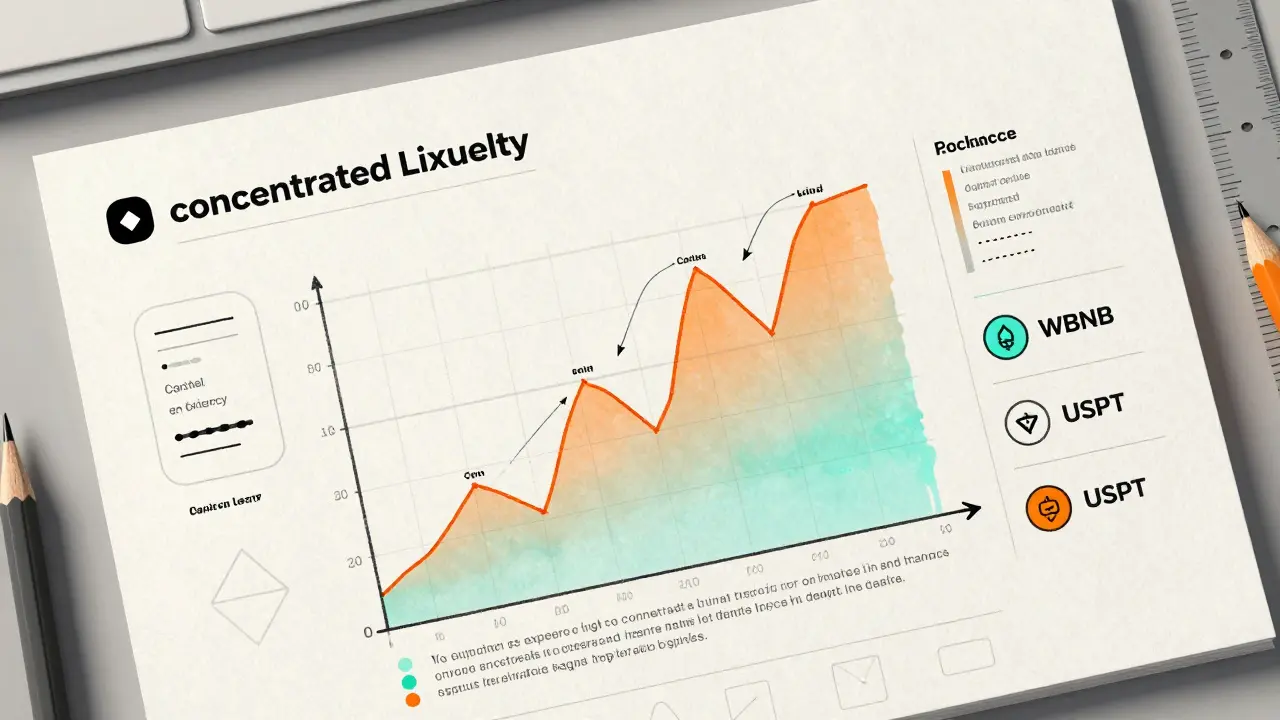
PancakeSwap v3 introduces concentrated liquidity. This allows you to specify a custom price range for your liquidity. Instead of spreading your funds thin from zero to infinity, you can focus them where trading is actually happening. For example, if you believe WBNB will stay between $300 and $350, you only provide liquidity in that band. This means you earn significantly more trading fees for the same amount of capital compared to v2.
However, this power comes with responsibility. If the price moves out of your chosen range, your position stops earning fees. You also face higher risks of impermanent loss if you don’t manage your ranges carefully. It’s not just set-and-forget anymore; it requires active monitoring.
Fees and Costs: Where You Save Money
Cost is the primary reason people flock to BSC-based exchanges. Here is the breakdown of what you will pay on PancakeSwap v3:
- Trading Fees: Standard spot swaps typically charge 0.25%. This is split between the protocol and liquidity providers. For high-volume pairs, fees can be as low as 0.01%, while exotic pairs might charge up to 1%.
- Gas Fees: This is where BSC shines. Transactions on Ethereum mainnet can cost $10-$50 during peak times. On BSC, you are usually looking at $0.10 to $0.50 per transaction. This makes small trades viable, which is impossible on many other chains.
- Perpetual Futures: If you trade derivatives, makers pay 0.02% and takers pay 0.07%. These rates are competitive with centralized exchanges like Binance.
While the 0.25% fee seems standard, remember that you are paying for the convenience of non-custodial trading. You keep control of your private keys. No company holds your assets. That peace of mind has value.
Safety and Security: Is Your Money Safe?
In DeFi, "safe" is relative. There is no customer support hotline to call if you make a mistake. However, PancakeSwap has built robust defenses against hacks and exploits.
The platform’s smart contracts have been audited by top-tier firms including CertiK, PeckShield, and SlowMist. These audits check for vulnerabilities that hackers could exploit. Additionally, the team uses multi-signature wallets for administrative functions, meaning one person cannot drain the treasury or alter critical code alone.
Despite these measures, user error remains the biggest risk. Connecting your wallet to a phishing site or approving a malicious contract can lead to total loss. Always verify URLs and use hardware wallets for significant amounts. The platform itself has a strong track record, having operated since 2020 without major catastrophic failures.
Performance and User Experience
Speed matters. On PancakeSwap v3, transactions confirm in seconds. The interface is clean and intuitive, though the concentrated liquidity dashboard can feel overwhelming for beginners. You’ll see charts showing historical price movements and suggested ranges based on volatility.
The platform supports over 3,000 trading pairs. Major pairs like BUSD/USDT and WBNB/USDT have deep liquidity, meaning minimal slippage even for large orders. Smaller altcoins may have thinner books, so always check the depth before trading.
One notable upgrade is PancakeSwap Infinity, launched in April 2025. This infrastructure update reduced gas costs further and introduced new liquidity pool types. It also improved customization for developers, making the ecosystem more vibrant.
Multi-Chain Expansion: Beyond BSC
PancakeSwap is no longer just a BSC project. In 2025, it expanded to eight additional blockchains, including Ethereum, Polygon zkEVM, Arbitrum One, Base, Aptos, and Solana. The July 2025 deployment of v3 pools on Solana was a major milestone, leveraging Solana’s high throughput for tokens like BONK and PYUSD.
This cross-chain strategy is crucial. As the DeFi landscape fragments, being able to move assets seamlessly between chains increases interoperability. You can provide liquidity on Solana and still earn rewards within the PancakeSwap ecosystem. However, each chain has its own gas dynamics and liquidity depths, so performance varies.
| Feature | PancakeSwap v3 (BSC) | Uniswap v3 (Ethereum) | SushiSwap |
|---|---|---|---|
| Average Gas Fee | $0.10 - $0.50 | $5.00 - $50.00+ | $2.00 - $20.00 |
| Standard Trading Fee | 0.25% | 0.30% | 0.30% |
| Liquidity Depth (Major Pairs) | High (Best on BSC) | Very High (Industry Leader) | Moderate |
| Supported Chains | 9+ (BSC, Solana, ETH, etc.) | 10+ (ETH, L2s, etc.) | Multiple |
| KYC Required | No | No | No |
Pros and Cons for Traders
Like any tool, PancakeSwap v3 isn’t perfect. Here is what users consistently praise and criticize:
Pros:
- Low Costs: Unbeatable gas fees on BSC make it ideal for frequent traders.
- Concentrated Liquidity: Higher returns for LPs who actively manage their positions.
- Feature-Rich: Beyond swaps, you get yield farming, staking, NFTs, and prediction markets.
- No KYC: Full privacy and anonymity for retail users.
Cons:
- Complexity: Managing concentrated liquidity ranges requires knowledge and time.
- Impermanent Loss Risk: Volatile pairs can erode your principal if not monitored.
- Customer Support: No dedicated support team; rely on community forums and docs.
- No Fiat On-Ramp: You must already have crypto to start trading.
Who Should Use PancakeSwap v3?
If you are a beginner just starting out, stick to simple spot swaps on v2 or use the simplified interface. Don’t dive into concentrated liquidity until you understand impermanent loss. For experienced traders and liquidity providers, v3 is a powerful engine for generating yield. The ability to optimize capital efficiency makes it superior to older AMM models.
Investors looking for passive income should consider staking CAKE tokens instead. It offers lower risk than providing liquidity on volatile pairs. Remember, high yields always come with higher risks. Never invest more than you can afford to lose.
Final Thoughts
PancakeSwap v3 remains the dominant force on Binance Smart Chain for good reason. It combines low fees, fast transactions, and advanced features into a single platform. While it demands more attention from liquidity providers than its predecessor, the potential rewards justify the effort. As it expands to chains like Solana and Ethereum Layer 2s, its relevance in the broader DeFi space continues to grow. Just stay vigilant about security and double-check every contract interaction.
Is PancakeSwap v3 safe to use?
Yes, PancakeSwap v3 is considered safe due to multiple audits by firms like CertiK and PeckShield, and its long operational history since 2020. However, users must protect their own private keys and avoid phishing sites, as the platform is non-custodial and offers no recourse for stolen funds.
How do I connect my wallet to PancakeSwap?
You can connect popular Web3 wallets like MetaMask, Trust Wallet, or the Binance Smart Wallet. Click the "Connect Wallet" button on the homepage, select your wallet provider, and approve the connection request in your app. Ensure you are on the correct network (e.g., BSC Mainnet) before trading.
What is the difference between v2 and v3?
The main difference is concentrated liquidity. V2 spreads your funds across all possible prices, while v3 lets you choose a specific price range. This increases capital efficiency and potential fees for v3 but requires active management to avoid impermanent loss if the price exits your range.
Does PancakeSwap require KYC?
No, PancakeSwap is a decentralized exchange and does not require Know Your Customer (KYC) verification. You can trade anonymously using only your crypto wallet. This appeals to privacy-conscious users but means there is no identity-based account recovery.
Can I use PancakeSwap on mobile?
Yes, PancakeSwap has a fully functional mobile website and a dedicated iOS and Android app. The mobile experience is optimized for quick swaps and basic liquidity management, though complex v3 range adjustments are easier on desktop.



Ryan Peters
27 June, 2026 . 05:52 AM
Look, I don't care about your fancy concentrated liquidity graphs if the underlying chain is still a joke. BSC is basically a centralized mess run by one guy in Singapore. You want safety? Go to Ethereum or go home. This whole v3 thing is just marketing fluff for people who can't afford real gas fees. Stop pretending it's 'decentralized' when it's clearly not.
ross harris
27 June, 2026 . 22:10 PM
The irony of seeking security in a digital ledger while ignoring the existential fragility of the system itself is palpable. We are building castles on sand and calling them fortresses. The concentrated liquidity is merely a metaphor for our own focused anxieties. You tighten the range, you tighten the noose. It is a beautiful, terrible dance of impermanent loss that mirrors the human condition perfectly.
Carl Belgrave
29 June, 2026 . 10:18 AM
Wake up! The only safe bet is holding physical assets. These DEX platforms are just casinos for degenerates who think they're smarter than the market. I've seen too many guys lose their shirts on these 'low fee' swaps. It's a trap designed to keep you engaged so they can bleed you dry with slippage. Stick to gold or cash, otherwise you're just feeding the beast.
Carl Hanzel
29 June, 2026 . 11:08 AM
Everyone here is missing the point entirely. You think audits matter? CertiK is just another rubber stamp company paid to look the other way. The moment a bug appears, your money is gone. There is no customer support because there is no responsibility. It is a void. A black hole of financial negligence wrapped in a pretty UI. Do not trust code you did not write yourself.
Daniel J. Cox
29 June, 2026 . 13:41 PM
I actually find the interface quite soothing compared to the chaos of other exchanges :). It’s interesting how different cultures approach risk management. In my experience, taking small steps with the v2 pools first really helps build confidence before jumping into the complex v3 ranges. Have you tried the mobile app? It’s surprisingly smooth for quick checks.
Emma Rémond
30 June, 2026 . 17:25 PM
It is frankly amusing to watch retail investors flock to this platform like moths to a flame. The concept of 'concentrated liquidity' requires a level of sophistication that most users simply do not possess. They deposit funds, forget about them, and then cry when impermanent loss erodes their principal. True alpha is found in private equity, not in public AMMs with subpar governance structures.
ELNORA JEFFERSON
1 July, 2026 . 04:30 AM
I tried using this once and immediately regretted it. The website lagged, the connection timed out, and I felt stupid for even trying. Why bother with all this tech jargon when you can just use a bank? It’s exhausting. I’m done.
Carol @minaszilda
2 July, 2026 . 15:58 PM
It’s okay to feel overwhelmed. DeFi is new for everyone. Start small. Focus on learning one concept at a time. You don’t have to master v3 today. Be kind to yourself as you learn.
Trent Erman1
4 July, 2026 . 08:31 AM
Hey team! 🚀 Let’s talk about the potential here. The multi-chain expansion is huge. Solana integration means speed AND low costs. If you’re ready to grow your portfolio, now is the time to dive in. Don’t let fear hold you back. The future is decentralized! 💪✨
Fiona Ellis
6 July, 2026 . 06:15 AM
I must say, the lack of KYC is both liberating and terrifying. One wonders what happens when regulators inevitably knock on the door. 😬 Have you considered the implications of anonymous trading on global financial stability? It seems rather reckless, doesn’t it? I’d love to hear your thoughts on this specific aspect.
Nicole Woessner
7 July, 2026 . 03:52 AM
i usually stick to ethereum but the fees on bsc are hard to ignore honestly. i’ve been testing the waters with small amounts on pancake v3 and it’s been okay so far. the ui is a bit cluttered though. anyone else find the range selection confusing?
Jon Milton
8 July, 2026 . 18:58 PM
Peace and prosperity to all traders here. While some argue about centralization, others focus on utility. PancakeSwap provides a service that millions rely on. Dismissing it outright ignores the reality of accessibility for those in developing nations. Let us engage in constructive dialogue rather than tribal warfare. Understanding different perspectives strengthens our collective knowledge.
Sajjad Ghorbani Moghaddam
9 July, 2026 . 14:28 PM
If you’re new to this, just remember to double-check every URL. Phishing is real. Also, don’t put all your eggs in one basket. Diversify your liquidity positions. It’s a marathon, not a sprint.
Rebecca Shoniker
10 July, 2026 . 00:09 AM
Let me be perfectly clear; the notion that this platform is 'safe' is dangerously misleading. Smart contract risks are non-zero. Impermanent loss is guaranteed in volatile markets. Users who believe otherwise are either ignorant or complicit in their own destruction. The jargon of 'security audits' is a shield for incompetence. Proceed with extreme caution, if at all.
Jay Sharma
10 July, 2026 . 01:51 AM
They tell you it’s safe but have you ever wondered who controls the validators? Binance has too much power. This is all part of the great reset. They want to track your transactions through the cross-chain bridges. Wake up sheeple. The audits are fake. The code is backdoored. Trust nothing.
Scott Miller
11 July, 2026 . 19:50 PM
You guys are too negative! Look at the TVL growth. Look at the volume. This is winning. If you’re not leveraging these tools, you’re losing. Get aggressive with your ranges. Maximize your yields. Don’t let the haters stop you from getting rich. Crush it!
Abby Martin
12 July, 2026 . 17:52 PM
I just don’t understand why people trust anonymous developers with their life savings. It’s morally bankrupt. If something goes wrong, who do you sue? Nobody. It’s a lawless wasteland. I prefer regulated environments where there is accountability. This whole crypto space needs to grow up and accept oversight.
Mélanie Boulay
12 July, 2026 . 22:05 PM
While I appreciate the detailed breakdown of fees, I cannot help but feel that the complexity introduced by version three creates an unnecessary barrier to entry for the average individual who simply wishes to exchange assets without engaging in sophisticated yield farming strategies, which ultimately detracts from the core promise of decentralized finance being accessible to everyone regardless of their technical expertise or financial literacy levels.
Maurice Flynn
14 July, 2026 . 09:05 AM
Just observe the trends. The market finds its way. PancakeSwap adapts. It’s like water flowing around rocks. No need to force anything. Just flow with the changes. The technology evolves, we evolve with it. Keep it chill.
nancy jarecki
15 July, 2026 . 21:16 PM
Boring. Another review of a mediocre protocol. The writing style is pedestrian and lacks any intellectual depth. I expected more nuance regarding the tokenomics of CAKE inflation. Instead, we get basic platitudes about 'safety.' Yawn. I’ll stick to reading whitepapers directly.
Robert Hundley
17 July, 2026 . 08:22 AM
Yo! Great read! 👍 I’ve been using PancakeSwap since v1 and it’s come a long way. The gas fees on BSC are still the best in the game. If you’re sitting on the fence, just jump in. Start small, learn the ropes, and watch your stack grow. Let’s gooo! 🔥