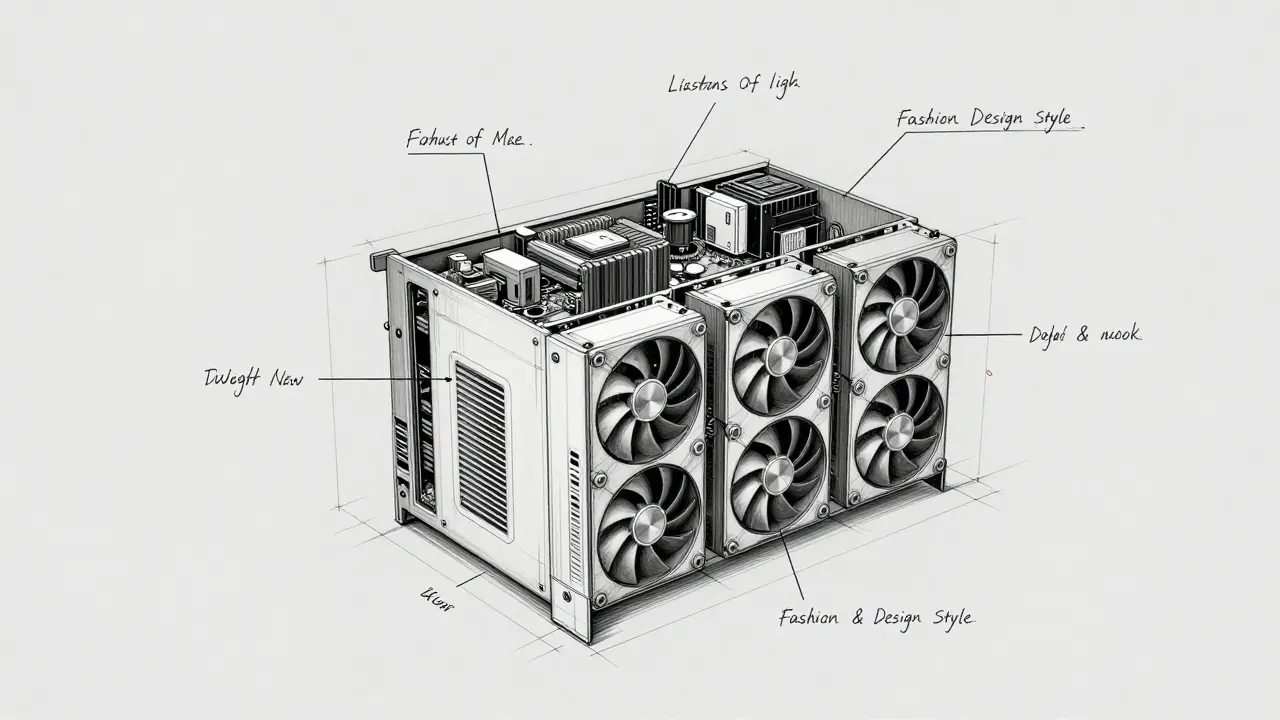
If you've ever wondered how people actually "create" Bitcoin or other digital coins, you've likely stumbled upon the debate between using high-end graphics cards and those loud, industrial-looking boxes. Choosing between GPU Mining is the process of using Graphics Processing Units to solve cryptographic puzzles and ASIC Mining is mining using Application-Specific Integrated Circuits designed for one specific algorithm isn't just about which one is faster. It's a choice between versatility and raw, uncompromising power. Depending on your budget and your appetite for risk, one of these could make you a profit, while the other could become an expensive space heater in your living room.
The Heavy Hitter: Understanding ASIC Mining
An ASIC is a piece of hardware that does exactly one thing and does it better than anything else on earth. Unlike a computer that can browse the web or play games, an ASIC miner is hard-wired for a specific blockchain algorithm. For example, if you buy a machine designed for SHA-256, you can mine Bitcoin, but you can't use it for anything else. Ever.
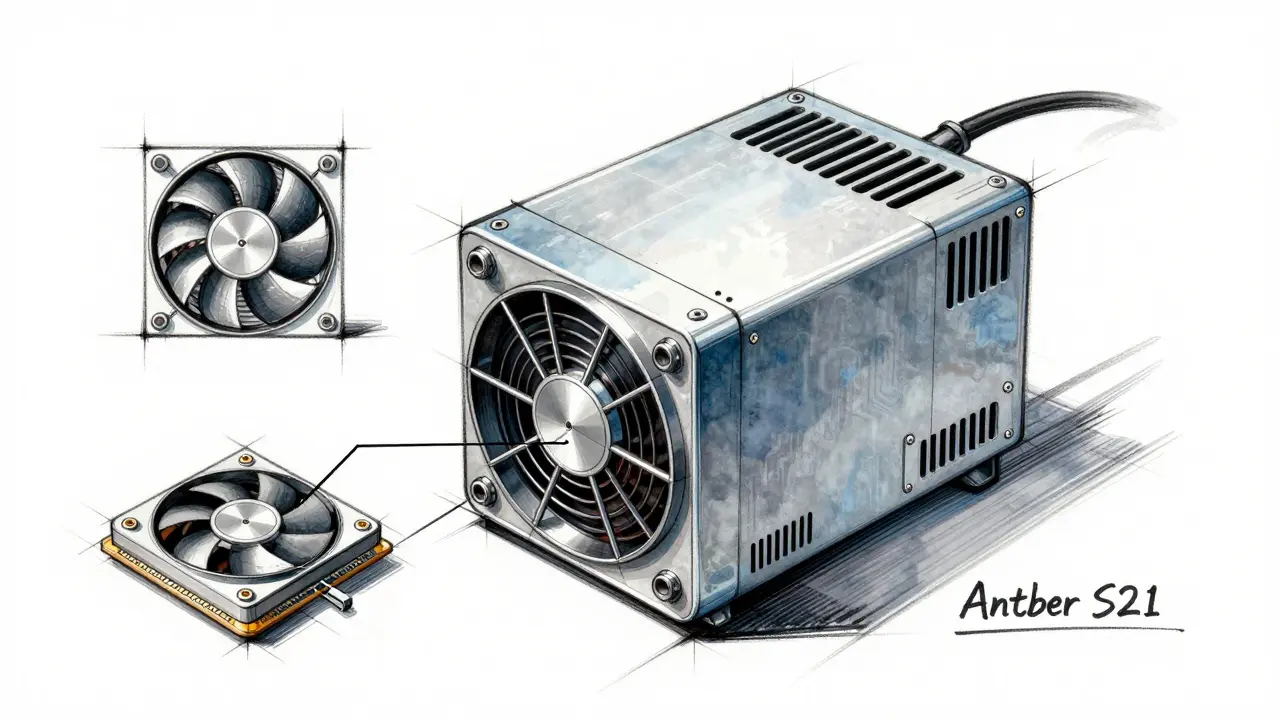
The main draw here is the sheer scale of performance. While a GPU measures its speed in Megahashes per second (MH/s), a modern ASIC like the Bitmain Antminer S21 Hydro hits 335 Terahashes per second (TH/s). That is a massive difference in magnitude. Because they are purpose-built, ASICs provide a much lower cost per hash, making them the only realistic choice for mining Bitcoin in 2026. If you have access to cheap electricity and a warehouse with industrial cooling, ASICs are the gold standard for industrial-scale production.
The Flexible Option: The World of GPU Mining
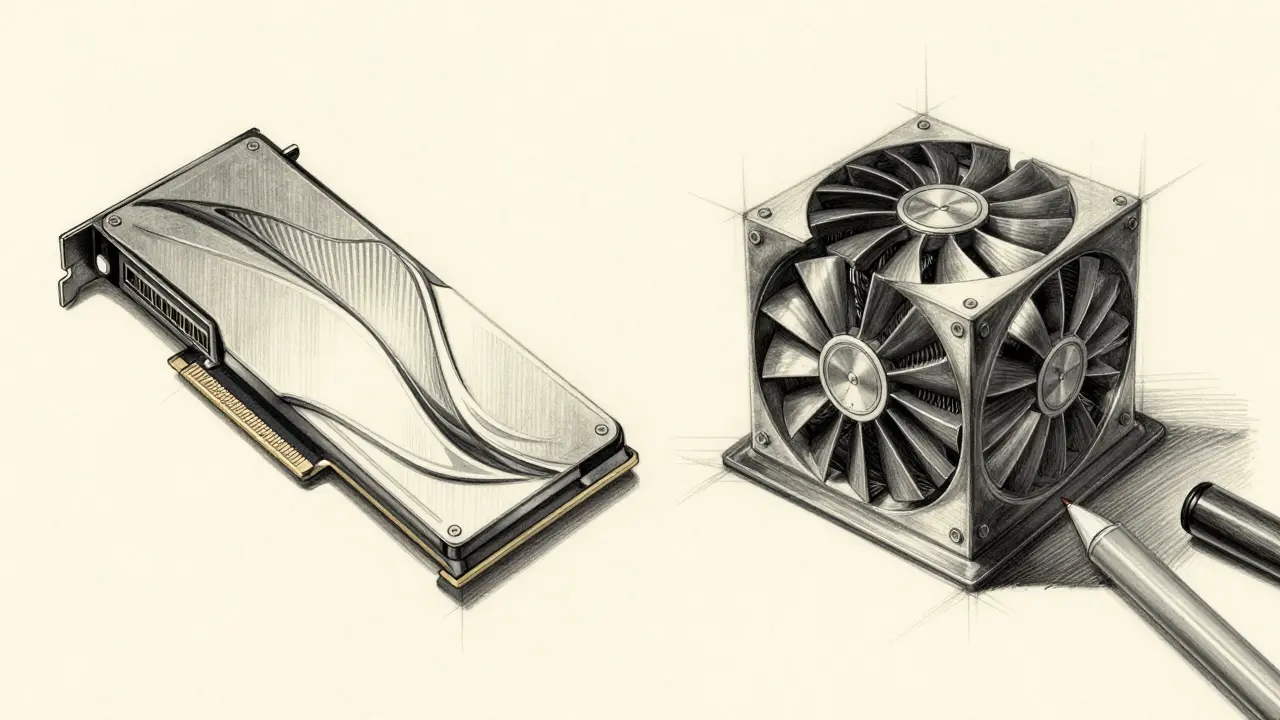
GPU mining uses the same kind of hardware you'd find in a high-end gaming rig. These Graphics Processing Units are designed for parallel processing-handling thousands of small tasks at once-which makes them great for memory-intensive algorithms. While they can't compete with ASICs on raw power for Bitcoin, they are the kings of the altcoin world.
The magic of the GPU is its adaptability. If a specific coin becomes unprofitable today, you don't have to throw your hardware in the trash. You simply change your mining software, switch to a different coin like Ravencoin or Ethereum Classic, and keep earning. This makes GPU mining a much safer bet for hobbyists. Plus, if you decide you're done with crypto, you can sell your cards to a gamer or an AI researcher, whereas an obsolete ASIC has almost zero resale value.
| Feature | ASIC Miners | GPU Rig |
|---|---|---|
| Hash Rate | Extreme (TH/s range) | Moderate (MH/s range) |
| Versatility | Single Algorithm only | Multi-coin / Multi-use |
| Upfront Cost | High ($3,000 - $10,000+) | Moderate (Scalable) |
| Noise & Heat | Industrial / Very Loud | Manageable / Moderate |
| Resale Value | Low (Drops fast) | High (Gamers/AI markets) |
The Profitability Puzzle: Electricity and Difficulty
You can have the fastest hardware in the world, but if your power bill is higher than your mining rewards, you're essentially paying the network to let you participate. This is where the "efficiency ratio" (hash rate per watt) becomes critical. ASICs are far more efficient than GPUs, meaning they produce more coins for every kilowatt of power used. However, they also pull massive amounts of electricity. A high-end ASIC can easily consume over 5,000W, which would trip a standard home circuit breaker if you aren't careful.
Then there is the "difficulty adjustment." As more miners join a network, the puzzles get harder to solve. Because ASICs push the network hash rate so high, the difficulty for Bitcoin is astronomical. This creates a barrier to entry: you either go big with ASICs or you look for "ASIC-resistant" coins that are specifically designed to be mined by GPUs to keep the network decentralized.
Implementation: Setting Up Your Operation
Starting a GPU operation is something you can do on a Saturday afternoon. You buy some cards, a motherboard, and a couple of decent power supplies, and you're in business. The learning curve is gentle, and if you run into a problem, there are thousands of threads on Reddit and YouTube to help you tweak your drivers for maximum efficiency.
Setting up an ASIC operation is more like starting a small factory. You need an industrial-grade electrical setup to avoid fire hazards, and you absolutely must have a ventilation strategy. These machines sound like jet engines and put out enough heat to warm a whole house in the middle of winter. Most professional ASIC miners use specialized cooling systems or dedicated climate-controlled warehouses to prevent the hardware from overheating and shutting down.
Which One Should You Choose?
The decision boils down to your goals. If you are looking to build a serious, long-term business focused on a major coin like Bitcoin, and you have the capital for an industrial setup, ASICs are the only way to stay competitive. You're trading flexibility for maximum output.
On the other hand, if you're a hobbyist, a gamer, or someone who wants to experiment with different blockchain projects, stick with GPUs. The ability to pivot is a huge safety net. You can mine a few different altcoins simultaneously, and you aren't locked into a single piece of hardware that might become a doorstop if the algorithm changes or the coin crashes.
Can I mine Bitcoin with a GPU in 2026?
Technically, yes, but practically, no. The network hash rate is so high that a GPU would take years to find a single block, and you would spend far more on electricity than you would ever earn in BTC. You're better off mining an altcoin with your GPU and swapping it for Bitcoin on an exchange.
Do ASICs become obsolete?
Yes, and quite quickly. When a manufacturer releases a new model with a significantly better hash-to-watt ratio, older models become less profitable. Since they can't be repurposed for gaming or AI, they often lose most of their value once they are no longer the most efficient option on the market.
What is an "ASIC-resistant" coin?
These are cryptocurrencies that use algorithms requiring large amounts of memory (RAM) rather than just raw processing power. Since ASICs are optimized for computation, not memory access, GPUs can keep up, ensuring that individual miners with consumer hardware can still compete.
Which hardware is better for AI processing?
GPUs are the clear winner. Because they are general-purpose parallel processors, they are the primary tool for training Large Language Models and rendering graphics. ASICs are useless for AI unless they were specifically built for AI (which makes them a different product entirely from a crypto miner).
How much noise does an ASIC actually make?
A lot. Most ASICs use high-RPM fans to move huge amounts of air across the chips. The noise level is often compared to a vacuum cleaner running constantly in your room. This is why most people keep them in garages or sound-proofed containers.

Michael Harms
18 April, 2026 . 04:40 AM
This is a great breakdown for anyone just starting out! Honestly, just jumping in with a couple of GPUs is a fantastic way to learn the ropes without risking a fortune. You got this!
Luke George
19 April, 2026 . 23:03 PM
The push for ASICs is just a way for the big corporate farms to centralize the network and kill the dream of decentralization. They want us all on their hardware so they can flick a switch and control the flow. Wake up people, the 'industrial gold standard' is just a gilded cage for your investment.
Sean Douglas
20 April, 2026 . 09:38 AM
My soul literally aches contemplating the sheer tragedy of a crashed ASIC. Imagine the visceral horror of owning a ten-thousand-dollar piece of silicon that has the functional utility of a very expensive brick. It is an absolute nightmare of financial devastation!
Thomas Jewett
21 April, 2026 . 11:13 AM
honestly it is just plain wrong how people think they can just plug these things in without thnkng about the envirnmental impact and the grid failure probablity and its just a total lack of moral foresight to prioritize some digital coin over the actual stability of our local power infrastructure which is already crumbling anyway because nobody cares about anything except thier own pockets these days.
Saurav Bhattarai
21 April, 2026 . 23:16 PM
Only a complete amateur would think GPUs are "safe." Please, spare us the delusions of the hobbyist. If you aren't scaling with industrial hardware, you're just playing house while the real players make the actual money.
Shantal Sanjur
22 April, 2026 . 22:01 PM
Oh, sure, "just change your software" and you're suddenly a genius investor. I've seen a dozen "ASIC-resistant" coins vanish into the ether faster than my patience for these optimistic GPU fanboys. It's all a shell game anyway.
Tracy Sperandio
24 April, 2026 . 05:21 AM
Let's inject some actual energy here! The adaptability of GPUs is a total game-changer for the creative spirit. It's not just about the coins; it's about the sheer thrill of pivoting your entire operation overnight to chase a new project! Absolute electricity!
Sean Mitchell
26 April, 2026 . 03:21 AM
The lack of detail regarding the specific TDP of the S21 is frankly appalling. I am utterly devastated by the superficiality of this comparison.
Kevin Lư
27 April, 2026 . 16:30 PM
Just buy the cards and chill. No need to make it a whole thing.
Ankit Sindhu
28 April, 2026 . 10:06 AM
I really appreciate how this post keeps things accessible for everyone. For those feeling overwhelmed, maybe start with a single GPU and a small budget just to see how it feels before scaling up. We're all learning together!
Shannon Kelly Smith
30 April, 2026 . 08:21 AM
Totally agree with the GPU approach for beginners! 🚀 It's all about the journey and building a community of learners. Let's get those rigs running! 💎🙌
nikki krinkin
2 May, 2026 . 05:55 AM
I can see both sides here. Some people just want a steady business and others want a hobby.
Kaitlyn Wu
2 May, 2026 . 09:02 AM
We need to be very clear about the safety hazards. Plugging an ASIC into a standard home outlet is an invitation for a house fire. Do not skip the industrial electrical part of this setup.
Anna Grealis
3 May, 2026 . 12:01 PM
Pretty sure the hash rate numbers are inflated by the manufacturrs anyway... who knows what the govt is actually monitoring through these chips
nathan jones
4 May, 2026 . 01:07 AM
GPUs are the move for most of us.
Gillian Kent
4 May, 2026 . 23:25 PM
I think we can all find a middle ground here. Its just about what fits your life and your space. No need for fighting over hardware!
Karen Mogollon Gutierrez
6 May, 2026 . 03:24 AM
It is simply abhorrent that one must choose between a cacophony of industrial noise or the precarious volatility of altcoins. This entire dilemma is a testament to the absurdity of our modern financial existence! I find it utterly exhausting that we are expected to manage our own electrical grids just to participate in a digital economy. The sheer audacity of the hardware manufacturers to sell these noise-polluting monstrosities as 'gold standards' is nothing short of a scandal! My living room is not a factory, and yet the market demands I treat it as such if I wish to be profitable. I am simply devastated by the lack of elegant solutions in this space. It is a tragedy of the highest order that the pursuit of profit requires such a brutal sacrifice of domestic tranquility. One must wonder if the stress of maintaining a rig is worth the meager returns. The mental toll of watching a GPU's value plummet is a burden I can scarcely bear. I am appalled by the callousness of the industry. It is a nightmare!
Vicky Duffala
6 May, 2026 . 13:13 PM
Think about the flow of energy! Mining isn't just about the money, it's about interacting with the digital heartbeat of the world. Whether it's a GPU or an ASIC, you're basically carving your mark into the future of currency. Let's just keep experimenting and see where the wind takes us! 🌟