If you thought Singapore was the easiest place in Asia to launch a crypto business, think again. The Monetary Authority of Singapore (MAS) is Singapore's central bank and financial regulatory authority that has drastically tightened its oversight of digital assets has pulled the rug out from under many operators. As of mid-2025, getting a new license to handle cryptocurrencies in Singapore is nearly impossible unless you fit a very narrow, elite profile. This isn't just a minor tweak; it’s a fundamental shift from a "crypto-friendly" hub to one of the strictest regulatory environments on the planet.
The core issue? MAS is worried about its reputation. They fear companies are using Singapore as a stamp of legitimacy while serving customers overseas with lax security. To stop this, they’ve imposed heavy restrictions that effectively ban most new entrants. If you’re planning to operate in or through Singapore, you need to understand exactly what changed, why it happened, and how it affects your bottom line today.
The De Facto Ban on New Licenses
For years, Singapore welcomed crypto firms with open arms. That era ended abruptly in June 2025. Under the Financial Services and Markets Act 2022 (FSMA) is the primary legislation governing financial services in Singapore, including digital token activities, MAS declared it would issue Digital Token Service Provider (DTSP) licenses only in "extremely limited circumstances."
This means if you are a startup or a mid-sized exchange looking to register in Singapore, you will likely be rejected. MAS stated clearly that they "will generally not issue a licence" because regulating offshore token services is too difficult and risky. The regulator wants to avoid "regulatory arbitrage," where firms use Singapore’s strong brand to gain trust but operate their actual business models in jurisdictions with weaker rules.
The deadline for full compliance was set for June 30, 2025. There were no grace periods. No extensions. If you weren’t ready by then, you had to stop operating immediately. This hard stop forced many international firms to either build massive local infrastructure overnight or leave Singapore entirely.
Extraterritorial Reach: You Can’t Hide Overseas
One of the most shocking aspects of the new framework is Section 137 of the FSMA. This clause gives MAS power over anyone operating from Singapore, regardless of who their customers are.
Here is the catch: Even if your servers are in Tokyo, your users are in Brazil, and your funds are held in Switzerland, if you are a Singapore corporation or an individual working from Singapore, you need a DTSP license. MAS does not care that you aren’t serving local residents. They want control over all digital token activity originating from their soil.
This extraterritorial reach closes a loophole many firms used previously. Before, some companies argued they didn’t need strict oversight because they weren’t targeting Singaporeans. Now, that argument is dead. If you touch crypto in Singapore, you play by MAS’s rules.

Heavy Compliance Costs and Requirements
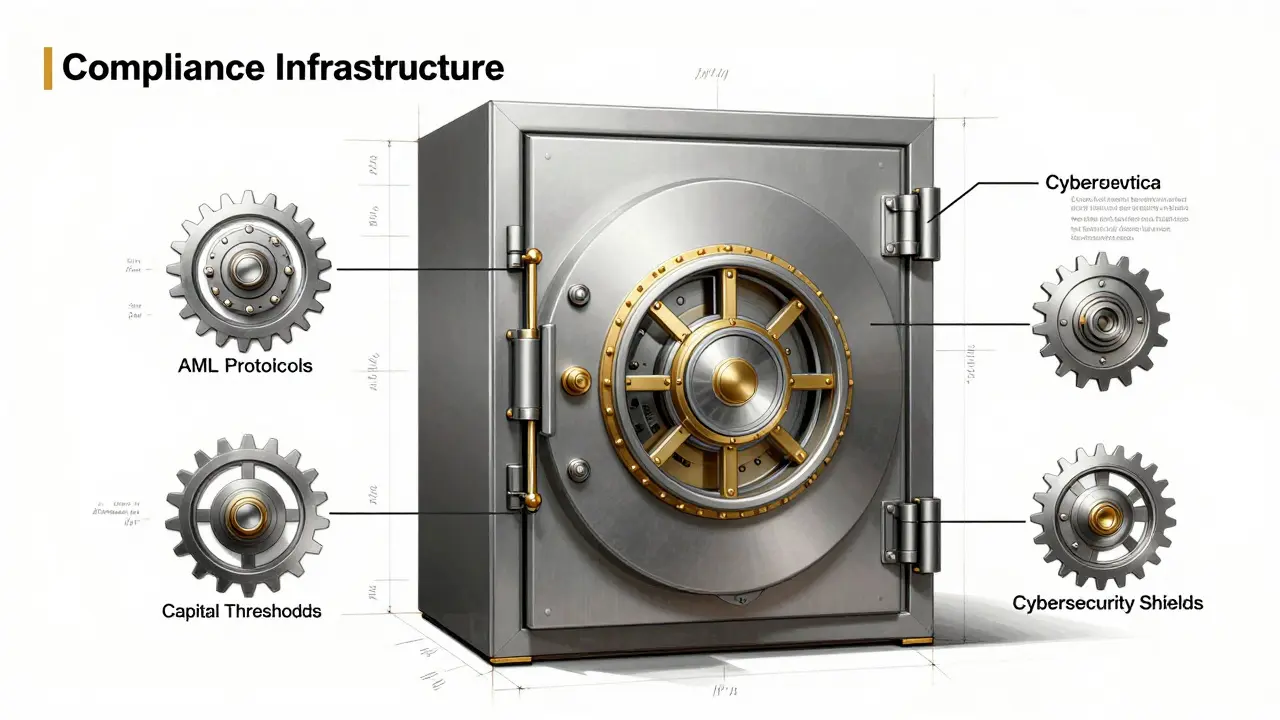
For the few firms that do get licensed-or those already holding them-the cost of doing business has skyrocketed. MAS demands rigorous adherence to Anti-Money Laundering (AML) and Counter-Terrorism Financing (CFT) protocols. These aren’t suggestions; they are mandatory conditions for survival.
- Capital Thresholds: You must hold significant minimum capital to prove financial stability.
- Local Presence: You must appoint a compliance officer based in Singapore. This role commands salaries between SGD 150,000 and SGD 250,000 annually.
- Audits: Annual independent audits are required to verify your operations.
- Cybersecurity: High-level security standards are non-negotiable to protect user assets.
Then there is the Travel Rule. Implemented via Notice PSN02, this requires platforms to share sender and receiver details for transactions over SGD 1,500 (about USD 1,100). You need specialized software to handle this data exchange securely. Implementing these systems costs between SGD 50,000 and SGD 200,000, depending on your transaction volume.
Consumer protection rules added in September 2024 make things even tighter. You can no longer let users buy crypto with credit cards-a common source of debt-fueled speculation. You must also conduct suitability assessments to ensure customers understand the risks before trading.
Why Did MAS Crack Down So Hard?
To understand the restrictions, you have to look at Singapore’s identity. It brands itself as a trusted, stable global financial hub. MAS believes that unregulated crypto activity threatens that reputation.
When crypto firms fail, engage in fraud, or facilitate money laundering, it reflects poorly on the entire jurisdiction. MAS officials have stated that a "smaller, higher-quality industry" serves Singapore better than a large, messy one. They are prioritizing financial integrity over market growth.
This stance contrasts sharply with competitors like Switzerland or the United Arab Emirates, which continue to actively court crypto businesses with clearer, more accessible licensing paths. Singapore is choosing quality over quantity, even if it means losing market share in the short term.
| Jurisdiction | Licensing Accessibility | Focus Area | Key Restriction |
|---|---|---|---|
| Singapore (MAS) | Very Low (De facto ban for new entrants) | Financial Integrity & Reputation | No licenses for offshore-only services |
| Switzerland | High | Innovation & Adoption | Clear guidelines for various token types |
| UAE | High | Economic Growth | Active recruitment of crypto firms |
Impact on the Industry and Jobs
The human cost of these regulations is visible. LinkedIn workforce analytics showed a 37% drop in crypto-related job postings in Singapore during Q1 2025 compared to the previous year. Firms are downsizing or relocating because the compliance burden is too high.
Industry analysts estimate that only 15 to 20 existing license holders will maintain full compliance, down from around 200 firms that had provisional status. Many smaller exchanges and service providers have exited the market entirely. For employees, this means fewer opportunities. For investors, it means less competition and potentially higher fees for remaining services.
However, for legitimate, well-funded institutions, the playing field might actually be fairer. With shady actors removed, trusted players may see increased confidence from institutional clients who value safety above all else.
What Comes Next?
MAS isn’t done yet. In May 2025, parliamentary replies hinted at further guidance on Decentralized Finance (DeFi) protocols and stablecoins later in 2025. Stablecoins, in particular, are under scrutiny to ensure they maintain "a high degree of value stability."
If you are operating in this space, keep a close eye on these developments. The regulatory landscape in Singapore is dynamic, but the direction is clear: stricter, safer, and more exclusive. Non-compliance carries severe penalties, including fines up to SGD 200,000, imprisonment, and forced cessation of operations.
The message from MAS is loud and clear: Singapore is no longer a wild west for crypto. It is a fortress of financial regulation. If you can meet the bar, you stay. If you can’t, you go.
Can I still get a crypto license in Singapore?
It is extremely difficult. MAS announced in June 2025 that they will issue licenses only in 'extremely limited circumstances.' Most new applications are rejected due to unresolved AML/CFT concerns and the difficulty of regulating offshore services. Only firms with elite compliance infrastructure and strong operational justification may qualify.
Does MAS regulate crypto firms that serve only foreign customers?
Yes. Under Section 137 of the Financial Services and Markets Act 2022 (FSMA), MAS has extraterritorial reach. Any Singapore corporation or individual operating from Singapore must obtain a DTSP license, regardless of where their users, servers, or funds are located.
What are the penalties for non-compliance?
Penalties are severe. Violators face fines up to SGD 200,000 (approx. USD 147,000), potential imprisonment, and mandatory cessation of operations. There are no grace periods for failing to meet the June 30, 2025 compliance deadline.
What is the Travel Rule requirement in Singapore?
The Travel Rule, implemented via Notice PSN02, mandates that crypto platforms collect and exchange sender and receiver information (names, ID numbers, account details) for transactions exceeding SGD 1,500 (approx. USD 1,100).
Why did MAS tighten regulations so much?
MAS aims to protect Singapore's reputation as a trusted financial hub. They are concerned about 'regulatory arbitrage,' where firms use Singapore's credibility while operating under weaker oversight elsewhere. The goal is to prioritize financial integrity and reduce risks associated with money laundering and fraud.