You send a transaction on Ethereum and watch the gas fee spike to $50. You wait ten minutes for confirmation. Then you try sending the same amount on Arbitrum. It costs pennies and confirms in seconds. What just happened? You moved from a Layer 1 network to a Layer 2 solution.
This isn't just about saving money. It's about understanding the fundamental architecture of modern blockchains. If you're building an app, trading assets, or just trying to understand why some networks feel fast and others crawl, knowing the difference between these two layers is non-negotiable. Let's break down exactly how they work, where they fail, and which one fits your needs right now.
The Core Difference: Security vs. Speed
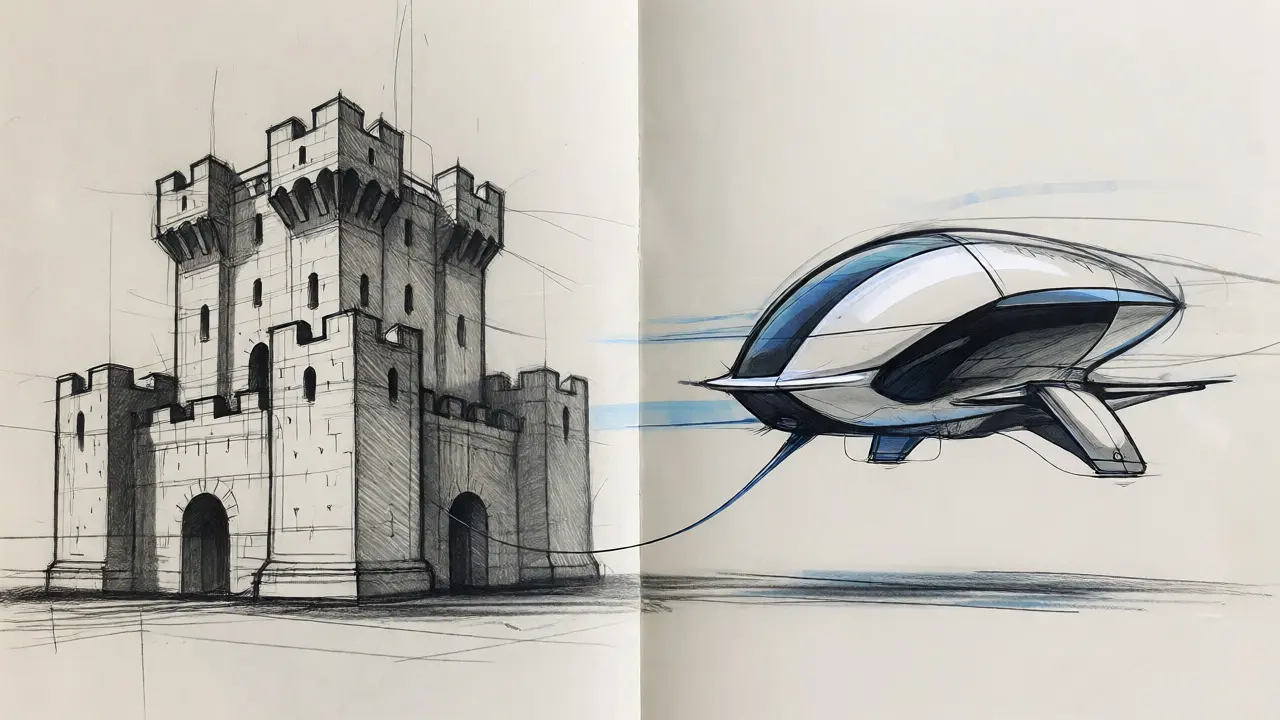
Think of a Layer 1 (L1) blockchain like a fortified castle. It has its own guards, its own walls, and its own rules. Bitcoin and Ethereum are classic examples. They handle their own consensus-meaning they decide who gets to add the next block-and they secure themselves using massive amounts of computational power or staked capital. Because every node in the network verifies every transaction, L1s are incredibly secure but inherently slow. Ethereum, for instance, processes only about 15-30 transactions per second (TPS) on its mainnet.
A Layer 2 (L2) is more like a high-speed delivery service that operates outside the castle walls but reports back to the castle for final verification. It doesn't have its own independent security model in the same way. Instead, it inherits security from the underlying L1. Solutions like Polygon, Optimism, and the Lightning Network bundle thousands of transactions together, process them off-chain, and then post a compressed summary back to the L1. This allows them to achieve speeds of 2,000 to 4,000 TPS while keeping costs near zero.
| Feature | Layer 1 (e.g., Ethereum, Solana) | Layer 2 (e.g., Arbitrum, Base) |
|---|---|---|
| Security Model | Independent consensus; secures itself via PoW or PoS validators. | Inherits security from the parent L1; relies on data availability proofs. |
| Throughput | Low (15-65 TPS typical); limited by block size and time. | High (2,000-9,000+ TPS); batches transactions off-chain. |
| Transaction Cost | Variable; can reach $50+ during congestion. | Consistently low; often under $0.05. |
| Decentralization | Very High; thousands of independent validators/nodes. | Moderate to Low; often relies on centralized sequencers initially. |
| Finality Time | Fast for some (Solana), slow for others (Bitcoin ~60 mins). | Delayed settlement; 7 days for Optimistic Rollups, 10-60 mins for ZK-Rollups. |
Why Do We Need Layer 2s?
If Layer 1s are so secure, why bother with the complexity of Layer 2s? The answer lies in the "Blockchain Trilemma." Vitalik Buterin described this as the impossible triangle of decentralization, security, and scalability. You can usually only pick two. Bitcoin picked security and decentralization, sacrificing speed. Solana tried to solve it by centralizing hardware requirements, gaining speed but risking validator centralization.
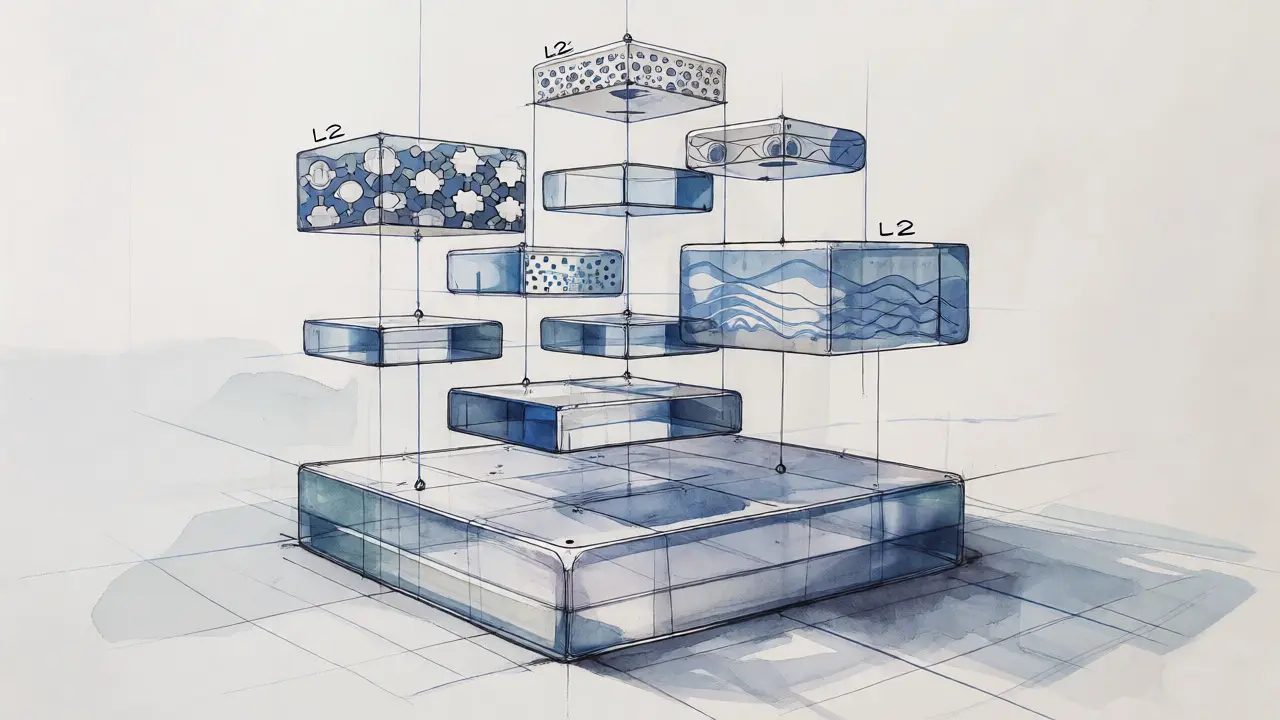
Layer 2s bypass this trilemma by not trying to be everything at once. They focus purely on scalability. By moving execution off the main chain, they free up the L1 to act solely as a settlement layer-a place where the truth is recorded, not where every single calculation happens. For developers, this means you can build apps that feel like Web2 (fast, cheap) without giving up the trustlessness of Web3.
Consider the user experience. In early 2022, minting an NFT on Ethereum could cost more than the art itself. Today, platforms like Immutable X use Layer 2 tech to process over 9,000 mints per second with negligible fees. If you're a gamer or a social media app developer, you simply cannot afford to operate on a congested L1. The friction kills adoption.
The Hidden Costs: Security Risks and Centralization
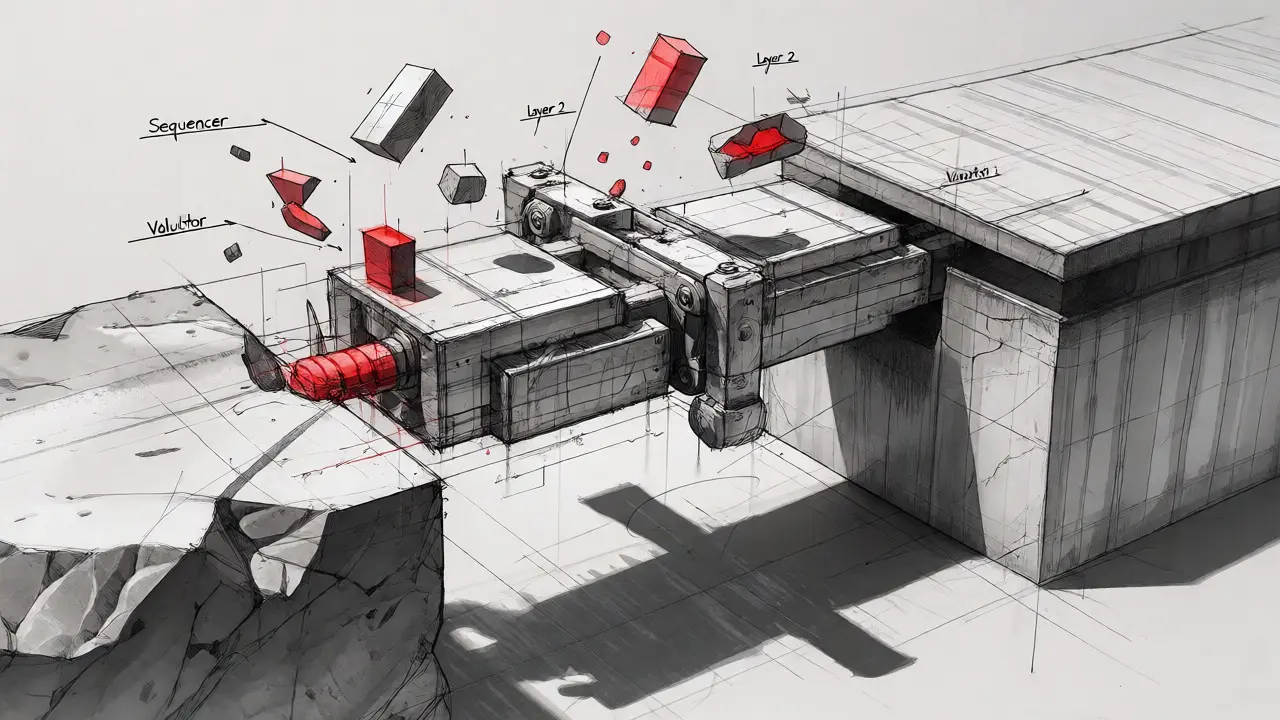
Here is the part most marketing materials gloss over: Layer 2s introduce new risks. When you move funds to an L2, you are trusting a few key things. First, you trust the sequencer-the operator who orders transactions. On many current L2s, like Optimism before its recent upgrades, there was a single sequencer. If that entity goes offline, the network halts. Unlike Ethereum, where if one miner stops, another takes over instantly, an L2 sequencer failure can freeze your funds until it comes back online.
Second, bridging is dangerous. Moving assets from L1 to L2 requires a "bridge." These bridges are smart contracts, and smart contracts get hacked. Remember the Ronin Bridge hack in 2022? Hackers stole $613 million because the sidechain had too few validators signing off on deposits. Or the Nomad Bridge incident, where a configuration error allowed anyone to drain funds. While major rollups like Arbitrum and zkSync are much safer now, the risk profile is still different from native L1 tokens.
Finally, consider withdrawal delays. If you use an Optimistic Rollup (like Arbitrum or Optimism), you must wait seven days to withdraw funds back to Ethereum. Why? Because the system assumes transactions are valid unless someone proves otherwise within that window. If you need liquidity immediately during a market crash, this delay can be painful. ZK-Rollups (like StarkNet or zkSync Era) reduce this to minutes or hours by using cryptographic proofs instead of fraud challenges, but they are technically harder to build on.
Which One Should You Use?
Your choice depends entirely on what you value more: absolute security or operational efficiency.
- Choose Layer 1 if: You are holding large amounts of wealth long-term (cold storage), you require maximum censorship resistance, or you are developing infrastructure that needs to settle final values directly. Institutions like banks often keep their core reserves on L1 because they can't tolerate even a small probability of bridge risk.
- Choose Layer 2 if: You are interacting with DeFi protocols daily, playing blockchain games, minting NFTs, or sending frequent small payments. The cost savings are too significant to ignore. For example, deploying a complex smart contract might cost $15,000 on Ethereum mainnet but only $150 on Arbitrum.
There is also a middle ground emerging. Some newer chains, sometimes called "Layer 1.5" or modular blockchains, attempt to combine aspects of both. Core DAO, for instance, uses a hybrid consensus mechanism that incorporates Bitcoin's proof-of-work security while offering faster block times. However, for most users today, the binary choice remains clear: stick to the base layer for safety, jump to the second layer for speed.
The Future: Convergence and Specialization
We are seeing a shift where L1s are becoming specialized settlement layers, while L2s become the primary interface for users. Ethereum's recent Dencun upgrade drastically reduced the cost for L2s to publish data to the main chain, making them even cheaper. Meanwhile, L1 competitors like Solana are pushing raw speed with projects like Firedancer, aiming for 1 million TPS. Does this make L2s obsolete?
Unlikely. Even if Solana hits 1 million TPS, it still faces state bloat and hardware requirements that limit decentralization. The trend is toward modularity: separate execution, consensus, and data availability into different layers. This means we will likely see hundreds of specialized L2s, each optimized for specific tasks-one for gaming, one for finance, one for identity-all settling back to robust L1s. Fragmentation is a real concern, though. With 17 different Ethereum L2 implementations currently active, interoperability between them is messy. Bridging from Arbitrum to Base is easier than it used to be, but it's still an extra step with extra risk.
For now, the ecosystem is maturing. Developers are learning to abstract away the complexity. Wallets are getting better at automatically routing transactions to the cheapest available network. As a user, you shouldn't need to know the deep technical differences anymore-you should just expect your transaction to be fast and cheap. But understanding the underlying mechanics helps you spot when something is wrong, like a stalled sequencer or a risky bridge, before it costs you money.
Is Layer 2 safer than Layer 1?
Not necessarily. Layer 1 provides independent security through decentralized validators. Layer 2 inherits security from Layer 1 but introduces additional trust assumptions, such as relying on sequencers or bridge contracts. While top-tier L2s are very secure, they have historically been targets for hacks due to these added complexities.
Why do I have to wait 7 days to withdraw from some Layer 2s?
This applies to Optimistic Rollups like Arbitrum and Optimism. The 7-day period is a "challenge window" where anyone can submit a fraud proof if they believe a transaction batch was invalid. After this period, the funds are considered final on the mainnet. ZK-Rollups do not have this long delay because they use mathematical proofs instead of challenge periods.
Can I lose my money by using a Layer 2?
Yes, primarily through bridge vulnerabilities or sequencer failures. If a bridge is hacked, your funds on the L2 side may be stolen. If the sequencer goes down permanently without a fallback mechanism, you might face delays accessing your funds. Always check if an L2 has a decentralized sequencer or a robust escape hatch mechanism.
Do all cryptocurrencies have Layer 2 solutions?
No. Most mature Layer 2 ecosystems exist around Ethereum and Bitcoin. Other L1s like Solana or Avalanche focus on scaling within their base layer rather than relying heavily on external L2s, though some experimental solutions are emerging for other chains.
Which is better for beginners: Layer 1 or Layer 2?
Layer 2 is generally better for beginners due to lower costs. Mistakes are cheaper to fix on an L2. However, ensure you use reputable bridges and wallets that support the specific L2 you are choosing. Start with established networks like Arbitrum or Base before experimenting with smaller ones.