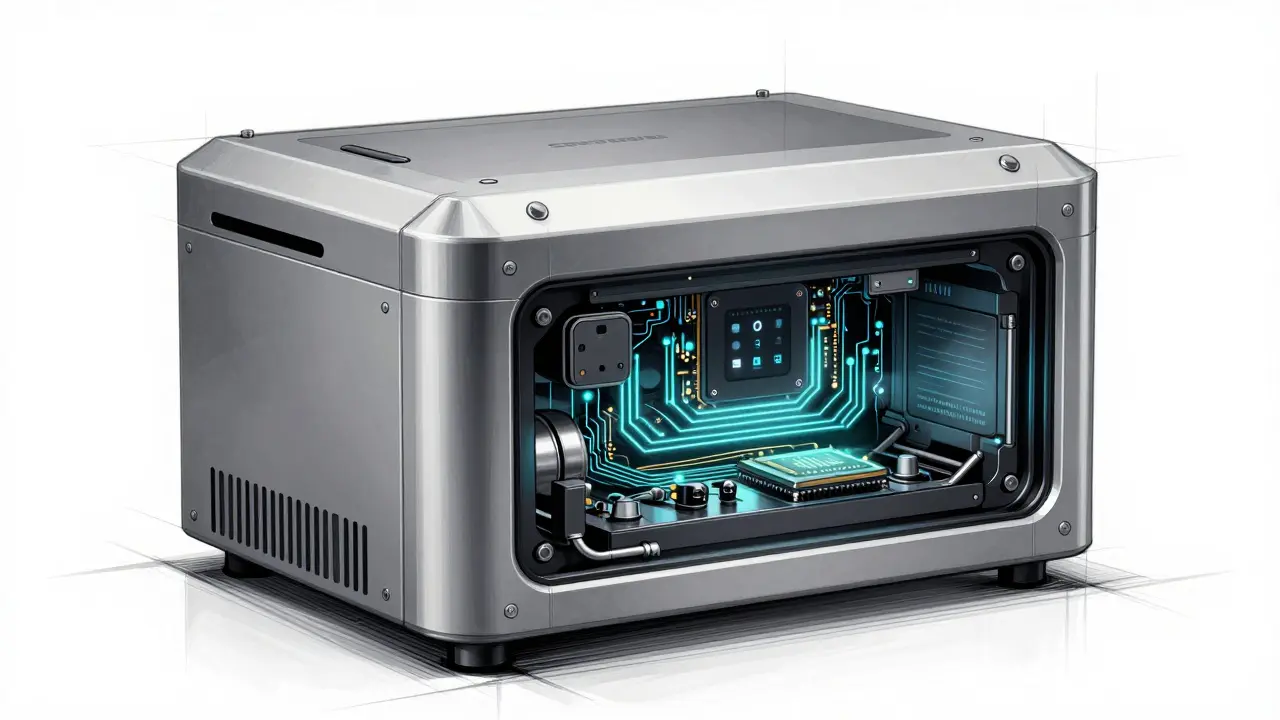
When your organization handles millions of transactions, patient records, or government data, software alone can't keep your keys safe. That's where institutional grade HSM solutions come in. These aren't just fancy encryption tools-they're physical devices built to resist tampering, theft, and cyberattacks at the hardware level. Unlike software that stores keys on servers vulnerable to malware or insider threats, HSMs lock cryptographic keys inside hardened, certified hardware that destroys them if anyone tries to break in.
What Exactly Is an Institutional Grade HSM?
An institutional grade Hardware Security Module (HSM) is a dedicated physical device designed to generate, store, and use cryptographic keys without ever exposing them to the outside world. Think of it as a digital vault with its own immune system. If someone tries to open it physically, the HSM wipes all keys automatically. These devices are certified to meet strict standards like FIPS 140-2 Level 3 a U.S. government security standard for cryptographic modules that requires physical tamper resistance, identity-based access controls, and environmental failure protection, Common Criteria an international standard for evaluating the security of IT products, often used by government agencies and critical infrastructure providers, and PCI HSM a requirement for payment processors handling cardholder data, mandating secure key management and audit trails.
These aren’t consumer gadgets. They’re used by banks, healthcare systems, cloud providers, and national security agencies. The difference between a regular server and an HSM? One can be hacked through a software flaw. The other physically prevents that from ever happening.
How HSMs Work: Beyond Software Encryption
Traditional encryption relies on software running on general-purpose servers. Keys live in memory, get loaded into RAM, and can be stolen through memory dumps, malware, or misconfigured access controls. HSMs remove that risk entirely.
Inside an HSM, you’ll find:
- True Random Number Generators (TRNGs) - These use physical phenomena like thermal noise or electrical voltage fluctuations to create keys that are truly unpredictable. No algorithm can guess them.
- Tamper-resistant enclosures - Sensors detect physical intrusion. If someone drills, probes, or opens the case, the device erases all keys within milliseconds.
- Secure operating systems - Not Linux or Windows. Custom-built, minimal OSes with no unnecessary services or open ports.
- Cryptographic accelerators - Dedicated chips that handle encryption, decryption, and digital signing faster than software, reducing latency in high-volume systems.
Keys never leave the HSM. When an application needs to sign a transaction or decrypt data, it sends the request to the HSM. The HSM does the math inside its secure boundary and returns only the result. The key? Never exposed.
Three Deployment Models: On-Prem, Cloud, or Hybrid?
Not all HSMs are the same. How you deploy them matters just as much as the hardware itself. There are three main models:
Network-Attached HSMs
These are standalone appliances connected to your network via Ethernet. They’re ideal for enterprises with multiple applications needing centralized key management. Think of them as a dedicated crypto server in your data center. Companies like Thales and Utimaco offer these. They’re great for organizations that want full control over physical access and need to meet strict data sovereignty rules.
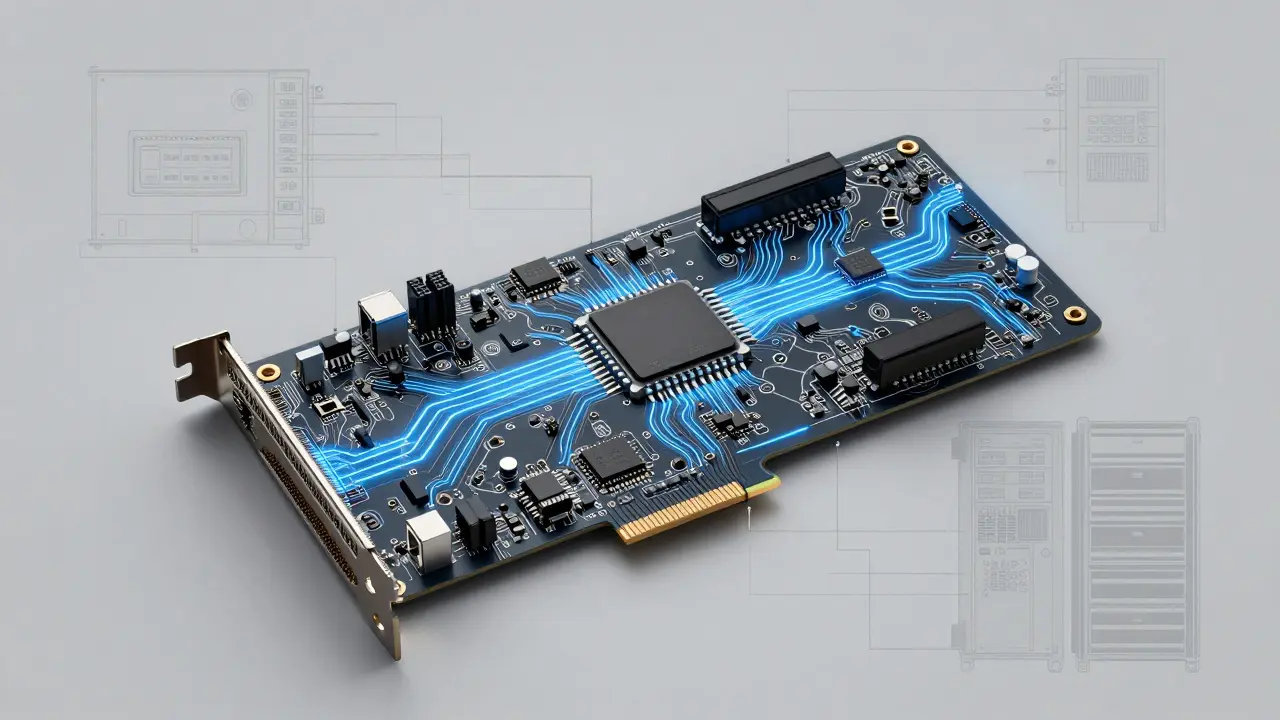
PCIe HSMs
These are cards you plug directly into a server’s expansion slot. They offer the lowest latency because they’re physically inside the same machine handling the crypto workload. Banks and trading platforms use these when every millisecond counts. The trade-off? You’re tied to specific server hardware. If the server dies, you need to migrate the HSM card-something that requires downtime and planning.
Cloud HSMs
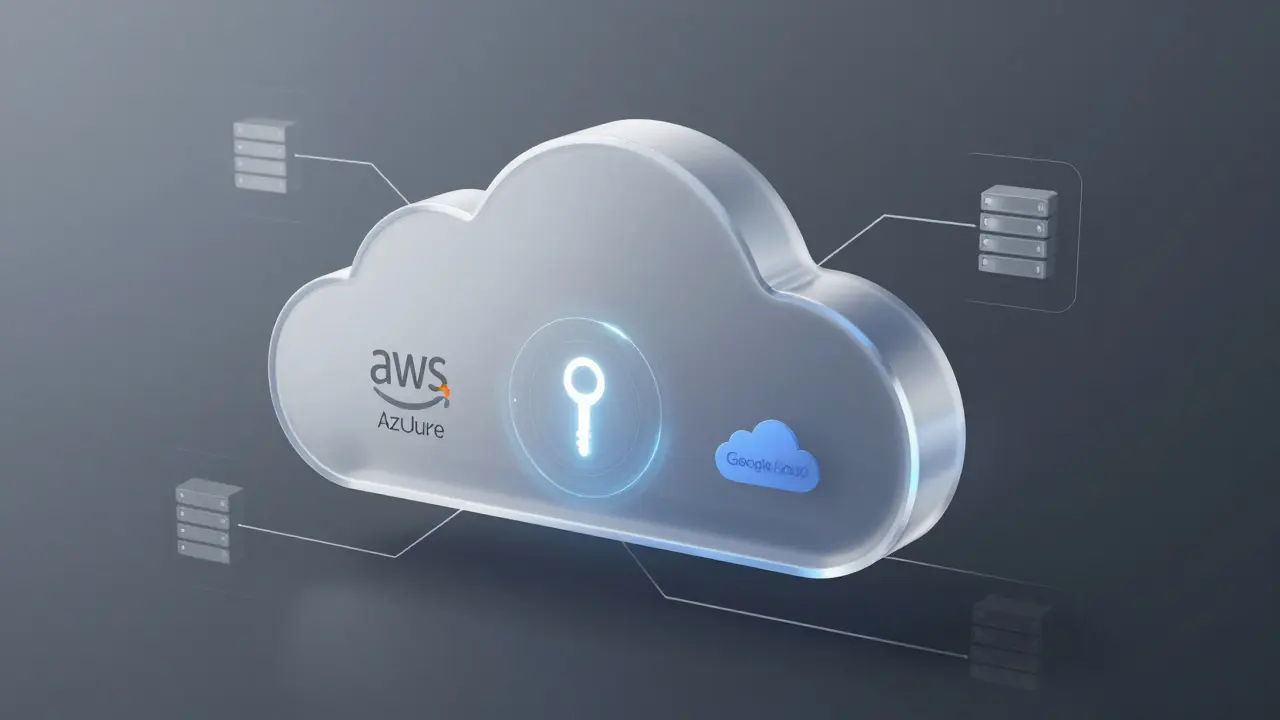
This is where the market is heading. Major cloud providers-AWS, Microsoft Azure, and Google Cloud-now offer HSM-as-a-service. You don’t buy hardware. You rent certified HSMs over the cloud. They’re FIPS 140-2 Level 3 certified, just like physical devices. This is perfect for teams running cloud-native apps, DevOps pipelines, or hybrid environments. Companies like Fortanix specialize in making cloud HSMs easy to integrate with Kubernetes, Terraform, and other modern tools.
Cloud HSMs cut out the cost and complexity of maintaining physical devices. No rack space, no power, no cooling. Just API calls. But they’re not for everyone. If your compliance rules say keys must stay on-premises, cloud HSMs won’t cut it.
Why Institutions Choose HSMs Over Software-Only Solutions
Organizations don’t adopt HSMs because they’re trendy. They do it because they have no other choice.
Take a hospital handling HIPAA-covered data. If a hacker steals encryption keys from a software server, they can decrypt years of patient records. With an HSM, even if the server is compromised, the keys are gone. No access. No breach.
Same for payment processors. PCI DSS requires that cardholder data keys be stored and used only in HSMs. Software-based key storage? That’s a violation. Fines. Loss of license. Reputation damage.
HSMs also simplify compliance. Instead of auditing dozens of servers for key storage, you audit one certified device. Audit logs are built-in. Access is role-based. Every key operation is recorded. That’s why 87% of financial institutions using HSMs report faster compliance audits, according to a 2025 Gartner survey.
What to Look for When Choosing an HSM
Not all HSMs are created equal. Here’s what actually matters:
- Certifications - Must have FIPS 140-2 Level 3 or higher. Common Criteria EAL4+ is a bonus. No certification? Walk away.
- API Support - Does it support PKCS#11, KMIP, or REST? Your apps need to talk to it. If the HSM only works with one protocol, you’re stuck.
- Scalability - Can it handle 10,000 signatures per second today? Will it handle 100,000 next year? Look for modular designs that let you add capacity without replacing the whole device.
- Key Lifecycle Management - Can you rotate, back up, and retire keys without downtime? Some HSMs make this a nightmare. Others automate it.
- Vendor Support - You’re not buying a toaster. You need 24/7 enterprise support with SLAs. Check reviews from other institutions.
Implementation Pitfalls and How to Avoid Them
Many organizations buy HSMs and then struggle to use them. Here’s why:
- Integration surprises - Your app uses Java. The HSM only supports C libraries. You need wrappers. Budget for that.
- Overlooking key backup - If the HSM fails and you didn’t back up keys? All encrypted data is lost. Always enable key export to secure, air-gapped storage.
- Ignoring user training - If your team doesn’t know how to rotate keys or read logs, the HSM becomes a black box. Train them. Or hire someone who does.
- Choosing the wrong model - If you’re cloud-first but buy a PCIe HSM, you’re fighting your own architecture. Match the HSM to your tech stack.
Start small. Pick one critical workload-like signing API tokens or encrypting database backups. Test the HSM there. If it works, expand.
The Future of HSMs: Quantum, Cloud, and Automation
The next five years will change HSMs again. Quantum computing isn’t here yet, but HSM vendors are already building support for post-quantum cryptography algorithms. These are new mathematical approaches designed to resist attacks from future quantum machines.
Cloud HSMs will get smarter. Expect deeper integration with CI/CD pipelines, automatic key rotation triggered by DevOps tools, and zero-trust access controls tied to identity providers like Okta or Azure AD.
Hybrid deployments will become standard. An organization might use a PCIe HSM for core banking systems, a cloud HSM for mobile apps, and a network-attached HSM for legacy ERP systems-all managed through a single dashboard.
The bottom line? HSMs aren’t going away. They’re evolving. And for any institution handling sensitive data, they’re no longer optional. They’re the baseline.
What’s the difference between a regular HSM and an institutional grade HSM?
Regular HSMs are often designed for small businesses or personal use and may lack certifications like FIPS 140-2 Level 3 or tamper-evident hardware. Institutional grade HSMs are built for enterprises and governments-they meet strict compliance standards, have hardened physical security, support high-volume operations, and include enterprise-grade support and key management tools. The difference is in certification, durability, scalability, and auditability.
Can I use an HSM with my existing software?
Yes, if your software supports standard cryptographic interfaces like PKCS#11, KMIP, or REST APIs. Most enterprise applications-like databases, payment gateways, and identity providers-have built-in HSM support. If not, you’ll need a middleware layer or SDK from the HSM vendor. Always test integration before deployment.
Are cloud HSMs as secure as physical ones?
Yes. Cloud HSMs from AWS, Azure, and Google Cloud are physically isolated, FIPS 140-2 Level 3 certified devices housed in secure data centers. They use the same hardware and cryptographic algorithms as on-premises HSMs. The only difference is you don’t own the box-you rent access to it. For most organizations, the security level is identical.
Do I need an HSM if I’m using blockchain?
Absolutely. Blockchain secures transactions, but not the keys. If your private keys are stored on a regular server, a hacker can steal them and drain your wallets or sign fraudulent transactions. Institutional HSMs protect those keys at the hardware level, making blockchain systems truly secure. Many crypto custodians and enterprise blockchain platforms require HSMs for compliance.
How much does an institutional HSM cost?
On-premises HSMs range from $5,000 to $50,000+ depending on performance and features. Cloud HSMs are billed by usage-typically $0.40 to $1.20 per hour, which adds up to $300-$900/month for moderate workloads. Most organizations see ROI within 6-12 months by avoiding breach costs, compliance fines, and downtime.



Megan Lavery
23 February, 2026 . 05:24 AM
Honestly, this is one of those topics that feels like magic until you actually need it. I work in healthcare IT, and when we implemented our HSM, it was like finally locking the vault after years of leaving the door open. No more sleepless nights wondering if someone hacked our keys. The audit logs alone made our compliance team cry happy tears. 🙌
Mae Young
24 February, 2026 . 23:46 PM
Oh, so now we're treating hardware like it's the Holy Grail? Let me guess - the same people who think air-gapped servers are 'unhackable' also believe in fairy tales. HSMs aren't magic. They're just expensive boxes with firmware that *might* not have backdoors... unless you're using a vendor with ties to certain intelligence agencies. And don't even get me started on cloud HSMs - 'physically isolated' my foot. The cloud is just someone else's server - with more paperwork.
Trenton White
26 February, 2026 . 01:53 AM
Interesting perspective. I’ve seen HSMs deployed across government and financial sectors in Asia and Europe - the cultural approach to security varies wildly. In Germany, they demand physical access logs and biometric controls. In Japan, it’s about ritualized key rotation ceremonies. The tech is universal, but the trust structures around it? That’s where the real nuance lies.
Cheryl Fenner Brown
26 February, 2026 . 03:24 AM
ok but like… cloud hsm? really? 😳 i mean, i get it, it’s convenient, but what if aws gets hacked?? like… what if they just… accidentally delete the whole thing?? 🤯 i’m not trusting my bank’s keys to some guy in a hoodie in virginia. also, why do they charge by the hour?? like, is this crypto? 🤔
Michael Teague
26 February, 2026 . 14:23 PM
Let’s be real. You’re spending $50k on a box so you don’t have to patch your servers? That’s not security. That’s denial. Every HSM ever made has had a firmware bug. Every one. And if you think your ‘certified’ device is immune to insider threats, you haven’t worked in enterprise IT. I’ve seen admins with root access walk out with keys on USB drives. Hardware doesn’t fix human stupidity.
Cory Derby
28 February, 2026 . 01:15 AM
A thoughtful and comprehensive overview. I would only add that while certifications like FIPS 140-2 Level 3 are essential, they are not sufficient on their own. Operational discipline - key rotation schedules, access reviews, and change control protocols - is what ultimately determines whether an HSM delivers value. The hardware is only as secure as the policies that govern it.
Colin Lethem
1 March, 2026 . 00:29 AM
bro i just used a cloud hsm for my side project and it was insane. like, i clicked a button in terraform, and boom - encrypted database backups, no sweat. the api is clean, the docs are actually good, and i didn’t have to buy a server or hire a sysadmin. if you’re not using one in 2025, you’re just making extra work for yourself. also, the cost? less than my monthly coffee habit.
lori sims
1 March, 2026 . 08:41 AM
There’s something beautiful about how these devices just… vanish the keys. Like a ghost. You ask it to sign something, and it does - but never lets you see the tool it used. It’s almost poetic. Like a monk who chants a prayer but never reveals the words. We’re so obsessed with visibility in tech, but sometimes, the safest thing is the thing you can’t touch.
Kristi Emens
2 March, 2026 . 05:01 AM
I appreciate the depth of this post. The point about hybrid deployments is critical. Many organizations are stuck in legacy systems while trying to adopt cloud-native practices. A unified key management layer that can bridge PCIe, network-attached, and cloud HSMs is not just a convenience - it’s a necessity for scalability. The future belongs to orchestration, not isolation.
christopher luke
2 March, 2026 . 17:19 PM
This is exactly the kind of content we need more of! 🔥 HSMs are the unsung heroes of cybersecurity. Most people think firewalls and MFA are the big guns - but nope. The real MVP is the box that never lets the key leave its cage. Keep pushing this message! 🙏
Mary Scott
3 March, 2026 . 01:08 AM
Who really owns the HSM in the cloud? Is it AWS? The government? Who’s monitoring it? What if the NSA has a backdoor? You think they don’t? And what about the people who install it? They’re all contractors. No one’s vetted. This whole thing is a lie. We’re all just playing along.
Shannon Holliday
4 March, 2026 . 05:25 AM
Cloud HSMs are the future 🚀 and honestly? I’m so glad we switched. No more hauling servers around. No more cooling bills. Just pure, silent, certified security. Also, the dashboard is gorgeous. Like, I actually enjoy checking the logs now. 😍
Lucy Simmonds
4 March, 2026 . 21:02 PM
Oh great, another 'trust the box' article. You know what's really secure? Not having keys at all. Or better yet - not storing data. But no, we need to keep everything online and then buy a $40k box to 'protect' it. Classic. Also, 'FIPS certified'? That's just a sticker. Anyone can pay for that. The real test is if it survives a hammer. And guess what? It doesn't. Ever.
Jessica Carvajal montiel
5 March, 2026 . 23:18 PM
Let me tell you about the time a vendor’s firmware update bricked our entire HSM cluster. We had zero backups because 'keys are never exported.' So yeah - we lost 3 years of encrypted patient records. The 'tamper-proof' box didn’t care about a bad patch. Now I only trust air-gapped, hand-written logs. And even then… I sleep with a baseball bat.
Sean Logue
6 March, 2026 . 00:12 AM
Been using network-attached HSMs for 12 years. They’re not sexy, but they work. The real win? When your CFO stops asking if the keys are safe. That silence? Priceless. Also, side note: if your vendor doesn’t offer 24/7 phone support with a 1-hour SLA - run. You’re not buying security. You’re buying a warranty.
Carl Gaard
7 March, 2026 . 01:26 AM
Just had a panic attack reading this. 😅 My team’s been using a PCIe HSM for our trading app - and I just realized we never updated the firmware in 18 months. I’m gonna go fix that right now. Also… can someone explain PKCS#11 to me like I’m 5? 🙏