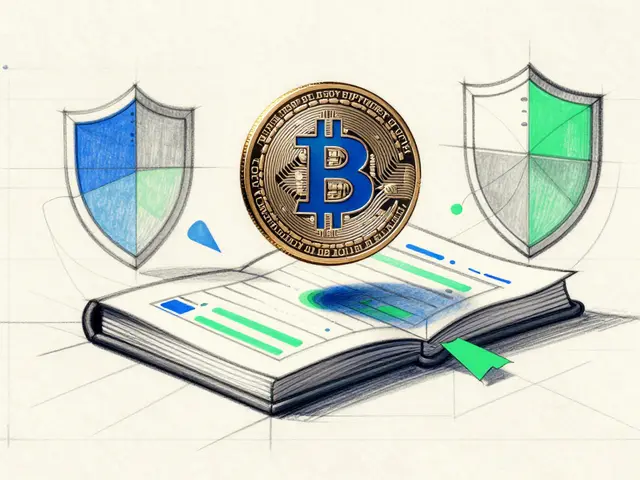
Imagine a financial system where your every coffee purchase, medical bill, or donation is recorded on a public ledger for anyone-including corporations and governments-to see. For many, this isn't a dystopia; it's the current reality of privacy coins is a category of cryptocurrencies engineered to provide anonymity and financial sovereignty by obfuscating transaction details on public blockchains. However, these digital assets are currently locked in a high-stakes game of cat-and-mouse with global regulators. With 97 countries now implementing rules to curb anonymity, the big question is no longer whether privacy coins are useful, but whether they can survive the regulatory crush.
The Core Tension: Anonymity vs. Compliance
The value of privacy coins lies in their ability to keep transactions "off the radar." While Bitcoin is often called anonymous, it's actually pseudonymous-your identity is hidden, but your transaction history is a transparent map. Privacy coins fix this by hiding the sender, the receiver, and the amount sent. This is a godsend for activists in authoritarian regimes or businesses protecting trade secrets, but it's a nightmare for tax authorities and law enforcement.
Regulators, led by the Financial Action Task Force (FATF), view these features as tools for illicit finance. The conflict has reached a boiling point. By 2025, the gap in how these coins are treated compared to transparent assets became glaring. According to Chainalysis, while privacy coins make up a tiny 0.34% of total transaction volume, they've been the target of 38% of all regulatory enforcement actions. This suggests a targeted campaign to eliminate anonymity in digital finance.
Technological Battlegrounds: Monero and Zcash
Not all privacy coins approach the problem the same way. The two heavyweights, Monero and Zcash, represent two entirely different philosophies of survival.
Monero (XMR) is the maximalist. It uses ring signatures to mix your transaction with others, stealth addresses to hide recipients, and confidential transactions to mask amounts. Privacy is the default; there is no "opt-out." This makes it the gold standard for anonymity, but it's also why it's being purged from centralized exchanges. When Kraken delisted Monero in 2023, it signaled a shift: the more private a coin is, the harder it is to trade on a regulated platform.
On the other hand, Zcash (ZEC) takes a hybrid approach. It utilizes zk-SNARKs (zero-knowledge succinct non-interactive arguments of knowledge) to offer "shielded transactions." The key difference? Privacy is optional. Users can choose between a private shielded address or a transparent one that looks just like a Bitcoin address. This flexibility is a strategic bet on regulatory acceptance.
| Feature | Monero (XMR) | Zcash (ZEC) |
|---|---|---|
| Privacy Model | Private by Default | Optional (Shielded/Transparent) |
| Key Technology | Ring Signatures / RandomX | zk-SNARKs |
| Blockchain Size | ~175 GB | ~65 GB |
| Avg. Throughput | 20 TPS | 15 TPS |
| Regulatory Stance | Maximalist Privacy | Compliance-Friendly |
The Regulatory Squeeze and the "Travel Rule"
The biggest hurdle currently facing these assets is the Travel Rule. This FATF requirement forces exchanges to share sender and receiver information for transfers over $1,000. Because Monero and Zcash's core tech obscures this data, they are fundamentally incompatible with this rule. This has led to a massive contraction in the market; total market cap for privacy coins dropped from $6.4 billion in 2023 to $3.8 billion by early 2025.
The European Union is taking this a step further. The MiCA (Markets in Crypto-Assets) Phase 2 implementation is expected to prohibit anonymous wallets by 2027. This could effectively ban privacy coins from the EU's massive crypto market. For the average user, this means the "exit strategy" is becoming more complex. We're seeing a migration toward Decentralized Exchanges (DEXs) and atomic swaps, where no central authority can block a trade. But these alternatives come with a cost-fees on no-KYC swap services can be 2.5% to 4.1% higher than on traditional exchanges.
Can "Regulated Privacy" Actually Work?
There is a glimmer of hope in the form of "regulated privacy." Some projects are trying to build backdoors-not for hackers, but for auditors. Zcash introduced "viewing keys," which allow a user to selectively disclose their transaction history to a regulator without making the whole network public. While institutional players like JP Morgan's Onyx division have experimented with Zcash Enterprise for confidential settlements, the retail crowd isn't buying it. Less than 5% of Zcash users actually use these viewing keys.
Even Monero is seeing tentative experiments. The Swiss Financial Market Supervisory Authority (FINMA) has worked with developers on a "Privacy-Preserving AML" framework. The idea is to use zero-knowledge proofs to prove a transaction is legitimate (e.g., it didn't come from a sanctioned wallet) without revealing who sent the money. If this works, it could bridge the gap between the right to privacy and the need for security.
Practical Realities: Using Privacy Coins Today
If you're trying to move into privacy coins, be prepared for a steep learning curve. An Altrady survey found that new users spend over 11 hours mastering their first private transaction-compared to just 2 hours for Bitcoin. The complexity comes from managing non-custodial wallets like Cake Wallet or the Monero GUI Wallet and avoiding the traps of centralized exchanges.
There are also hardware hurdles. If you want to run a full node for Monero, you'll need a beefy machine with at least 8 GB of RAM to handle the 175 GB ledger. Most people settle for lightweight SPV wallets, but this means trusting a third-party node with some of your data, which partially defeats the purpose of using a privacy coin in the first place.
The Fork in the Road: 2027 and Beyond
As we look toward 2027, the market is bifurcating. We are seeing the emergence of two distinct paths. One path leads toward "Institutional Privacy," where coins like Zcash evolve into enterprise tools for payroll and B2B settlements. These will be compliant, regulated, and integrated into the traditional financial system.
The other path is the "Underground Economy." Fully private coins like Monero are retreating to decentralized infrastructure and darknet markets. While this reduces their overall market cap, it strengthens their role as a tool of last resort for those in high-risk environments. Whether you're a journalist in a conflict zone or a donor for a Ukrainian NGO, the demand for true anonymity isn't going away; it's just moving where regulators can't reach it.
Why are exchanges delisting privacy coins like Monero?
Exchanges are under pressure from regulators to comply with Anti-Money Laundering (AML) and Know Your Customer (KYC) laws. Because privacy coins hide the transaction trail, exchanges cannot satisfy the FATF "Travel Rule," which requires them to report sender and receiver details. To avoid heavy fines or losing their operating licenses, many exchanges simply remove these coins from their platforms.
Is Zcash more "legal" than Monero?
Not necessarily "more legal," but Zcash is more "compatible" with current regulations. Because Zcash offers an optional transparency model (transparent addresses), institutions can use it while still providing audit trails to regulators. Monero's privacy is mandatory, making it a harder sell for regulated entities but a stronger tool for absolute anonymity.
What is the FATF Travel Rule?
The Travel Rule is a standard set by the Financial Action Task Force that requires virtual asset service providers (like exchanges) to collect and share personal data of the originators and beneficiaries of crypto transfers that exceed a certain threshold (usually $1,000). This is designed to prevent money laundering and terrorist financing.
Can I still buy privacy coins if my exchange doesn't support them?
Yes, but it's more difficult. Users typically turn to Decentralized Exchanges (DEXs), atomic swaps, or no-KYC swap services. These methods allow you to trade one cryptocurrency for another without a central intermediary, though they often come with higher fees and a more complex technical setup.
Will MiCA ban privacy coins in Europe?
The MiCA (Markets in Crypto-Assets) framework, specifically Phase 2, is expected to prohibit anonymous crypto wallets starting in 2027. While it may not "ban" the coins themselves from existing, it will likely make it illegal for regulated service providers in the EU to offer wallets or exchanges that support fully anonymous transactions.

Prachi Bhadarge
15 April, 2026 . 12:45 PM
Oh sure, let's just trust the governments to decide what 'legitimate' privacy looks like. That'll definitely end well for everyone involved.
Trudy Morse
16 April, 2026 . 19:07 PM
Privacy is just a social construct anyway. We're all just trading one form of visibility for another in the digital age.
Andrew Southgate
18 April, 2026 . 19:02 PM
If you're looking to get started with Monero, I really suggest looking into the GUI wallet first because it's much more intuitive for beginners, and while the learning curve is a bit steep as mentioned, there are some fantastic community guides out there that can walk you through the process of setting up a local node if you have the hardware to support it, which honestly makes the whole experience so much more rewarding and secure in the long run!
Adam Mann
19 April, 2026 . 10:07 AM
It's actually really inspiring to see how people are finding new ways to keep their information safe, and I truly believe that as we move forward, we'll find a beautiful balance where everyone can feel secure and free, because the human spirit always finds a way to innovate when it comes to protecting basic rights, and it's just so wonderful to see the global community coming together to explore these technical solutions for a better tomorrow for all of us regardless of where we live!
Yuhan Mo
21 April, 2026 . 03:25 AM
The implementation of zk-SNARKs effectively mitigates the transparency issue by allowing for succinct non-interactive proofs, which optimizes the verification process without compromising the underlying cryptographic integrity of the transaction layer.
Michelle Stanish
21 April, 2026 . 07:36 AM
Zcash isn't really a privacy coin if privacy is optional.
Abhinav Chaubey
22 April, 2026 . 08:27 AM
Typical Western panic about privacy coins while they ignore how their own central banks are planning the same surveillance with CBDCs. I've seen the tech and it's obvious that the decentralized approach is the only way to ensure sovereignty, especially for developing nations that are tired of being bullied by the dollar-centric system.
Jeff Barlett
22 April, 2026 . 23:29 PM
Wait, so we're just going to pretend that the "underground economy" isn't just a fancy word for a digital wasteland? This is absolutely tragic and the sheer audacity of thinking a few atomic swaps will save the market is honestly comical!
Sean Douglas
24 April, 2026 . 07:12 AM
The sheer, unadulterated horror of a world where my financial history is a public gallery for the bored masses to scrutinize is simply too much to bear. My soul weeps for the death of the secret, for the annihilation of the private sphere, and for the cold, sterile efficiency of a ledger that remembers every single mistake I've ever made with my wallet!
Kevin Lư
24 April, 2026 . 11:49 AM
I just think it's kind of wild that people are so obsessed with hiding their money when most of us are barely making rent anyway, but hey, I guess some people just love the drama of playing spy with their crypto.
Kim Smith
25 April, 2026 . 09:24 AM
i feel like the whole idea of regulation is just a way for people in power to feel like they're still in control while the actual tech is moving way beyond them and honestly who even cares about the travel rule when the whole point of crypto was to get away from the middleman in the first place... its just such a weird cycle of trying to fit a square peg in a round hole for the sake of bureaucracy and im just vibing with the idea that the code is the only real law that matters anyway
siddharth narula
26 April, 2026 . 07:58 AM
It is a moral imperative that we maintain the sanctity of financial privacy to protect the individual from the overreach of the state ⚖️. One must wonder if the architects of these regulations have any regard for the philosophical concept of autonomy in the digital age 🧐.
Chintu Parikh
28 April, 2026 . 05:25 AM
I am entirely in agreement with the sentiment that a middle ground must be established between regulatory requirements and the fundamental right to privacy. Let us strive to support the developers who are creating these innovative zero-knowledge proofs, as they provide a most promising path toward a harmonious financial future!
Mike Kempenich
29 April, 2026 . 08:05 AM
The transition to DEXs is basically inevitable at this point. It's not like anyone actually expects centralized exchanges to fight for our privacy when their bottom line depends on regulatory approval.
Vicky Duffala
30 April, 2026 . 18:51 PM
We are witnessing a rebirth of financial freedom! The pushback from governments is just proof that these tools actually work and are necessary for the evolution of human liberty. Keep pushing the boundaries and keep learning the tech because knowledge is the only thing they can't tax or regulate 🚀
Kaitlyn Wu
1 May, 2026 . 15:08 PM
Using non-custodial wallets is the only way to actually own your assets. If you're still keeping your privacy coins on an exchange, you're not actually using a privacy coin, you're just holding a placeholder for one.
nikki krinkin
2 May, 2026 . 17:47 PM
I've just been watching the market caps drop and it's kind of a quiet reminder that the hype cycle always crashes into reality eventually.