Imagine you want to use Bitcoin in a DeFi protocol on Ethereum. You can’t just move it over; you need a "wrapped" version. This is where the choice between centralized and decentralized wrapped assets becomes critical. One model relies on trusted third parties holding your original asset, while the other uses smart contracts to automate the process without middlemen. Choosing the wrong one can expose you to counterparty risk or smart contract bugs.
This guide breaks down exactly how these two models work, their security profiles, and which one fits your strategy. We will look at real-world examples like WBTC is a wrapped token representing Bitcoin on the Ethereum network, backed by BTC held by custodians. and compare them with newer decentralized alternatives. By the end, you will know how to evaluate the trust assumptions behind any wrapped asset you hold.
Quick Summary / Key Takeaways
- Centralized wrapped assets rely on custodians (like exchanges or banks) to hold the underlying asset. They are faster to issue but carry high counterparty risk.
- Decentralized wrapped assets use smart contracts and cryptographic proofs to lock assets. They remove single points of failure but introduce smart contract risk.
- The total value locked in major bridge protocols has historically exceeded that of individual stablecoins, highlighting the systemic importance of this infrastructure.
- Always check the collateral ratio and audit status before interacting with any wrapped asset.
How Centralized Wrapped Assets Work
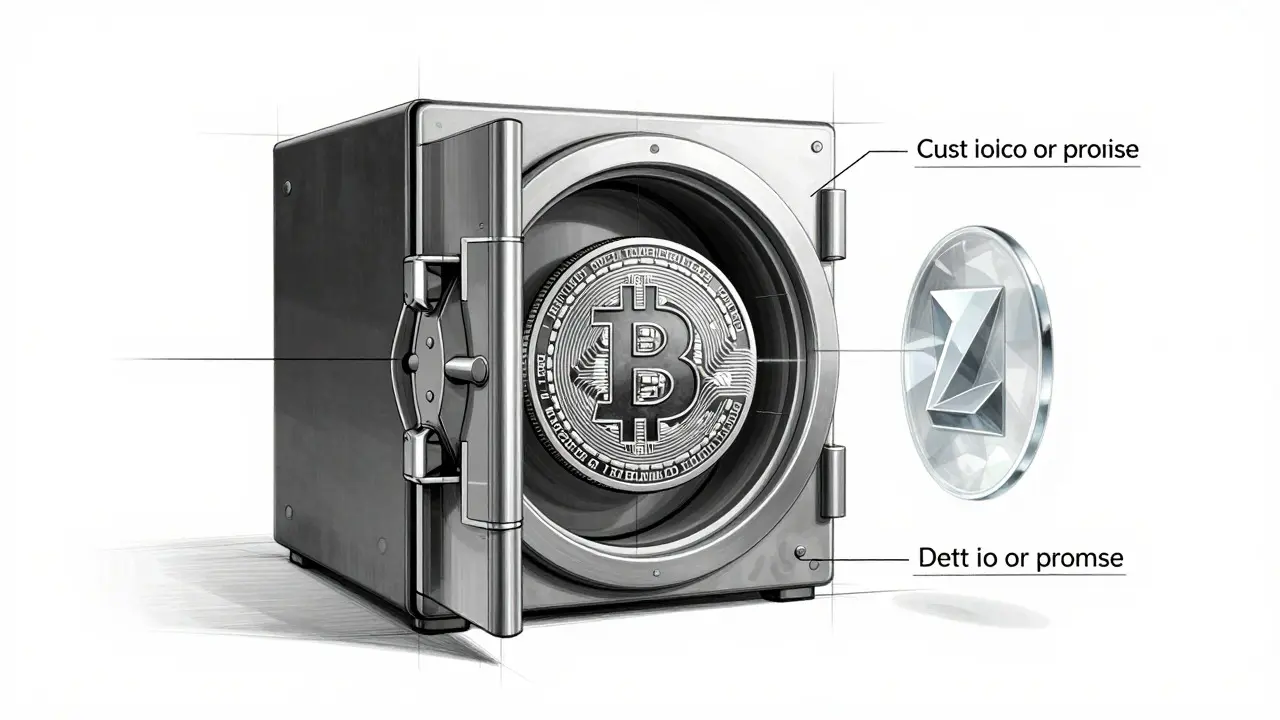
In a centralized model, a specific entity acts as the issuer. When you send Bitcoin to a designated address, the issuer confirms receipt and mints an equivalent amount of wrapped tokens on another chain, such as Ethereum. The original Bitcoin sits in cold storage controlled by the issuer. You now hold a promise-a digital IOU-that you can redeem for your original Bitcoin later.
The most prominent example here is Wrapped Bitcoin (WBTC), a ERC-20 token on Ethereum that represents Bitcoin, issued by a consortium of custodians including BitGo. To mint WBTC, you must request it through a partner exchange. The custodian verifies the deposit, locks the BTC, and triggers the smart contract to create new WBTC. This process is straightforward for users because the interface is familiar, similar to trading on a central exchange.
However, this convenience comes with a trade-off. If the custodian goes bankrupt, loses the private keys, or simply refuses to release your funds, your wrapped asset becomes worthless. This is known as counterparty risk. In 2023, several smaller wrapped asset projects faced scrutiny when auditors found discrepancies in their backing reserves, reminding investors that "trust us" is not a solid foundation for financial security.
The Mechanics of Decentralized Wrapped Assets
Decentralized wrapped assets aim to eliminate the need for a trusted third party. Instead of sending your asset to a company’s wallet, you lock it in a smart contract on the source chain. A network of validators or relayers then monitors this lock event. Once confirmed, they submit a transaction to the destination chain to mint the wrapped token.
This often involves cross-chain messaging protocols like LayerZero is an omnichain interoperability protocol that enables secure communication between different blockchains. or Axelar Network, a protocol that connects blockchains using a universal virtual machine architecture. These protocols use a set of independent validators who sign messages to prove that an asset was locked. No single validator can act alone; they must reach consensus. If one fails, the others cover for it.
Another approach is "native" wrapping via liquidity pools. For instance, wstETH is a liquid staking derivative that represents staked ETH on Ethereum, allowing holders to earn rewards while maintaining liquidity. Here, the "wrapping" is tied to the staking mechanism itself. Users deposit ETH into a staking pool, receive wstETH, and can use it in DeFi. The backing is guaranteed by the Ethereum staking system, not a corporate vault. This reduces custodial risk significantly but introduces risks related to the staking protocol’s smart contracts.
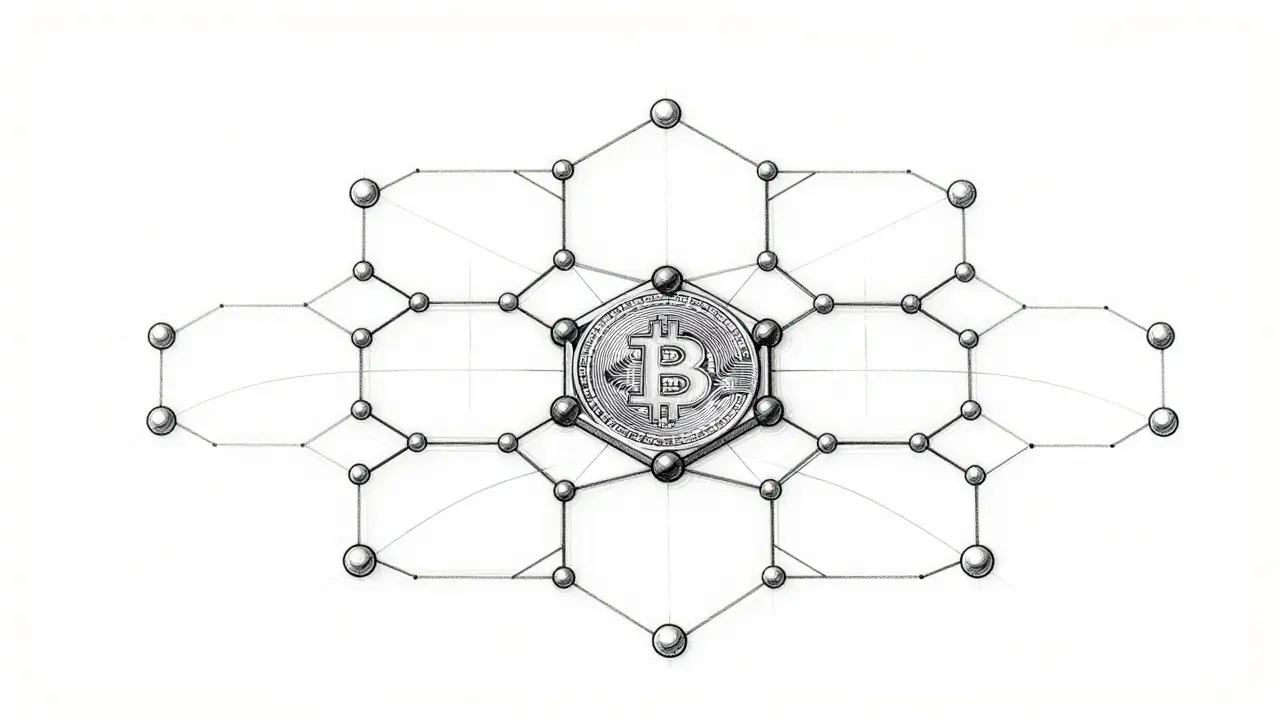
Comparing Risk Profiles: Custody vs. Code
The fundamental difference lies in what you are trusting. With centralized wrapped assets, you trust people and institutions. With decentralized ones, you trust code and mathematical proof. Neither is perfect, but the failure modes are different.
| Feature | Centralized Model | Decentralized Model |
|---|---|---|
| Primary Trust Assumption | Custodian integrity and solvency | Smart contract correctness and validator honesty |
| Issuance Speed | Fast (minutes to hours) | Moderate (depends on finality times, usually 15 mins - 24 hrs) |
| Transparency | Low (requires audits/attestations) | High (on-chain verifiable reserves) |
| Main Risk Vector | Custodian bankruptcy, fraud, key loss | Smart contract exploits, oracle failures |
| Example Projects | WBTC, renBTC (historical) | wstETH, Lido, LayerZero-based bridges |
Historically, bridge hacks have been the biggest threat to decentralized wrapped assets. In 2022, the Ronin Bridge hack resulted in a $600 million loss due to a compromised validator key. This incident highlighted that even "decentralized" systems can fail if their validator sets are too small or poorly distributed. Conversely, centralized issuers face regulatory risks. If a government freezes a custodian’s bank accounts, minting and redemption can halt indefinitely, regardless of the smart contract’s logic.
Evaluating Security and Transparency
When assessing a wrapped asset, look beyond the marketing. For centralized options, ask: Who holds the keys? Are there multi-sig requirements? How often are attestations published? Look for firms like KPMG or Deloitte issuing monthly reserve reports. If the last attestation was six months ago, be cautious.
For decentralized options, check the validator set size. A network with only five validators is riskier than one with fifty. Also, review the smart contract audits. Reputable firms like Trail of Bits or OpenZeppelin provide detailed reports. Check if the protocol is permissionless-can anyone become a validator? Permissionless systems tend to be more resilient against coordinated attacks.
Also consider the collateralization ratio. Some wrapped assets are over-collateralized, meaning the underlying assets held exceed the wrapped tokens in circulation. This buffer protects against minor price fluctuations or partial losses. Under-collateralized assets rely heavily on the issuer’s ability to backfill gaps quickly, which adds complexity and risk.
Practical Implications for Investors
Your choice depends on your portfolio size and risk tolerance. Small amounts might be fine with centralized solutions for their ease of use. However, for significant holdings, decentralization offers peace of mind. You don’t have to worry about a CEO making bad decisions or a server room catching fire. You only need to monitor the code and the validator health.
Here is a simple decision framework:
- Check the backing: Is the asset fully backed? Can you verify this on-chain?
- Assess the issuer: Is it a single company or a distributed network?
- Review the history: Has the protocol survived major market cycles without depegging?
- Consider exit liquidity: Can you easily unwrap the asset back to its native form?
If you are using wrapped assets for yield farming, ensure the yield doesn’t come from unsustainable sources. Sometimes, high APYs on wrapped tokens are subsidized by emissions, not organic demand. This can lead to death spirals if the subsidy stops. Always read the whitepaper to understand where the yield comes from.
Frequently Asked Questions
Are decentralized wrapped assets safer than centralized ones?
Not necessarily. Decentralized assets remove custodial risk but introduce smart contract risk. Centralized assets are safe only if the custodian is solvent and honest. Both require diligence. Generally, decentralized systems are preferred for large capital because they eliminate single points of human failure.
What happens if a wrapped asset depegs?
A depeg means the wrapped token trades below the value of the underlying asset. This usually signals a problem with the backing or the bridge. In centralized models, it may indicate insolvency. In decentralized models, it could be a temporary liquidity issue or a bug. Holders should monitor news and potentially sell early to avoid further losses if the root cause isn't clear.
Can I use any wrapped asset in any DeFi protocol?
No. Protocols specify which tokens they accept. For example, Aave accepts WBTC and wstETH, but not every random wrapped token. Always check the protocol's documentation to see supported assets. Using an unsupported token might result in it being treated as a low-quality collateral or rejected entirely.
How do I verify the reserves of a wrapped asset?
For decentralized assets, you can often view the smart contract balance directly on a block explorer like Etherscan. For centralized assets, look for third-party attestations or audits. Some platforms integrate real-time reserve dashboards. If no data is available, assume the lowest level of transparency and proceed with caution.
Is there a fee to wrap and unwrap assets?
Yes. Fees vary. Centralized issuers may charge a percentage (e.g., 0.05%) or a flat fee. Decentralized bridges charge gas fees on both chains plus a service fee for the validators. It is important to factor these costs into your strategy, especially for frequent movements between chains.