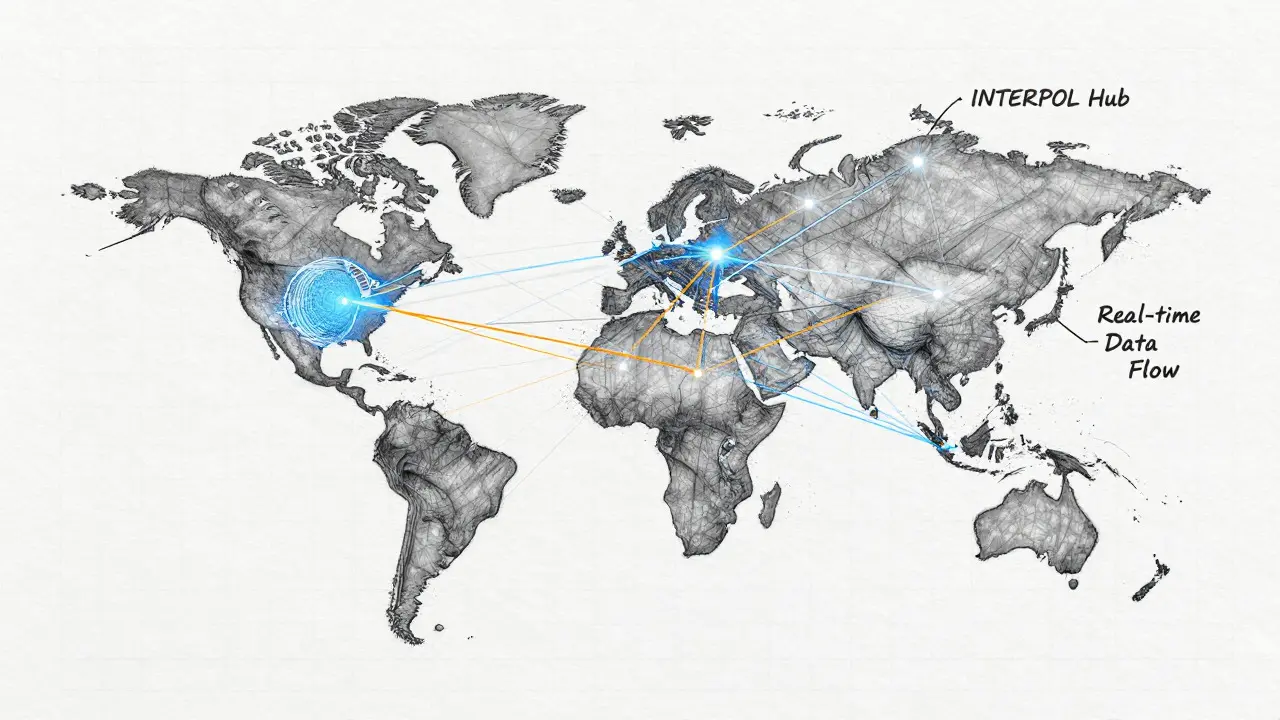
For years, losing money to a cryptocurrency scam meant accepting the loss. The old rule of thumb was simple: once crypto leaves your wallet, it’s gone forever. But in 2025 and into 2026, that narrative is shifting. Thanks to intense international cooperation on crypto crime enforcement, law enforcement agencies are no longer working in silos. They are connecting dots across borders, freezing assets in real-time, and dismantling criminal networks that span continents.
The landscape has changed because the criminals changed first. Cybercrime is inherently borderless. A victim in Germany might be scammed by an operator in Côte d'Ivoire, using servers hosted in a third country. To catch them, investigators need a unified front. This article breaks down how this global machinery works, who is leading the charge, and what it means for your digital assets today.
How International Coordination Actually Works
The backbone of modern crypto crime enforcement is not just better software; it is better communication between nations. For decades, jurisdictional limits were the biggest hurdle. An investigator in South Korea couldn’t easily freeze an account in Dubai without a lengthy legal process that allowed criminals to move funds hours or even minutes before the order arrived.
INTERPOL has stepped in as the central hub to solve this. With 195 member countries, it acts as the bridge between local police forces and international financial systems. The key mechanism here is the Global Financial Crime Programme, which was established in 2014 but has evolved rapidly with the rise of digital assets.
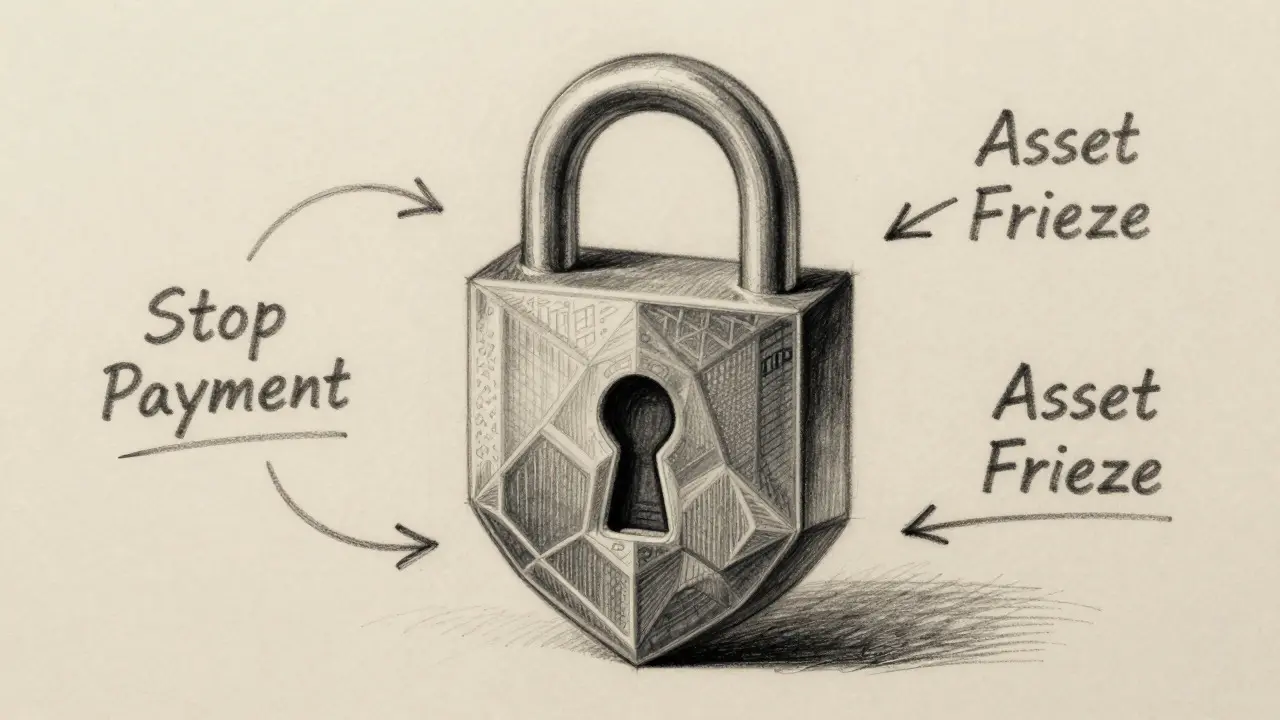
A critical tool in this arsenal is the Global Rapid Intervention of Payments (I-GRIP). Launched in 2022, this system enables real-time communication between financial intelligence units across borders. Think of it as a global "stop-payment" button for crypto transactions. When a fraud is detected, I-GRIP allows authorities to instantly alert banks and exchanges in other countries to freeze incoming funds before they can be laundered further.
This isn't theoretical. During Operation HAECHI VI, which ran from April to August 2025, this coordination resulted in the recovery of USD 439 million. That figure alone proves that when jurisdictions talk to each other, victims have a fighting chance to get their money back.
Major Operations: Serengeti and HAECHI
To understand the scale of current efforts, you have to look at the major coordinated operations. These aren't small sting operations; they are massive, multi-national takedowns.
Operation Serengeti 2025 is a prime example. Coordinated by INTERPOL and supported by the World Economic Forum's Cybercrime Atlas Initiative, this operation targeted investment scams and mining centers across Africa, Europe, and Asia. In August 2025, authorities in Angola dismantled 25 cryptocurrency mining centers. Meanwhile, a separate branch of the operation took down a cryptocurrency investment scam based in Zambia that had defrauded at least 65,000 victims out of an estimated $300 million.
What makes Serengeti significant is its geographic reach. Criminals were arrested in Côte d'Ivoire for activities originating in Germany. This demonstrates the power of simultaneous action. If one country acts alone, the criminals simply flee to another. When multiple countries act at once, escape routes close.
Then there is Operation HAECHI, which focuses heavily on cyber-enabled financial crimes like voice phishing (vishing) and romance scams. The sixth iteration, HAECHI VI, involved 40 countries and led to 3,000 arrests. It achieved a 78% higher recovery rate compared to similar standalone national operations in 2024. This data point is crucial: cooperation doesn't just catch more people; it recovers more money.
| Operation Name | Timeframe | Key Focus | Notable Outcome |
|---|---|---|---|
| Operation Serengeti 2025 | August 2025 | Investment scams, Mining centers | Dismantled 25 mining sites in Angola; recovered $300M from Zambia scam |
| Operation HAECHI VI | April-August 2025 | Voice phishing, Romance scams | Recovered $439 million; 3,000 arrests across 40 countries |
| US DOJ Seizure (Aug 2025) | August 14, 2025 | Market manipulation, Asset recovery | Seized over $2.8 million in crypto and cash assets |
The Role of Blockchain Analytics
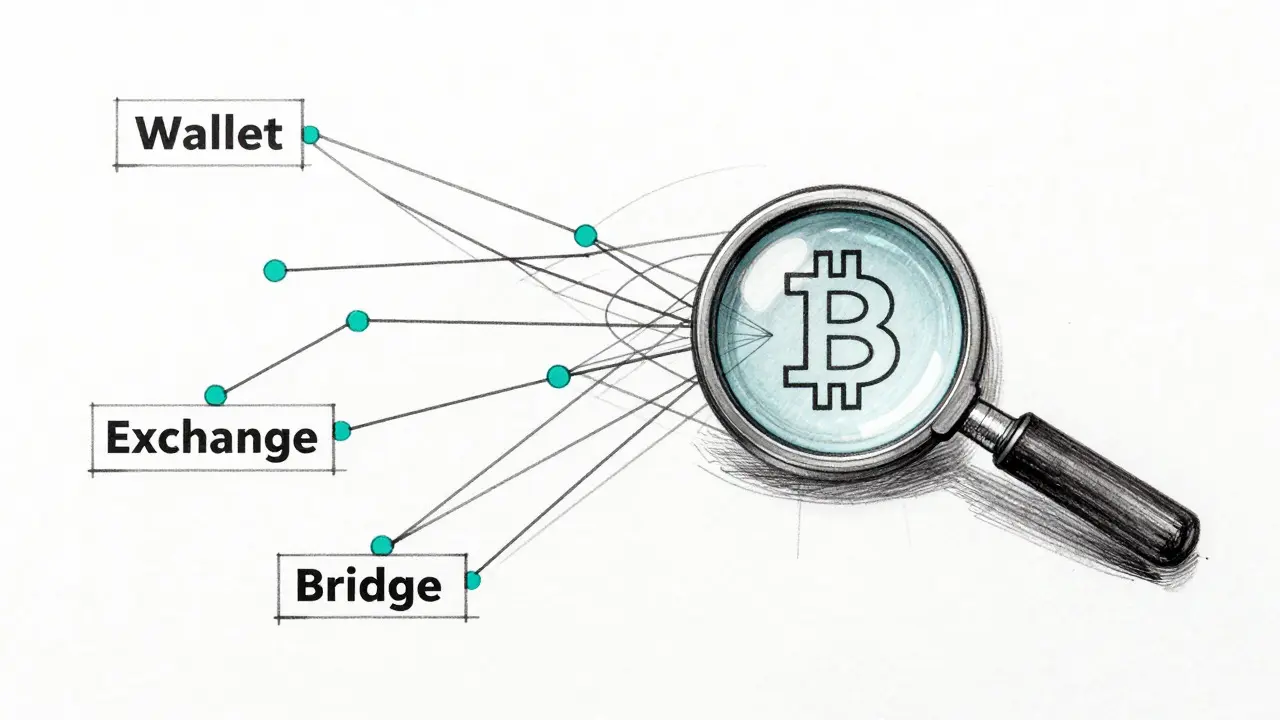
You can coordinate globally, but if you can't see where the money went, you're blind. This is where private sector technology meets public sector enforcement. Law enforcement agencies now rely heavily on blockchain analytics firms to trace illicit transactions.
Companies like Chainalysis, Elliptic, and TRM Labs provide the tools that turn opaque blockchain data into actionable intelligence. Their platforms identify threat actors, map transaction flows, and flag high-risk wallets.
In 2025, Chainalysis reported that illicit entities held nearly $15 billion in cryptocurrency, with Bitcoin making up 75% of those balances. However, the challenge has shifted. Direct transfers from illicit entities to regulated exchanges have collapsed from roughly 40% in 2021-2022 to around 15% in Q2 2025. Why? Because criminals are getting smarter about laundering.
They are moving away from direct deposits and toward more complex methods. Elliptic’s 2025 research highlights that over $21.8 billion in illicit and high-risk crypto has been laundered using cross-chain methods. This involves decentralized exchanges (DEXs), bridges, and no-KYC coin swap services. These tools allow criminals to jump between different blockchains (e.g., from Ethereum to Solana) to obscure the trail.
To counter this, enforcement agencies are adopting automatic cross-chain tracing capabilities. What used to take investigators several hours of manual work can now be done in minutes. This speed is essential because every second counts when trying to freeze assets.
Regional Approaches and Legal Frameworks
While INTERPOL provides the coordination, individual regions have their own strategies.
The United States Department of Justice (DOJ) has taken a aggressive prosecutorial stance. In October 2024, the DOJ charged 17 individuals in Massachusetts for market manipulation using bots to inflate altcoin and meme coin volumes. The focus here is on criminal prosecution to deter future bad actors. Additionally, the Securities and Exchange Commission (SEC) continues to pursue civil suits against non-compliant crypto companies, creating a two-pronged approach of criminal and regulatory pressure.
In Europe, Europol emphasizes a broader spectrum of crimes. Their August 2025 conference of European Police Chiefs highlighted links between crypto-enabled money laundering and online recruitment of minors. This suggests a holistic view where financial crime is seen as part of a larger ecosystem of digital threats.
Asia has shown remarkable success in asset recovery. The Korean National Police Agency, working with Emirati authorities, successfully recovered KRW 6.6 billion (USD 3.91 million) after a Korean steel company fell victim to forged shipping documents. The funds had been sent to an illegitimate bank account in Dubai. Without the bilateral cooperation facilitated by INTERPOL channels, that recovery would have been nearly impossible.
Challenges Facing Global Enforcement
Despite the successes, the job is far from easy. The primary challenge remains the speed of adaptation by criminal groups. As TRM Labs noted in their 2025 Crypto Crime Report, threat actors are embracing new technologies to obscure their activities faster than regulations can keep up.
Cross-chain crime is now a mainstream method for laundering funds. Decentralized finance (DeFi) protocols often lack strict Know Your Customer (KYC) requirements, providing safe havens for stolen funds. Furthermore, the lifespan of illicit entities varies significantly. Market-based services tend to operate longer, requiring sustained monitoring rather than one-off takedowns.
There is also a skills gap. Effective cross-border crypto investigations require specialized training. INTERPOL reports that officers participating in Operation Serengeti underwent 120 hours of specialized training in cryptocurrency tracing techniques. Not all 195 member countries have access to this level of expertise or the budget for advanced analytics tools.
Jurisdictional conflicts still arise. While INTERPOL facilitates information sharing, actual arrest warrants and asset freezes must comply with local laws. This creates friction points where delays can occur, allowing sophisticated criminals to exploit gaps between legal systems.
The Future of Crypto Crime Fighting
The trajectory is clear: international cooperation is becoming mandatory, not optional. By 2026, 87% of INTERPOL member countries report having dedicated cryptocurrency investigation units, up from 62% in 2022. This institutionalization ensures that crypto crime is treated with the same seriousness as traditional banking fraud.
We are likely to see greater integration of AI-driven analytics into law enforcement workflows. Predictive modeling could help identify potential scams before they fully unfold, shifting the focus from reactive recovery to proactive prevention.
Private-public partnerships will deepen. Governments cannot build these tech stacks alone. They will continue to rely on firms like Chainalysis and TRM Labs for insights, while these companies benefit from standardized regulatory frameworks that make their products more valuable.
For the average user, the message is cautiously optimistic. Recovery is possible. But vigilance is still required. The best defense remains strong personal security practices-using hardware wallets, verifying addresses, and being skeptical of too-good-to-be-true investments. When combined with a robust global enforcement network, these habits significantly reduce your risk.
Can I recover my lost cryptocurrency if I was scammed?
Yes, recovery is increasingly possible thanks to international cooperation. Operations like HAECHI VI have recovered hundreds of millions of dollars. However, success depends on how quickly you report the crime and whether the funds can be traced before they are laundered through cross-chain methods. Contact your local law enforcement immediately and provide all transaction details.
What is INTERPOL's role in crypto crime?
INTERPOL acts as the central coordinating body for 195 member countries. It facilitates information sharing, coordinates simultaneous operations like Serengeti and HAECHI, and manages systems like I-GRIP for rapid payment intervention. It bridges the gap between local police forces and international financial institutions.
How do blockchain analytics firms help law enforcement?
Firms like Chainalysis, Elliptic, and TRM Labs provide software that traces transactions on the blockchain. They identify illicit wallets, map money flows, and detect when funds are moved through mixers or cross-chain bridges. This turns anonymous blockchain data into evidence that can be used in court.
What is cross-chain laundering?
Cross-chain laundering involves moving stolen cryptocurrency from one blockchain to another (e.g., from Bitcoin to Ethereum) using bridges or decentralized exchanges. This obscures the audit trail, making it harder for investigators to track the original source of the funds. It is currently a major challenge for enforcement agencies.
Is international cooperation effective against small-scale scams?
Large-scale operations like Serengeti target big networks, but the infrastructure built by these efforts benefits smaller cases too. As more countries establish dedicated crypto units and share intelligence via INTERPOL, even smaller scams become easier to trace. However, large-scale operations remain the most efficient way to dismantle organized criminal enterprises.






Sus Sawyer
27 July, 2026 . 12:24 PM
Yo, this is actually huge news for us degens. I mean, seriously, who thought we’d ever see the day where cops could track our sats across borders? It’s wild. I remember back in ’18 when my buddy got rekt by a rug pull and he just had to eat the loss like it was a bad burrito. Now? They’re freezing assets in real-time. Real time! That’s faster than my wifi on a Tuesday night. The I-GRIP thing sounds like magic but it’s just tech and teamwork. If they can stop payments globally, that means scammers gotta be way more careful. Or maybe they’ll just get smarter. Either way, hope is a dangerous thing but also kinda nice.
Aryan MISHRA
28 July, 2026 . 02:32 AM
The efficacy of Operation HAECHI VI is undeniable; however, one must scrutinize the underlying mechanics of cross-chain laundering protocols. The statistic regarding the collapse of direct transfers from illicit entities to regulated exchanges (40% to 15%) is significant. It indicates a maturation of criminal sophistication. Yet, the reliance on third-party analytics firms such as Chainalysis introduces a centralization paradox within a decentralized ecosystem. Is this truly enforcement or merely corporate surveillance sanctioned by state actors? The data points are clear: cooperation yields results. But at what cost to privacy?
Subhash Kashyap Dm
30 July, 2026 . 00:02 AM
don't believe the hype interpol is just a front for the globalist agenda to control your money flow they want you to think its safe so you use their centralized exchanges while they trace every satoshi you own the whole blockchain is a honeypot designed to feed data to the cabal wake up sheeple
Billy Cunningham
30 July, 2026 . 20:25 PM
I feel so much better reading this 😔👍 It’s scary how fast things change. My heart hurts for all those victims though. Hope they get their money back soon 🙏💸
Ed Wallace
30 July, 2026 . 22:09 PM
It is fascinating to consider the philosophical implications of 'borderless' crime meeting 'bordered' justice. We are witnessing the friction between digital fluidity and legal rigidity. The concept of a unified front against cybercrime suggests a move towards a sort of global civic duty, yet it feels imposed rather than organic. How do we reconcile the anonymity that crypto promises with the transparency that justice demands? It’s a dance of shadows and light, really. And I’m here for the show.
Joshua Hofford
1 August, 2026 . 15:41 PM
This gives me so much hope for the future of digital finance! It’s great to see countries working together instead of fighting over jurisdiction. Imagine if we applied this same level of cooperation to climate change or poverty. We could solve everything! Keep up the good work, agencies. You’re making the internet a safer place for everyone. Let’s keep the momentum going!
Emma Smith
2 August, 2026 . 01:28 AM
so u guys really think this stops anything because i know some dudes who run mixers and they say the govts are blind without kyc which is basically nothing now days with dexs and bridges u can jump chains faster than a rabbit so yeah sure freeze an account in dubai but the money is already in solana and then ton and then who knows where its all just theater really
Rodmun Tarnowski
2 August, 2026 . 20:19 PM
Indeed! The statistical evidence presented herein is quite compelling. The recovery rate increase of 78% during Operation HAECHI VI is not merely incremental; it is transformative. This underscores the necessity of international frameworks. One must applaud the diligence of INTERPOL and its member states. Truly, a beacon of order in a chaotic digital landscape. Well done!
Matthew Smith
4 August, 2026 . 01:38 AM
Morally speaking this is good but legally its a mess. Who decides what is a scam? The SEC? Interpol? It feels like power creep. But I suppose if it gets my money back I shouldnt complain too much. Just dont let them confiscate my hodl because they think its suspicious. Freedom is fragile.
Prudence Flemming
4 August, 2026 . 17:57 PM
the jargon is heavy but the point stands. cross chain tracing is the new black box recorder. once they have that map there is no hiding spot. decentralization is dying a slow death by a thousand regulations. sad but true.
Carl Michaud
5 August, 2026 . 20:43 PM
Absolutely laughable. The elites think they can police the blockchain? Please. These ‘analytics’ firms are just selling proprietary algorithms to the highest bidder, creating a two-tiered system where the rich can launder freely and the little guy gets flagged for buying coffee with BTC. It’s a classic hegemonic maneuver to maintain financial stranglehold. Don’t be fooled by the PR spin.
Matt Kay
6 August, 2026 . 04:22 AM
boring article. cops will never catch me lol. also ur spelling is bad.
Dave Kjendal
7 August, 2026 . 11:31 AM
Look, I’m not saying it doesn’t work, but have you seen the budget cuts? Half these officers don’t know what a private key is. They’re relying on consultants who charge $500 an hour. Meanwhile, the scammers are using AI to generate fake profiles in seconds. It’s a cat and mouse game where the mouse has a laser gun. Still, better than nothing I guess.
Kat Bennett
8 August, 2026 . 21:33 PM
I’ve been following the Serengeti operation closely, and it’s genuinely impressive how many countries were involved simultaneously. It’s not just about catching the big fish; it’s about disrupting the entire supply chain of fraud. From the call centers in Africa to the servers in Eastern Europe, they’re hitting every node. It makes you wonder if we’re finally turning the tide on organized cybercrime, or if we’re just playing whack-a-mole with higher stakes. Either way, it’s a step in the right direction for victim restitution.
Candice Cornett
10 August, 2026 . 00:01 AM
oh please. they only recover money when it suits the narrative. what about the small claims? nobody cares about my 500 bucks. this is all for show. performative justice. keep dreaming.
Lance Jantz
10 August, 2026 . 05:14 AM
Oh, the grand ballet of global law enforcement! It’s quite the spectacle, isn’t it? To see the mighty nations of the world bowing down to the whims of blockchain analytics firms is both hilarious and terrifying. I, for one, am delighted to see the pretension of ‘anonymous’ crypto being stripped away. It’s like watching a magician reveal his tricks, only to realize the audience was never supposed to look behind the curtain. Bravo, indeed.
Don Fizy
12 August, 2026 . 04:04 AM
Hey folks! Great discussion here. Remember, even with all this tech, YOU are your first line of defense. Use hardware wallets, double-check addresses, and don’t trust strangers online. Stay safe out there! :) 👍