
If you've ever looked into earning passive income with your crypto, you probably hit a wall pretty quickly: the minimum stake. One network might let you start with a few dollars, while another demands a fortune just to get your foot in the door. This isn't just a random hurdle; it's a security feature designed to keep the network honest. But for the average person, it can be confusing. Do you really need thousands of dollars to participate, or are there shortcuts?
Whether you are a casual holder or looking to run your own hardware, understanding minimum staking requirements is the first step. These thresholds determine who gets to validate transactions and, more importantly, who gets the rewards. Let's break down how these requirements work across the biggest players in the space.
The High Bar: Solo Staking on Ethereum
When we talk about the "gold standard" of staking, we're usually talking about Ethereum is a decentralized, open-source blockchain with a smart contract platform that transitioned to Proof of Stake in 2022. Also known as ETH Network, it is the most-staked cryptocurrency in the world. . If you want to be a solo validator-meaning you run your own node and don't trust anyone else with your keys-the entry fee is steep: exactly 32 ETH.
This isn't just a financial requirement. To make this work, you need a dedicated computer with a fast processor and plenty of storage, running both an execution client and a consensus client. Your machine has to stay online 24/7. If your internet drops or your hardware crashes, you risk losing a bit of your stake.
Why so much? It's all about skin in the game. By requiring 32 ETH, the network ensures that validators have a massive financial incentive to follow the rules. If a validator tries to cheat the system, the network uses a process called slashing to confiscate a portion of that collateral. The higher the stake, the more painful the penalty, which keeps the network secure.
Breaking the Barrier: Pooled and Liquid Staking
Most people don't have 32 ETH lying around (or don't want to risk it on a home server). This is where Pooled Staking is a method where multiple users combine their small stakes to meet a network's minimum requirement and share the rewards comes in. It turns a high-barrier club into something anyone can join.
On platforms like Robinhood, the exchange handles the heavy lifting. They batch together groups of 32 ETH from various users to activate a validator. In exchange for this service, you might only get 50% to 100% of the original protocol rate, but you can start with almost nothing. For example, some services allow you to start with as little as $1 USD. Other exchanges, like Bitstamp, set their floor at 0.1 ETH.
Then there is Liquid Staking is a protocol that provides users with a derivative token representing their staked assets, allowing them to maintain liquidity . Instead of your ETH being locked in a vault where you can't touch it, you get a liquidity token. You can use this token in other DeFi apps while your original ETH continues to earn rewards in the background. It essentially makes the unstaking process as easy as a simple token swap.
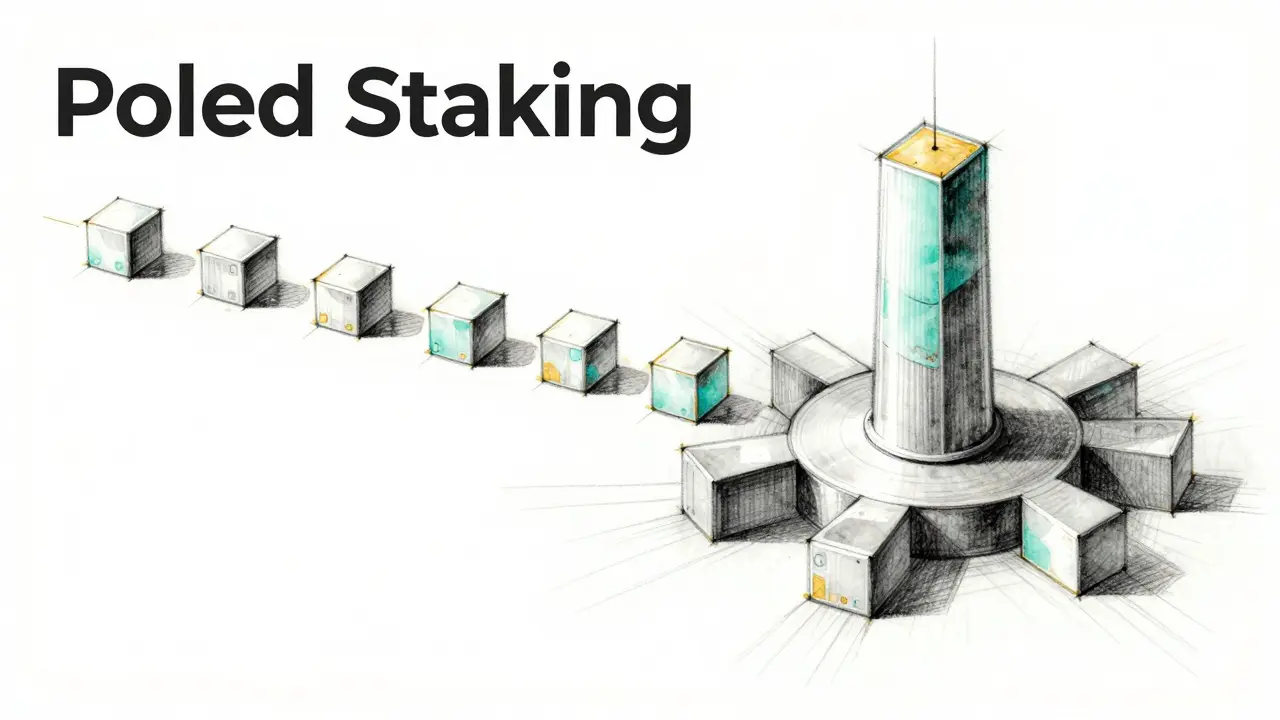
Comparing Minimums Across Major Blockchains
Ethereum isn't the only network with these rules. Every Proof of Stake is a consensus mechanism where block creators are chosen based on the number of coins they hold and are willing to lock up system handles its thresholds differently based on its goals for decentralization and security.
| Blockchain | Role | Minimum Requirement | Hardware Needed? |
|---|---|---|---|
| Ethereum (Solo) | Validator | 32 ETH | Yes (High Spec) |
| Ethereum (Pooled) | Delegator | ~$1 - 0.1 ETH | No |
| Polkadot | Nominator | 502 DOT | No |
| Tezos | Baker | 8,000 XTZ | Yes (Full Node) |
| Tezos (Delegated) | Delegator | No strict minimum | No |
Take Polkadot is a multichain protocol that connects and allows customized relations between diverse blockchains . If you want to be a "nominator," you need at least 502 DOT. If you have less than that, you're effectively priced out of the native staking process unless you find a third-party solution.
Similarly, Tezos is a blockchain designed for scalable and sustainable on-chain governance and upgrades requires 8,000 XTZ and a full node to become a "baker." Since that's a lot to ask of a regular user, Tezos relies heavily on delegation services. These services let you hand over your voting power to a baker who already meets the 8,000 XTZ requirement, and you split the rewards-usually resulting in an APY between 5% and 6%.
The Logic: Why These Limits Exist
You might wonder why blockchains don't just let everyone stake 1 cent. The answer is a balance between security and accessibility. In a PoS system, the probability of being chosen to propose a block is usually tied to how much you have staked. More coins equals a higher chance of being selected, which in turn means higher rewards.
If the minimums were too low, the network could be flooded with millions of tiny validators. This would create a massive communication overhead, slowing down the blockchain to a crawl because every single node would have to agree with millions of others. By setting a floor, the network limits the number of active validators to a manageable size.
Furthermore, these limits protect the network from "Sybil attacks," where one person creates thousands of fake identities to gain control. When there is a significant financial cost to entering the game, attacking the network becomes prohibitively expensive.

Choosing Your Staking Path
Deciding how to stake depends on your risk tolerance and your technical skill. Running a solo node is the most secure way to support the network because you aren't relying on a middleman. However, it's also the most stressful. If your power goes out and you aren't prepared, you lose money.
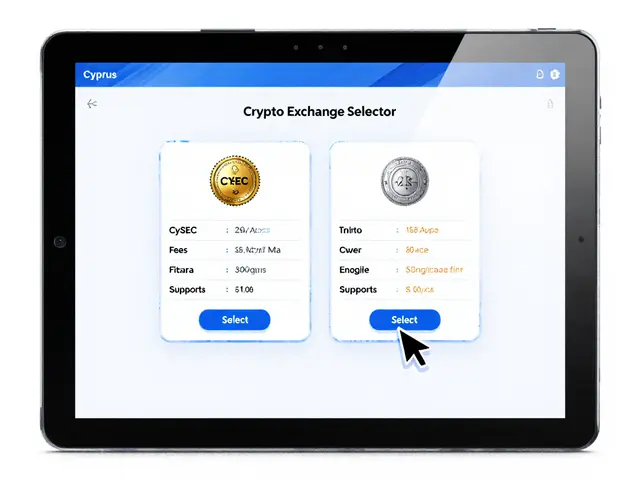
For most people, the trade-off for pooled staking is worth it. You give up a small percentage of your earnings (the platform fee) in exchange for zero hardware maintenance and a tiny entry fee. If you're using a platform like Robinhood or Blockchain.com, the process is basically as simple as clicking a button.
Just keep in mind that every platform has its own rules for unstaking. Some might let you withdraw instantly, while others have a "waiting period" (unbonding period) where your funds are locked but no longer earning rewards. Always check the exit terms before you lock your assets.
Can I stake Ethereum if I have less than 32 ETH?
Yes, absolutely. While solo validation requires 32 ETH, you can use pooled staking or liquid staking services. Some exchanges allow you to start staking with as little as 0.01 ETH or even $1 USD, depending on the provider.
What is slashing in Proof of Stake?
Slashing is a penalty mechanism where a portion of a validator's staked coins is permanently taken away if they act maliciously or fail to maintain their node's uptime. It is designed to discourage cheating and network negligence.
Does a higher stake always mean more money?
Generally, yes. In most PoS networks, the probability of being selected to verify a block and earn the reward is proportional to the amount of currency you have staked. More coins increase your odds of winning the block reward.
What is the difference between a baker and a delegator in Tezos?
A baker is a full validator who runs a node and holds at least 8,000 XTZ. A delegator is someone who doesn't have enough XTZ or the hardware to run a node, so they "lend" their staking power to a baker in exchange for a share of the rewards.
Is liquid staking safer than exchange staking?
It depends on your definition of safety. Liquid staking gives you a token you can trade, which provides more flexibility. Exchange staking is simpler but requires you to trust the exchange with your private keys. Neither is perfectly risk-free, but liquid staking allows you to stay more active in DeFi.
What to do next
If you're ready to start, first audit your holdings. If you're holding ETH, DOT, or XTZ, decide if you have the technical appetite for a node. If not, look for a reputable pool. Check the fees-some platforms take 10%, others take 25%. Compare the APY, but remember that higher yields often come with higher risks of slashing or platform instability.
For those with very small amounts, start with a user-friendly exchange to get a feel for how the rewards hit your account. Once you're comfortable, look into liquid staking tokens to see how you can maximize your capital efficiency without sacrificing your staking earnings.



Robert Preston
19 April, 2026 . 23:41 PM
Solo staking is basically a full-time job if you actually care about your hardware and uptime. People don't realize the stress of a power outage when you've got your skin in the game.
Kim Smith
21 April, 2026 . 10:01 AM
it's kind of wild how we just accept these arbitrary barriers to entry in the digital age, like, i mean, thinking about the philosophical implication of "skin in the game" is really just a way for the early adopters to keep the gates closed while pretending it's for the safety of the network, which is just such a weird vibe when the whole point was supposed to be democratization of finance and stuff anyway... just feels a bit off if you really dwell on it for too long
Alex Long
21 April, 2026 . 13:09 PM
Too long. Just use an exchange.
John and Lauren Busch
21 April, 2026 . 14:26 PM
Imagine actually running a server in your bedroom. Pure comedy.
Michelle Stanish
22 April, 2026 . 16:46 PM
Exchanges are risky.
Luke George
24 April, 2026 . 02:29 AM
The centralized exchanges are just honey-pots for the government to track every single move you make. They tell you it's "convenient" but they're just building the infrastructure for a total financial lockdown. Don't trust the mid-men.
Tracy Sperandio
24 April, 2026 . 16:26 PM
Stop being so gloomy! This is a golden opportunity for anyone to build a passive income stream from the ground up! Whether you're starting with one dollar or a thousand, the key is to jump in and start learning. Get that bread, everyone!
Ankit Sindhu
26 April, 2026 . 00:22 AM
For those who are beginners, I highly suggest starting with pooled staking. It's a much gentler learning curve before you decide to dive into the technical side of running a node.
Michael Harms
26 April, 2026 . 16:07 PM
Spot on! It's all about finding the path that fits your lifestyle. No shame in using a pool if it lets you sleep better at night!
Adedamola Oyebo
26 April, 2026 . 19:49 PM
Liquid staking is the real game changer!! The flexibility is unmatched...
Evan Iacoboni
27 April, 2026 . 06:22 AM
Why the hell is the Polkadot minimum so high compared to some of the newer chains? It seems counterintuitive if they want more nominators.
Karen Mogollon Gutierrez
28 April, 2026 . 16:24 PM
It is utterly preposterous that one must possess such a staggering amount of capital merely to participate in the foundational security of a network. This level of exclusivity is simply unacceptable in a modern economy!
Jeff Barlett
29 April, 2026 . 14:17 PM
Actually, the high barrier is the only thing making it valuable. If anyone could do it with a penny, the whole system would crash in five minutes. You're just complaining about how the world works.
siddharth narula
30 April, 2026 . 10:45 AM
One must contemplate the moral imperative of decentralization. If we merely shift our trust from one central bank to another central exchange, have we truly evolved as a society? 🧐 It is a tragedy of modern greed.
nikki krinkin
1 May, 2026 . 14:43 PM
I just use a reputable pool and don't think about it too much. Works fine for me.
Kaitlyn Wu
1 May, 2026 . 17:37 PM
Listen, before you jump into liquid staking, make sure you understand the smart contract risk. If the protocol gets hacked, your "liquid" assets might vanish. Do your own research first.
nathan jones
1 May, 2026 . 18:36 PM
Keep it simple. Just pick a coin you like and stake it.
Adam Mann
2 May, 2026 . 03:47 AM
I think it's really great that there are so many options now! Back in the day, you either had a massive rig or you had nothing, but now a student with five bucks can actually earn a little bit of interest and feel like they're part of the future of finance, which is just so awesome when you think about how much the tech has evolved for the average person who just wants to try something new without losing their shirt in the process.
Anna Grealis
3 May, 2026 . 06:19 AM
The unbonding periods are just a way for the whales to manipulate the price before the retail traders can exit. Its a total setup. They lock your funds so you cant sell during the dump. Classic.