Sending money home to Bangladesh has hit a historic high, with inflows reaching a staggering $30 billion in fiscal year 2025. For many workers abroad, it's a matter of pride and necessity. But while the rest of the world talks about Bitcoin and stablecoins as the future of cross-border payments, Bangladesh is taking a different path. If you're looking to use remittances in Bangladesh via crypto, you'll hit a brick wall of regulations. The short answer? It's illegal, and the risks are high.
The Hard Line on Crypto in Bangladesh
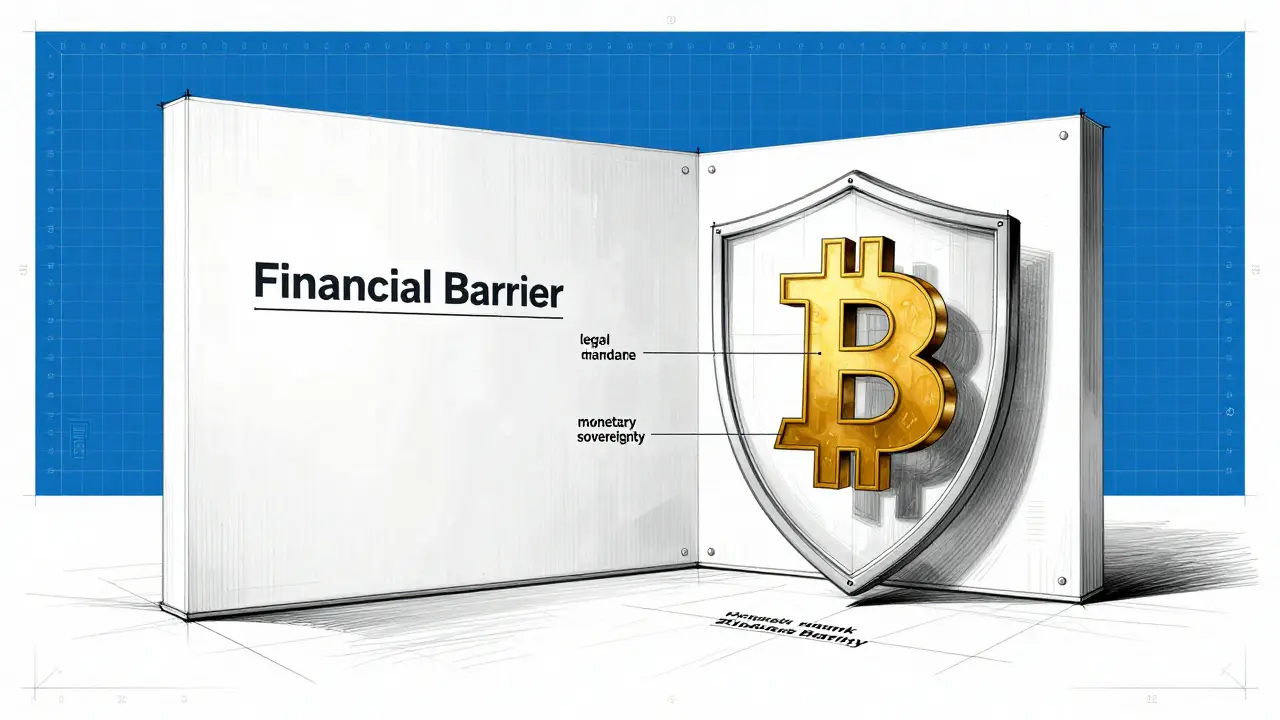
Since 2017, the Bangladesh Bank is the central bank of Bangladesh responsible for monetary policy and financial regulation has maintained a strict ban on digital currencies. This isn't just a suggestion; it's a legal mandate under Section 33 of the Foreign Exchange Regulation Act 1947. If you try to facilitate crypto transactions for remittances, you're risking criminal prosecution and, for businesses, the immediate revocation of their licenses.
Why the strictness? The central bank argues that Cryptocurrencies are digital or virtual currencies that use cryptography for security and operate on decentralized networks pose an unacceptable risk to the country's monetary sovereignty. In a market where the government needs tight control over foreign exchange reserves to stabilize the economy, the anonymous and volatile nature of crypto is a non-starter. While neighboring India and Pakistan have toyed with regulated frameworks, Bangladesh Bank officials have made it clear: private crypto has no place in the official ecosystem.
The Shift from Hundi to Digital Channels
For decades, many Bangladeshis relied on Hundi, an informal value transfer system based on a network of money brokers that bypasses official banking channels . It was faster and often cheaper, but it operated in the shadows. Recently, there's been a massive shift. In FY2025, remittance growth jumped by 27%, largely because the government cracked down on these informal networks and offered more competitive, market-driven exchange rates.
The result? More money is flowing through official banks and mobile apps. This shift helped the country move from a $4.3 billion deficit to a $3.3 billion surplus in its Balance of Payments by the end of FY2025. It's a huge win for the national economy, though it means users have to deal with more paperwork and official oversight.
Best Legal Ways to Send Money Today
Since crypto is off the table, what actually works? The market is currently dominated by a mix of traditional banks and Mobile Financial Services (MFS), digital payment systems that allow users to deposit, withdraw, and transfer money via mobile phones without a traditional bank account . For most, the goal is speed and low fees.
| Channel | Market Share | Average Speed | Key Advantage |
|---|---|---|---|
| Sonali Bank | 18.7% | 1-3 Days | Government backed, high trust |
| bKash | 15.2% | Real-time to 12 Hours | Instant access for rural recipients |
| BRAC Bank | 12.4% | Under 24 Hours | Strong digital platform for Middle East |
| Remittance Direct App | Growing | Under 4 Hours | Lower average fees (3.8%) |
If you're sending money from the Middle East-which accounts for over 68% of all inflows-apps like bKash or Nagad are the go-to choices. Some users report funds arriving in as little as 12 hours. However, it's not all perfect. You'll still find that exchange rates vary between banks, and some users in the UK still report fees as high as 7%, which is well above the World Bank's 3% target.
Overcoming the Hurdles: Costs and Paperwork
If you're new to sending money to Bangladesh, be prepared for a bit of bureaucracy. To get funds delivered, the recipient generally needs a National ID card and a linked bank account or MFS registration. For the 18% of people in rural areas who lack these documents, this remains a significant barrier to financial inclusion.
One of the biggest frustrations is the "hidden" cost. While the official exchange rate might look good, the actual cost of the transfer-including agent fees-can eat into the total. A pro tip: check the "Remittance Direct" app launched by the central bank in August 2025. It has processed over $1.2 billion and typically offers fees around 3.8%, which is cheaper than the 5.2% market average.
What's Next? The Future of Payments
While the ban on private crypto is firm, the government isn't ignoring technology. Bangladesh Bank is currently exploring Central Bank Digital Currencies (CBDCs), a digital form of a country's sovereign currency issued and regulated by the central bank . This would provide the efficiency of digital assets without the volatility or legal risks of Bitcoin.
Additionally, keep an eye out for the integration with India's Unified Payments Interface (UPI), a real-time payment system developed by National Payments Corporation of India to facilitate inter-bank transactions . Expected by the second quarter of 2026, this move could drastically simplify how the 1.2 million Bangladeshi workers in India send money home.
Is it illegal to use crypto for remittances in Bangladesh?
Yes. Under Section 33 of the Foreign Exchange Regulation Act 1947, the Bangladesh Bank prohibits the use of cryptocurrencies for remittances. Engaging in these transactions can lead to criminal prosecution or the loss of business licenses.
What is the fastest way to send money to Bangladesh?
Mobile Financial Services (MFS) like bKash and Nagad are generally the fastest, often delivering funds in real-time or within 12 hours. The 'Remittance Direct' app is also a highly efficient option with reduced processing times.
How much are the typical fees for sending money to Bangladesh?
Fees vary widely. While the market average is around 5.2%, some users report costs as high as 7%. The central bank's Remittance Direct app offers a more competitive average of 3.8%.
What documents are needed for the recipient to receive money?
Recipients typically need a valid National ID (NID) card, a registered mobile financial service account (like bKash), or a linked bank account to satisfy KYC (Know Your Customer) requirements.
Will Bangladesh ever allow crypto for money transfers?
Currently, there are no plans to allow private cryptocurrencies. However, the Bangladesh Bank is researching Central Bank Digital Currencies (CBDCs), which could provide a legal, state-backed digital alternative in the future.



Carroll Foster
11 April, 2026 . 02:09 AM
Oh great, another case of a central bank clinging to its precious monetary sovereignty like it's 1947. I'm sure the 'stability' they're protecting is doing wonders while the average worker deals with legacy banking rails and archaic paperwork. It's basically a masterclass in avoiding any form of DeFi disruption in favor of keeping the ledger tightly controlled. Truly a cutting edge approach to financial exclusion.
Heather Warren
12 April, 2026 . 22:42 PM
The Remittance Direct app sounds like a great way to save money on fees.
Rima Dinar
13 April, 2026 . 01:56 AM
It is truly heartening to see the shift toward digital channels and away from the informal Hundi system because while Hundi served a purpose for a long time, the move toward official banking and MFS platforms like bKash actually helps the overall economy of the country by stabilizing the balance of payments and ensuring that the funds are tracked and secure for both the sender and the family receiving the money back home, which is ultimately what matters most in the end for these hardworking people.
Prasanna Shembekar
13 April, 2026 . 23:10 PM
omg my cousin tried sending money last month and it was such a mess no idea why they make it so hard
Artavius Edmond
14 April, 2026 . 00:32 AM
Man, the gap between rural access and digital banking is still wild. It's cool that the numbers are going up, but those 18% of people without IDs are just getting left behind while the rest of us move to apps.
Jason Davis
15 April, 2026 . 09:38 AM
Sonal bank is okay but bKash is way faster for the village people. i use it all the time for family stuff and it just works’ better than old school banks.
Amanda Faust
15 April, 2026 . 18:35 PM
CBDCs are just glorified versions of the same central control the bank already has and wont actually solve the volatility problem for the user
Jessie Tayaban
17 April, 2026 . 11:52 AM
OMG 7 percent fees??!! That is actually insane!! Like why are we still paying that much in 2025?? Its literally robbery
I cant even believe some people still use those expensive services
ssjuul z
17 April, 2026 . 14:02 PM
Definitely stick to the official apps to avoid any legal trouble! 🚀 Better safe than sorry when it comes to the law!
Rebecca Violette
18 April, 2026 . 19:46 PM
this is so sad like why can't they just let us use stablecoins its literally just a way to help famly
Emily H
19 April, 2026 . 17:31 PM
The implementation of the Unified Payments Interface integration with India would be a highly advantageous development for the millions of workers currently utilizing informal channels. Such an advancement would likely reduce the operational friction and lower the aggregate cost of transfers significantly.
Swati Sharma
20 April, 2026 . 18:01 PM
Integrating UPI will definitely lower the friction for cross-border liquidity and improve the overall UX for the migrant workforce. It's a strategic move toward financial interoperability.
Jonathan Chamma
22 April, 2026 . 12:08 PM
It's a bit of a bummer for those in the rural areas who don't have the right papers. It feels like a giant wall standing in the way of people just trying to take care of their loved ones. Hopefully, the government finds a kinder way to bring everyone into the fold without all the red tape.
Scott Fenton
22 April, 2026 . 18:01 PM
One must exercise extreme caution regarding the legal ramifications of circumventing the Foreign Exchange Regulation Act. The risks associated with criminal prosecution far outweigh the marginal benefits of utilizing unregulated digital assets.
Mikayla Murphy
23 April, 2026 . 01:53 AM
It's really interesting to see how different countries handle the balance between innovation and regulation. Bangladesh seems to be prioritizing stability over the speed of adoption, which is a valid perspective given their economic goals.
Stanly Hayes
24 April, 2026 . 20:58 PM
Who cares about the ban? People will still find a way to move money. The government can't stop everything just by passing a law from 1947!
Lane Montgomery
26 April, 2026 . 02:56 AM
What's the exact penalty for crypto?
Agnessa Dale
28 April, 2026 . 01:08 AM
I'm sure the CBDC will be a wonderful bridge for everyone once it's ready!