You might have stumbled across Bitvast while looking for a place to trade Bitcoin or Ethereum. The website looks polished. It promises low fees, hundreds of coins, and easy bank transfers. But here is the hard truth you won't find on their homepage: as of mid-2026, this platform has effectively stopped working.
If you are reading this because you want to deposit money, stop right now. If you are reading this because your funds are stuck inside an account that hasn't moved in months, keep reading. This review cuts through the marketing fluff to tell you exactly what happened to Bitvast, why it matters, and where you should go instead.
The Reality Check: Bitvast Has Ceased Operations
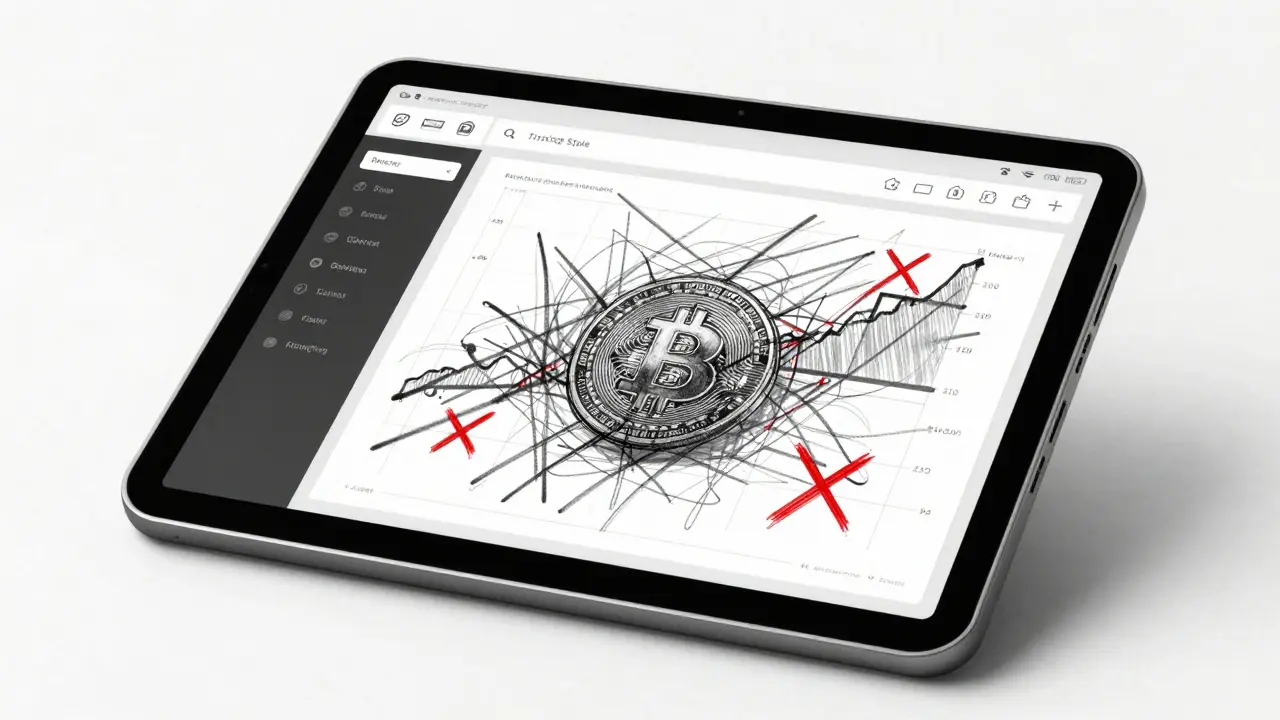
Let’s get the biggest issue out of the way first. Independent analysis from Traders Union in 2026 confirms that Bitvast has effectively ceased operations. There was no press release. There was no email notification to users. No formal bankruptcy filing was made public. One day, the lights were on; the next, the servers went dark.
This is not a minor glitch. This is a total operational halt. When an exchange stops operating without notice, it usually means one of two things: either the company ran out of liquidity and couldn't pay traders, or the management abandoned the project entirely. In either case, your access to your funds is severely compromised.
The danger here is the silence. Many exchanges fail loudly with news headlines. Bitvast failed quietly. Their website may still load, showing old charts and outdated fee structures, but the backend-the part that actually processes trades and withdrawals-is dead. Do not be fooled by a static webpage. A website being online does not mean the business is alive.
What Bitvast Promised vs. What Delivered
To understand the risk, we need to look at what Bitvast sold itself as. Founded in 2018, the platform positioned itself as a global digital asset service provider. They claimed to specialize in Over-The-Counter (OTC) transactions, which are large, private trades often used by institutions rather than retail investors.
Here is a breakdown of their claims versus the reality:
| Feature Claimed | Actual Status (2026) |
|---|---|
| 500+ Trading Pairs | Trading engine inactive; no new pairs added since cessation. |
| Lowest Fees in Industry | Fees are irrelevant if you cannot withdraw your principal amount. |
| Global OTC Services | No active OTC desks responding to inquiries. |
| Banking Partnerships (HK/US) | No evidence of active banking relationships supporting withdrawals. |
| Mobile & Desktop Apps | Apps exist but connect to non-functional servers. |
The promise of "multiple flexible payment options" sounds great until you try to use them. Reports indicate that while deposits might have gone through via bank transfer or cash, withdrawals hit a wall. Without an active support team or a functioning liquidity pool, those payment methods become useless pipes.
Why Did Bitvast Fail?
Bitvast wasn't alone in launching in 2018. That year saw a boom in crypto startups, many promising the moon. However, the industry consolidated quickly. Survivors like LCX Exchange (also founded in 2018 but based in Liechtenstein) and LMAX Digital managed to secure regulatory compliance and institutional trust. Bitvast did not.
The lack of transparency is the red flag. Legitimate exchanges publish proof of reserves. They undergo regular audits. Bitvast offered none of this. Instead, they relied on vague claims of "multi-layered security" and "global payment processing." In the crypto world, if you can't prove you hold the assets, you probably don't.
The absence of user reviews in 2026 is also telling. Active platforms generate noise-complaints about bugs, praise for fast withdrawals, questions about new features. Bitvast has gone silent. No community discussions. No recent testimonials. Just a ghost town.
Security Risks: What Happened to Your Data?
When an exchange ceases operations abruptly, your financial loss isn't the only concern. Your personal data is also at risk. Bitvast collected sensitive information: IDs, proof of address, bank details, and IP logs.
Without active security maintenance, these databases become targets. Hackers know that defunct exchanges often leave their servers unpatched. If Bitvast's infrastructure is still technically "on" but unmanaged, your personal identifiable information (PII) could be exposed in a data breach.
Furthermore, the claim of "banking accounts in Hong Kong and the United States" suggests they held fiat currency on behalf of users. If those accounts were frozen or closed due to inactivity, recovering those funds becomes a legal nightmare, especially without a registered corporate entity to sue.
Who Was Bitvast For? (And Who Should Avoid It)
Originally, Bitvast targeted high-net-worth individuals and institutions needing OTC services. These are trades too large for standard order books, requiring direct negotiation. For these users, reliability is paramount. You don't negotiate a $1 million Bitcoin trade with a platform that might vanish overnight.
Retail users were likely drawn in by the "quick buy/sell interface" and mobile apps. But the features marketed to beginners-ease of use, low fees-are meaningless without solvency. A cheap fee doesn't matter if you lose 100% of your capital.
In 2026, there is no demographic that should use Bitvast. Not beginners, not pros, not institutions. The risk/reward ratio is infinitely skewed toward risk.
Safer Alternatives for OTC and Spot Trading
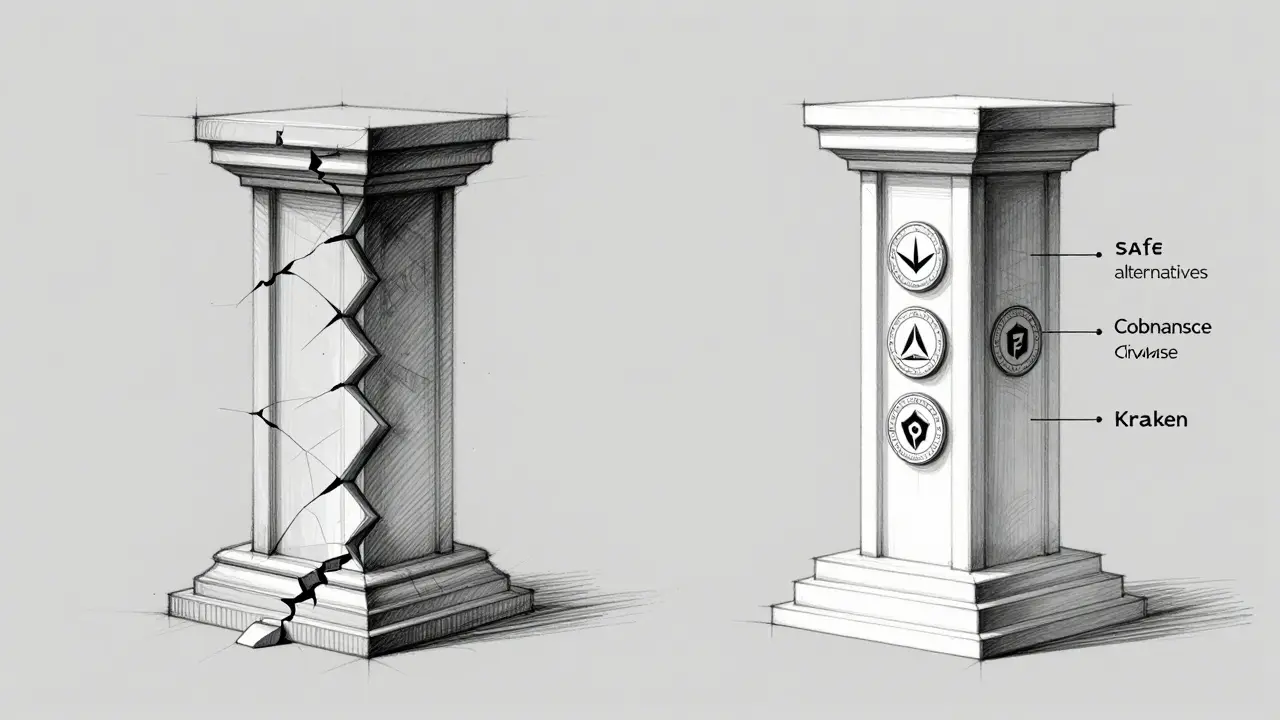
If you were considering Bitvast for its OTC capabilities or general spot trading, you have better, verified options. Here is how they compare:
- LCX Exchange: Also founded in 2018, LCX operates under strict Liechtenstein regulations. They offer genuine OTC services with transparent pricing and active customer support.
- Coinbase: For retail users, Coinbase remains a gold standard for security and regulatory compliance in the US and Europe. While fees are higher, your funds are safe.
- Kraken: Known for strong security records and a wide range of altcoins. Kraken provides clear proof of reserves and has never suffered a major hack resulting in user fund loss.
- Binance: Despite past controversies, Binance remains the largest exchange by volume, offering deep liquidity and competitive fees. Always use hardware wallet integration for added security.
These platforms actively engage with regulators, publish audit reports, and have responsive support teams. If you have a problem, you can talk to a human.
What To Do If You Have Funds Stuck in Bitvast
If you are currently locked out of your Bitvast account, take these steps immediately:
- Document Everything: Take screenshots of your balance, transaction history, and any emails from Bitvast. Save API keys if you have them. This is your evidence.
- Contact Support (Once): Send a formal inquiry via all available channels. Note the date and time. If you get no response within 7 days, document that silence.
- Check Local Regulations: Since Bitvast had ties to South Africa, the US, and Hong Kong, check if any financial authority in these regions has issued warnings. In South Africa, contact the Financial Sector Conduct Authority (FSCA).
- Consult a Lawyer: If the amount is significant, hire a lawyer specializing in digital assets. Collective action lawsuits are sometimes more effective than individual complaints.
- Do Not Pay "Recovery Fees": Scammers target victims of failed exchanges. If someone contacts you claiming they can recover your Bitvast funds for a fee, it is a scam. Only legitimate legal firms charge upfront retainers, and even then, proceed with caution.
How to Vet Any Crypto Exchange in 2026
Bitvast’s collapse is a lesson in due diligence. Before trusting any exchange with your money, ask these questions:
- Is there a Proof of Reserves? Look for Merkle Tree audits published regularly. If they don't show it, assume they don't have it.
- Where is the license? Check the footer of the website. Does it link to a verifiable regulator (like FCA, MAS, or FinCEN)? Or just a generic "registered in Seychelles" statement?
- Are there recent reviews? Search for "[Exchange Name] + scam" or "[Exchange Name] + withdrawal issues" on Reddit and Trustpilot. Filter by the last 3 months. Silence is bad; recent negative reviews are worse.
- Does the team exist? Can you find LinkedIn profiles for the CEO and CTO? Are they real people with histories?
In 2026, the bar is higher. Users expect transparency. Exchanges that hide behind vague marketing copy are playing a dangerous game.
Is Bitvast a scam?
While "scam" implies intentional fraud from day one, Bitvast exhibits all the hallmarks of a failed operation. Whether it was mismanagement or deliberate exit, the result is the same: users cannot access their funds. Treat it as a high-risk environment where your money is likely lost.
Can I still withdraw money from Bitvast?
No. As of 2026, Bitvast has ceased operations. Withdrawal functions are non-operational. Any attempt to withdraw will likely result in an error or indefinite delay.
Why did Bitvast shut down without notice?
This is common among unregulated or poorly regulated exchanges. Without legal obligation to notify clients, operators may abandon the platform when liquidity dries up or when facing insolvency. The lack of official announcement suggests a lack of corporate governance.
Is my personal data safe on Bitvast?
There is no guarantee. With operations ceased, security patches are likely not applied. Your ID, bank details, and email may be vulnerable to data breaches. Monitor your credit report and consider freezing your credit.
What is a better alternative for OTC trading?
For OTC trading, consider regulated platforms like LCX Exchange or LMAX Digital. They offer institutional-grade privacy and security with transparent fee structures and active support teams.
Did Bitvast ever have a mobile app?
Yes, Bitvast previously offered apps for iPhone, iPad, Windows, and Mac. However, these apps no longer function correctly as the backend servers are offline. Do not download or update them expecting functionality.
Where was Bitvast based?
Bitvast was founded in South Africa in 2018. It claimed to have banking partnerships in Hong Kong and the United States, but its primary registration was in South Africa.