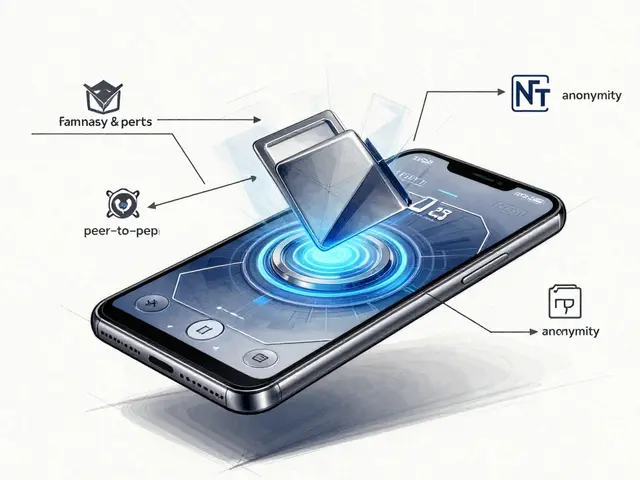
You’ve probably heard that blockchain isn’t just for storing money anymore. But what if your phone, your smart home devices, or even a DeFi bridge could prove they are secure in real-time? That is exactly what Naoris Protocol is trying to build. It’s not just another Layer 1 chain hoping to catch up with Ethereum or Solana. Instead, it positions itself as a "Sub-Zero" layer-a foundational security infrastructure that sits beneath traditional blockchains to protect them from the ground up.
If you are looking at the ticker symbol $NAORIS and wondering whether this is a hype-driven meme coin or a serious piece of tech, you are asking the right question. The crypto space is flooded with projects promising security, but few actually change how trust is verified on-chain. Naoris claims to do this by combining post-quantum cryptography with an AI-driven consensus mechanism. Let’s break down what that means for you, your assets, and the future of decentralized internet.
The Problem: Trust Is Broken in Web3
We all know the stories. Bridges get hacked. Smart contracts have bugs that drain millions. Devices in Decentralized Physical Infrastructure Networks (DePIN) report false data because they were compromised. Traditional cybersecurity relies on centralized audits-slow, expensive, and often outdated by the time they are published. In a world where quantum computers might soon crack current encryption standards, relying on old-school security models feels like locking your front door while leaving the windows wide open.
Naoris Protocol argues that we need a new approach. Instead of auditing security after the fact, why not embed trust directly into the hardware and software stack? This is the core idea behind their "trust mesh." Imagine every device connected to the network constantly validating its own integrity and the integrity of its peers. No more waiting for a quarterly security report. You get live, on-chain proof that a node, a device, or a contract is safe. This shifts cybersecurity from a reactive service to a proactive, decentralized utility.
How Does Naoris Work? The Sub-Zero Architecture
To understand Naoris, you have to forget the standard Layer 1 vs. Layer 2 debate for a moment. Naoris describes itself as a Sub-Zero Layer 1 blockchain. What does that mean? Think of it as the bedrock. While other chains handle transactions and smart contracts, Naoris handles the verification of truth and security underneath them.
The protocol uses a proprietary consensus mechanism called Decentralized Proof-of-Security (dPoSec™). Unlike Proof-of-Work, which burns energy to solve math puzzles, or Proof-of-Stake, which locks up capital, dPoSec rewards nodes for performing actual security work. These nodes, known as TrustNodes, perform millisecond-speed integrity attestations. They check if a device is tampered with, if a smart contract behaves correctly, and if the data being transmitted is genuine.
Here is the kicker: these validations happen in real-time. The results are anchored on-chain, creating an immutable record of trust. This allows external ecosystems like EVM (Ethereum Virtual Machine), Cosmos, and Move-based chains to import these trust proofs. So, a DeFi protocol on Ethereum can query Naoris to verify the security status of a user’s device before allowing a high-value transaction. It turns security into a composable asset.
Key Technologies Powering the Network
Naoris doesn’t rely on a single trick. It combines three major technological pillars to create its defense-in-depth strategy:
- Post-Quantum Cryptography: As quantum computing advances, today’s encryption methods (like RSA and ECC) will become vulnerable. Naoris builds its foundation using quantum-safe cryptographic algorithms. This ensures that data secured today remains secure even when powerful quantum computers arrive on the scene. It’s a forward-looking move that protects against future threats.
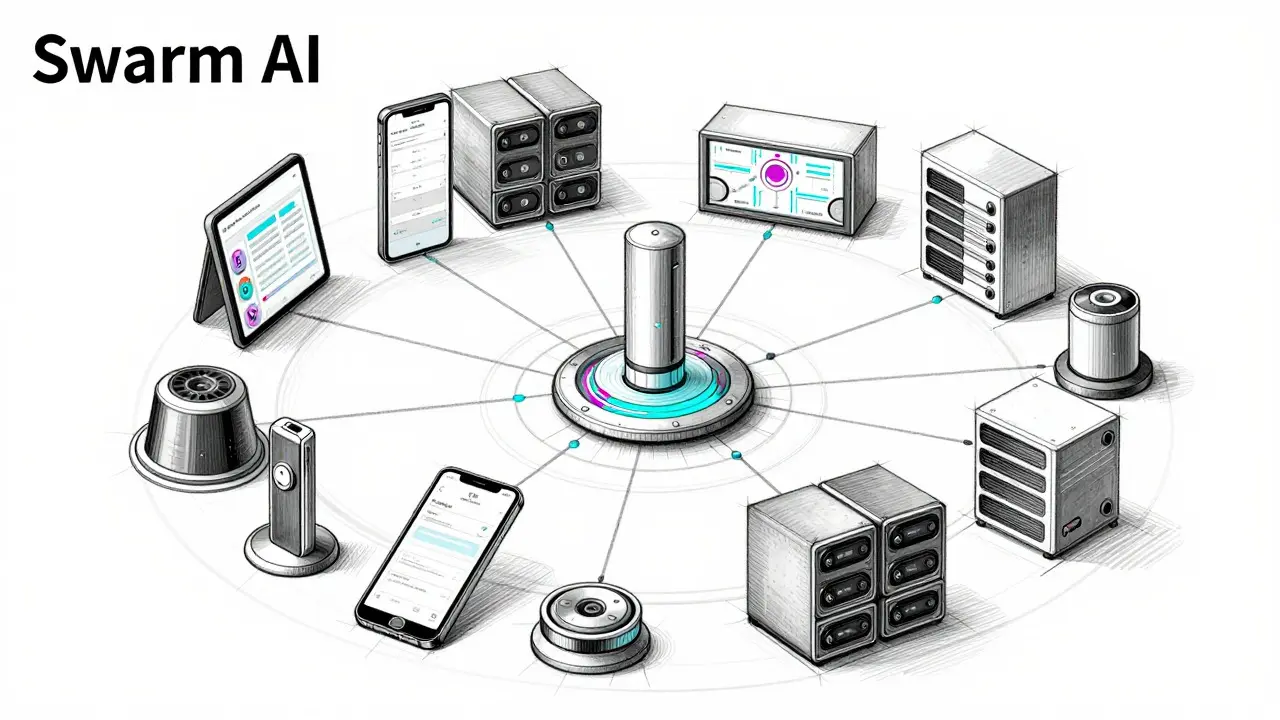
- Swarm AI Integration: Artificial intelligence isn’t just a buzzword here. Naoris integrates Swarm AI to analyze patterns and detect anomalies across the network. While individual nodes validate specific tasks, the AI layer looks at the bigger picture, identifying coordinated attacks or subtle vulnerabilities that human auditors might miss. This creates a self-healing security ecosystem.
- Decentralized Device Validation: Every connected device becomes a validator. Your smartphone, your IoT sensor, or your server can participate in the trust mesh. By distributing the validation workload across thousands of endpoints, the network becomes resilient to single points of failure. If one node goes rogue, the swarm detects it instantly.
The $NAORIS Token: Utility Over Speculation
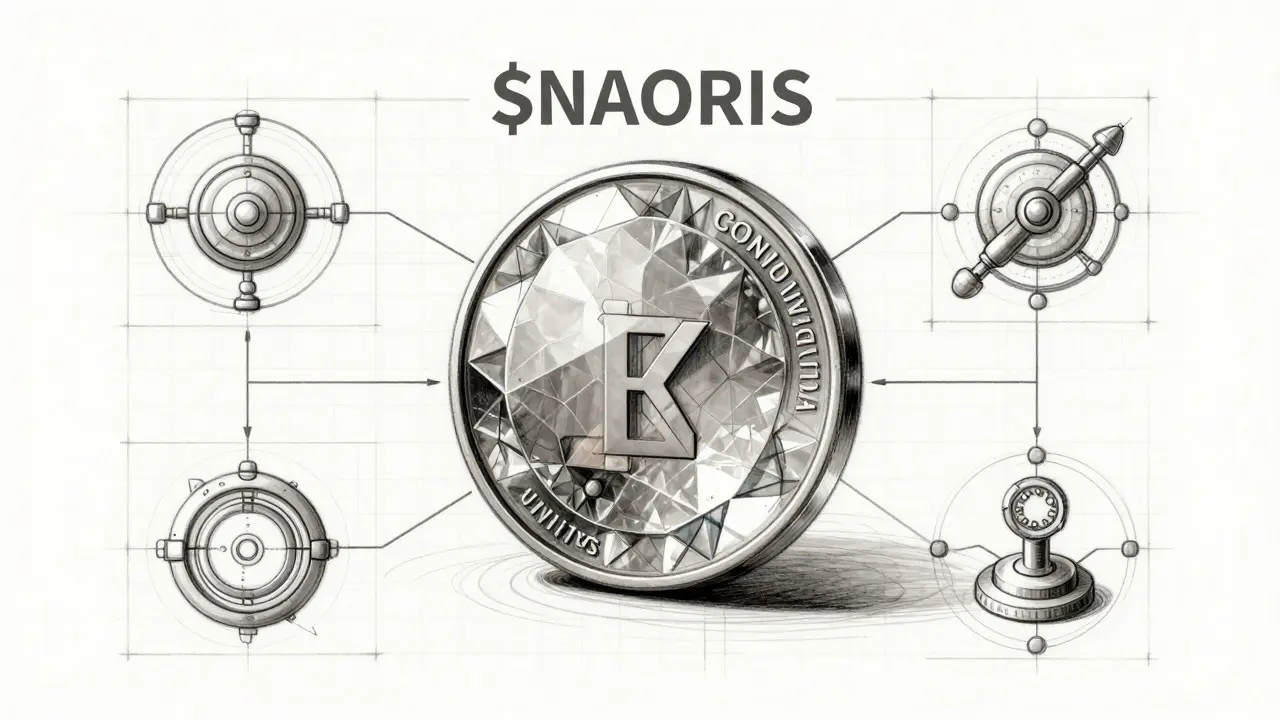
In many crypto projects, the token is an afterthought used primarily for fundraising. With Naoris, the $NAORIS token is central to the network’s operation. It serves as the on-chain proof of trust and the primary utility mechanism for the ecosystem.
So, what do you actually use $NAORIS for?
- Bonding for Validators: To operate a TrustNode, you must bond $NAORIS tokens. This acts as a skin-in-the-game mechanism. If a node performs honest security validations, it earns rewards. If it fails or acts maliciously, its stake can be slashed. This economic incentive aligns the behavior of validators with the health of the network.
- Paying for Security Services: Developers building dApps or enterprises securing their infrastructure can pay in $NAORIS to access real-time trust scores and compliance proofs. It turns security into a pay-per-use service rather than a fixed-cost subscription.
- Governance and Yield: Token holders can participate in governance decisions regarding the protocol’s evolution. Additionally, the deflationary nature of the tokenomics means that as more security services are consumed, tokens are burned or locked, potentially increasing scarcity over time.
The maximum supply of $NAORIS is capped at 4 billion tokens. As of mid-2026, approximately 599 million tokens are in circulation, representing about 15% of the total supply. This controlled release schedule aims to prevent early dumping and ensure long-term stability for the validator economy.
Market Performance and Price Context (2026)
Crypto prices are notoriously volatile, and $NAORIS is no exception. Understanding its market behavior requires looking at multiple data points rather than a single exchange listing. As of May and June 2026, the token has shown significant activity across major platforms.
| Exchange/Source | Price (USD) | 24h Volume | Daily Change |
|---|---|---|---|
| CoinGecko | $0.1218 | $12.4M | +19.55% |
| Kraken | $0.1100 | N/A | +21.63% |
| Crypto.com | $0.1099 | $11.6M | +18.96% |
| Coinbase | $0.1013 | N/A | N/A |
| Robinhood | $0.0896 | N/A | N/A |
Note the price discrepancies between exchanges. This is common in emerging altcoins due to differences in liquidity pools and trading volumes. CoinGecko and Kraken show higher prices, likely reflecting stronger buying pressure or better arbitrage opportunities. Meanwhile, Robinhood shows a lower entry point, which might appeal to retail investors but indicates less liquidity depth on that specific venue.
Historically, $NAORIS reached an all-time high of $0.1860 and hit an all-time low of $0.008352. The current price represents a massive gain from its lows but still sits below its peak. For traders, this suggests room for growth if adoption increases, but also highlights the risk of volatility inherent in early-stage infrastructure projects.
Who Is Naoris For? Use Cases Beyond Hype
Not every blockchain project has a clear customer base. Naoris targets two distinct groups: enterprise/government sectors and decentralized developers.
For Enterprises and Governments: Organizations dealing with sensitive data need robust security. Naoris offers a way to shift from siloed, centralized cybersecurity models to decentralized community compute models. A government agency could use Naoris to verify the integrity of IoT sensors in critical infrastructure, ensuring that data feeds haven’t been tampered with. The post-quantum aspect makes it particularly attractive for long-term data preservation needs.
For Web3 Developers: If you are building a DeFi protocol, a DAO, or a DePIN project, trust is your biggest liability. By integrating Naoris, you can offer users real-time proof that their interactions are secure. Imagine a lending platform that automatically adjusts interest rates based on the security score of the borrower’s wallet, provided by Naoris. Or a gaming dApp that verifies the integrity of player devices to prevent cheating. These integrations add tangible value to applications, moving beyond simple speculation.
Risks and Considerations
No technology is perfect, and Naoris faces several challenges. First, adoption is key. The value of a trust mesh depends on how many devices and protocols join it. If only a handful of nodes participate, the network effects diminish. Second, the complexity of post-quantum cryptography and AI integration introduces technical risks. Bugs in these foundational layers could have severe consequences. Finally, regulatory uncertainty around decentralized security services and AI decision-making remains a wildcard. Investors and users should monitor how regulators view these novel approaches to trust verification.
Additionally, the token’s liquidity is concentrated on centralized exchanges (CEXs) with minimal volume on decentralized exchanges (DEXs). This means large trades could impact price stability more than on mature assets. Always check the latest order book depth before entering significant positions.
Final Thoughts on Naoris Protocol
Naoris Protocol attempts to solve one of the most pressing issues in tech: how do we trust machines in an increasingly automated world? By positioning itself as a Sub-Zero Layer focused on real-time, decentralized cybersecurity, it carves out a unique niche. The combination of post-quantum cryptography, Swarm AI, and the dPoSec consensus model offers a compelling vision for a more secure internet.
Whether $NAORIS becomes a cornerstone of Web3 security depends on execution and adoption. The technology is ambitious, and the tokenomics are designed to incentivize long-term participation. For those interested in the intersection of AI, quantum resistance, and blockchain, Naoris is definitely worth watching. Just remember to do your own research, understand the risks, and never invest more than you can afford to lose.
What is the main purpose of Naoris Protocol?
Naoris Protocol provides real-time, decentralized cybersecurity for blockchains and devices. It acts as a Sub-Zero Layer that validates the integrity of nodes, smart contracts, and hardware, exporting trust proofs to other ecosystems like Ethereum and Cosmos.
How does the dPoSec consensus mechanism work?
Decentralized Proof-of-Security (dPoSec) rewards TrustNodes for performing millisecond-speed integrity attestations. Instead of solving math puzzles or staking for pure voting power, nodes earn $NAORIS by verifying that devices and contracts are secure and untampered.
Is $NAORIS a good investment in 2026?
Investment potential depends on your risk tolerance. $NAORIS has shown significant growth from its lows but remains volatile. Its value is tied to the adoption of its security infrastructure. Research the project’s roadmap and market conditions before deciding.
What is post-quantum cryptography in Naoris?
It refers to cryptographic algorithms designed to resist attacks from both classical and quantum computers. Naoris uses these methods to ensure that data secured today remains protected even as quantum computing technology advances.
Can I use Naoris for my DeFi application?
Yes. Naoris exports trust proofs to EVM, Cosmos, and Move ecosystems. Developers can integrate these proofs to verify user device integrity or smart contract safety, adding a layer of real-time security to their dApps.
What is the maximum supply of $NAORIS?
The maximum supply of $NAORIS is 4,000,000,000 tokens. As of mid-2026, approximately 599 million tokens are in circulation, making up about 15% of the total supply.
Where can I buy $NAORIS?
$NAORIS is traded on several centralized exchanges including Kraken, Crypto.com, Coinbase, and Robinhood. Liquidity varies by platform, so compare prices and fees before trading.
What are TrustNodes?
TrustNodes are validators on the Naoris network. They bond $NAORIS tokens to participate in the dPoSec consensus, performing security validations and earning rewards for maintaining network integrity.
Does Naoris support DePIN projects?
Yes. Naoris is designed to support Decentralized Physical Infrastructure Networks (DePINs) by providing real-time validation of physical devices, ensuring that data collected from sensors and hardware is authentic and secure.
How does Swarm AI enhance security?
Swarm AI analyzes patterns across the network to detect anomalies and coordinated attacks. It complements individual node validations by providing a holistic view of network health, enabling faster threat detection and response.