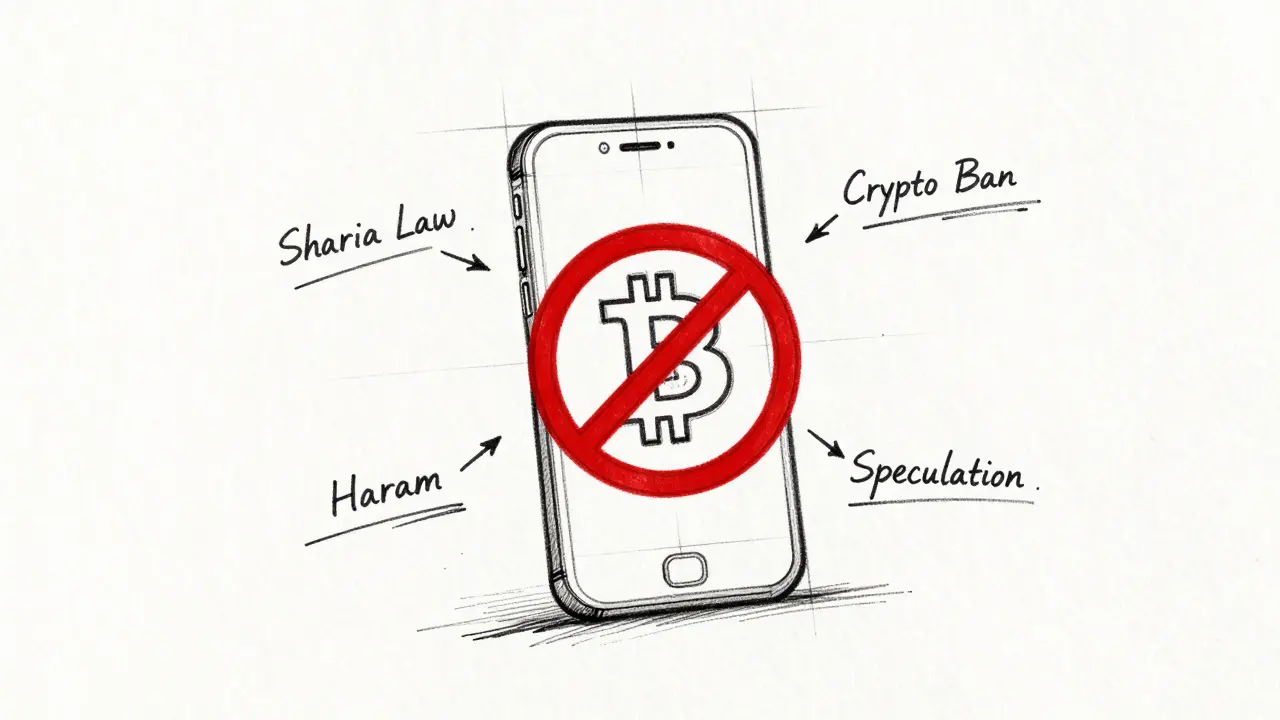
Imagine a country that went from being one of the fastest-growing adopters of digital currency to one of the few places on Earth where it is strictly forbidden. That is exactly what happened in Afghanistan. In just one year, the landscape shifted from rapid innovation to total prohibition. If you are looking at global crypto trends, this story stands out as a stark warning about how political instability can instantly freeze financial progress.
The Taliban is an Islamic fundamentalist political movement and military organization that seized control of Afghanistan in August 2021 implemented a comprehensive ban on all cryptocurrency activities in August 2022. This decision was not based on technical concerns or banking regulations, but on religious interpretation. Under their strict reading of Sharia law is Islamic legal framework derived from the Quran and Hadith that governs various aspects of life including finance, cryptocurrencies were declared 'haram' (forbidden). The reasoning? They argued that digital assets lack real-world backing and constitute speculative gambling. For anyone trying to understand why some nations reject blockchain technology, this provides a clear example of ideological resistance overriding economic utility.
From Boom to Bust: The Rapid Reversal
To grasp the severity of the ban, you have to look at where things stood before. In 2021, right after the initial takeover, Afghanistan saw a meteoric rise in crypto adoption. Why? Because the traditional system collapsed. International sanctions froze foreign reserves, banks stopped functioning normally, and people needed a way to move money across borders. With only 8.64 million of the 40 million inhabitants having reliable internet access, the infrastructure was poor, yet the demand was huge. The country jumped to rank 20th out of 154 countries in global crypto adoption according to data from Chainalysis.
Then came the crackdown. By November 2022, the value of cryptocurrency transactions plummeted to just $80,000 monthly. That is a near-total collapse of visible market activity. The government suspended all exchanges and made trading illegal. But here is the twist: the money didn't disappear; it just went underground. The ban forced operations into shadow networks, making enforcement incredibly difficult for authorities who lacked both the resources and the technical expertise to monitor decentralized ledgers effectively.
| Metric | 2021 (Pre-Ban) | 2022-2026 (Post-Ban) |
|---|---|---|
| Global Adoption Rank | 20th out of 154 | N/A (Illegal) |
| Monthly Transaction Value | Millions of USD | $80,000 (Nov 2022) / Unknown Underground Volume |
| Legal Status | Unregulated but tolerated | Strictly Prohibited (Haram) |
| Primary Use Case | Remittances & Savings | Underground Remittances & Survival Tool |
| Enforcement Level | Low | High (Arrests & Crackdowns) |
The Religious Rationale Behind the Ban
You might wonder why a government would ban something that helps its own citizens survive. The answer lies in ideology. Taliban officials argue that cryptocurrencies like Bitcoin is a decentralized digital currency that operates without a central bank or single administrator are inherently unstable and speculative. In Islamic finance, 'gharar' (excessive uncertainty) and 'maysir' (gambling) are prohibited. Since Bitcoin’s price fluctuates wildly and has no physical asset backing it up, the Taliban leadership classified it as falling under these prohibitions.
This stance puts Afghanistan in a very small club. According to Binance data, Afghanistan is one of only nine countries globally that still prohibit Bitcoin usage. Most other nations that banned crypto, such as Morocco, have since lifted those restrictions. Morocco ended its ban in 2024, recognizing the potential benefits of regulated digital assets. Meanwhile, countries like China, Egypt, and Iraq maintain similar prohibitions, though enforcement varies widely. Afghanistan remains unique because the ban is enforced through religious decree rather than just financial regulation.

Underground Networks: How People Still Trade
Despite the arrests and threats, crypto hasn’t vanished. It has simply become a black-market commodity. Peer-to-peer (P2P) networks thrive in the shadows. You don’t need a licensed exchange to send Bitcoin if you trust a local contact. In fact, USDT is a stablecoin pegged to the US dollar, widely used for preserving value in volatile economies and Bitcoin are heavily used for remittances. When the traditional banking system collapses, people find ways to bypass it.
Enforcement is inconsistent. The Taliban conducts occasional crackdowns, arresting traders and shutting down mining operations. However, the decentralized nature of P2P markets makes complete eradication nearly impossible. Think of it like trying to stop cash transactions-you can arrest individuals, but you cannot stop the flow of value between willing participants. Moreover, the government faces resource constraints. Monitoring blockchain transactions requires sophisticated tools and personnel that are scarce in a nation struggling with basic infrastructure.
A Lifeline for Women in Crisis
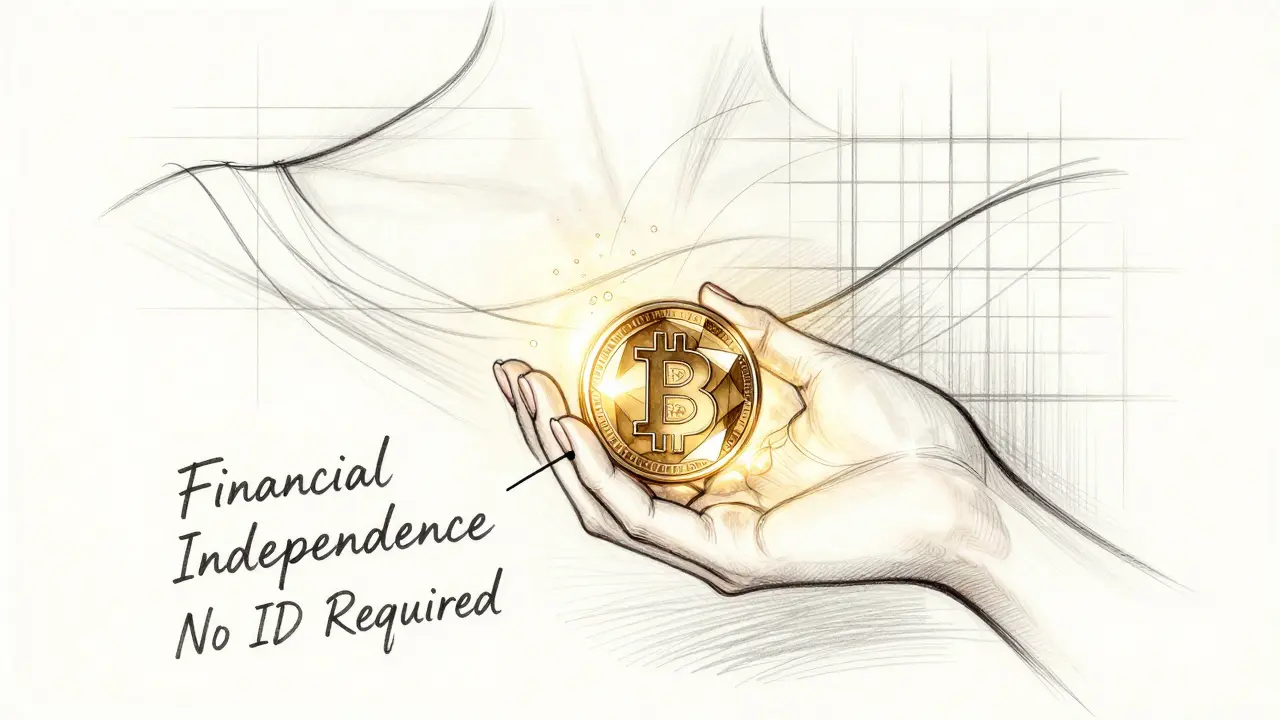
Perhaps the most poignant aspect of this story involves women. Under Taliban rule, women face severe restrictions on employment, education, and even movement. They often lack identification documents required for traditional banking. Enter Roya Mahboob, founder of the Digital Citizen Fund. She revealed that her organization teaches Afghan women financial literacy and Bitcoin usage through online and underground channels.
Why Bitcoin? Because it offers a form of financial freedom that the state cannot easily confiscate. Mahboob noted that the oppressive environment makes cryptocurrency easier for women to understand because "it gives them a hope of financial freedom." Unlike a bank account that can be frozen or closed due to gender-based discrimination, a private key held securely allows a woman to store and transfer value independently. This transforms Bitcoin from a speculative asset into a human rights tool. Collaborating with organizations like the Human Rights Foundation, these initiatives leverage blockchain’s decentralization to democratize access to finance for the most marginalized groups.
Economic Desperation vs. Regulatory Control
The broader context is humanitarian crisis. The United Nations warned that in 2022, 97% of Afghans fell below the poverty line. Food was available, but people had no purchasing power. Aid agencies reported growing instances of starvation. In this vacuum, cryptocurrency became a survival mechanism. The Taliban’s ban decimated the nascent market, but it did not eliminate the need for it.
Consider the irony: the government restricts high-speed internet access, which complicates crypto usage, yet simultaneously relies on informal networks to manage its own finances due to international sanctions. The tension between authoritarian control and economic necessity is palpable. Digital assets have become a vital component of the black market, allowing families to receive remittances from abroad when formal channels are blocked. This resilience highlights a key truth about blockchain technology: once adopted for survival, it is incredibly hard to suppress.
Global Context: Is Afghanistan an Outlier?
If you look at the global trend, Afghanistan is increasingly isolated. More than half of the 16 countries that previously banned cryptocurrencies have lifted their prohibitions. Governments worldwide are moving toward accommodation, seeing potential tax revenue and innovation in digital assets. Expert analysis suggests the likelihood of future global bans is very small. Instead, we see frameworks emerging for regulation, not prohibition.
Afghanistan’s position as one of the last holdouts reflects its unique political isolation. While other nations debate how to regulate DeFi or NFTs, Afghanistan debates whether using Bitcoin is a sin. This disconnect means the country misses out on potential economic relief. As global integration grows, the cost of this isolation may increase, further straining an already fragile economy.
Is cryptocurrency completely illegal in Afghanistan?
Yes, officially. The Taliban government declared all cryptocurrency activities, including trading, mining, and usage, as 'haram' (forbidden) under Sharia law in August 2022. Engaging in these activities can lead to arrests and penalties. However, underground peer-to-peer trading continues despite the ban.
Why did the Taliban ban Bitcoin?
The ban is based on religious grounds. Taliban leaders argue that cryptocurrencies are speculative, lack real-world asset backing, and involve excessive uncertainty ('gharar'), which violates Islamic financial principles. They view it as a form of gambling ('maysir').
How do people use crypto in Afghanistan if it's banned?
People rely on underground peer-to-peer (P2P) networks. Instead of using regulated exchanges, individuals trade directly with trusted contacts. Stablecoins like USDT and Bitcoin are popular for sending remittances and saving value, bypassing the collapsed traditional banking system.
Does the crypto ban affect women differently?
Yes, significantly. Many Afghan women lack ID documents and face employment bans, preventing them from accessing traditional banks. Organizations like the Digital Citizen Fund teach women to use Bitcoin as a tool for financial independence, allowing them to store and transfer funds without state interference.
Will the crypto ban be lifted in the future?
It is unlikely in the short term. The ban is rooted in religious ideology rather than temporary economic policy. While global trends favor regulation over prohibition, the Taliban's strict adherence to their interpretation of Sharia law suggests they will maintain the ban unless there is a major shift in governance or international pressure forces change.



Terry Hyland
17 June, 2026 . 21:19 PM
its all a big scam designed to steal your money and track every move you make. the taliban might be harsh but at least they are honest about it being wrong. these crypto bros think they can escape reality with magic internet money. it is just another way for the elite to control the poor. i bet the author gets paid by some bitcoin lobby to write this garbage.
Monica Pathammavong
19 June, 2026 . 10:41 AM
actually u dont know what ur talking about. the whole point of blockchain is decentralization which means no one controls it. its not about tracking its about freedom from corrupt banks. also the taliban ban is stupid because they cant stop people from using phones. its like trying to ban breathing. u should read more before commenting lol
Tim Lefebvre
21 June, 2026 . 03:40 AM
hey there! i think you both have valid points but lets look at the tech side. p2p networks are hard to shut down completely because there is no central server to hack or seize. in afghanistan people use local contacts to trade usdt or btc. its risky yes but when banks freeze your accounts you do what you gotta do. hope that helps clarify things!
Manish Prajapat
22 June, 2026 . 17:50 PM
The situation in Afghanistan highlights a profound philosophical conflict between traditional religious frameworks and modern technological advancement. The concept of 'gharar' or uncertainty in Islamic finance is applied here to cryptocurrency, viewing volatility as a moral failing rather than a market characteristic. This creates a paradox where the tool meant to liberate individuals from state control is deemed sinful by the very state seeking that control. It forces us to consider whether financial instruments carry inherent ethical weight or if morality is imposed upon them by external authorities.
John Doe
24 June, 2026 . 05:25 AM
I cannot even begin to comprehend the sheer desperation required to risk imprisonment just to send money to family members abroad. It breaks my heart to think that women in Afghanistan are turning to Bitcoin not as an investment strategy but as a lifeline for survival against systemic oppression. They are literally holding their future in private keys while the world watches from afar doing nothing but debating regulations. This is not just economics; this is a humanitarian crisis wrapped in code.
Mekz Wheoki
25 June, 2026 . 16:13 PM
Oh sure, let's praise the digital opiate while ignoring that half the population doesn't even have reliable electricity. You people sit in your air-conditioned offices talking about 'financial freedom' while real humans starve. The Taliban banning it makes perfect sense if you want order. Chaos breeds innovation only in movies. In reality, it breeds crime and instability. But hey, keep telling yourself that blockchain saves lives.
Skm Shubham
25 June, 2026 . 22:31 PM
Your argument lacks empirical basis. The correlation between crypto adoption and poverty alleviation is tenuous at best. What you call 'innovation' is merely speculative gambling masked as technological progress. The Taliban's stance aligns with conservative economic principles that prioritize stability over volatile assets. To suggest otherwise is to ignore the fundamental risks associated with unregulated markets. People lose everything when bubbles burst, and Afghanistan cannot afford such losses.
Rob Aronson
27 June, 2026 . 01:11 AM
Let's analyze the regulatory framework implications here 📊. The prohibition creates a black market inefficiency that actually increases transaction costs due to risk premiums. From a DeFi perspective, the lack of KYC/AML compliance in P2P trades exposes users to significant counterparty risk. However, the utility of stablecoins like USDT remains high for remittance corridors where SWIFT access is denied. It's a classic case of regulatory arbitrage driving underground liquidity pools 💸.
Kwon Bill
29 June, 2026 . 00:04 AM
In many developing nations, informal economies operate outside state control due to necessity. Afghanistan is no different. The cultural shift towards digital assets was driven by exclusion from the global banking system, not ideological preference. When formal institutions fail to serve the populace, alternative mechanisms emerge organically. This mirrors historical patterns where communities developed parallel currencies during hyperinflation or sanctions regimes.
Danna Charris
29 June, 2026 . 10:31 AM
Precisely. The nuance is often lost on those who view crypto solely through a libertarian lens. It is a tool, neither good nor evil. Its application in Afghanistan demonstrates resilience but also vulnerability. One must appreciate the complexity without romanticizing the danger involved.
Fede Faith
30 June, 2026 . 05:34 AM
You guys are missing the human element here. I've worked with NGOs in similar regions. Women using crypto aren't thinking about market cap or halving cycles. They are thinking about how to buy medicine for their kids without asking permission. It's scary but it works. We need to support education on security so they don't get scammed. That's the real win condition here.
Josh Dodson
1 July, 2026 . 02:34 AM
totally agree with you! its amazing how tech adapts to needs. we just need to make sure ppl know how to secure their wallets properly. maybe more guides on seed phrases would help? i think its great that orgs like digital citizen fund are stepping up. lets keep supporting them!
Suman Patil
2 July, 2026 . 13:48 PM
This is a fascinating intersection of sociology and fintech! 🚀 The adoption curve in Afghanistan defies traditional models because the driver is existential threat rather than profit motive. Imagine the UX challenges: low bandwidth, fear of detection, limited literacy. Yet, the demand persists. This proves that when pain points are severe enough, users will overcome any friction. Great analysis on the underground networks!
Kumaran sowkarpet
2 July, 2026 . 23:34 PM
As someone from India, I see similarities with our cashless push but without the government force. Here people use UPI because it is convenient. There they use crypto because it is necessary. Very sad but powerful story. Hope they stay safe :)
Mauricio Contreras Loredo
3 July, 2026 . 03:29 AM
Sure, it's 'necessary,' but let's not pretend it's a utopia. Most of these people are getting rugged by local scammers because they don't understand smart contracts. The Taliban ban is harsh, yeah, but the alternative is a wild west where the naive get slaughtered. Not exactly a recipe for empowerment, more like exploitation with extra steps.
sreeja boora
4 July, 2026 . 08:22 AM
The article fails to address the sovereignty issues. A nation has the right to regulate its financial sector according to its values. External pressure to adopt Western financial technologies is a form of neo-colonialism. Afghanistan's choice to reject speculative assets is a sovereign decision that should be respected regardless of one's personal opinion on cryptocurrencies.
Grace Newman
4 July, 2026 . 08:25 AM
One must consider the deeper implications of this narrative. Who benefits from portraying the Taliban as mere obstacles to financial progress? Is it not possible that the push for crypto adoption in sanctioned countries serves broader geopolitical interests? The West loves to champion 'freedom' when it aligns with their technological dominance. Be wary of accepting this story at face value.
Andrea Burd
5 July, 2026 . 16:36 PM
boring read. everyone knows crypto is dead anyway. why waste time writing about a country that is irrelevant to the global economy? just skip it next time.
Akeem Whittaker
7 July, 2026 . 12:35 PM
Please refrain from dismissing the experiences of millions of people based on national stereotypes. Every individual's struggle for financial autonomy matters. Dismissing this topic as irrelevant ignores the universal desire for dignity and security. Let's engage with respect and empathy rather than cynicism.
Annemarie Fitzgerald
9 July, 2026 . 03:59 AM
the existential dread of living under such a regime must be palpable. yet here we are discussing transaction fees. it feels almost trivial compared to the loss of basic rights. but perhaps that is the nature of modern discourse reducing human suffering to data points. i find myself unable to fully process the tragedy behind the statistics.
Abby Sivertsen
9 July, 2026 . 18:48 PM
I grew up in a place where banking was restricted too. I get it. It's not about the money, it's about agency. When you can't open a bank account, you feel invisible. Crypto makes you visible to the world again. It's messy and dangerous but it's better than being erased. Keep sharing these stories so people understand the stakes.
Benjamin Eisen
10 July, 2026 . 02:20 AM
It really makes you think about what money actually is. Is it trust in a government or trust in math? In Afghanistan, trust in the government is zero. So math wins. Simple as that. Thanks for bringing up such an important topic. It shows how resilient humans are when pushed to the brink.