Imagine a digital ledger that never forgets, never lies, and can’t be hacked without breaking the entire internet. That’s the promise of blockchain. But how does it actually work under the hood? Specifically, how do blockchain blocks store transaction data in a way that keeps billions of dollars secure?
It’s not magic. It’s math, cryptography, and a very specific file structure. If you’ve ever wondered why Bitcoin transactions are permanent or why Ethereum gas fees spike when everyone is trying to buy an NFT, the answer lies in how these blocks are built. Let’s peel back the layers.
The Anatomy of a Block: Header, Counter, and Payload
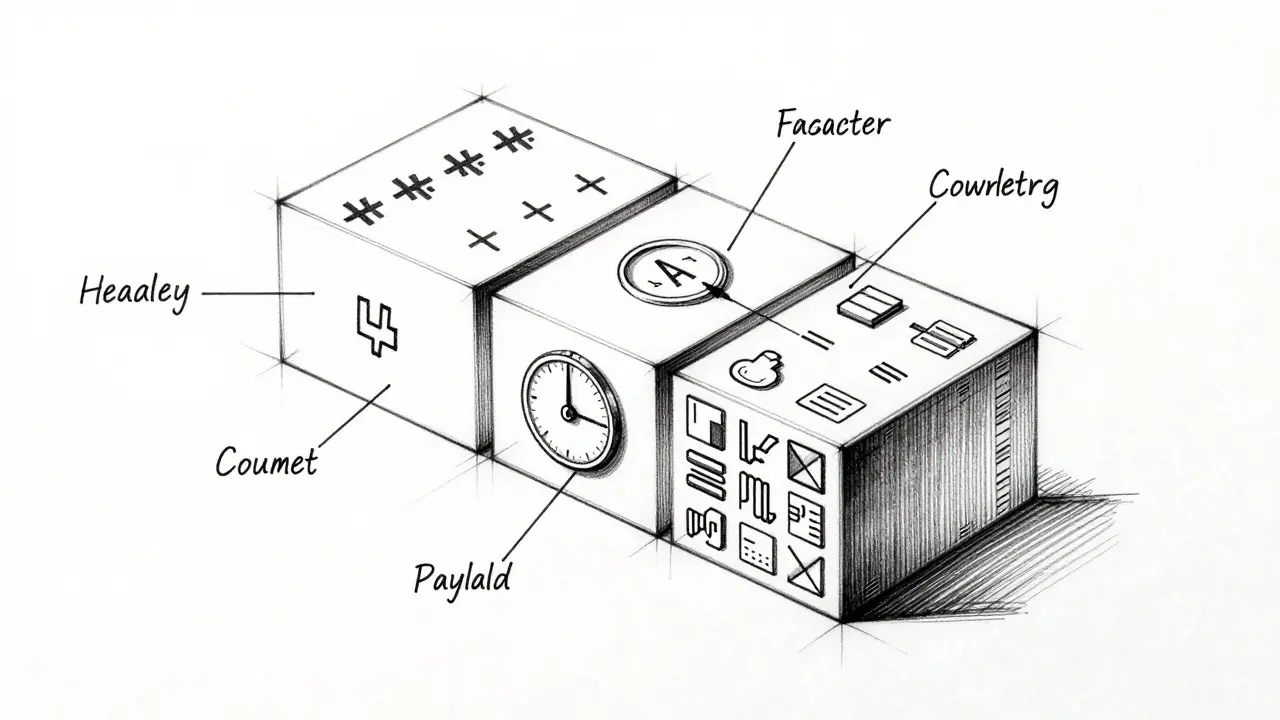
Every block in a blockchain like Bitcoin or Ethereum follows a strict template. Think of it as a shipping container with three main parts: the label (header), the inventory list (counter), and the goods (transactions).
The Block Header is the most critical part for security. It contains:
- Previous Block Hash: A unique fingerprint of the last block. This links blocks together into a chain. If you change one block, this hash changes, breaking the link to all subsequent blocks.
- Merkle Root: A single cryptographic summary of every transaction in the block. We’ll dive deeper into this below.
- Timestamp: When the block was created.
- Nonce: A random number miners tweak to solve the proof-of-work puzzle.
- Version Number: Indicates which protocol rules apply.
Next comes the Transaction Counter, a simple integer telling the network how many transactions are packed inside. Finally, the Transaction Data itself-the actual records of value moving from address A to address B.
The Merkle Tree: Efficient Verification
Here’s where things get clever. A block doesn’t just list transactions linearly. It uses a Merkle Tree a binary tree structure invented by Ralph Merkle in 1979.
Imagine you have 100 transactions. Instead of storing them as a flat list, the system pairs them up, hashes each pair, then pairs those hashes, and repeats until only one hash remains. That final hash is the Merkle Root, stored in the block header.
Why does this matter? Because it allows anyone to verify if a specific transaction is in a block without downloading the whole block. You only need the transaction and a few sibling hashes (the "Merkle path"). This is crucial for lightweight wallets on your phone. They don’t store the entire blockchain; they just check the Merkle proof against the block headers they trust.
If someone tries to alter even one bit of a transaction, the Merkle Root changes completely due to the avalanche effect in cryptographic hashing. The block becomes invalid instantly.
What’s Inside a Transaction?
Before data gets hashed into a Merkle Tree, it exists as raw transaction objects. These vary slightly by blockchain but generally include:
- Sender Address: Public key hash (e.g., 160-bit hexadecimal in Bitcoin).
- Recipient Address: Where the funds are going.
- Value: Amount transferred (satoshis in Bitcoin, wei in Ethereum).
- Signature: Cryptographic proof that the sender owns the private key associated with the sending address. In Bitcoin, this is typically a 65-byte ECDSA signature.
- Data/Gas: In Ethereum, this includes gas price limits and optional calldata for smart contracts.
This data is immutable once confirmed. Unlike a SQL database where you can run `UPDATE` or `DELETE`, blockchain data is append-only. Corrections require new transactions, not edits.

On-Chain vs. Off-Chain Storage: The Cost Reality
You might think, "Why not store everything on the blockchain?" The short answer: cost and space.
| Feature | On-Chain Storage | Off-Chain Storage (e.g., IPFS, Filecoin) |
|---|---|---|
| Cost | High ($10+ per KB on Ethereum during peak times) | Low (cents per GB) |
| Security | Maximum (protected by consensus mechanism) | Variable (depends on storage provider redundancy) |
| Immutability | Permanent and tamper-proof | Potentially mutable unless pinned |
| Scalability | Limited (Bitcoin ~4MB/block, Ethereum ~30M gas) | High (unlimited external storage) |
| Use Case | Critical state, financial records, hashes | Images, videos, large documents |
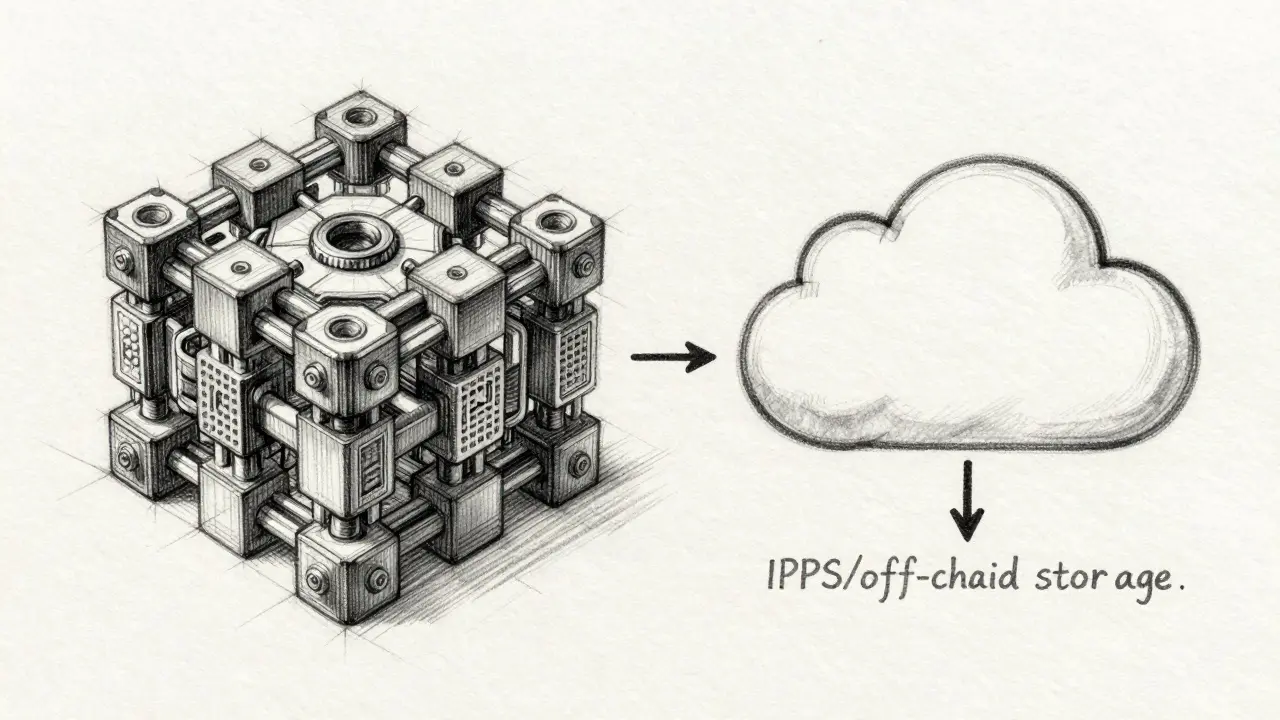
Storing 1KB of data directly on Ethereum can cost around $10 depending on gas prices. Storing a high-resolution image would bankrupt most users. That’s why projects like NFTs often store the actual JPEG on centralized servers or decentralized networks like IPFS, while only storing the hash of that image on-chain. The hash proves authenticity, but the data lives elsewhere.
However, this creates a risk: if the off-chain server goes down, the NFT points to nothing. This happened with several early NFT projects where the "art" disappeared because the hosting company shut down.
Blockchain Size and Scalability Challenges
Because every node must validate transactions, the blockchain grows continuously. As of late 2023, Bitcoin’s blockchain exceeded 475GB, while Ethereum surpassed 1.2TB. Running a full node requires significant hardware-Ethereum nodes need at least 2TB of SSD storage and 16GB RAM.
This growth poses a centralization risk. If only wealthy institutions can afford to run full nodes, the network loses its decentralization. To combat this, developers are introducing innovations like:
- Proto-Danksharding (EIP-4844): Reduces data storage costs by 90% by storing temporary data off-chain with on-chain verification.
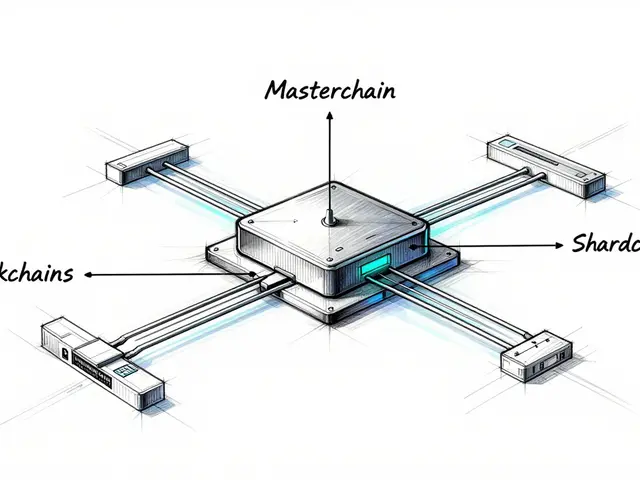
- Data Availability Layers: Projects like Celestia separate data availability from execution, allowing blockchains to scale to 10,000+ TPS without bloating every node.
Real-World Implications for Developers and Users
For developers, understanding block structure is vital for optimizing smart contracts. A common mistake is storing unnecessary data on-chain. For example, storing user profiles as long strings instead of efficient structs can increase gas costs by 400%. One developer reported spending $1,200 in extra fees after realizing his inefficient code structure was wasting storage slots.
For users, the immutability of blockchain data is both a feature and a bug. If you send crypto to the wrong address, there’s no customer support to reverse it. The data is locked in the block forever. Conversely, this makes blockchain ideal for auditing. Financial institutions use it because altering historical records would require re-mining every block since the error-a computationally impossible task.
Future Trends: Modular Blockchains and Privacy
The future isn’t about making blocks bigger; it’s about making them smarter. Zero-knowledge proofs (ZKPs) allow transactions to be verified without revealing their contents. Projects like StarkNet and Aleo are pioneering this, storing only mathematical proofs on-chain while keeping sensitive data private.
Additionally, hybrid models are emerging. Healthcare systems, for instance, might store patient health record hashes on a HIPAA-compliant blockchain while keeping the actual medical files in encrypted, off-chain databases. This balances privacy, compliance, and verifiability.
As we move toward 2026, expect blockchain storage to become more modular, cheaper, and specialized. The monolithic "store everything here" approach is fading, replaced by a layered ecosystem designed for efficiency.
Can I delete data from a blockchain block?
No. Blockchain data is immutable. Once a block is confirmed and added to the chain, it cannot be altered or deleted. Any attempt to change data would invalidate the block's hash and break the chain, requiring massive computational power to rewrite history, which is practically impossible on secure networks like Bitcoin or Ethereum.
Why is on-chain storage so expensive?
On-chain storage is expensive because every node in the network must store and validate the data. This redundancy ensures security and decentralization but consumes significant resources. Gas fees reflect the demand for limited block space. During high traffic, users bid up prices to prioritize their transactions.
What is a Merkle Root used for?
A Merkle Root is a cryptographic summary of all transactions in a block. It allows for efficient verification. Lightweight wallets can prove a transaction exists in a block without downloading the entire blockchain, saving bandwidth and storage. It also ensures data integrity; any change to a transaction changes the root hash.
How do NFTs store images if blockchains are small?
NFTs typically do not store the actual image file on-chain. Instead, they store a metadata pointer, often a URL or a hash pointing to the image hosted on decentralized storage like IPFS or centralized servers. The blockchain only records ownership and the link to the asset.
Is blockchain storage secure?
Yes, highly secure. Data is distributed across thousands of nodes and protected by cryptographic hashing. Tampering with data would require controlling more than 51% of the network's computing power, which is economically and technically unfeasible for major blockchains like Bitcoin and Ethereum.