Have you ever tried to send money on a blockchain and waited five minutes for it to confirm while paying a fee that cost more than your lunch? If so, you know exactly why Venom exists. It isn’t just another coin hoping for a quick price spike. It is built to be the digital highway for governments, banks, and massive enterprises that need speed, security, and low costs without breaking the bank.
If you are looking at the VENOM token in your portfolio or just heard about it from a friend, you probably have questions. Is it safe? What can you actually do with it? And why do people keep calling it "Layer 0"? Let’s break down what Venom is, how it works, and why it might matter for the future of finance.
The Quick Takeaways
- Venom is a high-speed blockchain network designed for big institutions and governments, not just retail traders.
- The native VENOM token is used for transaction fees, staking, and governance within the ecosystem.
- It uses a unique Layer 0/Layer 1 hybrid architecture that allows for up to 150,000 transactions per second.
- Transaction costs are incredibly low, often less than $0.002 per transaction.
- The project focuses heavily on real-world applications like Central Bank Digital Currencies (CBDCs) and compliant financial systems.
What Exactly Is Venom?
To understand Venom, you first need to forget the idea of Bitcoin as a simple ledger for peer-to-peer payments. Venom is an enterprise-grade digital infrastructure platform. Think of it as the foundation upon which other blockchains and financial apps are built. Founded by Christopher Louis Tsu and Dr. Kai-Uwe Steck, the project started development back in 2018 but didn’t launch its mainnet until March 2024.
The core problem Venom solves is scalability. Most popular blockchains get slow and expensive when too many people use them at once. Venom was engineered from the ground up to handle massive loads. It targets large-scale institutional and governmental applications. This means it’s built for things like national digital currencies, tracking carbon credits, and processing millions of micro-transactions for global companies.
The Venom Foundation, established in 2022, drives this mission. Their goal isn’t just to create a speculative asset but to provide a scalable, adaptable blockchain for developers and businesses who need reliability above all else.
How Does the Technology Work?
You will hear the term "Layer 0" thrown around a lot when discussing Venom. But what does that mean? In the blockchain world, layers refer to how data is processed.
- Layer 1 is the base blockchain itself (like Ethereum or Bitcoin).
- Layer 2 sits on top of Layer 1 to make it faster (like Lightning Network).
- Layer 0 is the protocol that enables multiple Layer 1 blockchains to exist and communicate with each other.
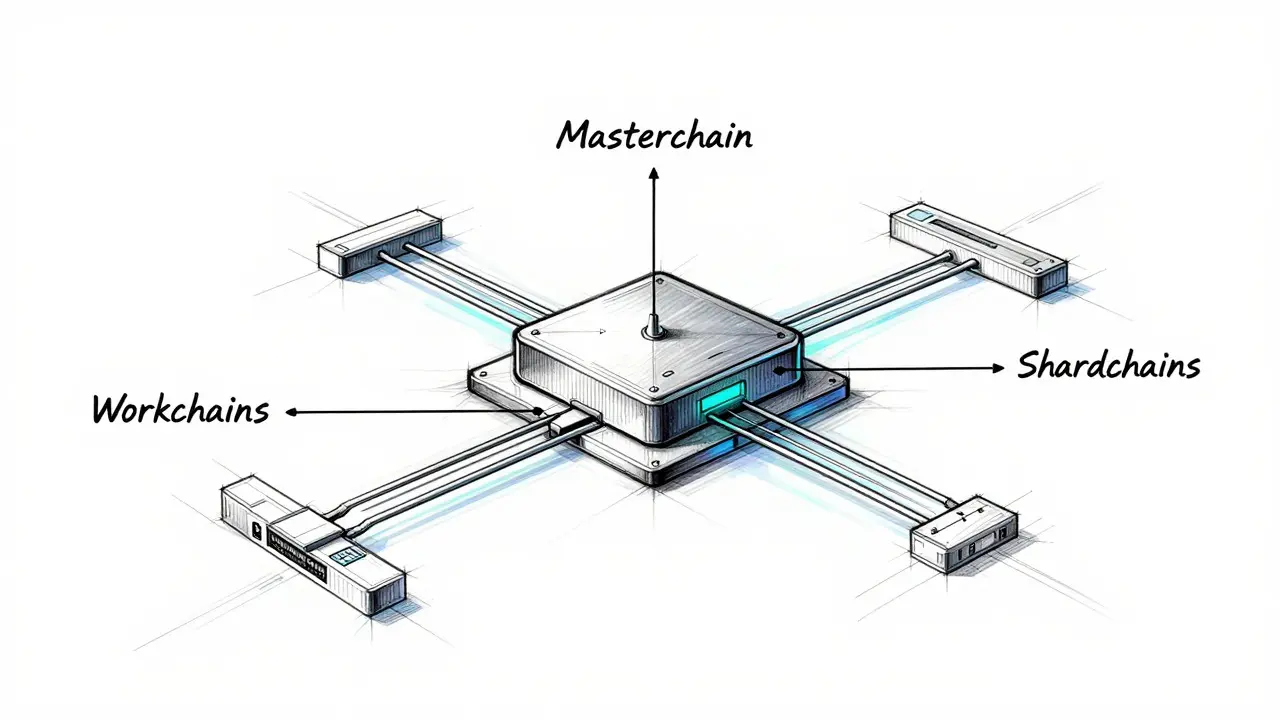
Venom uses a hybrid Layer 0/Layer 1 architecture. It operates as a heterogeneous multi-blockchain system. At the center is a "masterchain" (Layer 0) that anchors the network. Branching off from this are multiple "workchains" and "shardchains" (Layer 1). These chains process transactions in parallel. Imagine a highway with one main control tower (Layer 0) directing traffic across dozens of lanes (Layer 1) simultaneously, rather than forcing every car into a single lane.
This design utilizes Mesh network technology and dynamic sharding. Dynamic sharding means the network automatically adjusts to demand. If traffic spikes, Venom creates more shards to handle the load. If traffic drops, it consolidates resources. This ensures efficiency regardless of how busy the network is.
Performance: Speed and Cost
Let’s talk numbers, because they are where Venom really stands out. Traditional blockchains like Ethereum often struggle with high gas fees and slower confirmation times during peak usage. Venom aims to eliminate these bottlenecks.
| Metric | Venom (VENOM) | Typical Legacy Blockchain |
|---|---|---|
| Transactions Per Second (TPS) | 100,000 - 150,000 | 15 - 30 |
| Average Transaction Fee | < $0.002 | $1.00 - $50.00+ |
| Finality Time | < 3 seconds | 10 seconds - 10 minutes |
| Consensus Mechanism | Proof-of-Stake + BFT | Proof-of-Work / Proof-of-Stake |
In a closed-network stress test conducted in May 2025, Venom achieved 150,000 TPS with finality under three seconds. That is blazing fast. For context, Visa processes around 24,000 TPS at peak times. Venom is theoretically capable of handling global payment volumes with ease.
The network employs a Proof-of-Stake consensus mechanism combined with Byzantine fault tolerance (BFT). This enhances security while maintaining high performance. Validators stake VENOM tokens to secure the network. If they act maliciously, they face "slashing," meaning part of their stake is burned as a penalty. This keeps the network honest and secure.
The VENOM Token: Utility and Economics
The $VENOM token is the lifeblood of the ecosystem. It has a maximum supply of 8 billion tokens. As of late 2025, the circulating supply is approximately 989 million, giving it a significant market capitalization.
So, what do you actually do with VENOM?
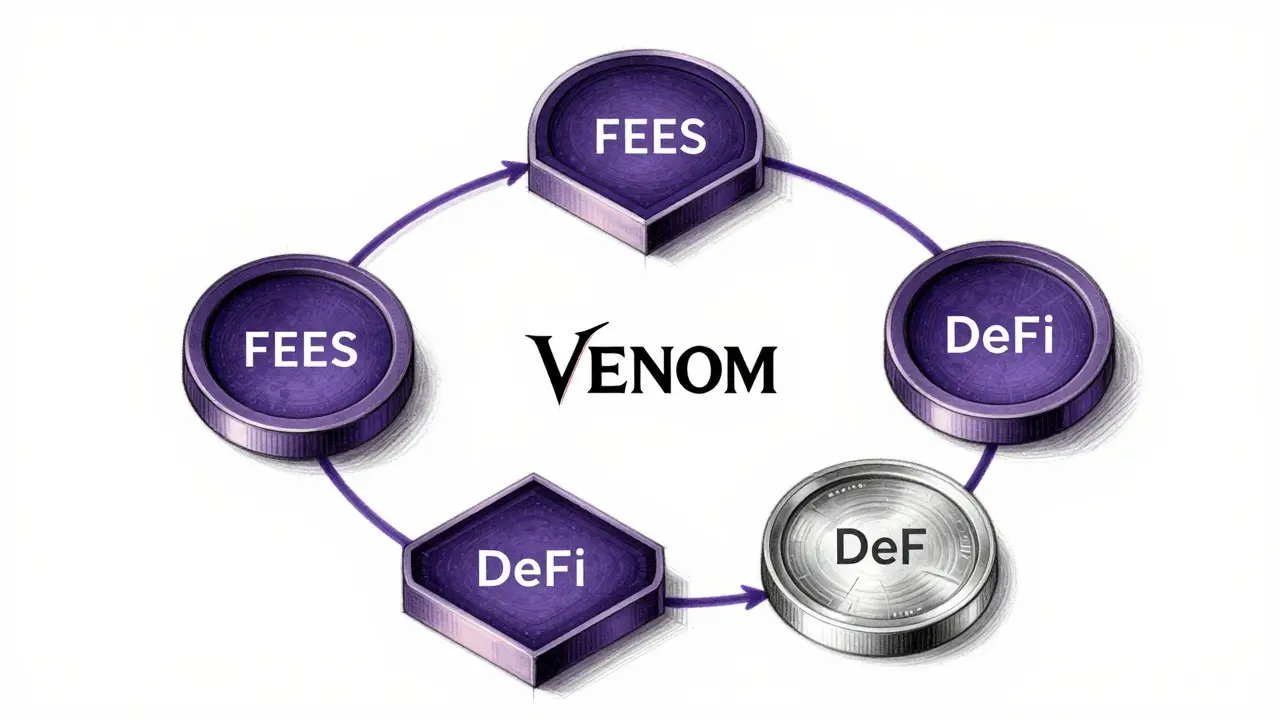
- Pay Transaction Fees: Every time you interact with the network-sending money, swapping tokens, or using an app-you pay a tiny fee in VENOM.
- Staking and Farming: You can lock up your VENOM to help secure the network or provide liquidity to decentralized exchanges. In return, you earn passive income.
- Governance: Holders can vote on proposals that shape the future of the Venom Foundation and the network’s development.
- Access DeFi and Gaming: VENOM is used across the ecosystem for decentralized finance tools, NFT marketplaces, and gaming platforms.
Initially, the token model is inflationary to encourage adoption and staking. However, there are strategic plans to transition toward a deflationary structure. This involves token burning mechanisms, where a portion of transaction fees or specific actions permanently remove VENOM from circulation, potentially increasing scarcity over time.
Real-World Use Cases: Beyond Speculation
While retail investors love trading coins, Venom’s true power lies in its enterprise focus. The network is engineered specifically for governments and large institutions. Here is where it shines:
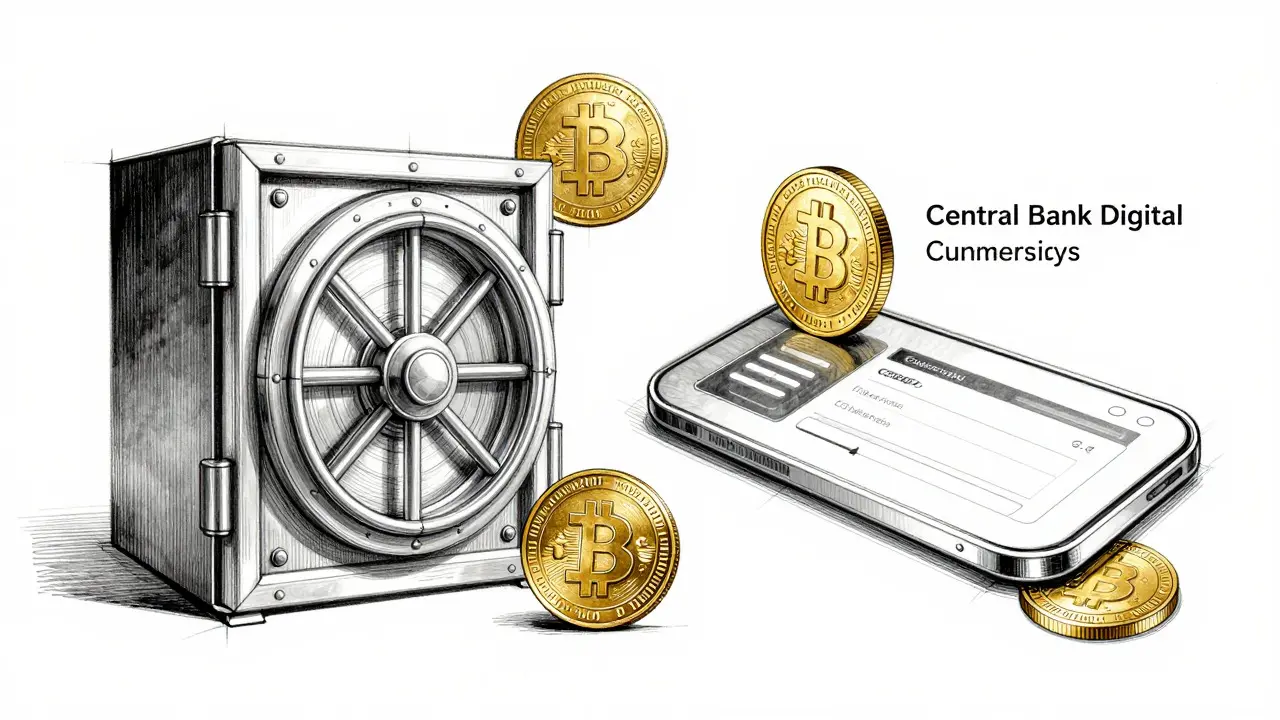
- Central Bank Digital Currencies (CBDCs): Many countries are exploring digital versions of their fiat currency. Venom provides the infrastructure to issue and manage these CBDCs securely and efficiently.
- Compliant Stablecoins: Businesses need stable value for daily operations. Venom supports fiat-backed stablecoins with built-in regulatory compliance, such as on-chain KYC (Know Your Customer) and AML (Anti-Money Laundering) capabilities.
- Tokenized Real-World Assets: Imagine buying a fraction of a building or trading carbon credits on a blockchain. Venom makes this possible with low fees and high speed.
- Sovereign Financial Systems: A notable partnership with Vietnam highlights Venom’s role in developing sovereign blockchain-backed financial systems. This shows real-world government trust in the technology.
This focus on compliance and regulation is a double-edged sword. For purists who want total anonymity, Venom might seem too controlled. But for banks and governments, that control is a feature, not a bug. It allows them to adopt blockchain tech without fearing regulatory crackdowns.
The Ecosystem: Tools and Platforms
A blockchain is only as good as the tools built on top of it. Since its mainnet launch in March 2024, the Venom Foundation has rolled out a suite of integrated platforms:
- VenomWallet: A non-custodial wallet available as a browser extension for laptops and PCs, plus mobile apps for Android and iPhone. You hold your keys, you own your crypto.
- VenomScan: The blockchain explorer. Use this to track transactions, verify contract addresses, and monitor network health.
- VenomBridge: Essential for cross-chain interoperability. It allows you to move assets from Ethereum, Binance Smart Chain, and other networks onto Venom.
- VenomGet: A simplified platform for acquiring VENOM tokens and other assets.
- VenomPools: Designed for liquidity providers who want to earn yields by supplying assets to decentralized exchanges.
- Web3.World: A hub for decentralized application (dApp) development, helping builders create next-gen apps on the Venom infrastructure.
These tools create a cohesive environment. Instead of hunting for third-party wallets or bridges that might be insecure, users can rely on the native, vetted solutions provided by the foundation.
Is Venom Right for You?
If you are a day trader looking for a meme coin that pumps 100% overnight, Venom might not be your primary play. Its value proposition is tied to long-term adoption by institutions and governments. However, if you believe in the future of Web3, decentralized finance, and blockchain infrastructure that can actually scale to serve billions of users, Venom is worth watching closely.
Its combination of technical prowess (150k TPS), economic utility (staking, fees), and strategic partnerships (Vietnam CBDC) positions it uniquely in the market. It bridges the gap between the wild west of crypto and the regulated world of traditional finance.
What is the current price of VENOM?
The price of VENOM fluctuates based on market demand. As of late 2025, it has maintained a significant market capitalization. Always check a live cryptocurrency tracker like CoinMarketCap or CoinGecko for the most up-to-date price action before making any investment decisions.
Is Venom a Layer 1 or Layer 0 blockchain?
Venom is a hybrid. It functions as a Layer 0 protocol that anchors the network and enables communication between multiple Layer 1 workchains and shardchains. This allows for parallel processing and greater scalability than a standard Layer 1 blockchain.
How do I buy VENOM tokens?
You can acquire VENOM through major centralized exchanges that list the token or via the VenomGet platform. Once purchased, you can store them in the non-custodial VenomWallet or compatible hardware wallets that support the TIP-3 token standard.
What is the maximum supply of VENOM?
The maximum supply of VENOM is capped at 8,000,000,000 (8 billion) tokens. Currently, less than half of this supply is in circulation, with the rest allocated for ecosystem growth, staking rewards, and foundation reserves.
Is Venom secure?
Yes, Venom uses a Proof-of-Stake consensus mechanism combined with Byzantine Fault Tolerance (BFT). This ensures that even if some validators fail or act maliciously, the network remains secure. Additionally, validator slashing penalties discourage bad behavior, enhancing overall network integrity.