You’ve probably seen the ticker TREB is the native utility and governance token of the Treble decentralized finance platform popping up on your radar. If you are wondering what this coin actually does beyond just sitting in a wallet, you are not alone. The crypto space is flooded with new projects, but Treble claims to be something different: a "modular V4 DEX" built specifically for the Base blockchain is a Layer 2 scaling solution developed by Coinbase that offers low transaction fees and high speed.
In simple terms, Treble is trying to solve a messy problem in decentralized finance. Right now, if you want to swap tokens, lend money, or farm yields, you often have to jump between three or four different websites. It is clunky, it eats up your time, and it can get expensive. Treble aims to fix this by putting everything under one roof. This article breaks down exactly what the platform offers, how the TREB token works, and whether it is worth your attention in the current market.
The Core Concept: What Makes Treble Different?
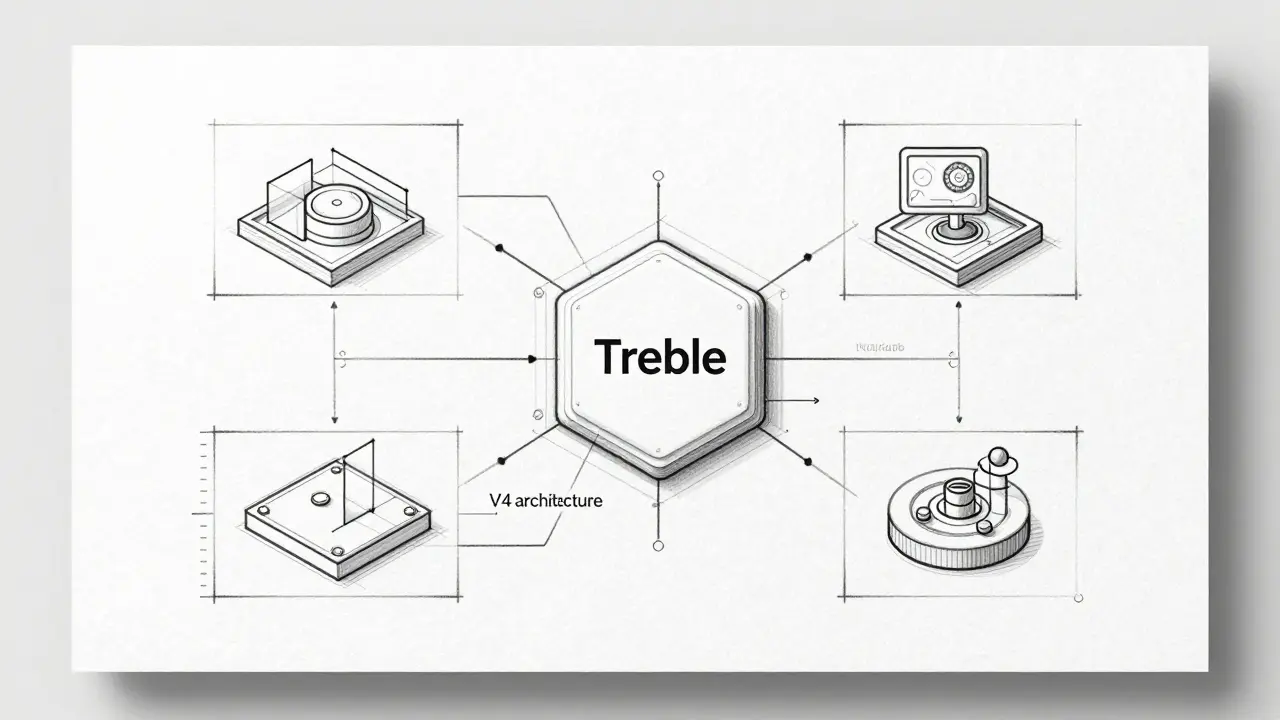
To understand Treble, you first need to look at its architecture. Most decentralized exchanges (DEXs) right now run on versions of technology pioneered by Uniswap, specifically V3. These are great, but they have limits. Treble positions itself as the first "modular V4 DEX" on the Base network.
What does "modular" mean here? Think of it like an app store for financial services. Instead of just being a place to trade, Treble is designed to plug in other functions seamlessly. According to their technical roadmap, this includes:
- Concentrated Liquidity Ranges: This allows liquidity providers to put their capital to work more efficiently, potentially earning higher fees without needing massive amounts of funds.
- Auto-compounding Fees: Instead of manually reinvesting your earnings, the protocol handles it automatically, which helps grow your position over time.
- Native Limit Orders: On many DEXs, setting a limit order (buying at a specific price later) requires complex workarounds. Treble builds this directly into the interface.
This setup is particularly appealing because the Base blockchain is growing fast. By optimizing these features specifically for Base, Treble hopes to offer smoother transactions and lower costs than generic cross-chain competitors.
Beyond Swaps: The Full DeFi Hub Experience
If Treble were just another swap tool, it would struggle to stand out. The real draw is its ambition to become a full-suite DeFi Hub. The platform integrates several tools that usually require separate apps.
One standout feature is the fiat on/off ramp. For newcomers, buying crypto can be a headache involving bank transfers and identity checks. Treble simplifies this by allowing direct purchases. Even more interesting is the CEX onramp, which lets you move funds from centralized exchanges (like Binance or Coinbase) directly into Web3 wallets within the Treble interface. This bridges the gap between traditional trading and decentralized autonomy.
Then there is the no-KYC spending capability. This is a controversial but popular feature among privacy advocates. It allows users to spend crypto at hundreds of merchants for things like rent or mortgages without going through traditional banking infrastructure or strict Know Your Customer (KYC) verification processes for those specific transactions. While regulatory scrutiny on this front is increasing globally, it remains a key selling point for users seeking financial sovereignty.
| Feature | Function | User Benefit |
|---|---|---|
| Cross-Chain Swaps | Moves assets between blockchains | Access liquidity across Ethereum, Arbitrum, Polygon, etc., without leaving the app |
| Farming & Staking | Earn rewards for providing liquidity | Generate passive income using optimized yield strategies |
| No-KYC Spending | Direct crypto payments | Pay bills or buy goods without traditional bank intermediaries |
| DeFAI Integration | AI-driven analytics | Get automated recommendations for yield farming and portfolio management |
Tokenomics: Understanding the TREB Supply
Every crypto project needs a token to function, and TREB is the fuel for the Treble engine. Let’s look at the numbers, because understanding supply is crucial for assessing potential value.
The total supply of TREB is capped between 42.33 million and 43.32 million tokens. This is a relatively small supply compared to some meme coins, which can help prevent extreme dilution if demand picks up. Here is how that supply is distributed based on presale data:
- Private/Presale Allocation: About 20.31% (approx. 8.6 million tokens). This goes to early investors and strategic partners.
- Public Sale Allocation: About 15.12% (approx. 6.4 million tokens). This is what retail buyers got access to during the initial launch phases.
- Remaining Supply: Reserved for ecosystem growth, team incentives, and future development.
During the strategic presale in December 2024, the token was priced at $0.09 per token. Since then, market prices have fluctuated significantly. Depending on the exchange, you might see prices ranging from roughly $0.04 to $0.22. This volatility is normal for early-stage DeFi tokens but highlights the importance of checking live order books before buying.
Holding TREB isn’t just about hoping the price goes up. The token is intended to provide utility: governance rights (voting on platform changes), fee sharing from the DEX activities, and access to premium staking pools. As the platform adds lending and perpetuals trading, the demand for TREB could theoretically increase as it becomes integral to these operations.

Market Position and Valuation Risks
Let’s talk about the elephant in the room: valuation. When Treble launched, its market capitalization was projected around $500,000. Recent data suggests the fully diluted valuation (FDV) has grown to approximately $5.1 million, with a circulating market cap closer to $1.35 million.
Some analysts argue this is undervalued. They point out that Treble offers an "S-tier" experience with advanced features like V4 architecture and AI integration, yet trades at a fraction of the cost of established competitors. However, you must weigh this against significant risks.
Liquidity Risk: Because the market cap is still relatively low, large sell orders can cause sharp price drops. You might find it difficult to exit a large position quickly without slippage.
Execution Risk: Treble promises a lot-lending, perpetuals, AI integration. Building these securely is hard. If they fail to deliver on the roadmap, investor confidence could plummet.
Competition: The Base blockchain is not empty. Established giants like Uniswap and Curve already operate there. Treble has to fight for users who are already comfortable with those platforms. Their advantage lies in being more "modular" and user-friendly, but changing user habits is tough.
Security and Technical Foundations
When dealing with smart contracts, security is non-negotiable. Treble utilizes proven mechanisms rather than experimental tech. The V4 DEX architecture builds upon the battle-tested concentrated liquidity models introduced by Uniswap V3. This means the core logic has been scrutinized by thousands of developers worldwide.
However, as with any DeFi project, you should always verify the latest audit reports. Early-stage projects sometimes launch with limited independent security documentation. Before depositing significant funds, check Treble’s official channels for recent audit results from reputable firms. The cross-chain functionality also relies on bridge technologies, which have historically been targets for hackers. Ensuring these bridges are robust is critical for the platform’s long-term survival.
Who Is Treble For?
Treble tries to appeal to two very different groups, which is both its strength and a challenge.
For Retail Users: The focus is on simplicity. The fiat ramps, no-KYC spending, and intuitive interface make it easier for someone who just wants to use crypto for daily life or earn some passive income through staking. The AI-driven suggestions (DeFAI) act like a personal assistant, helping beginners navigate complex yield opportunities.
For Institutional Traders: The API integrations, leverage trading, and perpetuals cater to professionals who need speed and depth. The ability to execute limit orders natively and manage concentrated liquidity ranges appeals to sophisticated market makers who want efficiency without leaving the Base ecosystem.
If you fall into either camp, Treble offers tools tailored to your needs. But remember, the platform is still maturing. The lending and perpetuals features are part of the upcoming roadmap, meaning they may not be fully stable or available immediately.
Final Thoughts on the TREB Project
Treble represents a bold attempt to consolidate the fragmented DeFi landscape on the Base blockchain. By combining a modular V4 DEX with fiat ramps, cross-chain capabilities, and AI integration, it aims to be more than just a trading venue-it wants to be a financial operating system.
The low market capitalization offers high upside potential if adoption grows and the roadmap is executed successfully. However, the risks are equally pronounced. Low liquidity, intense competition, and the inherent volatility of early-stage crypto projects mean you should approach TREB with caution. Do your own research, start small, and keep an eye on their development updates. In the world of DeFi, execution matters more than promises.
Where can I buy TREB tokens?
TREB tokens are primarily traded on the Treble Swap interface (app.trebleswap.com). Additionally, you may find listings on select exchanges such as MEXC. Availability on major centralized exchanges like Crypto.com varies, so always check current listing status before attempting to purchase.
Is Treble safe to use?
Like all DeFi platforms, Treble carries risks. It uses established V4 architecture similar to Uniswap, which is generally secure. However, as a newer project, it is crucial to wait for comprehensive third-party security audits before depositing large amounts. Always use a hardware wallet and enable all available security features.
What is the difference between Treble and Uniswap?
Uniswap is a general-purpose DEX focused primarily on swapping tokens. Treble is a "DeFi Hub" built on the Base blockchain that combines swapping with additional features like fiat on-ramps, no-KYC spending, lending, and AI-driven yield optimization. Treble is also optimized specifically for the Base network, whereas Uniswap operates across multiple chains.
How does the no-KYC spending feature work?
This feature allows users to convert their crypto holdings into fiat-equivalent payments for merchants (such as rent or utilities) without undergoing traditional banking identity checks for each transaction. It bypasses standard bank infrastructure, offering greater privacy and speed, though regulatory compliance varies by jurisdiction.
What is the total supply of TREB?
The total supply of TREB tokens is capped at approximately 42.33 to 43.32 million. This fixed supply model is designed to prevent inflation and maintain scarcity as the platform grows.