
Most crypto exchanges today feel like digital banks-they want your passport, a selfie, and probably your first-born child before you can move a single dime. Then there is CoinCatch is a cryptocurrency derivatives trading platform founded in 2022 that allows users to withdraw up to $50,000 daily without identity verification. Also known as a privacy-centric derivatives hub, it caters to traders who want the power of 200x leverage without the paperwork hurdle. But is a non-KYC approach a red flag or a breath of fresh air in 2026? Let's look at the actual numbers and the risks.
The Quick Verdict
If you are a professional trader who values privacy and needs extreme leverage for short-term plays, CoinCatch is a powerhouse. It bypasses the tedious onboarding of mainstream sites. However, if you live in the United States, you're out of luck-the platform explicitly blocks US users. It's a high-speed, high-risk tool that is best used by those who already understand how futures contracts work.
| Feature | Details |
|---|---|
| Max Leverage | 200x (BTC), 150x (ETH) |
| KYC Requirement | Non-KYC up to $50,000/day withdrawal |
| Trading Fees | 0.02% Maker / 0.06% Taker |
| Supported Assets | 400+ Cryptocurrencies |
| Regulated In | BVI, Canada (FINTRAC), USA (FinCEN) |
High-Octane Trading: Leverage and Derivatives
CoinCatch isn't a place for someone just looking to buy some Bitcoin and hold it for ten years. It is a specialized engine for Derivatives Trading, focusing on financial contracts that derive their value from an underlying crypto asset. This means you aren't just betting that a price will go up; you're trading contracts based on where that price will be.
The platform supports three main contract types: USDT-M, USDC-M, and Coin-M. For those who don't speak "exchange," this simply means you can choose whether your collateral is a stablecoin (like Tether) or the actual cryptocurrency you're trading. The real draw here is the leverage. Offering 200x on Bitcoin is aggressive. To put that in perspective, a 0.5% move in the wrong direction could wipe out your entire position. It's a double-edged sword: massive potential gains, but equally massive potential for a total loss.
The Privacy Angle: Non-KYC Reality
The most talked-about feature is the lack of KYC, or Know Your Customer procedures. While most platforms force you through a gauntlet of document uploads, CoinCatch lets you withdraw up to $50,000 a day without a selfie or a utility bill. For many, this is the primary reason to use the site. It removes the friction of onboarding and keeps your trading activity away from prying eyes.
But here is the catch: while they have FinCEN registration in the US and FINTRAC registration in Canada, they still don't allow US citizens. This creates a weird paradox where they follow the rules of the US financial watchdog but won't actually let Americans use the service. If you're in the US, don't bother trying to bypass this with a VPN; it's a recipe for getting your funds frozen.
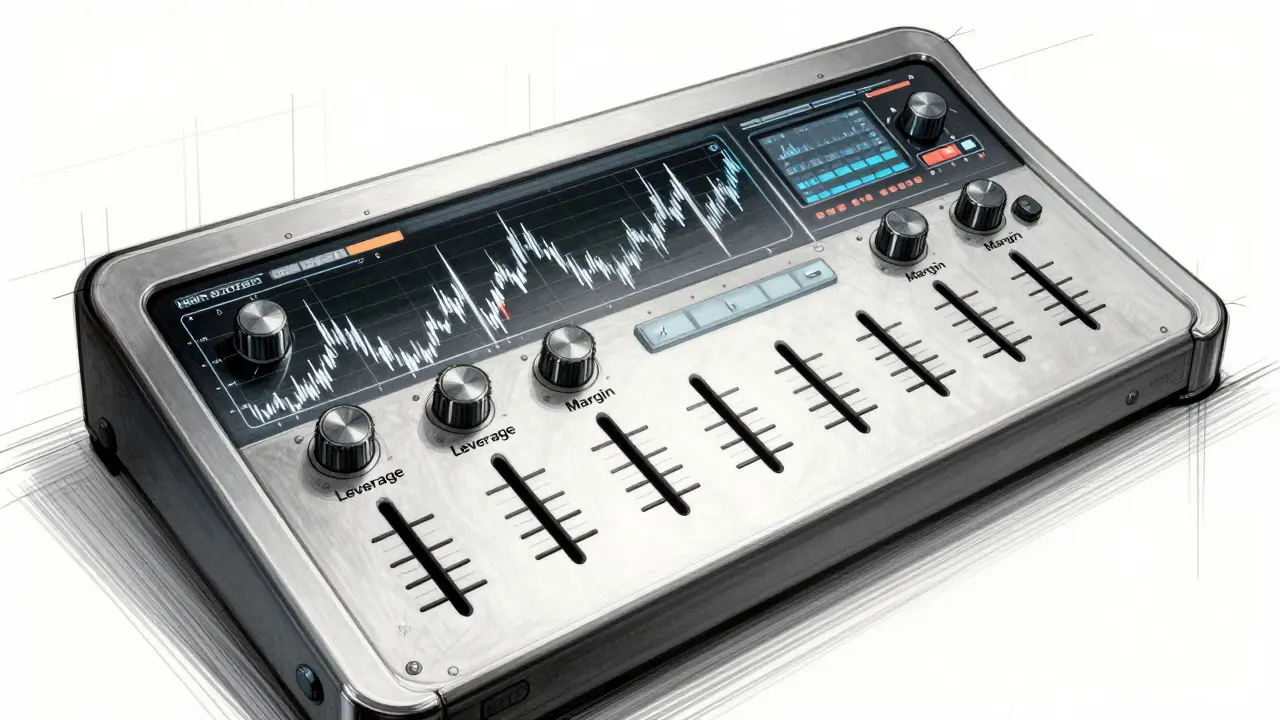
Technical Infrastructure and Security
A platform offering 200x leverage can't afford to lag. CoinCatch uses a financial-grade matching engine that can handle millions of transactions per second. In the world of high-frequency trading, a three-second delay is an eternity, and so far, the infrastructure has held up under heavy volume, with daily trading volumes often exceeding $9 billion.
To solve the "trust me, I have your money" problem that plagued exchanges like FTX, CoinCatch implemented a Proof of Reserves system. Using Merkle tree technology, they allow users to mathematically verify that their assets are actually held in the platform's reserves. This is a critical transparency tool that prevents the exchange from lending out user funds behind the scenes.
Cost of Doing Business: Fees and Bonuses
Trading costs are lean. With maker fees at 0.02% and taker fees at 0.06%, it's competitive with the big players. For the active trader, these fractions of a percent add up over thousands of trades. They also use a funding fee system to keep the futures price pegged to the spot price. Interestingly, Bitcoin has seen average funding fees as low as -0.0011%, which can be an advantage for those shorting the market.
To lure in new blood, they offer "newbie bonuses" reaching up to 5,125 USDT. While these sound great, always read the fine print. These are usually tied to trading volume targets or deposit milestones, meaning you'll need to put your own skin in the game before you see that bonus hit your wallet.

The User Experience: Is it Intuitive?
The interface is designed for a specific type of person: the futures trader. If you've used Binance Futures or BitMEX, you'll feel right at home. The layout emphasizes order books, candlesticks, and quick-access leverage sliders. It's not "simple" in the sense that a grandmother could use it, but it is intuitive for anyone who knows what a trailing stop order or isolated margin is.
Depositing is a breeze. You can push funds through the TRX, ETH, BSC, BTC, or XRP chains. The use of QR codes makes the process fast, which pairs well with the non-KYC setup. You can literally go from signing up to opening a 100x long position in under ten minutes.
The Risks and Red Flags
We have to be honest: CoinCatch is a young company. Founded in 2022, it hasn't been through as many "crypto winters" as the giants. While its growth is impressive, a shorter track record means less proven stability during a catastrophic market crash. Additionally, being registered in the British Virgin Islands is a standard move for crypto firms, but it means you have very little legal recourse if something goes sideways compared to a platform regulated by the SEC or FCA.
Is CoinCatch safe for large deposits?
CoinCatch uses Proof of Reserves via Merkle trees to show they hold user assets. However, because they are a relatively new platform (founded 2022) and based in the BVI, it carries more risk than a legacy exchange. The $50,000 non-KYC withdrawal limit is a huge perk, but for millions of dollars, a more established institution is usually safer.
Can US citizens use CoinCatch?
No. Despite having FinCEN registration, CoinCatch explicitly prohibits US-based traders from using the platform.
How does the 200x leverage work?
200x leverage means for every $1 you put up, you can control $200 worth of Bitcoin. While this multiplies your profits, it also multiplies your losses. A tiny move against your position can trigger a liquidation, meaning you lose your entire margin almost instantly.
Do I need to provide a passport to trade?
No, CoinCatch allows you to trade and withdraw up to $50,000 per day without any KYC (Know Your Customer) documentation, such as IDs or proof of address.
What are the trading fees on CoinCatch?
The platform charges a maker fee of 0.02% and a taker fee of 0.06%, which is very competitive for derivatives trading.
Next Steps for New Traders
If you're jumping in, don't start with 200x leverage. Try 2x or 5x first to get a feel for the interface. Start by depositing a small amount of USDT via the BSC or TRX chain to keep fees low. If you're uncomfortable with the risks of futures, stick to the spot trading side of the platform before moving into contracts. For those who value privacy, set up your withdrawal routine early to ensure you're comfortable with the $50,000 limit before you scale your portfolio.






Gaurav Undirwade
18 April, 2026 . 08:59 AM
It is utterly reprehensible that such platforms facilitate anonymity, as it undoubtedly encourages illicit financial activities. One must maintain a standard of moral integrity and transparency in all fiscal dealings to avoid the degeneration of the global economic order. Such a reckless disregard for identification is a symptom of a deeper societal collapse into lawlessness. I find it profoundly disturbing that individuals would seek to hide their identities while engaging in high-risk speculation. Truly, the lack of oversight here is an affront to professional financial standards.
Ian Chait
18 April, 2026 . 09:15 AM
BVI based?? lol total honeypot. The globallists probably run the backend of these things to track us anyway. 200x leverage is just a way for the house to liquidate your bag before the next big reset. Just use a cold wallet and ignore the fiat trap. Most of these 'proof of reserves' are just shell games using the same old central bank trickery. Don't be a sheep and think a Merkle tree makes it safe from the deep state ops. It's all just a front for the NWO to suck up liquidity.
Sean Douglas
19 April, 2026 . 00:10 AM
My heart is absolutely shattering for every single American trader who has to stare at a 'Not Available in Your Region' screen while the rest of the world enjoys this paradise of privacy! It is a cruel, twisted joke that we are barred from such a magnificent tool of liberation. I can feel the phantom pain of a thousand missed trades pulsing through my veins! How can we be expected to thrive in this financial wasteland when the gates of CoinCatch are slammed shut in our faces with such cold, clinical precision?
Vicky Duffala
19 April, 2026 . 17:48 PM
Let's just think about the freedom this gives the average person :) It's all about breaking the barriers of traditional finance and letting people take control of their own destiny! We should keep pushing for more privacy in everything we do. The energy of this platform seems so fresh and exciting for those of us who want to move fast. It is like a new frontier where we can all learn and grow together. Keep that momentum going guys! 🚀
Adam Mann
20 April, 2026 . 06:12 AM
I think it's really wonderful that there are options like this out there for people who might be intimidated by the big corporate exchanges that want to know every detail of your private life before you can even look at a chart. If you're new to this, just remember that the community is here to help you navigate these waters, and while the leverage can be scary, it's all part of the learning process of understanding how volatility actually works in the real world. Just take it slow, be patient with yourself, and remember that every successful trader started somewhere with a few mistakes and a lot of curiosity about how the market moves.
Andrew Southgate
20 April, 2026 . 11:08 AM
For anyone wondering about the $50k limit, it's actually quite generous for the vast majority of retail traders, so you really don't need to worry about hitting that ceiling unless you're moving some serious volume daily. I've spent years analyzing these structures and the beauty of a non-KYC setup is that it reduces the attack surface for identity theft, which is a huge risk when you store your sensitive documents on a server that could be breached at any time. If you're planning to use high leverage, I highly suggest using a separate sub-account for your high-risk plays so you don't accidentally wipe out your main collateral during a flash crash, as that's a mistake I see way too many people making when they first dive into 100x or 200x positions.
Trudy Morse
21 April, 2026 . 07:38 AM
Privacy is just a social construct anyway. It's cute that people think a BVI registration is a shield. Just use the tool and don't overthink the philosophy of it.
Kevin Lư
21 April, 2026 . 09:32 AM
Honestly, who cares about the BVI stuff? Most of these places are basically casinos anyway, so just enjoy the ride and don't be a buzzkill about the rules. I'm just here for the 200x gamble, man!
Prachi Bhadarge
21 April, 2026 . 15:19 PM
Oh great, another 'revolutionary' platform that lets you gamble your life savings without an ID. How original. I'm sure the Proof of Reserves is totally foolproof and definitely not just a fancy math trick to make us feel safe while we wait for the inevitable rug pull.
Chintu Parikh
22 April, 2026 . 01:57 AM
I would be most grateful if we could all discuss how to safely integrate this into a diversified portfolio. It is truly an impressive feat of engineering to maintain such high throughput with a matching engine. I believe we can all find a middle ground between privacy and security if we collaborate and share our experiences with the platform's stability over time. Let us maintain a positive spirit as we explore these new financial horizons together!
Mike Kempenich
22 April, 2026 . 06:44 AM
The non-KYC feature is a solid move. It's about time exchanges stopped acting like police officers.
Shannon Kelly Smith
23 April, 2026 . 09:03 AM
Listen up beginners! 📢 Stop trying to 200x your account on day one! Use a stop loss or you're just donating your money to the exchange! 📉 Learn the basics of isolated margin before you blow your whole wallet! 💰🔥
Gillian Kent
23 April, 2026 . 11:04 AM
i think its rly cool how they let ppl from so many countrys use it without all the paper work. its just a more open way of doing things i guess.
Joshua Salwen
24 April, 2026 . 11:55 AM
Um, hello?? Did everyone miss the part where they're in the BVI? Literally any idiot knows that means you're basically throwing your money into a black hole!! 🙄 I can't even believe people are actually falling for this Proof of Reserves nonsense when the whole thing is probably a glitchy mess!!
Saurav Bhattarai
25 April, 2026 . 09:47 AM
Imagine actually believing a BVI-registered platform is 'safe'. The sheer delusions of some of you are almost as impressive as the 200x leverage. I'm sure the 'newbie bonuses' are just as real as your hopes of getting rich overnight. Pathetic.
Michelle Stanish
26 April, 2026 . 01:10 AM
I don't see the hype. Privacy isn't that important.
Jeff Barlett
26 April, 2026 . 11:57 AM
Actually, the non-KYC part is probably just a trap to get people to deposit and then freeze accounts for 'suspicious activity' later. It's too good to be true, which usually means it's a scam in a fancy wrapper.
Adedamola Oyebo
27 April, 2026 . 22:33 PM
Matching engine is fast!! Proof of reserves is key!!
Kaitlyn Wu
28 April, 2026 . 15:25 PM
Keep your deposits small until you've verified the withdrawal process yourself. Don't let the hype lead you into over-leveraging your portfolio beyond your risk tolerance.
nikki krinkin
29 April, 2026 . 02:28 AM
I'm just watching from the sidelines on this one. It seems like a lot of volatility for my taste, but it's interesting to see how the market handles non-KYC in 2026.