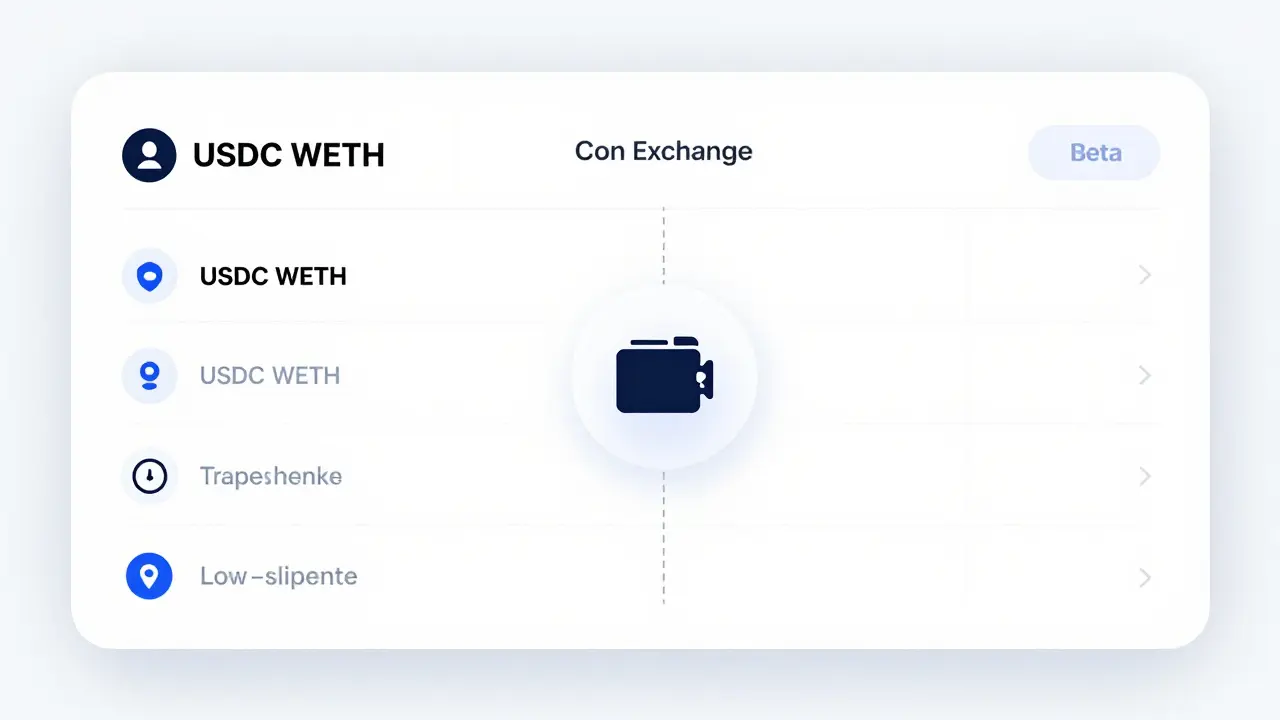
SwapBased isn’t another Uniswap clone. It’s a SwapBased crypto exchange built from the ground up on Coinbase’s Base blockchain - and that makes it both fascinating and risky. If you’re someone who’s already using Base for low-cost DeFi trades, SwapBased might look like a tempting next step. But if you’re new to crypto or expect a polished, high-liquidity platform, you’ll quickly hit walls. This isn’t a platform for beginners. It’s for experienced users who want to experiment with a DEX that’s still in beta - and are okay with that.
What SwapBased Actually Offers
SwapBased gives you four core tools in one interface: spot trading, concentrated liquidity pools, staking, and perpetual futures. That’s a lot for a platform with only 6 tokens and 7 trading pairs. The most active pair is USDC/WETH, which alone makes up nearly half of all trading volume. Other pairs include BASE/WETH, USDC/BASE, and a few others - but no DAI, no WBTC, no LINK. If you’re looking for major tokens, you won’t find them here.
The platform’s biggest technical win is its use of non-upgradeable smart contracts. That means the code can’t be changed after deployment. No backdoor updates. No emergency patches. That’s rare in DeFi, where most protocols reserve the right to tweak contracts. It’s a security-first move - but it’s only as strong as the code itself. And here’s the problem: SwapBased has never been independently audited. No CertiK. No PeckShield. No OpenZeppelin. That’s a red flag. In crypto, audits aren’t optional. They’re the bare minimum.
Liquidity: Thin Order Books, High Slippage
SwapBased’s 24-hour trading volume sits at just over $10,800. That’s tiny. For comparison, Aerodrome Finance on Base has over $1 billion in total value locked (TVL). SwapBased’s liquidity pools are shallow. For the BASE/WETH pair, the depth on the buy side is $1,611. On the sell side, $1,606. That’s not enough to handle even moderate-sized trades without slippage.
Real users report 2-3% slippage on trades over $500. One trader tested a $1,000 swap and got hit with 2.5% slippage. That means if you wanted to buy $1,000 worth of WETH, you ended up paying $1,025. That’s not a bug - it’s a feature of low liquidity. If you’re trying to move large amounts, this isn’t the place. Stick to trades under $500. And even then, stick to USDC/WETH - it’s the only pair with decent depth.
Perpetual Futures: Beta with Almost No Users
SwapBased touts itself as the first DEX on Base to offer perpetual futures. That’s a bold claim - and technically true. But “first” doesn’t mean “useful.” The perpetual market is still in beta. Trading volume is negligible. Liquidity is so thin that even small positions can trigger liquidations. According to DeFiLlama data, total perpetuals volume across all Base DEXs in September 2024 was $42 million. Spot trading? $2.1 billion. That tells you everything. The futures market is a prototype. Not a product.
Most users avoid it. Those who’ve tried it say the interface is confusing, funding rates are erratic, and there’s no real price discovery. If you’re serious about derivatives trading, head to a centralized exchange like Bybit or OKX. Don’t risk your capital on a beta feature with no users.

Wallets, Fees, and Gas Costs
SwapBased is non-custodial. You use your own wallet - MetaMask, Coinbase Wallet, or anything EVM-compatible. No KYC. No sign-ups. That’s good. But it also means you’re fully responsible. One wrong click, and your funds are gone.
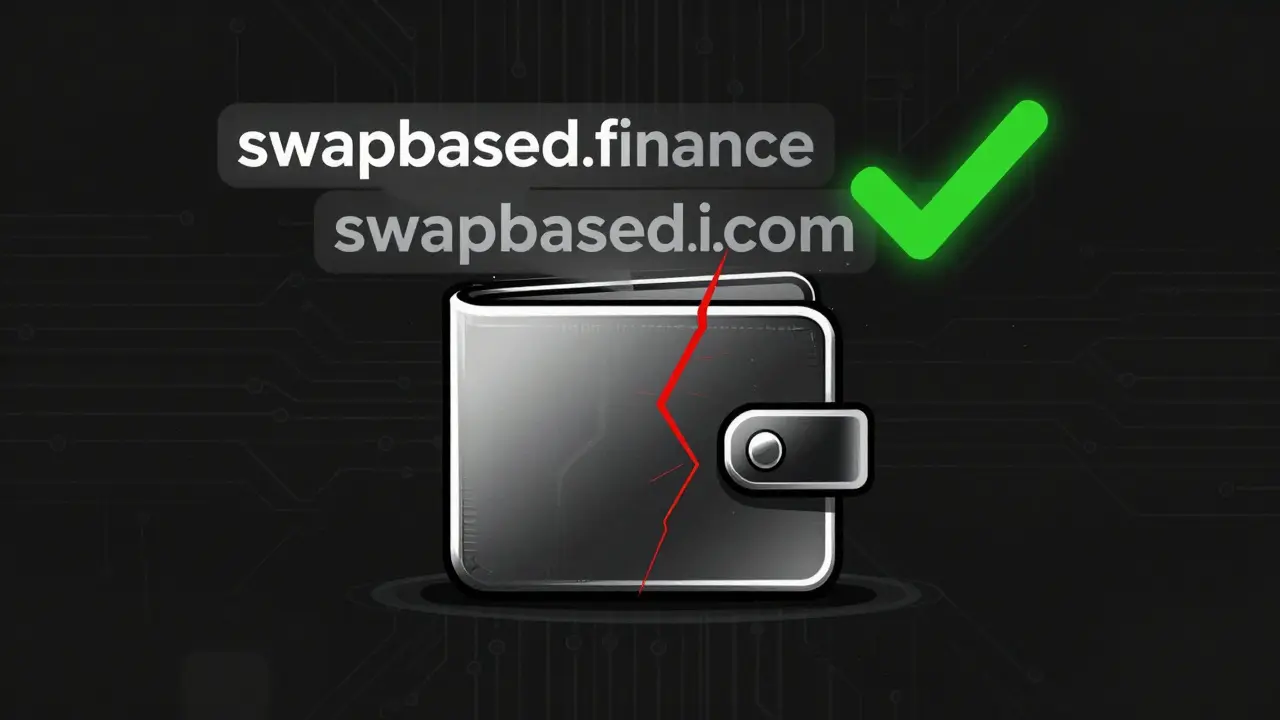
Gas fees on Base are cheap - typically $0.02 to $0.05 per swap. That’s a major plus. Compared to Ethereum mainnet, where fees can hit $10+, this is a breath of fresh air. But don’t mistake low fees for safety. You still need to watch out for fake websites. There are already phishing sites like swapbase[.]finance trying to steal wallets. Always double-check the URL: it’s swapbased.com, not swapbased[.]finance or swapbased.io. The real site has no “.finance” or “.io” in the domain.
Who Should Use SwapBased?
SwapBased isn’t for everyone. Here’s who it’s actually for:
- Experienced DeFi users who understand slippage, impermanent loss, and concentrated liquidity.
- Base ecosystem enthusiasts who want to support early protocols and experiment with new features.
- Small traders making $100-$500 swaps in USDC/WETH.
- LPs looking for fee-sharing - liquidity providers earn 0.3% of swap fees directly, which is competitive.
Here’s who should avoid it:
- Beginners - the interface is cluttered, and the learning curve is steep.
- Larger traders - your trades will get slippageed.
- Security-conscious users - no audits means unknown risk.
- Those seeking major tokens - DAI, WBTC, SOL, ETH? Not here.
Community and Support
The official Discord has about 1,200 members. The Telegram group? Just 273. Activity is low. Most questions are answered by users, not devs. Official documentation is sparse. You’ll find more help on YouTube tutorials than on SwapBased’s own site.
Community feedback is mixed. One Reddit user said it took them 15 minutes to complete their first swap. Another warned they nearly lost funds to a fake site. The most common advice? “Only trade small amounts.” “Stick to USDC/WETH.” “Wait for audits.”
The Road Ahead
SwapBased’s roadmap is ambitious: expand token support to 15-20 tokens by Q1 2025, add more cross-chain bridges, and - critically - get audited. But there’s no timeline. No firm dates. And no public name for the audit firm. That’s a problem. In DeFi, trust is built on transparency. Silence breeds suspicion.
Base blockchain is growing fast. TVL hit $7.8 billion by October 2024. That’s a huge opportunity. But SwapBased isn’t the only player. Aerodrome Finance, Polaris DEX, and even Uniswap could roll out features here soon. SwapBased’s first-mover advantage in perpetuals is fading fast. If they don’t fix their audit gap and expand liquidity, they’ll get buried.
Final Verdict
SwapBased is a high-risk, high-reward experiment. It’s not broken. It’s not a scam. But it’s untested. It’s under-resourced. And it’s missing the one thing that makes DeFi trustworthy: independent security reviews.
If you’re curious, try it - but only with money you can afford to lose. Start with $50. Swap USDC for WETH. See how the interface feels. Check your slippage. Then walk away. Don’t stake. Don’t provide liquidity. Don’t touch the perpetuals market. Just test it. And wait. Watch for audits. Watch for liquidity growth. Watch for real updates.
Right now, SwapBased feels like a beta version of a promising product. But betas aren’t for everyone. They’re for the brave. And the patient.
Is SwapBased safe to use?
SwapBased is not audited, which means its smart contracts haven’t been reviewed by third-party security firms. That’s a major red flag. While the platform uses non-upgradeable contracts (a good security feature), the lack of audits means unknown vulnerabilities could exist. Use it only with small amounts, and never connect your main wallet. Always verify you’re on the official site: swapbased.com.
What’s the best trading pair on SwapBased?
USDC/WETH is by far the most liquid pair, accounting for nearly 47% of all trading volume. It has the tightest bid-ask spread and the lowest slippage. Avoid other pairs unless you’re doing very small trades. Even then, stick to this one.
Can I trade large amounts on SwapBased?
No. SwapBased has extremely shallow liquidity. Trades over $500 often experience 2-3% slippage. A $1,000 trade could cost you an extra $25-$30 in price impact. It’s designed for small, frequent trades - not large positions. Use centralized exchanges like Coinbase or Kraken for bigger trades.
Why doesn’t SwapBased have more tokens?
SwapBased is a very new protocol, launched in 2023. It’s still in early development. The team has prioritized building core features - like concentrated liquidity and perpetual futures - over expanding token lists. They’ve promised to add 15-20 tokens by Q1 2025, but there’s no guarantee. For now, the selection is minimal.
Are there fake SwapBased websites?
Yes. Scammers have created fake sites like swapbase[.]finance and swapbased.io. These sites mimic the real interface and trick users into connecting their wallets - then drain funds automatically. Always check the URL. The official site is swapbased.com. Never click links from social media or Discord. Type it manually.
Should I provide liquidity on SwapBased?
Only if you’re comfortable with high risk. Liquidity providers earn 0.3% of swap fees, which is fair. But with shallow pools and no audits, impermanent loss and smart contract bugs are real threats. Start with a tiny amount - $100 or less - and monitor it closely. Don’t lock up large sums.



Marie Vernon
20 March, 2026 . 21:22 PM
I’ve been using SwapBased for a few weeks now with $200 max per trade. Honestly? It’s not perfect, but it’s the only DEX on Base that feels like it’s actually trying. The UI is clunky, sure, but I appreciate that they didn’t just copy Uniswap. Low volume? Yeah. But that’s why I’m here - to be part of something early. Just stick to USDC/WETH and don’t touch futures. Simple as that.
Ross McLeod
21 March, 2026 . 20:41 PM
The fact that this platform hasn’t been audited is not just a red flag - it’s a full-blown neon sign screaming ‘DO NOT TRUST’. Non-upgradeable contracts sound great in theory, but without an audit, you’re essentially gambling on code written by someone who might’ve copied and pasted from Stack Overflow. And let’s be real: if they were serious about security, they’d have hired a firm before launch. They didn’t. So why should we?
Jessica Beadle
23 March, 2026 . 19:33 PM
The perpetuals market is a ghost town. Zero price discovery. Zero volume. Zero reason to exist. They’re marketing it as a ‘first’ on Base - which is like calling a tricycle the first Ferrari. It’s technically correct, but utterly useless. If you’re even considering trading futures here, you’re either delusional or desperate. Either way, don’t blame the platform when your margin gets liquidated by a 0.3% funding rate spike.
Sarah Zakareckis
25 March, 2026 . 14:20 PM
I’m all for supporting early protocols, but let’s not pretend this is safe. The liquidity is laughable, the token list is a joke, and the lack of audits is a dealbreaker. That said - if you’re a small trader with $100 to play with, and you’re okay with 2% slippage? Go ahead. Just don’t stake. Don’t LP. And definitely don’t use your main wallet. Use a burner. Keep it small. Keep it simple. And don’t cry when it doesn’t work.
rajan gupta
27 March, 2026 . 11:51 AM
This whole thing feels like a trap. Base is growing, sure - but why is SwapBased the only one with zero audits? Coincidence? Or is this just another way for insiders to pump and dump before the real players show up? I’ve seen this movie before. First, they build something ugly. Then they hype it. Then they vanish. And we’re left holding the bag. Don’t be the sucker who thinks ‘early adopter’ means ‘smart investor’.
Gene Inoue
28 March, 2026 . 09:42 AM
You people are so naive. ‘Oh, it’s just a beta!’ Yeah, and your house is just a ‘prototype’ while the foundation is made of wet sand. No audits? Low liquidity? A 1,200-person Discord? This isn’t innovation - it’s negligence dressed up as decentralization. If you’re trading here, you’re not a pioneer. You’re a lab rat. And the scientists aren’t even wearing gloves.
Ricky Fairlamb
29 March, 2026 . 21:18 PM
Let me clarify something for the delusional: ‘non-upgradeable contracts’ do not equal ‘secure’. They equal ‘irreversible mistakes’. If there’s a vulnerability in the code - and there almost certainly is - it cannot be patched. Ever. That’s not security. That’s suicide by smart contract. And the fact that they’re not even naming an audit firm? That’s not incompetence. It’s malice. This isn’t DeFi. It’s a honeypot.
Tony Weaver
30 March, 2026 . 18:14 PM
I’ve used Aerodrome, Uniswap, Sushi, and now SwapBased. The difference? SwapBased feels like a side project built by someone who just learned Solidity last week. The interface is cluttered. The liquidity is microscopic. The futures market? A ghost. And yet somehow, people are still posting ‘I made 300%’ in the Discord. Bro. That’s not profit. That’s a liquidity trap. You didn’t win. You got lucky. And next time, you’ll lose everything.
Lauren J. Walter
1 April, 2026 . 08:06 AM
Wow. So SwapBased is the ‘first’ to offer perpetuals on Base. Congrats. The first to what? The first to have zero users? The first to have no audits? The first to have a trading volume lower than my coffee budget? I’m not impressed. I’m just sad. For the project. For the users. For the future of DeFi.
Brenda White
1 April, 2026 . 12:28 PM
i tried it and it was kinda fun? like, the ui is messy but i like that its not bloated? i did a 300usdc swap and got 2.1% slippage but hey its base so gas was like 3 cents? i dont get why everyone is panicking. its not a bank. its a dapp. chill.
Tobias Wriedt
3 April, 2026 . 07:35 AM
🚨 DON’T USE SWAPBASED 🚨 I lost $800 because I clicked a link from a Discord DM. There are fake sites everywhere. They look identical. I didn’t even realize until my wallet was empty. Always type the URL. Always. And if you’re thinking about LPing? Don’t. Just don’t. I’m still crying.
Ernestine La Baronne Orange
4 April, 2026 . 06:51 AM
I don’t understand how anyone can defend this. The platform has zero transparency. No audit. No roadmap with dates. No team names. No GitHub commits. No press releases. No media coverage. And yet, people are treating it like it’s the next Uniswap? This isn’t crypto. This is a cult. You’re not investing. You’re praying. And you’re praying to a codebase that could vanish tomorrow because the devs got bored and went back to their 9-to-5s.
Manali Sovani
4 April, 2026 . 22:39 PM
The notion that this platform is suitable for ‘experienced DeFi users’ is laughable. True expertise lies in risk mitigation, not in exposing oneself to unverified code. To engage with a protocol lacking third-party verification is not innovation - it is recklessness masquerading as sophistication. One must exercise prudence, not enthusiasm, in the digital asset ecosystem.
Konakuze Christopher
5 April, 2026 . 06:07 AM
No audits. No liquidity. No future. This is how projects die. Quietly. Slowly. With no fanfare. Just a dead Discord and a GitHub repo that hasn’t been touched in 6 months. Don’t waste your time. Don’t waste your money. Walk away.
S F
6 April, 2026 . 16:48 PM
If you’re not using SwapBased, you’re not part of the future. Base is the future. And if you’re too scared to try the first DEX on it, you’re already behind. Stop being a coward. Get in. Trade small. Learn. Adapt. Or get left behind.
Angelica Stovall
7 April, 2026 . 15:22 PM
I saw the same thing with that ‘BaseSwap’ thing last year. Then it vanished. No warning. No explanation. Just gone. And now this? Same name. Same team. Same lack of audits. Same fake Discord. This isn’t a DEX. It’s a phishing scheme with a UI. You think you’re being smart? You’re being scammed.