Ever seen the ticker FARM on a chart and wondered what it actually does? You aren't alone. The name sounds simple-like agriculture-but in the world of decentralized finance (DeFi), it represents something much more technical: automated yield optimization.
However, before you buy or interact with any token labeled FARM, you need to pause. There is a major trap here. The ticker "FARM" belongs to two completely different projects on two different blockchains. Confusing them could cost you money or leave your funds stuck in a useless contract. Most people looking for "FARM crypto" are interested in Harvest Finance, an Ethereum-based protocol that automates yield farming strategies. But there is also a Solana-based token used for cattle tracking. This guide focuses on the DeFi giant, Harvest Finance, while helping you avoid the common mix-up.
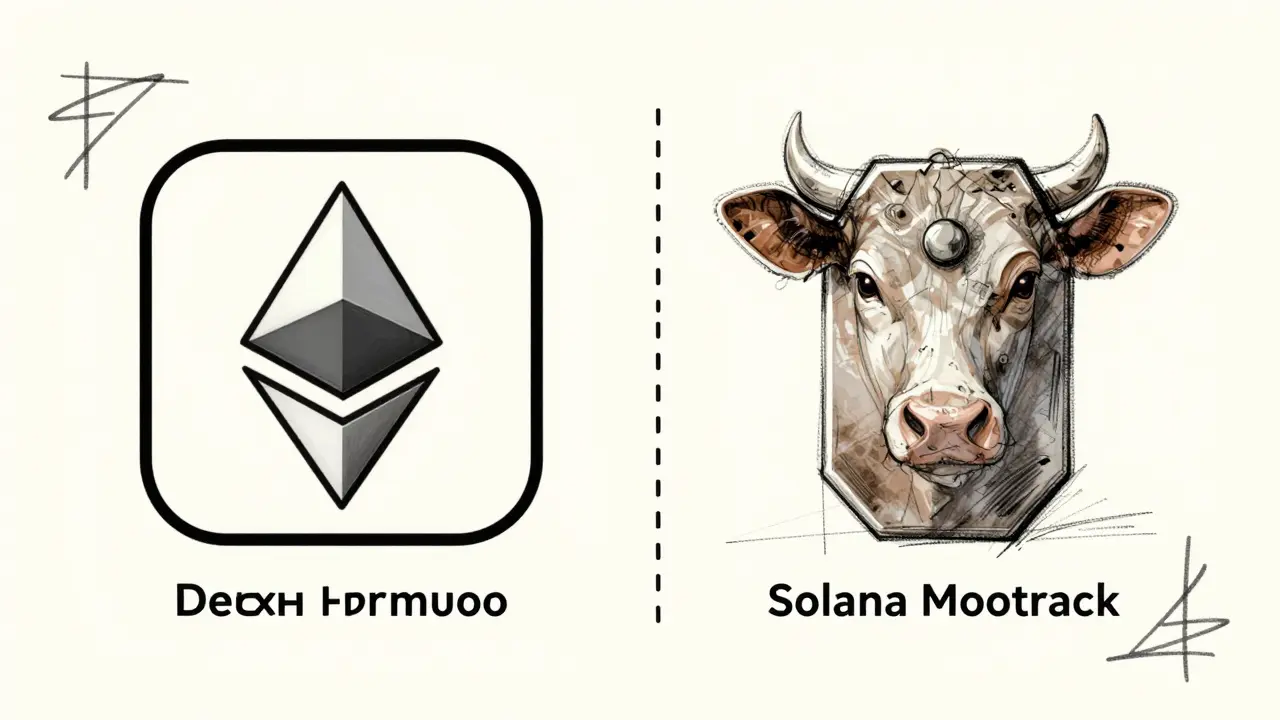
Harvest Finance vs. Mootrack: Don't Mix Them Up
The biggest risk for new investors isn't market volatility; it's identity confusion. When you search for FARM, you might see data from a project called Mootrack, a platform built on the Solana blockchain for livestock trading. That FARM token has a circulating supply of 1 billion tokens and trades on small decentralized exchanges like Meteora. It has almost no liquidity compared to its DeFi counterpart.
In contrast, the FARM token associated with Harvest Finance is an ERC-20 token on Ethereum. It has a maximum supply of just 5 million tokens. It trades on major centralized exchanges like Coinbase, Kraken, and Binance. If you are looking at a chart with millions in daily volume, you are likely looking at Harvest. If you see tiny volumes and a connection to agriculture logistics, you are looking at Mootrack. Always check the blockchain address. Harvest Finance lives on Ethereum (and compatible Layer 2s), not Solana.
What Does Harvest Finance Actually Do?
To understand the FARM token, you first need to understand the problem it solves: Yield farming is the practice of moving crypto assets between different lending and liquidity protocols to earn the highest possible interest rates. In early 2020, this was a manual nightmare. Users had to constantly monitor dashboards, calculate gas fees, and manually move funds from one platform to another every few hours to catch better rates. It was time-consuming and expensive.
Harvest Finance launched as a solution. It acts as an aggregator. Instead of you moving your money, you deposit it into a Harvest "vault." The protocol’s smart contracts then automatically move those funds across various DeFi platforms (like Aave, Compound, or Uniswap) to find the best yields. Crucially, it auto-compounds these rewards. When a strategy earns interest, Harvest reinvests that interest immediately to generate even more returns. This automation allows users to act like professional traders without needing to watch charts all day.
The Utility of the FARM Token
So, why do you need the FARM token itself? It isn't just a speculative asset; it has three concrete functions within the ecosystem:
- Governance Rights: Holding FARM gives you a vote. You can propose changes to the protocol, such as adding new strategies, adjusting fee structures, or allocating treasury funds. This makes Harvest a cooperative rather than a company controlled by founders.
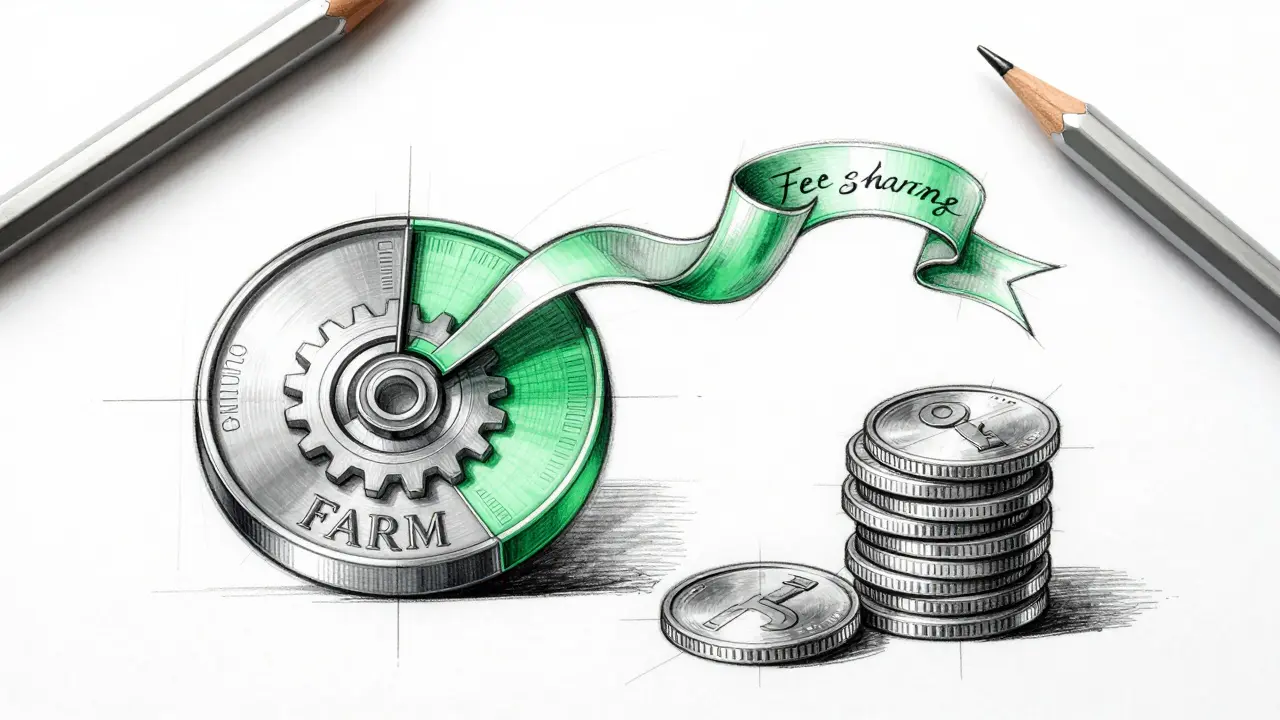
- Fee Sharing: This is a key differentiator. Harvest Finance charges performance fees on the profits generated by its strategies. A portion of these fees-specifically 5%-is distributed back to FARM token holders. This means the token accrues value directly from the protocol's success, not just from hype.
- Incentives: The protocol uses FARM emissions to reward users who provide liquidity to its vaults. By depositing stablecoins or ETH, you earn both the underlying yield and additional FARM tokens, aligning user behavior with protocol growth.
Tokenomics: Supply and Distribution
One of the most distinctive features of Harvest Finance is its tokenomics. Unlike many DeFi projects that issue billions of tokens to venture capitalists and insiders, Harvest was bootstrapped without VC funding. There were no private sales.
The total supply of FARM is capped at 5,000,000 tokens. These tokens were distributed over a four-year period starting from its launch in 2020. As of mid-2026, the majority of these tokens have been issued. The circulating supply hovers around 672,000 FARM, meaning a significant portion remains locked or unissued depending on the specific vesting schedules for contributors. This scarcity model contrasts sharply with inflationary tokens that dilute holders endlessly. Because the emission schedule is largely complete, future value accrual depends heavily on the protocol generating real revenue through fees, which is then shared with holders.
| Feature | Harvest Finance (FARM) | Mootrack (FARM) |
|---|---|---|
| Blockchain | Ethereum (ERC-20) | Solana |
| Total Supply | 5,000,000 | 1,000,000,000+ |
| Primary Use | DeFi Governance & Fees | Livestock Platform Access |
| Major Exchanges | Coinbase, Kraken, Binance | Meteora DEX only |
| VC Backing | None (Community-led) | Varies |
Risk Profile: The 2020 Exploit and Security
You cannot talk about Harvest Finance without addressing its history. In October 2020, shortly after launch, Harvest suffered a severe flash-loan exploit. Attackers manipulated the prices of assets in automated market maker pools, causing Harvest’s strategies to withdraw funds at artificially bad prices. Approximately $24-34 million worth of assets were drained from certain stablecoin pools.
This event is critical context. It highlights the inherent risks of DeFi aggregators. While Harvest shut down affected strategies, offered bounties, and partially compensated users, the incident remains part of its record. Today, the protocol operates with enhanced safeguards and has continued to function for years since. However, users must understand that interacting with Harvest involves smart-contract risk. You are trusting code to manage your capital across multiple other protocols. If any underlying protocol fails, or if Harvest’s own code has a bug, losses can occur. The team emphasizes transparency and community governance to mitigate these risks, but the responsibility ultimately lies with the user.
How to Buy and Use FARM
If you decide to participate, the process is straightforward thanks to widespread exchange support. Since FARM is listed on major centralized exchanges, you don't need to be a coding expert to acquire it.
- Create an Account: Sign up on a supported exchange like Coinbase, Kraken, or Crypto.com. Complete the necessary identity verification (KYC).
- Fund Your Account: Deposit fiat currency via bank transfer or credit card, or deposit another cryptocurrency like Bitcoin or Ethereum.
- Purchase FARM: Search for the FARM/USDT or FARM/USD pair. Place a market order to buy instantly or a limit order to set a specific price.
- Transfer to Wallet (Optional): For active participation in governance or staking, transfer your FARM to a self-custody wallet like MetaMask. Ensure you are on the correct network (Ethereum Mainnet or an L2 like Arbitrum/Polygon if supported by the specific action).
Once in your wallet, you can connect to the Harvest Finance dashboard to view available strategies. You can deposit assets into these vaults to earn yield, or hold FARM to receive fee distributions. Remember to account for gas fees on Ethereum, which can be high during network congestion. Using Layer 2 networks like Arbitrum or Polygon can significantly reduce these costs when interacting with the protocol.
Market Context and Volatility
As of May 2026, FARM trades in the mid-single-digit dollar range, having fallen significantly from its all-time high of over $600 during the 2021 bull market. This volatility is typical for DeFi governance tokens. Their price is driven by a combination of speculation, protocol utility, and broader crypto market trends.
Unlike blue-chip cryptocurrencies like Bitcoin, FARM is a specialized tool. Its value proposition is tied to the health of the DeFi sector. If yield farming becomes less popular or if regulatory pressures tighten around DeFi protocols, demand for FARM may decrease. Conversely, if Harvest introduces innovative strategies that outperform competitors like Yearn Finance or Beefy Finance, and if fee revenues grow, the token could benefit from increased buying pressure from users seeking fee shares.
Always check live data. Prices fluctuate rapidly. A snapshot showing a price of $6.45 today might differ tomorrow. Use reliable trackers to monitor the 24-hour volume and market cap to gauge liquidity and interest. Low volume can make it difficult to sell large positions without impacting the price.
Is FARM Right for You?
FARM is not a passive investment like a savings account. It requires active understanding of DeFi mechanics. It suits users who want exposure to the yield aggregation sector, believe in the long-term viability of automated farming, and are comfortable with the technical risks involved. It is less suitable for those seeking stability or who are unfamiliar with smart-contract vulnerabilities.
The lack of VC backing and the fee-sharing model offer a unique alignment of incentives. You are essentially investing in a cooperative that profits only if you profit. However, the historical exploit serves as a reminder that trust in code is never absolute. Do your own research, start with small amounts, and never invest more than you can afford to lose.
Is FARM coin safe to buy?
Like all DeFi tokens, FARM carries significant risk. While Harvest Finance has operated for years and improved security post-2020, it remains exposed to smart-contract bugs and market volatility. It is listed on reputable exchanges, which adds a layer of accessibility, but the underlying protocol risks remain. Only invest what you can afford to lose.
What is the difference between Harvest Finance FARM and Mootrack FARM?
They are completely unrelated. Harvest Finance FARM is an Ethereum-based token for DeFi yield optimization with a max supply of 5 million. Mootrack FARM is a Solana-based token for a cattle-trading platform with a supply of 1 billion+. Always verify the blockchain and contract address before buying.
How does Harvest Finance make money?
Harvest generates revenue by charging performance fees on the profits earned from its yield farming strategies. A portion of these fees (5%) is distributed to FARM token holders, while the rest supports protocol development and treasury reserves.
Can I stake FARM tokens?
Yes, you can use FARM to provide liquidity to Harvest’s vaults or participate in governance. Staking often yields additional rewards in the form of more FARM tokens or a share of the protocol's fee revenue, depending on the specific strategy and current parameters.
Why did FARM price drop so much from its ATH?
The drop reflects the broader cooling of the DeFi sector after the 2021 bull run, combined with the completion of initial token emissions. Many DeFi tokens saw massive speculation-driven peaks followed by corrections as markets matured and yield opportunities normalized.