Imagine owning a digital character that remembers your conversations, evolves over time, and actually belongs to you on the blockchain. That is the promise behind Artificial Liquid Intelligence, commonly known as ALI. It is an ERC-20 utility and governance token that powers an ecosystem where artificial intelligence meets non-fungible tokens (NFTs). While many crypto projects talk about AI, this project tries to build the actual infrastructure for it.
If you have seen the ticker symbol ALI pop up on exchange lists or heard whispers about "intelligent NFTs," you are probably wondering if this is just another hype cycle or something with real utility. The short answer is that it sits in a unique niche, but it comes with significant risks typical of small-cap altcoins. Let’s break down what it actually does, how the token works, and whether it has legs in the current market.
The Core Concept: Bridging AI and Blockchain
At its heart, Alethea AI is the company behind the Artificial Liquid Intelligence protocol. Founded around 2019 by Arif Khan, the team set out to solve a specific problem: standard NFTs are static images or videos. They don’t think, they don’t talk, and they certainly don’t remember you.
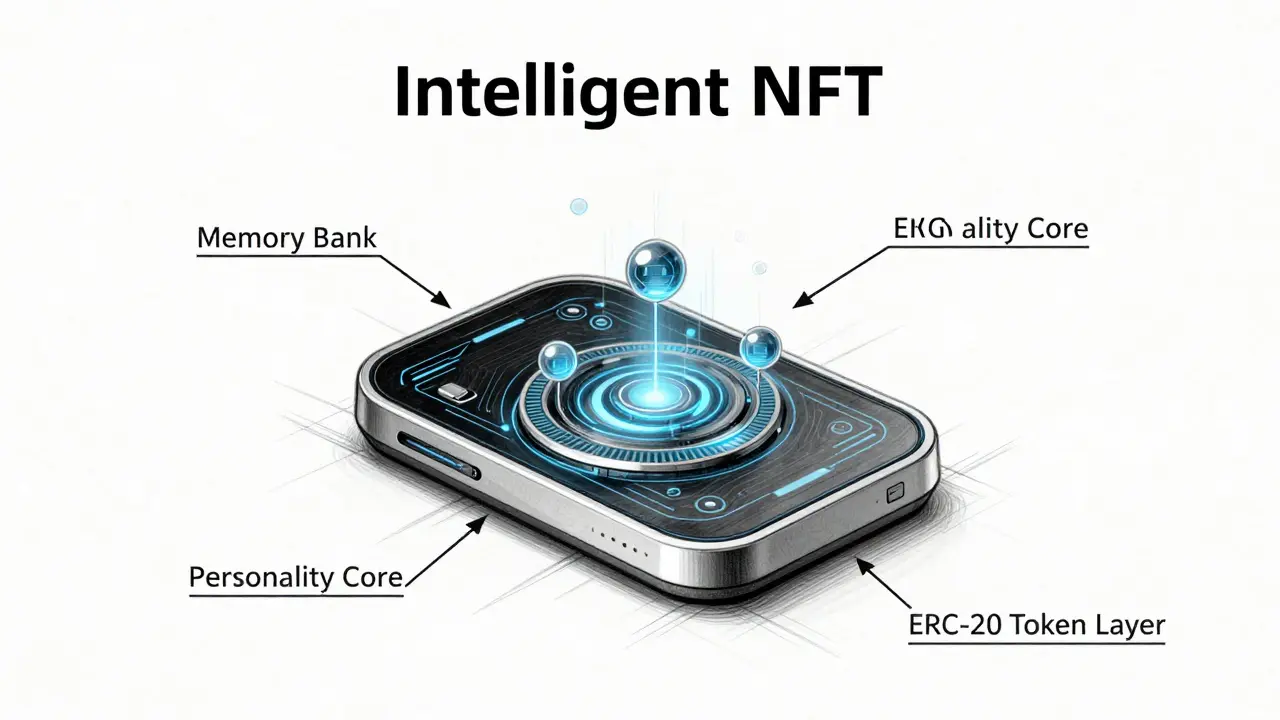
Alethea AI introduced the concept of iNFTs, or Intelligent Non-Fungible Tokens. These are not just collectibles; they are AI-driven characters embedded with personality traits, memory banks, and interactive capabilities. Think of them as virtual companions or avatars that can learn from interactions. The AI Protocol serves as the property-rights backbone for these generative AI assets. In simple terms, it ensures that when you create or train an AI character, you own the rights to that specific iteration of intelligence, not just the code.
This distinction matters because most AI models today are centralized. Big tech companies own the data and the models. By putting these AI entities on the blockchain via iNFTs, the project aims to decentralize ownership. You aren’t just renting access to a chatbot; you hold the asset that defines its behavior and history.
How Does the ALI Token Work?
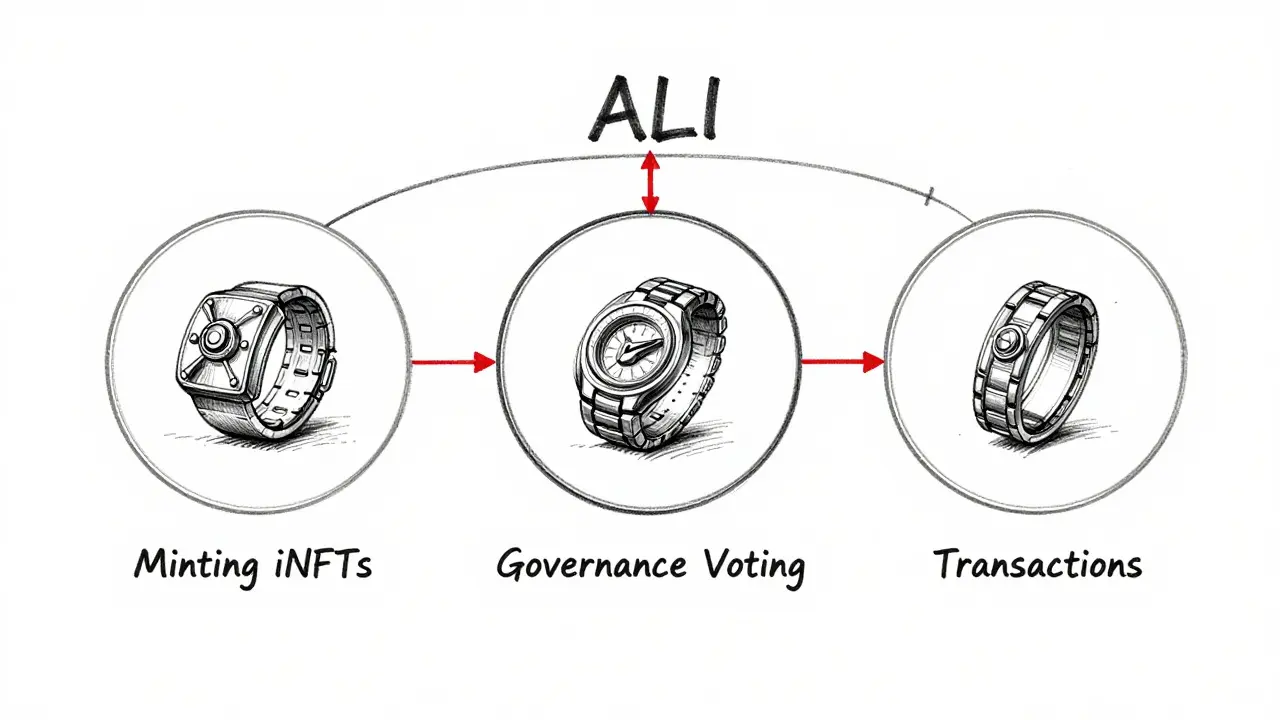
The ALI token is the native currency of the Artificial Liquid Intelligence ecosystem. It is an ERC-20 token built on the Ethereum network, which means you need an Ethereum-compatible wallet like MetaMask to hold it. But why do you need it? Here are the three main jobs it performs:
- Utility for Creation: If you want to mint an iNFT or train an AI character within the ecosystem, you pay fees in ALI. This creates constant demand from creators who need to interact with the platform.
- Governance Rights: Holding ALI gives you a voice. You can vote on proposals regarding the development of the AI Protocol. This includes decisions on new features, fee structures, or partnerships. It turns holders into stakeholders rather than passive investors.
- Incentives and Rewards: The protocol rewards participants. Developers who build useful dApps, users who contribute high-quality data for training AI, and validators who secure the network can earn ALI. This aligns everyone’s interests toward growing the ecosystem.
The tokenomics are designed to be deflationary in the long term. With a fixed maximum supply, the idea is that as usage increases, more tokens might be locked or burned, reducing availability. However, keep in mind that the vast majority of the supply is already circulating, so sudden inflation shocks are less likely, but scarcity-driven pumps depend entirely on adoption.
Noah’s Ark: The Metaverse Home for iNFTs
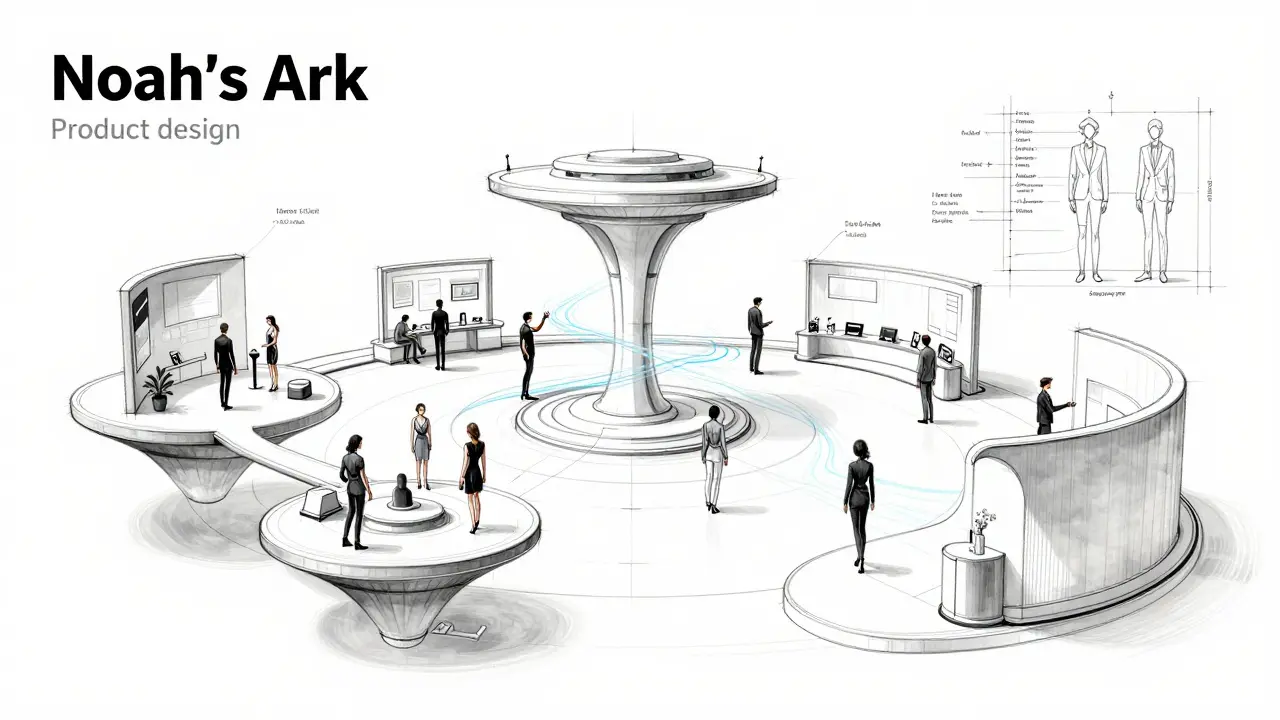
You cannot talk about ALI without mentioning Noah’s Ark, which is the metaverse environment developed by Alethea AI. This isn’t just a trading floor; it is a social space where your iNFTs come to life.
Inside Noah’s Ark, your AI character can interact with other users’ characters. Imagine walking through a virtual gallery where the art talks back to you, or hosting a party where your AI avatar learns new slang from other guests. The ALI token is used here for transactions, such as buying virtual land, trading rare iNFTs, or paying for premium interaction features.
This metaverse aspect is crucial because it provides a use case beyond speculation. If people spend time in Noah’s Ark, they need ALI to facilitate those experiences. It transforms the token from a mere store of value into a medium of exchange within a specific digital economy.
Market Performance and Volatility Risks
Let’s look at the hard numbers, because this is where many investors get hurt. As of mid-2026, ALI is ranked roughly #884 by market capitalization. It is a small-cap asset. The all-time high was approximately $0.1978 USD back in April 2022. Since then, the price has dropped significantly, hovering near $0.0013-$0.0015 USD. That is a drawdown of over 99%.
Why did it drop this much? Several factors play a role:
- Bear Market Conditions: Like most altcoins, ALI suffered during the broader crypto winter of 2022-2023.
- Liquidity Issues: With a market cap under $15 million, daily trading volume is modest. Large sell orders can crash the price quickly.
- Adoption Hurdles: While the technology is innovative, mainstream adoption of iNFTs is still slow. Users are hesitant to invest heavily in AI characters until the utility is undeniable.
Buying ALI now means buying at the bottom, but also accepting high risk. Analysts suggest that while a return to previous highs is possible in a bull run, reaching $1.00 is highly unlikely in the near future due to the massive market cap that would require. Realistic targets often cited by analysts range between $0.009 and $0.02 in optimistic scenarios.
| Metric | Value / Detail |
|---|---|
| Token Standard | ERC-20 (Ethereum) |
| Total Supply | ~9.87 Billion ALI |
| Circulating Supply | ~9.39 Billion ALI (Highly liquid) |
| All-Time High | $0.1978 USD (April 2022) |
| Current Rank | #884 (Approximate) |
| Primary Use Case | iNFT Creation, Governance, Noah’s Ark Transactions |
Where Can You Buy ALI?
Getting your hands on ALI is relatively straightforward compared to obscure micro-caps. It is listed on several major centralized exchanges (CEXs) and decentralized exchanges (DEXs).
For beginners, platforms like Kraken, Crypto.com, and Gate.io offer easy fiat-to-crypto pairs or simple swaps. These platforms provide better liquidity and customer support. If you prefer self-custody and lower fees, you can swap ETH for ALI on Uniswap V2/V3. Just remember to connect your wallet carefully and double-check the contract address to avoid scams.
Interestingly, ALI is also accepted by The Giving Block, a platform that allows charities to accept crypto donations. This indicates a level of legitimacy and integration that some purely speculative tokens lack. Donors can give ALI to causes they support, adding another layer of utility.
Is ALI a Good Investment in 2026?
That depends entirely on your belief in the convergence of AI and Web3. If you think AI agents will become personalized, owned, and traded as digital assets, ALI is one of the few protocols building the rails for that future. The technology behind iNFTs is genuinely innovative, moving beyond JPEGs to functional AI entities.
However, you must weigh this against the competition. Other projects are also exploring AI-NFT hybrids. Furthermore, the regulatory landscape for AI-generated content and crypto assets is shifting rapidly. Any crackdown on either front could impact the project.
My advice? Treat ALI as a high-risk, high-reward satellite position in your portfolio. Do not put money you cannot afford to lose. Look for signs of increased activity in Noah’s Ark or new partnerships with major AI developers. Those are the catalysts that could drive real value, not just marketing hype.
Who founded Artificial Liquid Intelligence?
The project was co-founded by Arif Khan alongside the team at Alethea AI. Some sources mention "Reef Khan," but Arif Khan is the widely recognized founder associated with the public records and CoinMarketCap listings.
What is an iNFT?
An iNFT stands for Intelligent Non-Fungible Token. Unlike traditional NFTs which are static files, iNFTs contain AI algorithms that give them personalities, memories, and the ability to interact dynamically with users and other assets.
Can I buy ALI with US Dollars?
Yes, indirectly. On centralized exchanges like Kraken or Crypto.com, you can buy Bitcoin or Ethereum with USD and then trade for ALI. Direct USD pairs may not always be available depending on the exchange and region.
Is ALI a coin or a token?
ALI is a token. Specifically, it is an ERC-20 token built on the Ethereum blockchain. Coins like Bitcoin or Ethereum run on their own blockchains, whereas tokens rely on existing networks.
What is Noah’s Ark in the context of ALI?
Noah’s Ark is the metaverse platform created by Alethea AI. It serves as a social and economic hub where users can deploy, interact with, and trade their iNFTs using the ALI token.