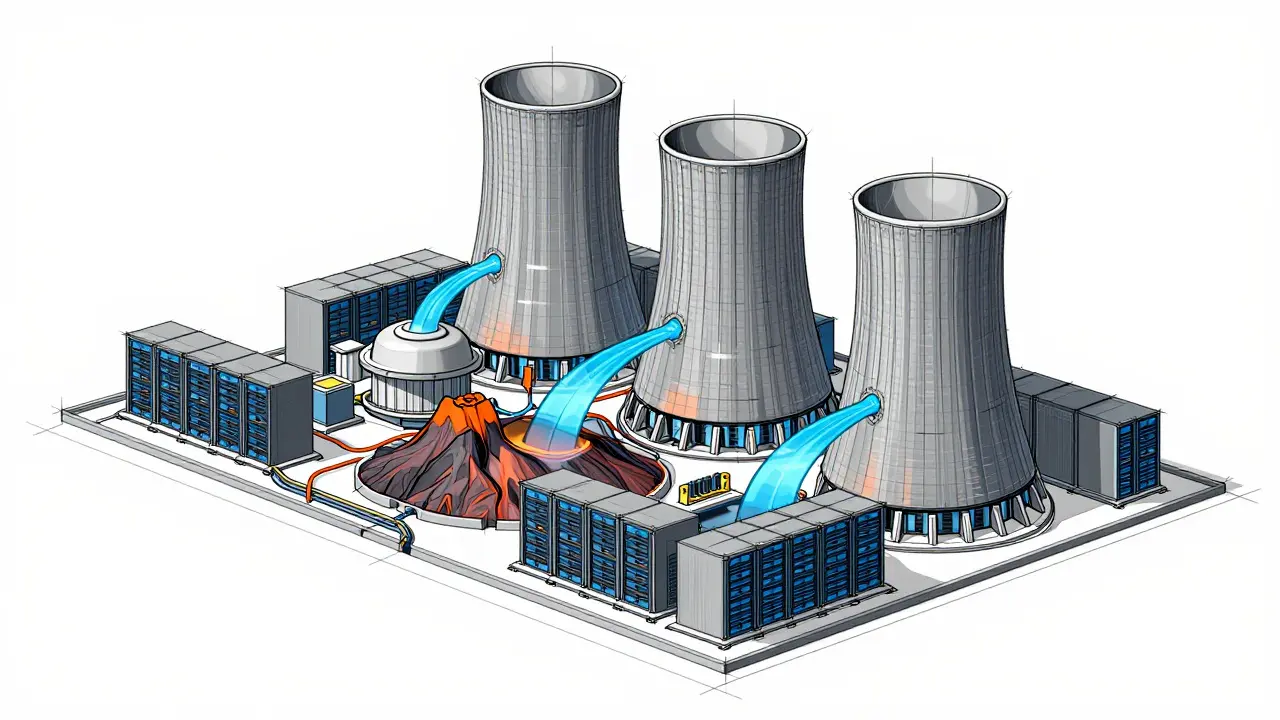
For more than a decade, Iceland was the undisputed king of green Bitcoin mining. With cheap geothermal power, a freezing climate that cooled servers for free, and a stable government, it seemed like the perfect setup. But by 2024, the party started to slow down. The lights are still on, but the music has changed. Today, Iceland faces a hard truth: its renewable energy supply is finite, and crypto miners are hitting a wall.
If you are looking to expand your mining operation in Reykjavik or Akureyri, you need to know the current reality. The era of easy access to unlimited cheap power is over. This article breaks down why energy allocation has become the biggest bottleneck for crypto mining in Iceland, what this means for existing operators, and where the industry might go next.
The Renewable Ceiling: Why There Is No More Power
To understand the problem, you first have to look at how Iceland generates electricity. Unlike most countries that burn coal or gas, Iceland runs almost entirely on renewables. About 75% of its power comes from hydroelectric dams, and the remaining 25% is geothermal energy tapped directly from volcanoes. It sounds like an infinite source, right? Not exactly.
The issue isn't the lack of potential energy; it's the lack of infrastructure to harness it. Building new hydroelectric plants requires damming rivers and altering landscapes, which faces strict environmental regulations and public scrutiny. Geothermal plants take years to drill and develop. As a result, Iceland’s total electricity generation capacity has remained relatively flat in recent years. According to data from 2023, cryptocurrency mining alone consumed about 8% of the nation's total energy output. That number might sound small, but in a country with a population of just over 380,000 people, it represents a massive chunk of available resources.
Here is the core conflict: the grid is full. When every waterfall and volcano is already running at near-maximum capacity, you cannot simply plug in another massive industrial user without taking power away from someone else. For crypto miners, this means there is no "new" power to tap into. Any expansion requires displacing existing users, which leads us straight into political trouble.
| Energy Source | Share of Total Generation | Expansion Potential |
|---|---|---|
| Hydroelectric | ~75% | Low (Environmental constraints) |
| Geothermal | ~25% | Medium (High drilling costs/time) |
| Crypto Mining Usage (2023) | ~8% of total consumption | Capped by grid limits |
The Political Shift: From Welcome Mat to Closed Door
For years, the Icelandic government welcomed crypto miners. They brought foreign currency, utilized stranded energy, and boosted GDP. In 2024, the crypto mining sector contributed an estimated 2% to Iceland's GDP. That is significant for a small economy. However, politicians began to ask a simple question: "Is this the best use of our limited clean energy?"
In March 2024, Prime Minister Katrín Jakobsdóttir signaled a major shift in policy. She expressed a clear desire to reduce cryptocurrency mining activities. The reasoning wasn't about carbon emissions-since the energy is green-but about opportunity cost. Every megawatt given to a Bitcoin miner is a megawatt not given to an aluminum smelter, a data center for AI, or a hydrogen production plant.
This marks a fundamental change in tone. Previously, miners were seen as innovative partners. Now, they are viewed as competitors for scarce resources against traditional industries. The government is actively prioritizing sectors that offer more stable employment and long-term economic benefits per unit of energy consumed. Aluminum smelting, for instance, has been a cornerstone of Iceland's industrial base for decades. It provides predictable jobs and steady revenue. Crypto mining, by contrast, is volatile, creates few direct local jobs, and depends heavily on global market prices.
Who Gets Priority? The Battle for Megawatts
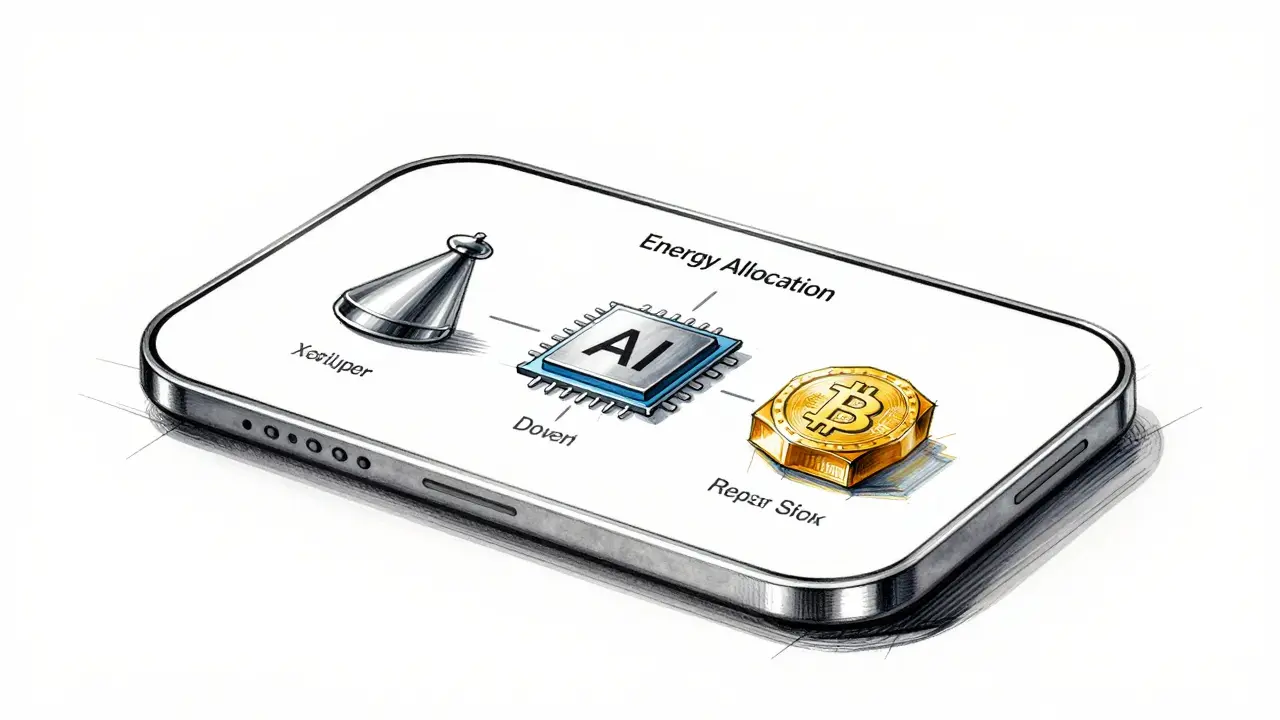
When energy is scarce, someone has to decide who gets it. In Iceland, that decision is becoming increasingly hostile to new crypto entrants. The National Energy Authority and local municipalities are under pressure to prioritize domestic consumption and established industries. This has led to two main tools being used against crypto expansion: tariff hikes and connection rationing.
First, let's talk about money. Historically, Iceland offered some of the lowest electricity rates in the world for industrial users. Those days are fading. To discourage high-energy usage, authorities have implemented steep tariff increases for large consumers. While miners can still operate profitably due to efficient hardware, the margin for error has shrunk. If Bitcoin's price dips, higher power costs can quickly turn a profitable farm into a loss-making one.
Second, and more critically, is the issue of grid connections. If you want to build a new mining facility today, you will likely face a lengthy waiting list-or worse, a flat denial. Daniel Jonsson from Greenblocks and other industry analysts note that while Iceland remains a premium location due to stability and green credentials, the inability to secure new power contracts is a hard ceiling. Existing miners who signed long-term Power Purchase Agreements (PPAs) between 2013 and 2017 are safe. Newcomers? Not so much.
This creates a "first-mover advantage" scenario. Established players like Genesis Mining, Advania Data Centers, and Verne Global hold the keys to the kingdom because they locked in power deals when the grid had spare capacity. They are sitting on valuable assets that new competitors cannot replicate. For anyone trying to enter the market now, the barrier to entry is no longer just capital-it's permission.
The Hardware Reality: Efficiency Isn't Enough
You might think that using the most efficient machines could solve the problem. After all, modern ASICs like the Antminer S19 XP and Whatsminer M50S are incredibly powerful. They deliver more hashpower per watt than ever before. But efficiency doesn't create new electrons. Even if you cut your energy use in half, you still need a physical connection to the grid.
Let's look at the numbers. Iceland's crypto operations currently contribute well above 1% of Bitcoin's global hashrate. That is impressive for a tiny island nation. However, the absolute limit of available power caps this growth. The Hashrate Index analysis from 2024 suggests that Iceland's mining sector is constrained to approximately 120 megawatts of allocated power. You cannot scale beyond that without building new power plants, which won't happen soon.
This puts Iceland in a unique position. It is likely the largest hashrate generator per capita in the world, similar to how it is the largest aluminum producer per capita. But "per capita" metrics don't help when you are competing with Texas, Kazakhstan, or Russia for total network security. Those regions have vast grids and abundant fuel sources. Iceland has neither. Its strength is quality and sustainability, not quantity and scale.
What Comes Next? The Pivot to Blockchain
So, is crypto mining dead in Iceland? Not exactly. It's just changing shape. The government has indicated a strategic pivot: less focus on energy-intensive mining, more focus on broader blockchain development. This means supporting technologies that use minimal electricity but offer high value. Think smart contracts, decentralized finance (DeFi) platforms, and enterprise blockchain solutions.
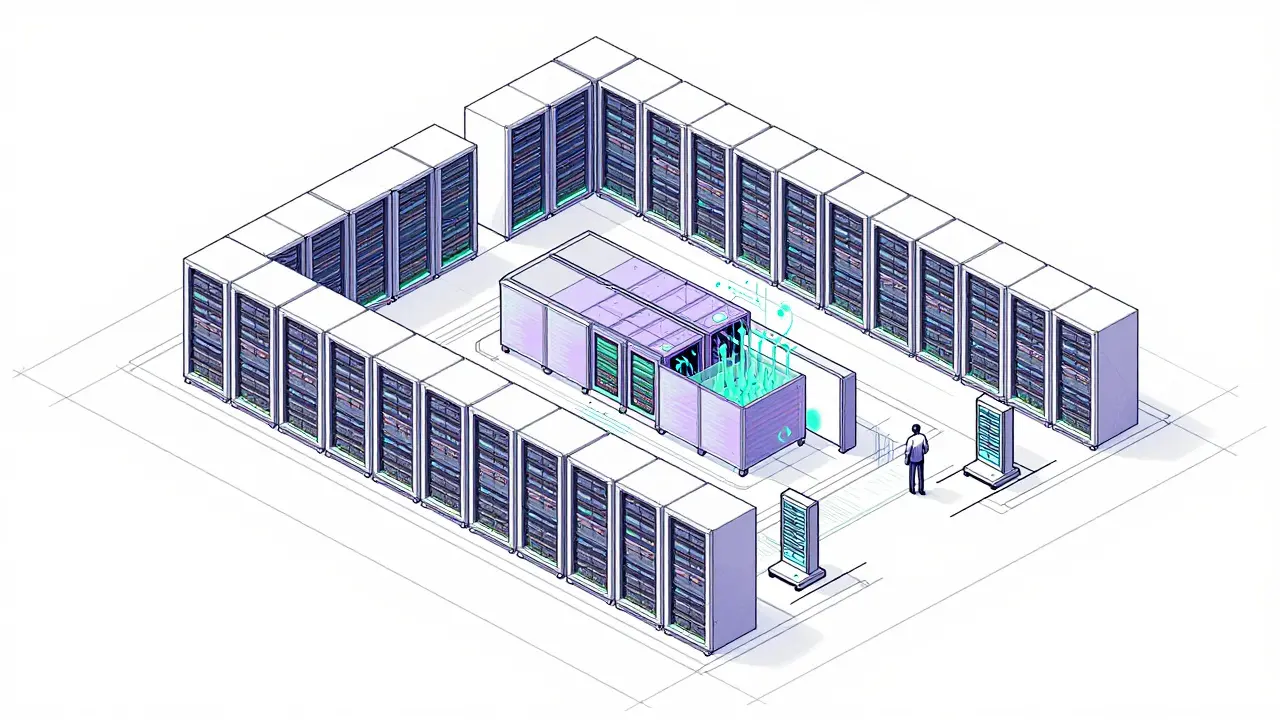
There is also growing interest in Artificial Intelligence (AI) data centers. AI workloads are energy-intensive, but they often command higher rents and provide more tangible services to the global tech industry than anonymous Bitcoin hashing. We may see a gradual transition where old mining halls are repurposed for AI training or cloud storage. Companies like Verne Global are already exploring these hybrid models, leveraging their existing cold-storage facilities for diverse digital loads.
Additionally, Iceland is exploring Central Bank Digital Currency (CBDC) initiatives. This reflects a preference for blockchain applications that benefit citizens and the financial system directly, rather than speculative asset mining. For investors and operators, the message is clear: if you want to stay in Iceland, you need to adapt. Pure-play mining is a sunset industry here. Value-added blockchain services are the sunrise.
Practical Advice for Miners and Investors
If you are considering Iceland for your next move, here is what you need to do:
- Audit Your Contracts: If you have an existing PPA, review the terms carefully. Look for clauses related to force majeure or regulatory changes. Ensure your contract protects you from sudden tariff spikes.
- Don't Bet on Expansion: Do not plan for scaling up in Iceland. Assume your current capacity is your maximum. Budget accordingly.
- Diversify Locations: Relying solely on Iceland is risky. Consider diversifying into jurisdictions with more flexible energy markets, such as parts of North America or Southeast Asia, to balance your portfolio.
- Explore Hybrid Models: Look into offering additional services. Can your facility host non-mining workloads during off-peak hours? Can you partner with local tech firms for blockchain development?
- Monitor Policy Changes: Keep a close eye on statements from the Ministry of Industry and Innovation. Small shifts in rhetoric can lead to big changes in regulation.
The golden age of unrestricted crypto mining in Iceland is behind us. But the country's reputation for stability and green energy remains intact. The key is to respect the limits of the grid and align with the government's vision for a sustainable, diversified digital economy.
Can new crypto miners still get power in Iceland?
It is extremely difficult. Most new applicants face long waiting lists or outright rejections because the grid is at capacity. Only those who secured Power Purchase Agreements (PPAs) before 2017 have guaranteed access. New entrants should assume they will not get a connection unless they displace an existing industrial user, which is politically unlikely.
Why is the Icelandic government reducing support for crypto mining?
The government views crypto mining as a low-value use of scarce renewable energy. Compared to aluminum smelting or AI data centers, mining offers fewer jobs and more volatility. Officials want to prioritize industries that provide stable employment and broader economic benefits to citizens.
Is Bitcoin mining still profitable in Iceland?
Yes, for existing operators with favorable power contracts. Iceland's electricity is still cheaper than many alternatives, and the cooling climate reduces operational costs. However, rising tariffs and the inability to scale mean profits are capped. New entrants would struggle to achieve profitability due to high upfront costs and lack of power access.
How much of Iceland's energy goes to crypto mining?
In 2023, cryptocurrency mining accounted for approximately 8% of Iceland's total energy consumption. While this seems small globally, it is significant for a small nation with limited grid expansion options, leading to competition with other heavy industries.
Will Iceland ban crypto mining completely?
A complete ban is unlikely. Instead, the government is using soft power tools like tariff hikes and restricted grid access to naturally shrink the sector's growth. The goal is to phase out expansion rather than shut down existing operations abruptly, allowing for a transition toward other blockchain technologies.