Imagine handing over your cash to a stranger without knowing if they will actually send the goods you ordered. In the traditional world, we rely on banks, lawyers, or escrow services to bridge that trust gap. But what if you could verify every single step of that transaction yourself, instantly, without asking anyone for permission? That is the promise of Blockchain transparency, which is the fundamental characteristic ensuring all transactions and data on a network are publicly accessible and verifiable by any participant with system access.
This isn't just about seeing who sent money to whom. It is about a structural shift in how we handle truth. When Bitcoin launched, it introduced a radical idea: a shared record that everyone can see but no one can secretly change. This concept has since expanded far beyond cryptocurrency into supply chains, voting systems, and corporate governance. Today, we need to look under the hood to understand exactly how this transparency works, why it creates trust where there was none before, and what limitations still exist.
The Mechanics of Public Verification
To understand blockchain transparency, you first have to forget how traditional databases work. In a bank’s system, the database is private. Only the bank sees the full picture. You get a statement, but you cannot audit their internal ledgers. Blockchain flips this model entirely.
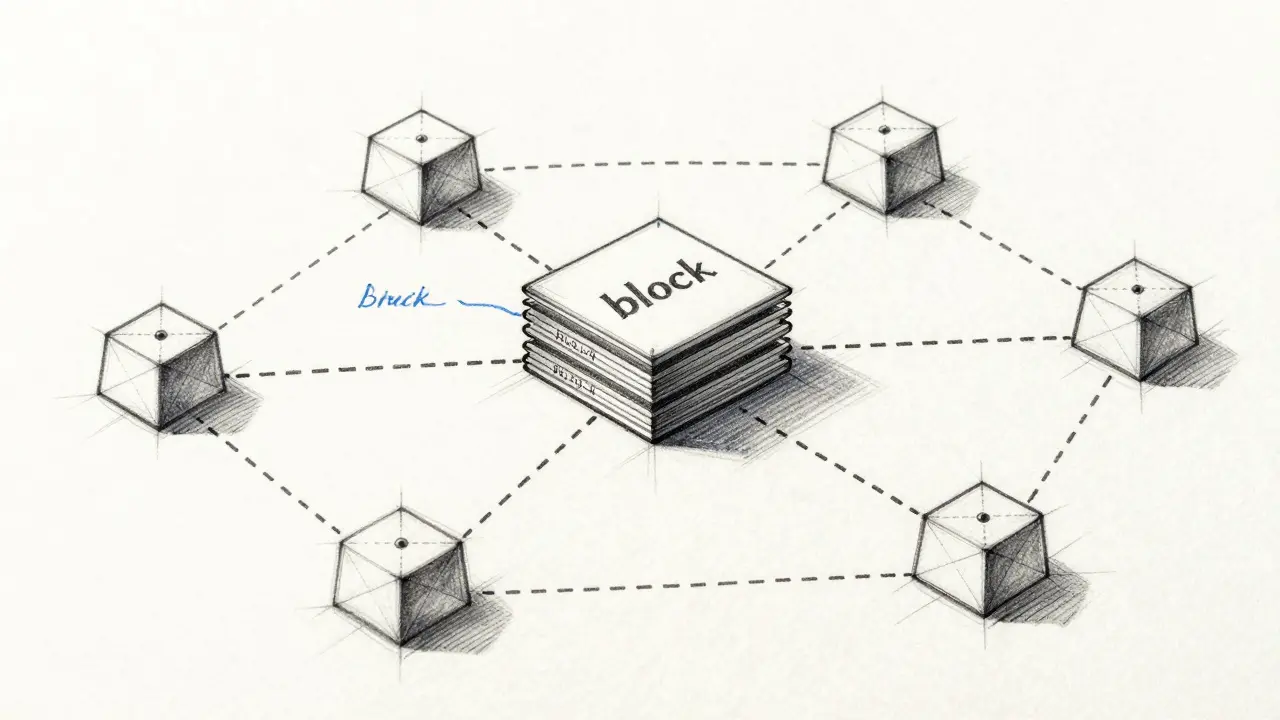
When a transaction occurs on a public network like Ethereum, it is broadcast to thousands of computers, known as nodes. These nodes do not just store the data; they validate it against strict rules. Once validated, the transaction is grouped into a block. This block contains comprehensive details: participant addresses, transaction amounts, timestamps, and digital signatures.
Here is the critical part: these blocks are linked together using cryptographic hashes. Think of a hash as a unique fingerprint for that specific block. If someone tries to alter a transaction in Block 100, the fingerprint changes. Because Block 101 includes the fingerprint of Block 100, its fingerprint also changes. This domino effect breaks the entire chain. To cheat the system, an attacker would need to recalculate the fingerprints for every subsequent block and control more than half of the network’s computing power simultaneously. For major networks, this is computationally impossible.
This process creates an immutable record. Immutability serves as the cornerstone of trust because it prevents alteration without consensus. You don’t trust the person sending the money; you trust the mathematical proof that the record hasn’t been tampered with.
Consensus Mechanisms: The Guardians of Truth
Transparency is useless if the people maintaining the ledger can collude to hide bad data. This is where consensus mechanisms come in. They are the democratic processes that decide which version of the ledger is the correct one.
Most people know Proof of Work (PoW), used by Bitcoin, where miners solve complex puzzles to secure the network. However, newer models like Delegated Proof of Stake (DPoS) offer a different approach to transparency and efficiency. In DPoS, token holders vote for delegates-typically between 20 to 100-who act as validators. These elected delegates take turns producing blocks.
Why does this matter for transparency? Because DPoS introduces a layer of accountable governance. If a delegate acts maliciously or fails to validate transactions correctly, voters can remove them from office. This creates a feedback loop where performance is directly tied to reward. It makes the network faster than PoW while maintaining a high level of scrutiny. The transparency here extends beyond just financial transactions to the very governance of the protocol itself.
Smart Contracts: Automating Accountability
One of the most powerful aspects of blockchain transparency is the integration of smart contracts. A smart contract is simply code stored on the blockchain that executes automatically when predefined conditions are met.
Consider a dividend payment. In a traditional company, calculating and distributing dividends involves months of manual work, legal checks, and potential human error. On a blockchain, you can write a smart contract that says: "If Company X reports profit Y, then distribute Z tokens to shareholders."
Once deployed, this contract is transparent. Anyone can read the code to verify the logic. There is no hidden clause buried in a 50-page PDF. When the condition is met, the execution happens instantly and visibly. This reduces human error and expedites processes. It ensures accountability in tasks like voting, insurance claims, and performance-linked compensations. You don’t have to hope the other party keeps their word; the code enforces it.
Real-World Applications Beyond Finance
While cryptocurrencies grabbed headlines, the real value of blockchain transparency lies in its application to physical assets and organizational behavior. Supply chain management is perhaps the most compelling example.
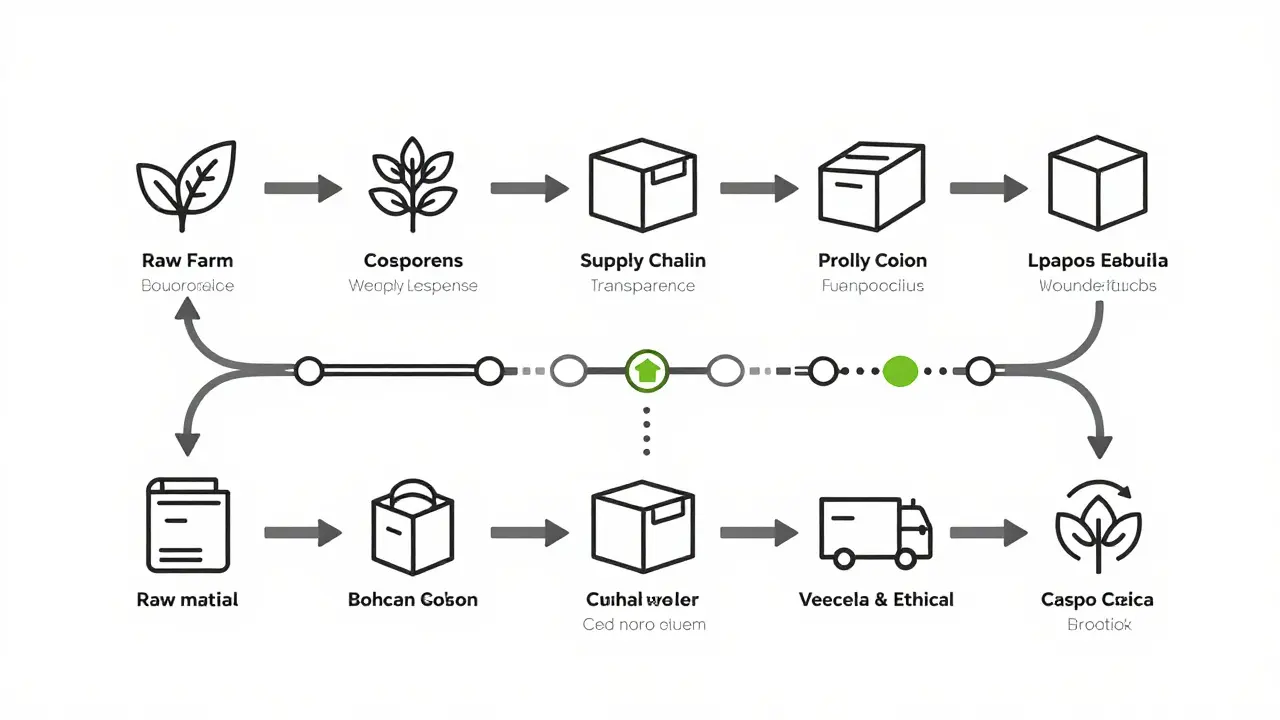
In global supply chains, products pass through dozens of hands-farmers, processors, shippers, retailers. Traditionally, tracking this journey relies on paper documents that can be forged or lost. Blockchain creates tamper-evident records that provide trusted, shared, and reliable transaction recording across these complex systems.
For instance, a consumer buying organic coffee can scan a QR code and see the entire history of that bag. They can verify the farm of origin, the date of harvest, and the carbon footprint of transport. This enables Environmental, Social, and Governance (ESG) tracking through supply chain traceability. Executives use this data to predict risks, ensure compliance, and enhance brand loyalty. It transforms abstract promises of "ethical sourcing" into verifiable facts.
Corporate governance also benefits significantly. Boards of directors can use blockchain to record meeting minutes and voting outcomes immutably. This minimizes the scope for unethical behavior and empowers stakeholders by allowing verification of board action legitimacy. If a director claims they voted against a controversial resolution, the blockchain provides indisputable proof either way.
The Privacy Paradox: Is Too Much Transparency Bad?
If transparency is so good, why aren’t all companies moving everything to public blockchains immediately? The answer lies in privacy. While transparency builds trust, it can also expose sensitive business intelligence.
On a fully transparent network, competitors could analyze your transaction patterns to guess your inventory levels, supplier costs, or strategic partnerships. This is why privacy-focused solutions have emerged. Technologies like zero-knowledge proofs allow participants to prove a transaction is valid without revealing the underlying data. For example, you can prove you have enough funds to pay a bill without revealing your total balance.
This represents a balanced approach to the base distributed ledger design. Organizations must strike an equilibrium between the benefits of transparency and the necessity of confidentiality. Many enterprise blockchains are therefore "permissioned," meaning only authorized participants can view the data. They retain the immutability and auditability of blockchain but restrict access to protect competitive advantage.
| Feature | Public Blockchain | Permissioned Blockchain |
|---|---|---|
| Access | Open to anyone | Restricted to invited members |
| Visibility | All transactions visible | Only authorized users see data |
| Trust Model | Trustless (reliant on code) | Trusted participants (reliant on identity) |
| Use Case | Cryptocurrencies, public records | Supply chains, inter-bank settlements |
| Privacy | Low (pseudonymous) | High (confidential) |
Benefits for Business Operations
Implementing blockchain transparency delivers tangible operational and economic benefits. First, it increases trust and security. When users can observe network activity, they trust the information accuracy more deeply. This builds trustless systems where participants operate without fear of fraud.
Second, it enhances accountability. Transparency breeds responsibility. When actions are permanently recorded, individuals and organizations adhere more strictly to uniform rules. Wrongdoing is identified and corrected rapidly because the audit trail is instant and complete.
Third, it improves efficiency. Transparent transactions enable streamlined operations. Participants can make informed decisions based on real-time, available information rather than waiting for end-of-month reports. This reduces the cost of reconciliation and dispute resolution. Cost and complexity reduction occurs when transparent transactions make data tracking easier, helping reduce overall business costs and improving competitive positioning.
Future Outlook: Automated Compliance
We are moving toward a future where transparency is not just a feature but a regulatory requirement. Governments are exploring Central Bank Digital Currencies (CBDCs) and regulated stablecoins that leverage blockchain for real-time auditing. The integration of smart contracts with governance processes promises to expand automation capabilities while maintaining transparency requirements.
As consensus mechanisms evolve, particularly in hybrid models combining speed with decentralization, we will see more sophisticated governance structures. Supply chain applications suggest expanding transparency use cases beyond financial transactions to comprehensive business process management. The technology positions itself as a transformative force in modern business operations, making blockchain adoption a necessity rather than a choice for institutions striving to build credibility.
Is blockchain truly anonymous?
No, blockchain is pseudonymous, not anonymous. Transactions are linked to public addresses, not names. However, because the ledger is transparent, analysts can often trace addresses back to real-world identities through patterns, exchange records, and IP logs. True anonymity requires additional privacy tools like mixers or zero-knowledge protocols.
Can transactions be deleted from a blockchain?
Practically speaking, no. Due to the cryptographic linking of blocks, deleting a past transaction would require altering all subsequent blocks and gaining majority control of the network. This is computationally infeasible for established networks. Corrections are made by adding new transactions that reverse the previous ones, leaving the original record intact.
What is the difference between transparency and privacy in blockchain?
Transparency means all data is visible to network participants, enabling verification and trust. Privacy restricts access to specific data to protect sensitive information. Public blockchains prioritize transparency, while permissioned blockchains and privacy coins use cryptographic techniques to limit visibility while maintaining integrity.
How does blockchain improve supply chain tracking?
It creates a single, shared source of truth. Each step in the supply chain is recorded as a transaction, creating an immutable history. This allows consumers and regulators to verify provenance, detect counterfeit goods, and ensure ethical sourcing without relying on potentially falsified paper documents.
Are smart contracts legally binding?
This depends on local jurisdiction. In many regions, smart contracts are recognized as enforceable agreements if they meet standard contract law requirements (offer, acceptance, consideration). However, their automated nature means disputes are resolved by code execution rather than court interpretation, though legal frameworks are evolving to address this.