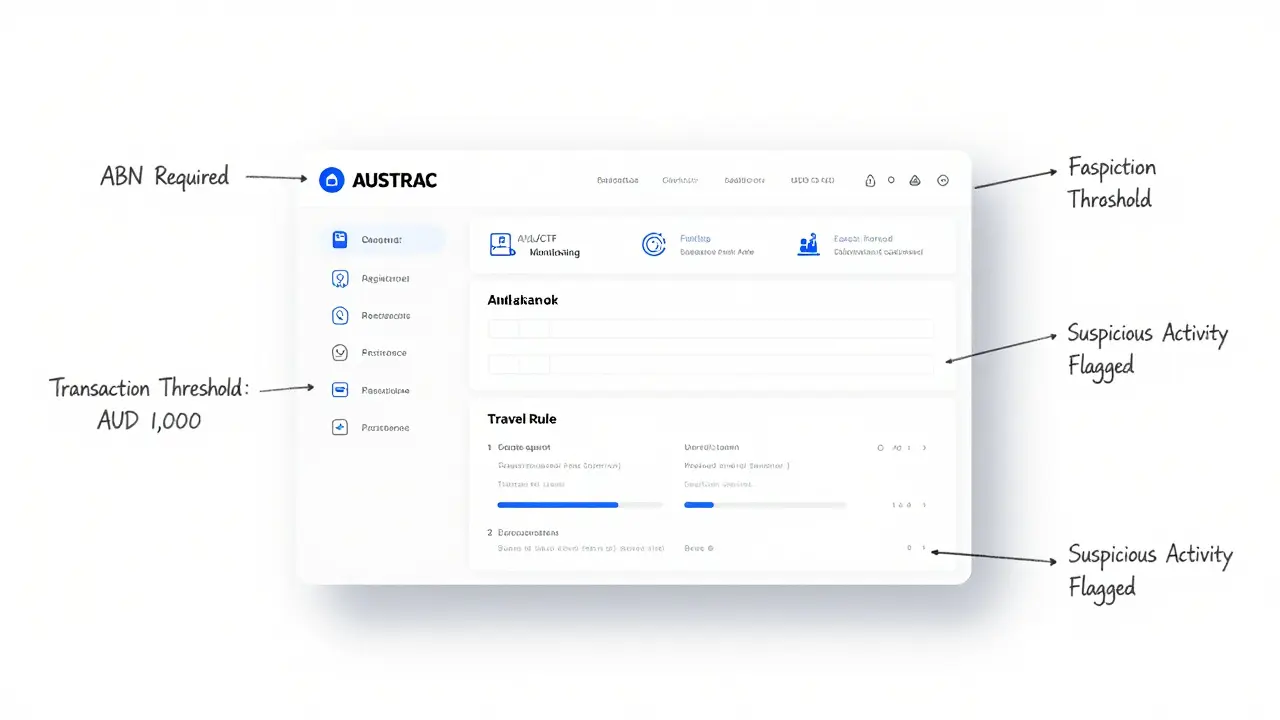
By March 31, 2026, every crypto business operating in Australia must be registered with AUSTRAC-or it will be shut down. This isn’t a warning. It’s the law. And it’s already changing how exchanges, wallet providers, and even peer-to-peer platforms operate. If you’re running a crypto service in Australia, you need to know exactly what’s required, how much it costs, and what happens if you miss the deadline.
What AUSTRAC Actually Regulates Now
AUSTRAC doesn’t regulate Bitcoin or Ethereum themselves. It regulates the services that touch them. Since 2018, only crypto-to-fiat exchanges had to register. But the 2024 amendments changed everything. Now, five types of services fall under the law:
- Exchanging virtual assets for fiat currency (like AUD)
- Exchanging one crypto for another (BTC for ETH, for example)
- Transferring virtual assets between users
- Safekeeping or administering crypto assets (custody wallets)
- Participating in financial services tied to token issuance (like ICOs or STOs)
That means even if you’re not dealing with Australian dollars, you still need to register. A platform that lets users swap Solana for Polygon? That’s covered. A wallet that holds crypto for customers? Covered. A P2P app that connects buyers and sellers? Covered. The definition of a virtual asset is clear: it’s any digital value that can be transferred, stored, or traded electronically. Game tokens? Loyalty points? Excluded. Real crypto? Always in.
The March 2026 Deadline Is Non-Negotiable
The clock is ticking. All businesses must be registered and fully compliant by March 31, 2026. There are no extensions. No grace periods. And AUSTRAC isn’t asking politely-it’s enforcing. In July 2025, the regulator refused to renew one crypto ATM provider’s registration. Another voluntarily pulled out. A third paused operations. This isn’t about fines anymore. It’s about being locked out of the market.
Businesses have been scrambling. Independent Reserve got compliant in Q1 2025 and saw a 22% jump in institutional clients. CoinSpot, on the other hand, had to suspend its P2P service in August 2025 because it couldn’t meet the new transaction monitoring rules. The difference? Preparation. Those who started in 2024 had time. Those who waited are now behind.
What You Have to Do: The 4-Step Process
Getting compliant isn’t optional. It’s a process. Here’s what you need to do:
- Register online through AUSTRAC’s portal. You’ll need your ABN, business structure, and details of all owners and directors. No exceptions.
- Build an AML/CTF program. This isn’t a document you download. It’s a living system. You need customer identification, ongoing transaction monitoring, and a way to report suspicious activity. You can’t just use a template. AUSTRAC expects you to understand how your business is used for money laundering.
- Implement the Travel Rule. Any transfer over AUD 1,000-whether it’s on-chain, via a bank, or through a wallet-must include full originator and beneficiary details. That means name, address, account number. No anonymous swaps. No privacy coins bypassing this. The rule applies equally to blockchain and traditional payments.
- Train your team. Your staff need to know how to spot red flags. A customer who deposits $50,000 in Bitcoin and withdraws it as Monero? That’s a red flag. A user who sends crypto to 15 different wallets in one hour? That’s a red flag. You need people who understand these patterns.
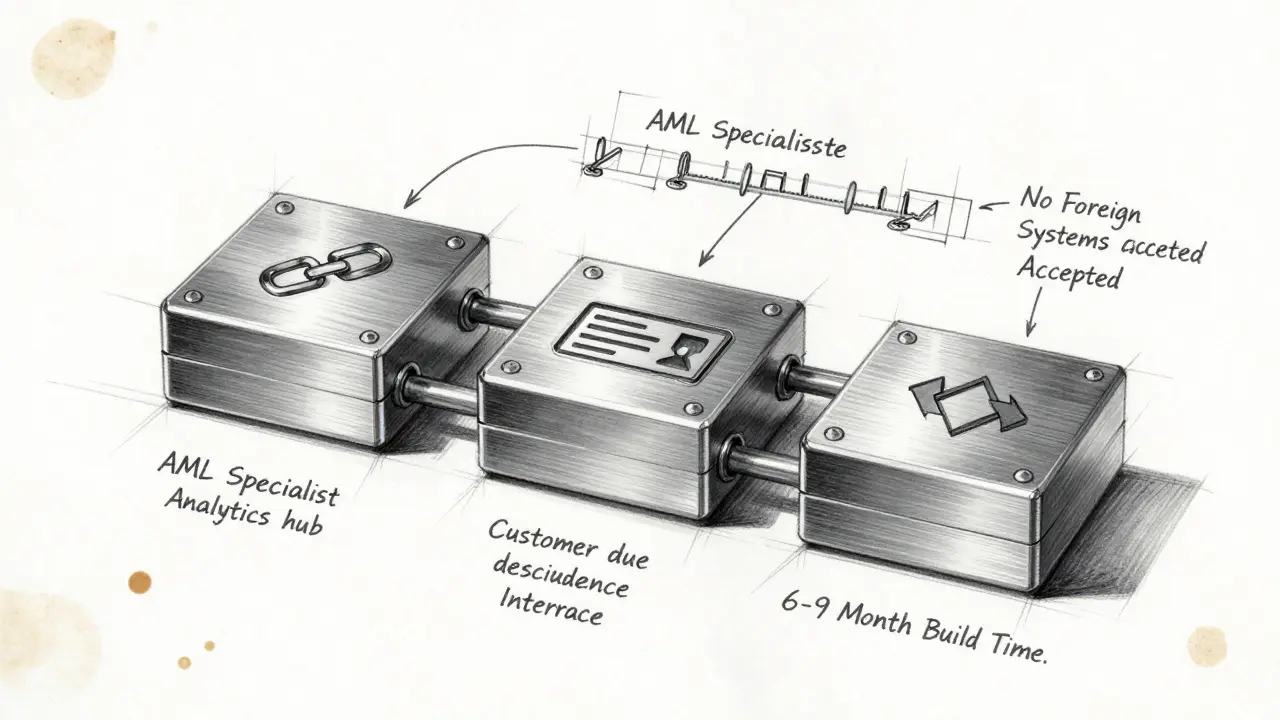
The average time to get compliant? Six to nine months. The cost? Between AUD 120,000 and AUD 350,000, depending on your size. Small exchanges are feeling the pinch. One user on Reddit reported spending AUD 185,000 on compliance software alone. For a startup with 5 employees, that’s more than half its annual budget.
Technology-Neutral, But Not Risk-Neutral
Australia’s approach is unique. It doesn’t care if you use Bitcoin, Ethereum, or a private blockchain. The rules apply the same way to all of them. That’s smart. It means the law won’t become outdated when a new tech emerges.
But here’s the catch: the law doesn’t care about decentralization. DeFi protocols-like Uniswap or Aave-are not mentioned anywhere in the rules. If you’re running a smart contract that lets users lend and borrow without a company behind it, you’re in a legal gray zone. The regulator says it’s focusing on service providers, not the tech. But if there’s no company to hold accountable, who gets fined? No one has an answer yet. A September 2025 survey found 68% of Australian crypto businesses are worried about this gap.
What’s Missing: DeFi, Stablecoins, and Crypto ATMs
While the framework is broad, it’s incomplete. DeFi is ignored. Stablecoins aren’t regulated under a dedicated system-yet. The March 2025 Digital Asset Statement promised a Stored Value Facility (SVF) regime for stablecoins, but details aren’t out. That leaves businesses guessing. Should you treat USDT like a bank account? Like a security? Like cash? No one knows.
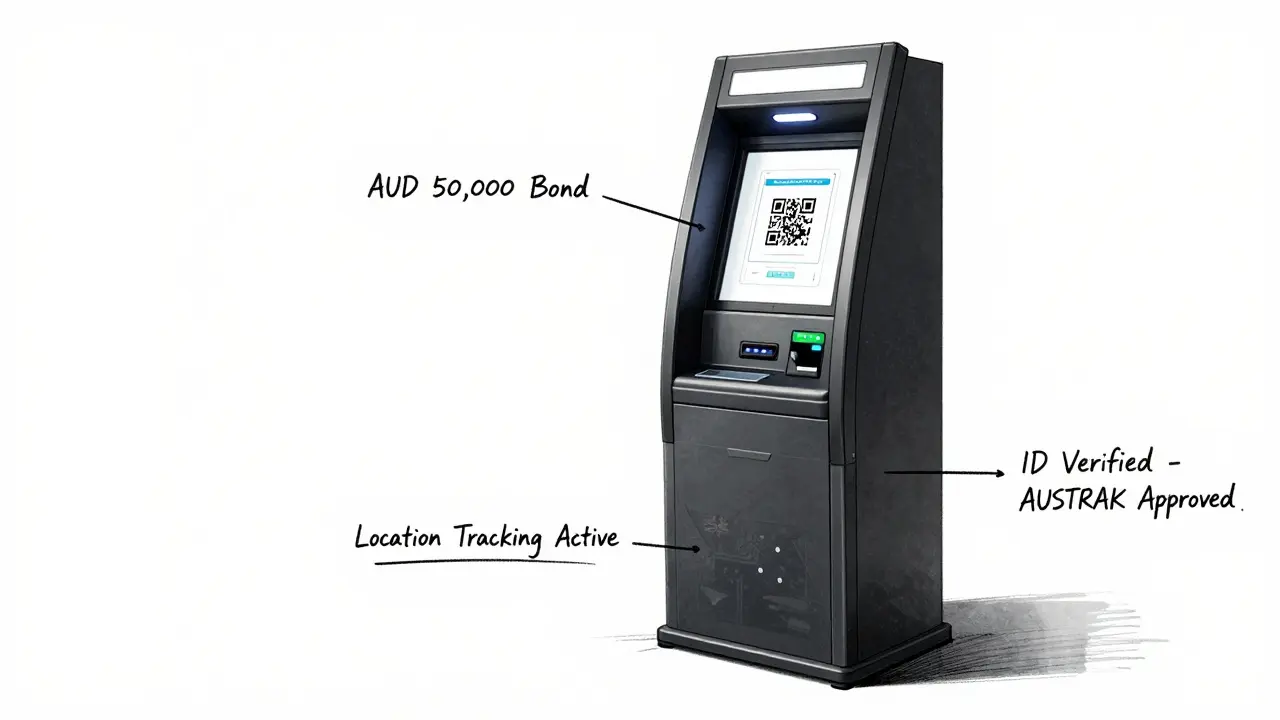
Crypto ATMs are another story. Australia has 1,800 of them-the most in Asia-Pacific. After a July 2025 crackdown that identified 90 scam victims, AUSTRAC set minimum standards: identity checks, location tracking, and a AUD 50,000 bonding requirement. Operators say it’s too high. In Texas, the bond is USD 25,000. But the regulator says it’s necessary. The Trustpilot rating for compliant ATMs is 3.2/5-mixed reviews, but clear enforcement.
Who’s Getting It Right-and Who’s Not
Independent Reserve, CoinSpot, and Swyftx control 68% of the Australian crypto market. Only 47% of domestic exchanges were fully compliant as of August 2025. That means more than half were still operating illegally.
Successful businesses share three traits:
- They started early-before 2024.
- They hired AML specialists with crypto experience, not just general compliance officers.
- They invested in blockchain analytics tools that can trace transactions across chains.
Failures? They assumed they could wait. They thought they were too small to matter. They used off-the-shelf software that didn’t handle crypto-specific risks. Now they’re either suspended, under investigation, or paying lawyers.
The Bigger Picture: Australia’s Place in the World
Compared to the U.S. and UAE, Australia is behind. The U.S. implemented the Travel Rule in 2021. The UAE has a clear licensing system for crypto firms. Singapore has a sandbox for testing new models. Australia has none of that.
Professor Ross Buckley from UNSW Law says Australia’s regulatory timeline is “lagging behind by 18-24 months.” That’s dangerous. If you’re a startup choosing where to launch, you’ll pick Singapore or Dubai-not Australia-unless you’re targeting Australian users.
But Australia has one advantage: it’s consistent. The rules apply to everyone the same way. No loopholes. No exceptions. If you’re serious about building a long-term crypto business in Australia, you have to play by these rules. There’s no shortcut.
What Comes Next
By December 2025, AUSTRAC, Treasury, ASIC, and the ACCC will finalize their joint framework. That’s when we’ll see:
- Formal licensing for Digital Asset Platforms (DAPs)
- Clear rules for stablecoins under the SVF regime
- Review of the regulatory sandbox
- Guidance on blockchain’s economic impact
Market size is growing fast. In 2025, Australia’s crypto services market hit AUD 4.7 billion. By 2027, KPMG projects it will hit AUD 7.3 billion-if regulation is clear. If it’s not? Growth stalls. Investors pull out. Startups leave.
The message is simple: if you’re in this space, compliance isn’t a cost. It’s the price of staying in business. The deadline is here. The rules are clear. The choice is yours.
Do I need to register with AUSTRAC if I only trade crypto-to-crypto?
Yes. Exchanging one virtual asset for another is one of the five regulated services under the AML/CTF Act. Even if you don’t handle Australian dollars, you must register with AUSTRAC and comply with all requirements, including the Travel Rule for transfers over AUD 1,000.
What happens if I don’t register by March 31, 2026?
Your business will be blocked from operating in Australia. AUSTRAC can shut down your website, freeze your bank accounts, and refer you to law enforcement. There are no warnings. No fines first. Just immediate shutdown. Any customers who try to use your service after that date will be at risk of dealing with an illegal entity.
Is DeFi regulated in Australia?
No, not yet. DeFi protocols-like decentralized exchanges or lending platforms without a legal entity-are not covered by current regulations. AUSTRAC says it regulates service providers, not technology. But if a DeFi project has a company behind it, that company must register. If it doesn’t, it operates in a legal gray zone with no protection or oversight.
How much does it cost to get AUSTRAC-compliant?
Costs vary by size. Small exchanges typically spend AUD 120,000-200,000 on software, legal help, and staff training. Larger platforms spend up to AUD 350,000. This includes blockchain analytics tools, customer due diligence systems, and compliance personnel. The registration fee itself is minimal, but the real cost is building a working AML/CTF program that meets AUSTRAC’s standards.
Can I use a foreign AML system to comply with AUSTRAC?
No. AUSTRAC requires a locally tailored AML/CTF program. Even if you’re compliant in the U.S., EU, or Singapore, you still need to meet Australia’s specific rules. This includes the Travel Rule, customer verification standards, and reporting thresholds. Foreign systems may help as a starting point, but they won’t be accepted as full compliance.
Do I need to report every transaction over AUD 1,000?
No. You don’t report every transaction-you must collect and verify the originator and beneficiary details for every transaction over AUD 1,000. Then, you monitor for suspicious patterns. If you see something unusual, you file a Suspicious Matter Report (SMR) with AUSTRAC. The Travel Rule is about data collection, not reporting every single transfer.
Are crypto ATMs regulated differently?
Yes. Crypto ATMs have specific rules under AUSTRAC’s July 2025 minimum standards. Operators must conduct identity checks, record transaction locations, and maintain a AUD 50,000 financial bond. These rules were introduced after a joint operation found 90 scam victims using ATMs to launder funds. Non-compliant ATMs have been shut down.
Can I operate as an individual without a company?
No. AUSTRAC only registers legal entities-companies, partnerships, or trusts. Individuals cannot register. If you’re running a crypto service as a sole trader, you must incorporate a company first. There are no exceptions.




Arya Dev
4 March, 2026 . 00:49 AM
So let me get this straight... I have to spend $200k just to let people trade Bitcoin? And if I don't? They shut me down? Like, I'm supposed to believe this isn't just a tax grab disguised as 'compliance'? I mean, come on. This is madness.
Jessica Carvajal montiel
5 March, 2026 . 19:44 PM
They're not regulating crypto. They're regulating freedom. The Travel Rule? That's surveillance dressed up in a suit. Every transaction over $1,000 gets tracked? That's not compliance-it's a digital leash. And don't get me started on how they're ignoring DeFi. This isn't about safety. It's about control. And they're going to crush innovation while pretending to protect us.
Phillip Marson
6 March, 2026 . 15:44 PM
I've seen this movie before. Every time a government decides to 'regulate' crypto, it ends with a bunch of startups packing up and moving to Dubai. AUSTRAC thinks they're being smart by being consistent? Nah. They're being stupid by being rigid. You can't slap a bank regulation on blockchain and call it innovation. It's like putting a horse in a Tesla and expecting it to fly.
Tracy Whetsel
6 March, 2026 . 20:35 PM
I know this feels overwhelming but you're not alone 😊 Seriously, if you're a small operator, start with the basics: document your customer checks, use open-source tools like Chainalysis or TRM Labs, and reach out to the AUSTRAC helpdesk-they actually respond! You don't need to build a whole compliance team overnight. Baby steps. One policy at a time. You got this 💪
Jeff French
6 March, 2026 . 21:56 PM
The Travel Rule implementation is actually pretty standard globally. Most jurisdictions have similar thresholds. The real issue is the cost of blockchain analytics tools. That's where the bottleneck is. Not the law. The tools. And yeah, small players are getting squeezed. But that's the cost of being in a regulated space. You either adapt or exit. No drama.
Brian Lemke
7 March, 2026 . 10:32 AM
This is actually one of the clearest crypto frameworks I've seen. No wiggle room? Good. No loopholes? Even better. You want to build something lasting in crypto? You need rules. Not hype. Not 'decentralized' excuses. Real rules. Australia's doing the boring, unsexy work that lets real businesses thrive. If you're scared of paperwork, maybe crypto isn't for you.
Megan Lavery
8 March, 2026 . 19:36 PM
I just started my crypto kiosk in Perth and honestly? The process was way smoother than I expected. AUSTRAC’s portal is actually user-friendly. They gave me templates. I hired a freelance AML consultant for 3 weeks. Total cost? $85k. Not cheap, but doable. If you're reading this and stressing? Just start step one. Register. You'll be surprised how much easier it gets after that.
Mae Young
9 March, 2026 . 19:51 PM
Oh, so now Australia's the 'responsible' one? How cute. Let me guess-next they'll be mandating that every Bitcoin transaction include a handwritten note from your therapist. 'Dear AUSTRAC, I traded 0.5 BTC because I felt lonely.' This isn't regulation. It's performative governance. They're not protecting users. They're protecting banks. And you? You're just collateral damage.
Trenton White
10 March, 2026 . 20:27 PM
I’ve been in crypto since 2017. I’ve seen the U.S. flounder, the EU overcomplicate, and Singapore play nice. Australia’s approach is brutal, but it’s honest. No false promises. No regulatory arbitrage. You want to operate here? You pay the price. And honestly? That’s better than the chaos elsewhere.
Cheryl Fenner Brown
11 March, 2026 . 09:19 AM
ok so i read this and my brain is like 🤯 but like… can i just use coinbase? i mean they already do all this stuff right? why do i need to do it myself? also is there a meme i can send to my boss to explain this? 😅
Colin Lethem
12 March, 2026 . 20:39 PM
Wait-so if I run a P2P app where users trade directly and I don't touch the funds, why am I regulated? That's like saying Uber has to be a taxi company because they connect drivers and riders. The tech is neutral. The service isn't. AUSTRAC is conflating infrastructure with custody. This is a fundamental misunderstanding of how P2P works.
lori sims
13 March, 2026 . 03:18 AM
I love how this post doesn't shy away from the ugly truth. The cost is brutal. The timeline is tight. But if you're building something real, this is the price of legitimacy. I used to think regulation was the enemy of crypto. Now I see it as the filter that separates the builders from the hustlers. And honestly? We need more filters.
Reggie Fifty
14 March, 2026 . 14:48 PM
Australia thinks it's being tough? Ha. The U.S. has 100 times more crypto activity and doesn't have this mess. Why? Because we don't let bureaucrats dictate innovation. You want to shut down businesses? Fine. But don't pretend you're protecting consumers. You're protecting Wall Street from competition. And you're killing the next Bitcoin because you're too scared to let it breathe.
Kristi Emens
14 March, 2026 . 19:24 PM
I work with a small crypto advisory firm. We spent 7 months getting compliant. The biggest surprise? The staff training. Once we taught our team how to spot red flags, we started catching real money laundering attempts. The compliance system didn't just cost us-it saved us. From legal trouble. From bad actors. From reputational damage. It's not a burden. It's armor.
Deborah Robinson
15 March, 2026 . 11:44 AM
To anyone stressing about the $200k cost: look into grants. AUSTRAC has partnerships with incubators that subsidize compliance tools. Also, join the Australian Crypto Compliance Network on LinkedIn. Real people there sharing templates, vendor discounts, even free legal clinics. You don't have to do this alone. Reach out. Someone's gonna help you. I promise 💙