Trading on Ethereum often feels like paying a premium just to move your own money. High gas fees and slow confirmation times make it nearly impossible for anyone not trading thousands of dollars to actually make a profit. This is where SyncSwap v3 is a leading decentralized exchange (DEX) optimized for the zkSync Era ecosystem. By leveraging zero-knowledge rollup technology, it promises the security of Ethereum without the soul-crushing fees. But does it actually deliver on that promise, or is it just another fork of Uniswap with a different name?
Quick Summary: What You Need to Know
- Market Leader: Controls about 35-38% of the zkSync DEX market share.
- Low Costs: Gas fees are 90-95% cheaper than Ethereum mainnet.
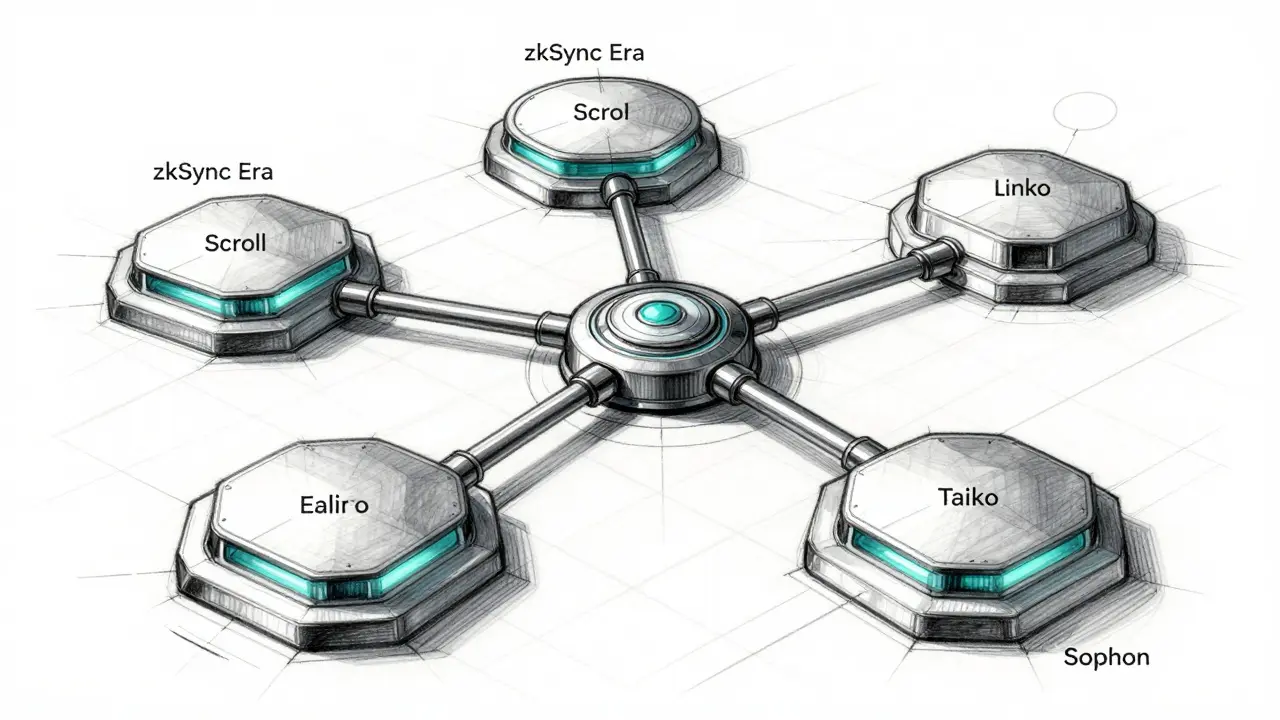
- Multi-Chain: Supports zkSync Era, Scroll, Linea, Taiko, and Sophon.
- Liquidity: Significant TVL (around $63M - $82M), ensuring lower slippage for major pairs.
- The Catch: The interface can be intimidating for complete beginners.
The Engine Under the Hood: zkRollups and Speed
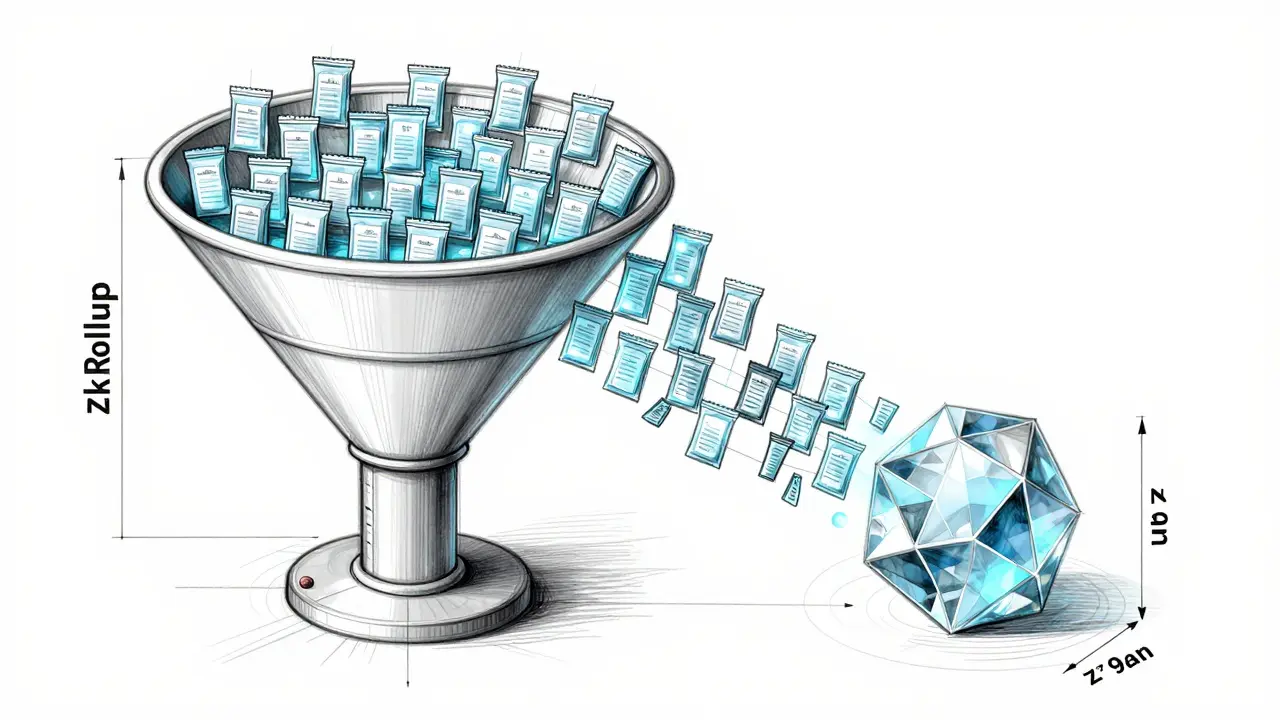
To understand why SyncSwap v3 is fast, you have to understand the tech. It runs on zkSync Era, which uses zkRollup technology to bundle hundreds of transactions into one single proof before sending it to the Ethereum mainnet. This isn't just a speed boost; it's a fundamental shift in how Layer 2s handle data.
In real-world terms, your swaps execute in 2 to 5 seconds. While the finality on the Ethereum mainnet takes about 10 to 15 minutes, the platform itself feels instantaneous. For a trader, this means you aren't staring at a spinning loading wheel while the price of your token crashes. With a capacity of roughly 2,000 transactions per second, the platform stays stable even when the market goes crazy and everyone rushes to swap at once.
Trading Experience: Liquidity and Costs
The most important part of any crypto exchange is whether you can actually trade without losing 2% of your position to slippage. SyncSwap excels here. With a Total Value Locked (TVL) reaching up to $82 million, it has roughly 2.3 times the liquidity of its nearest competitors like Mute.io or SpaceFi. This makes it the go-to spot for the USDC/WETH pair, which is consistently the most active on the platform.
Then there's the cost. On Ethereum mainnet, a simple swap can cost $20 or $50 in gas during peak hours. On SyncSwap, you're looking at an average of 0.0005 to 0.001 ETH per transaction. That's a massive 60-70% cost advantage over other DEXs in the same ecosystem. If you're making frequent, smaller trades, these savings add up quickly.
| Feature | SyncSwap v3 | Average Competitor |
|---|---|---|
| Market Share | ~37% | < 15% |
| Network Support | 5 Networks (zkSync, Scroll, Linea, Taiko, Sophon) | 1-2 Networks |
| Avg. Gas Fee | 0.0005 - 0.001 ETH | 0.0015 - 0.003 ETH |
| Execution Speed | 2-5 Seconds | 5-10 Seconds |
Beyond zkSync: The Multi-Chain Strategy
One thing that sets SyncSwap apart is that it isn't just a one-trick pony. While it started on zkSync, the team has aggressively expanded. By July and August 2025, they integrated Scroll and Linea. This means you can use the same familiar interface across different Layer 2 solutions, including Taiko and Sophon.
This move is strategic. Instead of betting everything on one rollup, they're positioning themselves as the primary liquidity layer for the entire L2 landscape. For users, this means less friction when moving assets between different ecosystems, provided you have the right bridging tools in place.
The Rough Edges: User Interface and Onboarding
It's not all sunshine and low fees. If you're a seasoned DeFi degens, you'll be fine, but if you're new to this, SyncSwap can feel like a cockpit of a 747. User feedback on Reddit often mentions a steep learning curve. The process of bridging assets from the Ethereum mainnet to zkSync Era is a common pain point-it can take 10 to 30 minutes and requires a few technical steps that aren't always intuitive.
Additionally, the official documentation is written by developers, for developers. If you're looking for a "Quick Start Guide for Humans," you'll likely end up on YouTube watching community tutorials. The platform is powerful, but it doesn't hold your hand. If you've never used MetaMask or configured a custom RPC network, expect to spend about 30 minutes just getting your first trade ready.
The Token Situation: SYNC
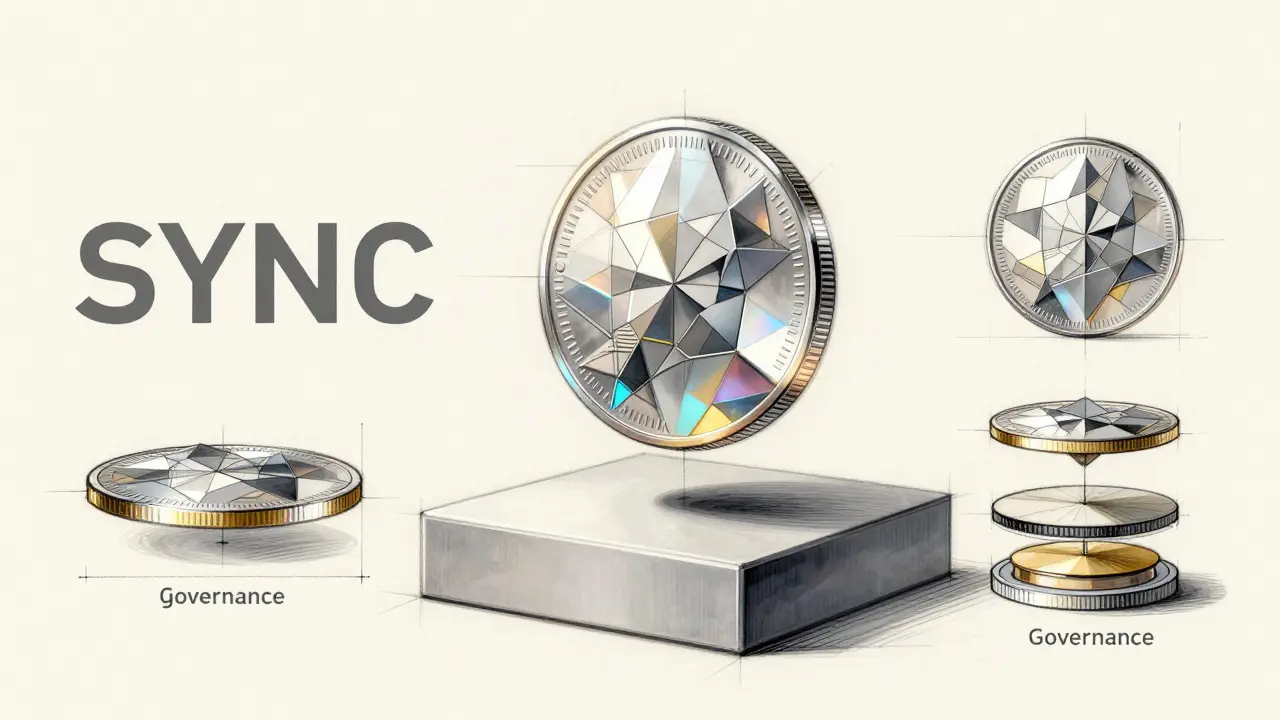
For a long time, the community wondered if there would ever be a native token. As of 2025, the SYNC token has been announced with a total supply of 100 million tokens. While the exact utility and full tokenomics have been a point of debate among analysts-with some noting a lack of detailed public blueprints early on-the introduction of a token usually signals a move toward decentralized governance.
If you're hunting for airdrops, this is the key entity to watch. Many users have already integrated with the platform specifically to qualify for the SYNC distribution. Just be careful: always double-check that you are using the official interface to avoid phishing scams, which are rampant in the L2 space.
Step-by-Step: How to Use SyncSwap v3
- Setup Your Wallet: Install MetaMask and add the zkSync Era network. You'll need to find the correct Network Name, RPC URL, and Chain ID from the official zkSync documentation.
- Bridge Your Funds: Use the official zkSync bridge to move ETH from the Ethereum mainnet to the L2. Be patient; this can take up to half an hour.
- Connect to SyncSwap: Navigate to the app and connect your wallet. Make sure you're on the correct network (e.g., zkSync Era or Scroll).
- Select Your Pair: Choose the token you have and the token you want. If you're unsure, sticking to major pairs like USDC/WETH ensures the lowest slippage.
- Execute and Verify: Set your slippage tolerance (usually 0.5% to 1% is fine) and confirm the transaction in your wallet.
Is SyncSwap v3 safe to use?
SyncSwap is generally considered reliable within the zkSync community, boasting over $8 billion in cumulative volume. It relies on the security of the zkSync Era protocol, which is rooted in Ethereum's security. However, like all DEXs, it carries smart contract risk. Always use a hardware wallet for large sums.
How do gas fees compare to Uniswap on Mainnet?
Fees are significantly lower. While Uniswap on Ethereum can cost double-digit USD amounts for a single swap, SyncSwap transactions typically cost a fraction of a cent to a few cents, representing a 90-95% reduction in costs.
What networks does SyncSwap support?
It is no longer just for zkSync. SyncSwap now supports zkSync Era, Scroll, Linea, Taiko, and Sophon, making it one of the most versatile DEXs in the Layer 2 space.
What is the SYNC token used for?
The SYNC token is the native asset of the platform with a total supply of 100 million. It is primarily aimed at governance and ecosystem growth, though specific utility details are often updated via their official community channels.
Why is my bridge taking so long?
Bridging from L1 to L2 involves moving assets across different layers of the blockchain. Depending on network congestion and the specific bridge used, this can take anywhere from 10 to 30 minutes. This is normal behavior for the technology.
Final Verdict and Next Steps
If you're tired of paying $30 in gas for a $100 trade, SyncSwap v3 is a no-brainer. It's the most liquid and cost-effective way to trade on zkSync Era. The only real hurdle is the initial setup. Once you've bridged your funds and configured your wallet, the experience is seamless.
For those just starting, I recommend spending a few minutes on YouTube looking for a "zkSync Era bridging guide" before attempting your first transfer. If you're already a DeFi user, your next step should be exploring their liquidity pools to see if you can earn a bit of yield while providing liquidity for the networks they support.

Tony Gurley-Ward
22 April, 2026 . 17:43 PM
The whole concept of a DEX is just a digital mirage of freedom, isn't it? We trade one centralized master for a mathematical one and call it liberation. SyncSwap is just another colorful cog in the machine, painting over the void with "low fees" and "speed" while we all dance on the same blockchain treadmill. It's a psychedelic trip into a financial void where the only thing truly decentralized is our collective anxiety.
Clair Geary
24 April, 2026 . 17:29 PM
this sounds like a total game changer for small fish like me! absolutely love the idea of not getting eaten alive by gas fees
its like finally finding a way to swim without a shark circling your ankles
Caiaphas Konkol
25 April, 2026 . 04:28 AM
Low fees are a siren song for the masses who fail to see the architectural fragility of L2s. One must ask if the efficiency of a zkRollup outweighs the systemic risk of a centralized sequencer. I find it quaint that people are celebrating a 90% reduction in fees while ignoring the potential for a single point of failure to vaporize their assets. It is the quintessential trade-off of the mediocre mind.
Larry Yang
26 April, 2026 . 12:47 PM
tbh the tvl numbers are just fluff. liquidity can be pulled in a heartbeat and then you're stuck with worthless tokens in a ghost town. it's basically just a fancy wrapper for the same old liquidity problems we've seen a thousnd times before. not a revolutionary leap just a minor tweak
Hannah Rubia
28 April, 2026 . 10:01 AM
I would like to humbly suggest that new users utilize a hardware wallet as mentioned in the safety section. While the efficiency of SyncSwap is commendable, maintaining a rigorous security posture is paramount when interacting with any decentralized protocol. It is advisable to verify all contract addresses independently to ensure the utmost safety of your capital.
Jennifer Taylor
28 April, 2026 . 12:58 PM
They want us to use "bridges" because that's where they track you. Once you bridge you're just giving them a map to your whole wallet. This is all just a way to get everyone into one place before the big reset happens. Don't trust the speed, it's just a trap.
Gary Lingrel
29 April, 2026 . 11:54 AM
typical crypto hype train just another way to fleece the gullible 🙄 i bet the "governance" token is just a pump and dump scheme in disguise... so much for the ethics of decentralization
Eric Raines
29 April, 2026 . 22:11 PM
I've been using this for months and it's way simpler than the post makes it out to be. The bridging part is a joke, it takes like two minutes if you actually know what you're doing. People just love to complain about "difficulty" because it makes them feel like they're doing something complex.
Sarah Ingrams
30 April, 2026 . 03:31 AM
it really is a relief to trade without those crazy fees
Benjamin Forg
1 May, 2026 . 02:31 AM
who owns the sequencers really. just another layer of control disguised as tech. you think youre free but you're just in a smaller cage
Sara Ellis
2 May, 2026 . 14:28 PM
money is just a thought anyway and moving it fast is just moving thoughts faster
Robert Mosolygo
4 May, 2026 . 13:18 PM
The total supply of 100 million tokens is a classic inflationary trap designed to entice airdrop hunters while the insiders dump their allocated shares. The lack of a detailed public blueprint during the early stages is not a coincidence; it is a deliberate obfuscation of the token's actual utility. This platform is merely a conduit for capital extraction under the guise of L2 innovation.
Lisa Camp
5 May, 2026 . 00:30 AM
STOP WAITING AND JUST BRIDGE ALREADY! The gains are happening NOW and if you're too scared of a 30-minute wait you're going to miss the entire cycle! GET IN THE GAME!
Doc Coyle
6 May, 2026 . 07:55 AM
It is simply a matter of basic logic that lower fees lead to higher volume. There is nothing mysterious about it. Most people just can't handle a bit of setup work without complaining.
debashish sahu
8 May, 2026 . 02:32 AM
It is interesting to see how the DEX landscape is evolving across different regions. The accessibility provided by Layer 2 solutions could truly democratize finance for people in developing economies where high gas fees were a total barrier.
Charlie Queen
8 May, 2026 . 03:22 AM
Love seeing the multi-chain expansion! 🚀 It's so much easier when you don't have to jump through ten different hoops just to switch networks. Keep it simple and keep it fast! 🌐✨
Guy Bianco
9 May, 2026 . 08:05 AM
I believe it is beneficial for beginners to approach this with a spirit of learning. While the interface may seem daunting, it is an opportunity to grow one's technical proficiency in the DeFi space. :)
Gloris Young
10 May, 2026 . 18:16 PM
The low slippage for the USDC/WETH pair is definitely the big win here. Makes a huge difference for those of us just trying to keep our portfolios stable.
Tara Aman
12 May, 2026 . 16:30 PM
I am totally on board with this! Let's all help each other get through the bridging process so nobody gets left behind. We can do this!
Matthew Morse
13 May, 2026 . 20:30 PM
who cares about the ui honestly. if it works it works. just put your money in and stop whining about the buttons being in the wrong place
Candace Sherrard
15 May, 2026 . 06:15 AM
One cannot help but reflect on the paradoxical nature of these "fast" transactions, where the immediate gratification of a two-second swap clashes with the lingering thirty-minute wait of the bridge, creating a strange temporal dissonance in our interaction with value that mirrors the broader human struggle between instant desire and the slow, methodical reality of systemic change.
Jennifer L
16 May, 2026 . 23:13 PM
Oh my goodness the throught of losing funds to a phising scam is absolutely TERRIFYING!! Please everyone be so careful with your wallets because the heart-break of losing everything is just too much to bear!! 😭
Kyle Bush
18 May, 2026 . 17:03 PM
L2s are the future and the US is gonna lead the charge! 🇺🇸 Let's get these gains and show the world how we do it! Who's with me?! 🤑🔥🚀
Ellie Drews
19 May, 2026 . 03:02 AM
If you're feeling overwhelmed by the setup, just take it one step at a time. There's no rush, and the community is usually pretty helpful if you check the forums.
Mary Tawfall
20 May, 2026 . 15:18 PM
It's so exciting to see the ecosystem growing like this! The multi-chain strategy really opens up a lot of possibilities for everyone involved. Positive vibes only for the SYNC launch!