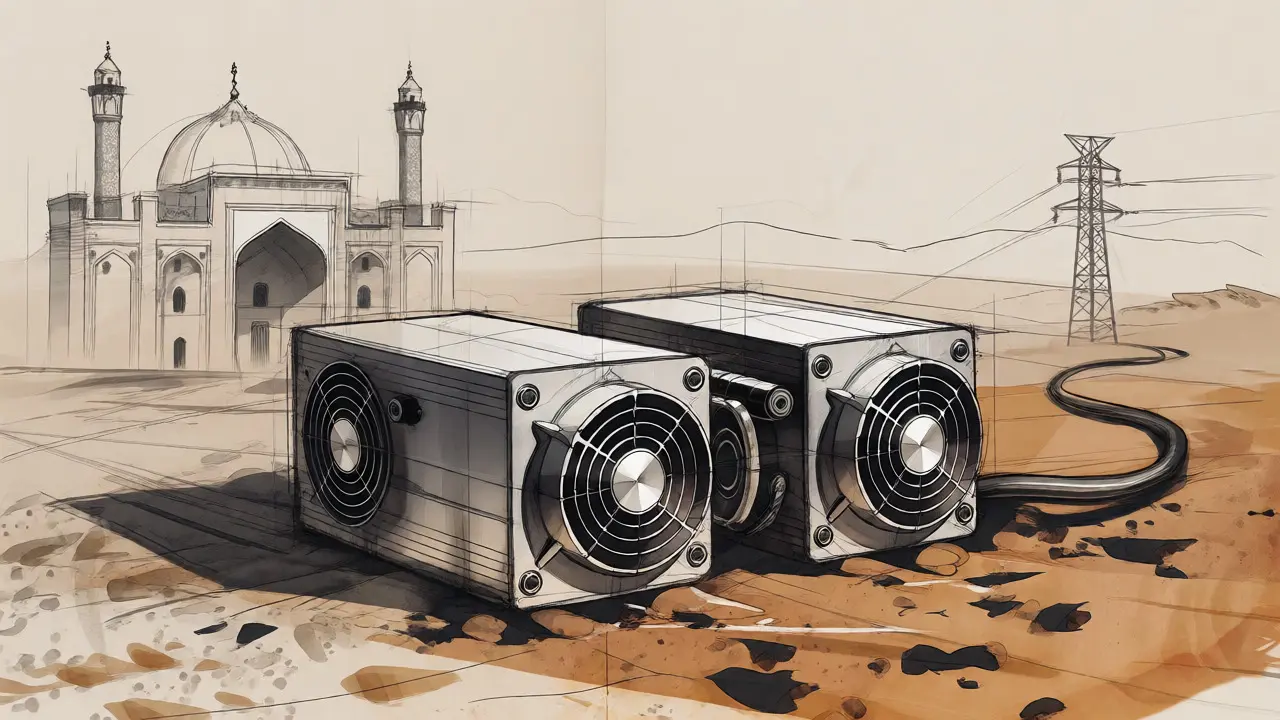
Imagine sitting in your living room in Tehran during a scorching summer day. The temperature hits 45°C (113°F). Your air conditioner cuts out because the power grid is failing again. You step outside, only to see that just a few kilometers away, massive industrial fans are humming at full speed. They aren't cooling homes or hospitals; they're cooling thousands of specialized computers crunching numbers for Bitcoin. This isn't a glitch in the matrix. It's the reality of state-controlled crypto mining in Iran. While regular citizens ration their electricity, powerful entities like the Islamic Revolutionary Guard Corps (IRGC) run massive mining farms on subsidized power, turning national energy shortages into private profit and geopolitical leverage.
The Birth of a Shadow Economy
How did this start? Back in July 2018, under President Hassan Rouhani, Iran officially recognized cryptocurrency mining as a legal industry. On paper, it looked like a smart move to modernize the economy. In practice, it was a survival tactic. U.S. sanctions had locked Iran out of international banking systems, making it nearly impossible to trade oil or import goods through traditional channels. The government needed a backdoor. By legalizing mining, they could monitor existing operations and, more importantly, create a mechanism to generate foreign currency without touching the SWIFT network.
The Central Bank of Iran even announced plans for a national cryptocurrency backed by the rial, hoping to facilitate international transactions despite trade embargoes. But while the bureaucracy debated digital currencies, the real players moved fast. By December 2020, Iranians were trading between $16 million and $20 million daily across various cryptocurrencies. More significantly, Iran’s Bitcoin mining output was valued at approximately $1 billion annually. This wasn't just hobbyists with GPUs in their basements anymore. This was big business, and big money attracts big power.
Who Actually Runs the Mines?
If you think these mines are run by tech startups from Tehran’s Silicon Valley equivalents, you’re missing the point. The sector quickly became dominated by entities tied directly to the regime’s core power structures. Between 2019 and 2020, the IRGC and organizations under Supreme Leader Ali Khamenei aggressively entered the market. They didn’t just participate; they partnered with Chinese companies to build massive infrastructure.
A prime example is the 175-megawatt Bitcoin farm in Rafsanjan, Kerman province. This facility is a joint venture between an IRGC-linked enterprise and Chinese investors. Why would Chinese firms invest there? Simple math. Iran offers some of the cheapest electricity in the world, with tariffs as low as 0.004 cents per kWh. That’s roughly 1/50th of typical global commercial rates. For a miner, every kilowatt-hour saved is pure profit margin when converted to dollars or euros on the open market.
These state-affiliated operations often sit in special economic zones or on military bases. They have dedicated power feeds and minimal regulatory scrutiny. Investigative reports describe this setup as a "crypto cartel." These groups systematically divert national electricity resources for private profit, operating with impunity due to their political connections and armed protection.
The Energy Crisis Connection
Here is where the frustration boils over for ordinary Iranians. The country faces chronic energy shortages, exacerbated by aging infrastructure and poor management. Yet, while factories shut down and neighborhoods go dark for hours, state-backed mining operations continue uninterrupted. The technical requirements for these operations are intense. They use ASIC (Application-Specific Integrated Circuit) miners, which consume enormous amounts of power. By early 2023, total national mining capacity was estimated to exceed 1,000 megawatts.
The contradiction is stark. The Ministry of Industry, Mine and Trade mandates that legal mining operations pay specific electricity tariffs-reportedly around 7 cents per kWh-and use government-approved hardware. But enforcement is inconsistent. State-affiliated entities are routinely exempted. A shocking discovery in May 2025 highlighted this disparity. Authorities found a large-scale mining operation hidden in tunnels beneath the Shahid Ghorbani Sports Complex in Ahvaz. For over two years, miners operated undetected in service rooms housing electrical systems, using public sports facilities as cover while draining the local grid.
| Feature | Private/Legal Miners | State-Affiliated (IRGC) |
|---|---|---|
| Electricity Cost | ~7 cents/kWh (regulated) | ~0.004 cents/kWh (subsidized) |
| Regulatory Scrutiny | High (licensing required) | Minimal (military/political shield) |
| Power Stability | Subject to rationing | Dedicated feeds, rarely cut |
| Hardware | Government-approved list | Flexible, high-efficiency imports |
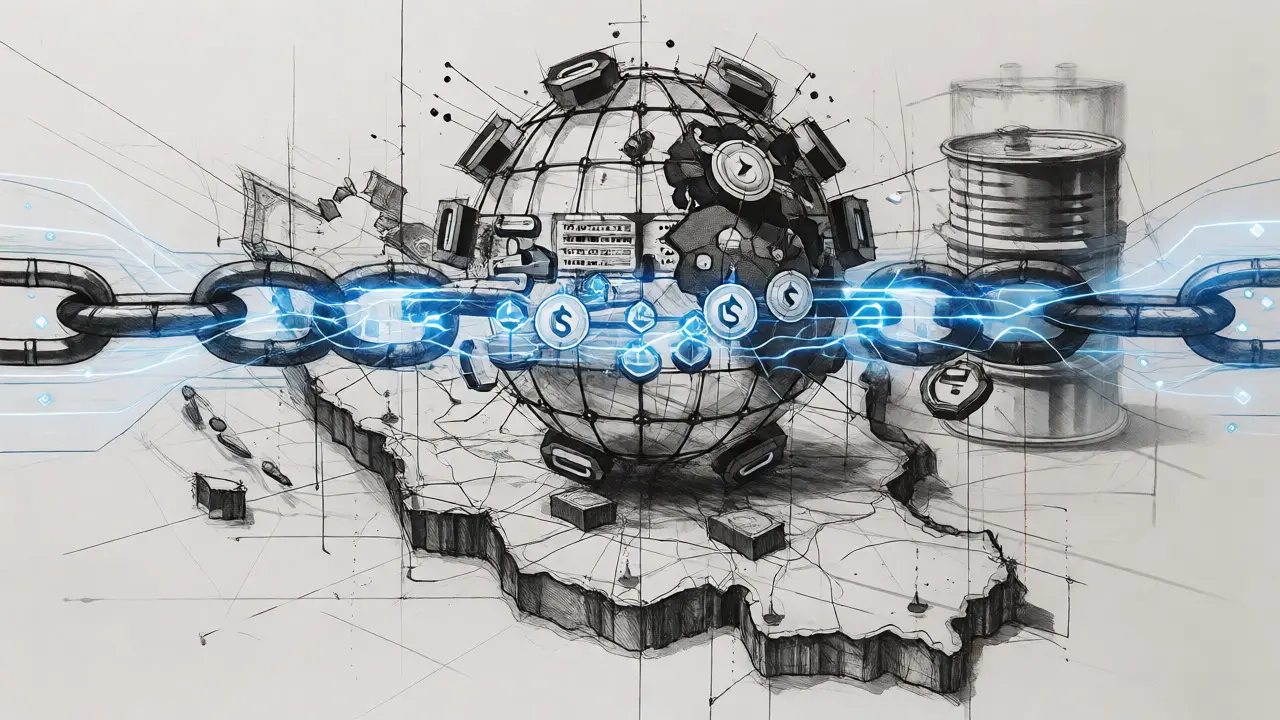
Sanctions Evasion and Financial Engineering
Why does the regime tolerate the public anger? Because cryptocurrency solves a critical problem: liquidity. When you can’t sell oil through banks, you mine Bitcoin. Then, you sell that Bitcoin on exchanges like Nobitex, Iran’s largest domestic platform, or internationally. This converts mined assets into hard currency that can buy food, medicine, or weapons, bypassing the U.S. dollar system entirely.
However, the international community is catching up. On July 2, 2025, Tether executed its largest-ever freeze of Iranian-linked funds, blocking 42 cryptocurrency addresses. Many of these were connected to Nobitex and IRGC-affiliated wallets flagged by counter-terrorism financing bureaus. This move disrupted established transaction patterns. In response, the Iranian government coordinated a push to shift users from USDT (Tether) to DAI via the Polygon network. It’s a cat-and-mouse game. As soon as one stablecoin gets blocked, the regime pivots to another blockchain or token to keep the cash flowing.
The Regulatory Whiplash
If you’re trying to do business legally in this space, good luck keeping up. The rules change constantly. In February 2025, a nationwide ban hit all cryptocurrency advertising, both online and offline. Then, in August 2025, the "Law on Taxation of Speculation and Profiteering" came into effect. For the first time, capital gains tax was imposed on cryptocurrency trading, treating digital assets alongside gold and real estate.
Before that, in late 2024, the Central Bank blocked all cryptocurrency-to-rial payment gateways, citing ambiguity and lack of transparency. They later partially unblocked them in January 2025 but required government API access that provided "full user data" to authorities. This created a surveillance net for legal transactions. Meanwhile, the Central Bank continues to develop the "Rial Currency," an electronic version of the banknote intended to compete with decentralized cryptos. It’s a clear attempt to centralize control while still leveraging the technology for sanctions evasion.
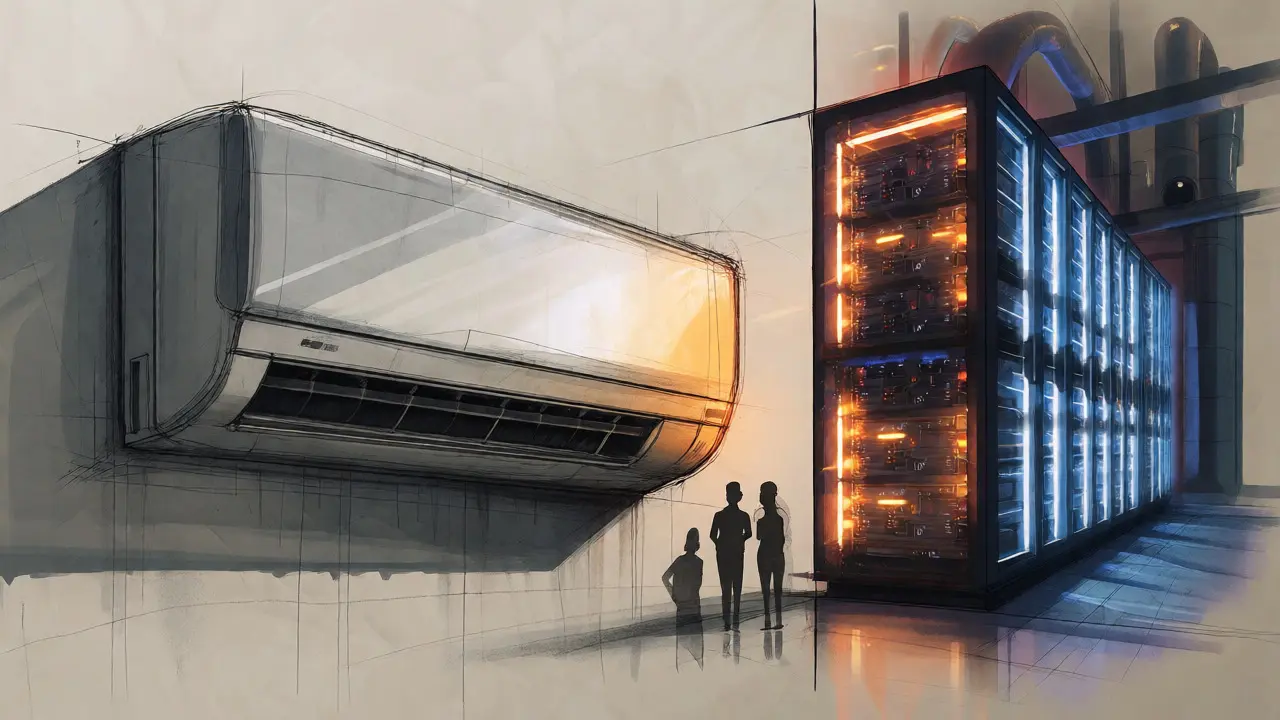
Public Outrage and Social Impact
You don’t need to read financial reports to understand the impact; just look at social media. During the heatwaves of summer 2024, hashtags like #IranEnergyCrisis trended on X (formerly Twitter). Verified accounts reported blackouts lasting up to 14 hours in Tehran’s District 3 while temperatures soared. Citizens drew direct lines between these outages and the visible hum of nearby mining rigs.
Reddit discussions in communities like r/Iran documented hundreds of comments detailing how small businesses suffered while mining operations continued. One user noted that a factory had to shut down due to power rationing, yet the mining facility next door never flickered. This perceived injustice fuels broader dissatisfaction with the regime’s priorities. It’s not just about electricity; it’s about fairness. When the elite monopolize cheap resources for speculative gain, the average citizen pays the price in comfort and opportunity.
Is It Sustainable?
Experts remain skeptical about the long-term viability of this model. Silvia Boltuc, an analyst specializing in Eurasian affairs, notes that tensions persist between regulatory ambitions, economic necessity, and the energy crisis. The strategy works in the short term to generate foreign exchange, but it undermines the domestic infrastructure needed for broader economic health.
Moreover, international pressure is mounting. With major stablecoin issuers freezing assets and new laws targeting speculation, the ease of moving value is decreasing. The regime is caught in a trap: it needs crypto to survive sanctions, but expanding mining worsens the energy crisis that threatens internal stability. As of 2026, the balance remains precarious. The state controls the levers, but the cost of pulling them is rising every year.
Is cryptocurrency mining legal in Iran?
Yes, but it is heavily regulated. Since July 2018, mining has been a legal industry. However, operators must obtain licenses from the Ministry of Industry, Mine and Trade, use approved hardware, and pay specific electricity tariffs. Enforcement varies, with state-affiliated entities often receiving exemptions.
Why does Iran allow crypto mining if it causes power outages?
The primary reason is sanctions evasion. Mining allows Iran to generate foreign currency (like Bitcoin) without relying on the international banking system, which is restricted by U.S. sanctions. The revenue generated helps fund imports and supports the regime financially, outweighing the political cost of power shortages for the leadership.
What role does the IRGC play in Iranian crypto mining?
The Islamic Revolutionary Guard Corps (IRGC) runs large-scale mining operations, often in partnership with Chinese firms. These operations benefit from subsidized electricity and military protection, allowing them to operate efficiently and evade stricter regulations applied to private miners. They effectively act as a state-backed crypto cartel.
How much does electricity cost for crypto miners in Iran?
Rates vary significantly based on affiliation. State-affiliated or privileged entities may pay as little as 0.004 cents per kWh due to subsidies. Legal private miners typically pay higher regulated rates, reportedly around 7 cents per kWh, though this can fluctuate based on government policy and energy availability.
Did Tether freeze Iranian crypto funds?
Yes. In July 2025, Tether froze 42 cryptocurrency addresses linked to Iranian entities, including connections to the Nobitex exchange and IRGC-affiliated wallets. This was the largest single action against Iranian-linked funds by a stablecoin issuer, forcing a shift toward other stablecoins like DAI.