You’ve probably seen the headlines about massive crypto airdrops. Remember when Uniswap handed out $15,000 worth of tokens to early users? That kind of windfall makes every trader want in on the next big distribution. But here is the catch with Scaleswap (SCA): it doesn’t work like those old-school snapshot giveaways. If you are looking for a simple "click here to get free coins" button, you might be disappointed. Instead, Scaleswap uses a merit-based system called ScaleSCORE. This changes the game entirely. It means your rewards depend on how active and loyal you are to the ecosystem, not just how many tokens you hold in a cold wallet.
As we move through 2026, the landscape of decentralized finance has shifted away from passive holding toward active participation. Projects are smarter now. They don't want to give their tokens to bots or farmers who dump immediately after listing. They want real users. Scaleswap was built with this exact philosophy. Understanding how this platform works is crucial if you want to maximize your potential returns from partner project airdrops.
What Is Scaleswap and Why Does It Matter?
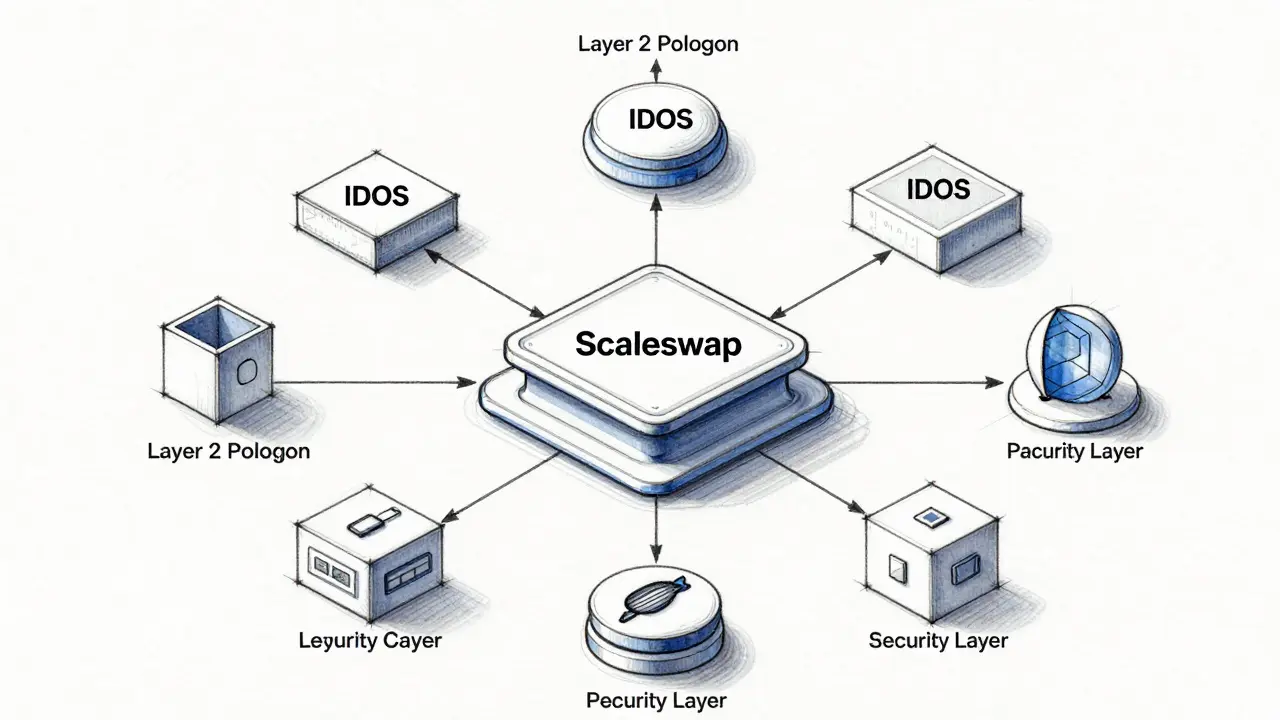
To understand the airdrop mechanics, you first need to know what the platform actually does. Scaleswap is a fully decentralized IDO (Initial DEX Offering) launchpad that operates on Layer 2 scaling solutions. Think of it as a bridge between new cryptocurrency projects and investors. When a new blockchain startup needs funding, they come to Scaleswap. Investors provide capital, and in return, they get early access to the project’s tokens.
The native currency of this ecosystem is the $SCA token. This isn't just a speculative asset; it has utility. You use SCA to pay fees on the platform. Here is the interesting part: these fees are burned. Every time you pay a fee in SCA, those tokens are destroyed forever. This creates a deflationary pressure on the supply, similar to burning vouchers. As more people use the platform to raise funds or trade, the value of the remaining SCA tokens can theoretically increase due to scarcity.
Scaleswap distinguishes itself by focusing heavily on security. The co-founder, Stanislav Stolberg, brings extensive background in information security. In an industry plagued by hacks and rug pulls, having a team that prioritizes code reliability is a significant trust signal. The platform also leverages the Polygon network. By operating on this Layer 2 solution, Scaleswap offers faster transaction speeds and significantly lower gas fees compared to the Ethereum mainnet. This efficiency attracts more projects and users, creating a virtuous cycle of growth.
The Core Mechanism: How ScaleSCORE Determines Your Rewards
This is the most critical section for anyone interested in Scaleswap airdrops. Unlike traditional platforms where airdrop allocations are often distributed equally among all token holders at a specific snapshot time, Scaleswap uses the ScaleSCORE system weights user participation and loyalty within the platform ecosystem.
Imagine two users. User A holds 10,000 SCA tokens but never interacts with the platform again. User B holds 1,000 SCA tokens but actively participates in IDOs, votes in governance, and engages with community features. Under the old model, User A would get ten times the airdrop reward. Under ScaleSCORE, User B could potentially receive a larger allocation because their score reflects genuine engagement.
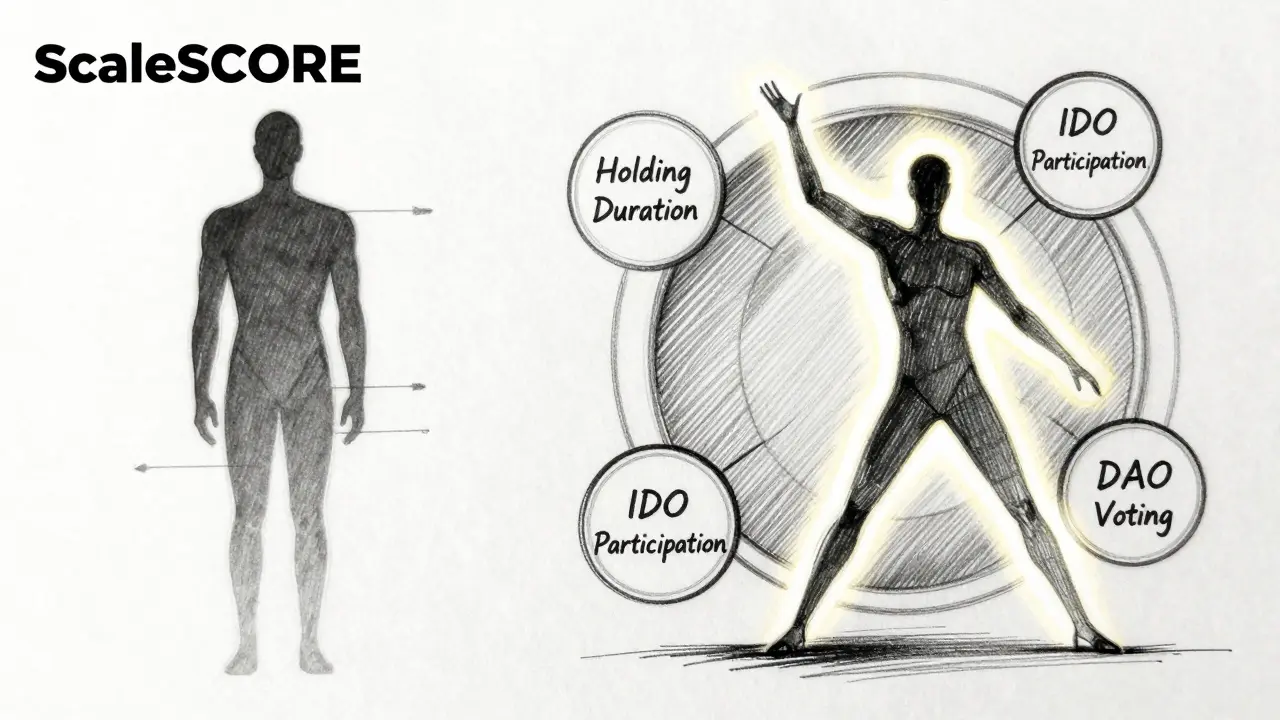
The ScaleSCORE acts as a multiplier for your airdrop eligibility. It measures:
- Token Holding Duration: How long have you held SCA? Long-term holders are rewarded over short-term flippers.
- Participation History: Have you bought into previous IDOs hosted on Scaleswap?
- Community Engagement: Do you participate in DAO votes or other interactive features?
This system benefits both sides. For the projects launching airdrops, they get to distribute tokens to verified, engaged supporters rather than passive speculators. For you, the user, it means that being active pays off. You aren't just buying a ticket; you're building a reputation within the ecosystem.
How to Participate in Scaleswap Ecosystem Airdrops
Since Scaleswap primarily facilitates airdrops for *other* projects rather than conducting its own massive token giveaway, your strategy needs to be proactive. You are positioning yourself to receive tokens from future partners. Here is a step-by-step approach to maximizing your position in 2026.
- Acquire and Hold SCA Tokens: You cannot participate without the native token. Buy SCA from reputable exchanges that list it. Store them in a compatible wallet that supports Polygon transactions.
- Engage with the Platform: Don't just hold. Look for opportunities to interact. This might include participating in upcoming IDOs if you qualify, or engaging with any staking mechanisms available.
- Monitor Partner Announcements: Scaleswap frequently partners with new projects. Keep an eye on their official social channels and Discord. When a new project announces an IDO or airdrop campaign, check the requirements. Often, simply holding SCA and having a decent ScaleSCORE qualifies you for a portion of the distribution.
- Join the DAO: Scaleswap operates with a Decentralized Autonomous Organization structure. Participating in governance decisions can boost your ScaleSCORE and keep you informed about strategic shifts.
One notable example of their partnership model is their collaboration with WISeKey International Holding Ltd. Together, they launched WISe.Art, an NFT platform. While this wasn't a direct SCA airdrop, it demonstrated how Scaleswap integrates with broader digital asset ecosystems. Users involved in such initiatives often gain visibility and potential future rewards.
Risks and Considerations Before You Jump In
No investment in DeFi is without risk. While the ScaleSCORE system sounds appealing, you need to be aware of the pitfalls.
Smart Contract Risk: Even with strong security leadership, smart contracts can have vulnerabilities. Always verify that the contracts you are interacting with are audited. Reputable firms usually publish audit reports from third-party security companies.
Market Volatility: The price of SCA can fluctuate wildly. If the token price drops significantly, the value of your potential airdrop rewards might not cover your initial investment cost. Calculate your break-even point carefully.
Regulatory Uncertainty: Crypto regulations continue to evolve globally. Ensure that participating in IDOs and airdrops complies with the laws in your jurisdiction. Some regions restrict access to certain types of fundraising events.
Opportunity Cost: Tying up capital in SCA to maintain a high ScaleSCORE means those funds aren't working elsewhere. Diversification remains key. Don't put all your eggs in one basket, even if the basket promises merit-based rewards.

Scaleswap vs. Traditional Launchpads: A Comparison
| Feature | Scaleswap (SCA) | Traditional Launchpads |
|---|---|---|
| Airdrop Distribution Method | Weighted by ScaleSCORE (Activity + Loyalty) | Often equal per token holder or random selection |
| Network Infrastructure | Polygon (Layer 2) | Varies (Ethereum, BSC, Solana, etc.) |
| Token Utility | Fees paid in SCA and burned | Staking required for entry; fees may vary |
| Governance | DAO-driven with transparent voting | Centralized teams or hybrid models |
| Security Focus | High (Led by infosec experts) | Standard audits, varying quality |
This comparison highlights why Scaleswap appeals to serious participants. The weighted distribution ensures that the people who actually contribute to the ecosystem's health are rewarded. It filters out the noise. However, it requires more effort from you. You can't just buy and forget. You have to stay engaged.
Future Outlook: What to Watch in 2026 and Beyond
The crypto space moves fast. In 2025, we saw major players like Jupiter and Optimism execute large-scale distributions. The trend is moving toward continuous engagement rewards rather than one-off snapshots. Scaleswap is well-positioned for this shift. Their integration with Polygon ensures they remain cost-effective as user activity grows. Additionally, their expansion into NFTs via WISe.Art suggests a diversification of revenue streams and partnership opportunities.
Keep an eye on announcements regarding new IDO listings. Each new project that launches on Scaleswap represents a potential airdrop opportunity for SCA holders with high ScaleSCOREs. Also, monitor any updates to the ScaleSCORE algorithm. Platforms often tweak these metrics to encourage specific behaviors, such as longer holding periods or deeper community involvement.
If you are serious about capturing value from emerging crypto projects, Scaleswap offers a structured path. It’s not a get-rich-quick scheme, but it is a fairer system for those willing to put in the work. Focus on building your score, securing your holdings, and staying informed.
Does Scaleswap have its own token airdrop?
Currently, Scaleswap does not conduct its own massive token airdrop events for the SCA token. Instead, it functions as a facilitator for partner projects. These partner projects distribute their tokens to SCA holders based on their ScaleSCORE ratings. So, while you won't get free SCA tokens directly from a generic giveaway, you can earn tokens from other projects launching on the platform.
How do I increase my ScaleSCORE?
Your ScaleSCORE increases through active participation. This includes holding SCA tokens for extended periods, participating in IDOs hosted on Scaleswap, and engaging with the platform's DAO governance features. Passive holding alone is less effective than combining holding with regular interaction with the platform's tools and services.
Is Scaleswap safe to use?
Scaleswap emphasizes security, led by co-founder Stanislav Stolberg who has a strong background in information security. The platform operates on the Polygon network, which is widely regarded as secure. However, all DeFi platforms carry inherent risks, including smart contract vulnerabilities and market volatility. Always conduct your own due diligence and consider using hardware wallets for storage.
What happens to the SCA tokens used for fees?
Fees paid in SCA tokens are burned. This means they are permanently removed from circulation. This mechanism creates a deflationary pressure on the token supply, which can potentially increase the value of the remaining tokens as demand for platform usage grows.
Which blockchain network does Scaleswap use?
Scaleswap operates on the Polygon network. This Layer 2 scaling solution allows for faster transaction speeds and significantly lower gas fees compared to the Ethereum mainnet, making it more accessible for users and cost-effective for projects launching on the platform.
Can I participate in Scaleswap airdrops if I live outside the US?
Generally, yes. However, crypto regulations vary by country. You should check the local laws regarding Initial DEX Offerings (IDOs) and token airdrops in your jurisdiction. Some platforms may restrict access to users from specific countries due to regulatory compliance requirements.
What is WISe.Art and how does it relate to Scaleswap?
WISe.Art is an NFT platform launched in partnership between Scaleswap and Nasdaq-listed firm WISeKey International Holding Ltd. It demonstrates Scaleswap's expansion beyond traditional IDOs into the NFT and digital asset tokenization space. Participation in such ecosystem projects can sometimes offer additional engagement opportunities for SCA holders.