You’ve heard of "Changer" for swapping your Bitcoin or Ethereum. You type it into the search bar, ready to make a trade, but something feels off. The website looks slightly different from what you remember. Or maybe you can’t find any clear information about who owns it. This is exactly where many traders get stuck-and where some lose money.
Here is the hard truth: There is no major, reputable cryptocurrency exchange simply called Changer. If you are looking at a site with that exact name, you need to pause immediately. It is highly likely you are dealing with a phishing site, a scam clone, or you have confused it with one of the three legitimate platforms that sound similar: Changelly, ChangeHero, or ChangeNOW.
This review isn't just about debunking a fake name. It’s about helping you navigate the real landscape of instant crypto swaps in 2026. We will break down the actual platforms you probably meant to use, their security records, fees, and the red flags that could cost you thousands.
The "Changer" Confusion: Why You Can’t Find It
In the crypto world, names matter. When a platform lacks a digital footprint-no official Twitter/X account, no verified Trustpilot profile, no mentions on CoinMarketCap-it’s a massive warning sign. A quick search for "Changer crypto exchange" reveals nothing authoritative. Instead, we see three distinct entities that dominate the "instant swap" niche.
If you clicked a link promising "Changer," check the URL carefully. Scammers often register domains like `changer-exchange.com` or `changer-crypto.net` to mimic legitimate brands. They capture your deposit address, wait for you to send funds, and then vanish. Always verify the brand name against established industry leaders before moving a single satoshi.
Changelly: The Established Veteran
Changelly is a global non-custodial cryptocurrency exchange platform established in 2017. It is the most likely candidate if you were looking for a well-known service. Changelly operates on a non-custodial model, which means they do not hold your funds in their own wallets during the transaction. Instead, they act as an intermediary that connects you to liquidity providers.
Why does this matter? Because if Changelly gets hacked, your funds aren't sitting there waiting to be stolen. However, "non-custodial" doesn't mean "unregulated." Changelly has tightened its compliance significantly over the years.
| Feature | Details |
|---|---|
| Custody Model | Non-custodial (funds never stored on exchange) |
| KYC Requirements | Basic KYC for trades up to €10,000/48h; Advanced KYC for higher limits |
| Supported Assets | 700+ cryptocurrencies including BTC, ETH, USDT |
| Fees | Dynamic pricing based on network congestion and liquidity |
| Partnerships | Exodus, Ledger, Trezor |
The user experience on Changelly is smooth. You paste your wallet address, select the coins, and confirm. For small amounts, it’s hassle-free. But here is the catch: if you try to move large sums, the Basic KYC won’t cut it. You’ll need to undergo Advanced KYC, which involves face recognition and additional documentation. This is standard for anti-money laundering (AML) compliance, but it can feel intrusive if you’re used to anonymous trading.
ChangeNOW: Speed and Simplicity
ChangeNOW is a leading instant cryptocurrency exchange platform known for speed and ease of use. Unlike Changelly, which has deep integrations with hardware wallets, ChangeNOW focuses purely on the web and mobile app experience. It positions itself as a bridge between different blockchains, allowing you to swap assets without creating an account.
Is it safe? Generally, yes. ChangeNOW uses a non-custodial approach similar to Changelly. They don’t keep your money. However, their reputation relies heavily on customer support responsiveness. On Trustpilot, users frequently praise the immediate response times. If a transaction hangs due to network issues, their team tends to resolve it quickly.
The fee structure is competitive, but transparency can vary. Sometimes the "exchange rate" looks great, but the hidden network fees or spread can eat into your profits. Always check the final amount you receive before confirming the swap. In 2026, with Layer-2 solutions like Arbitrum and Optimus gaining traction, ChangeNOW supports these networks, reducing gas fees significantly compared to mainnet Ethereum transactions.
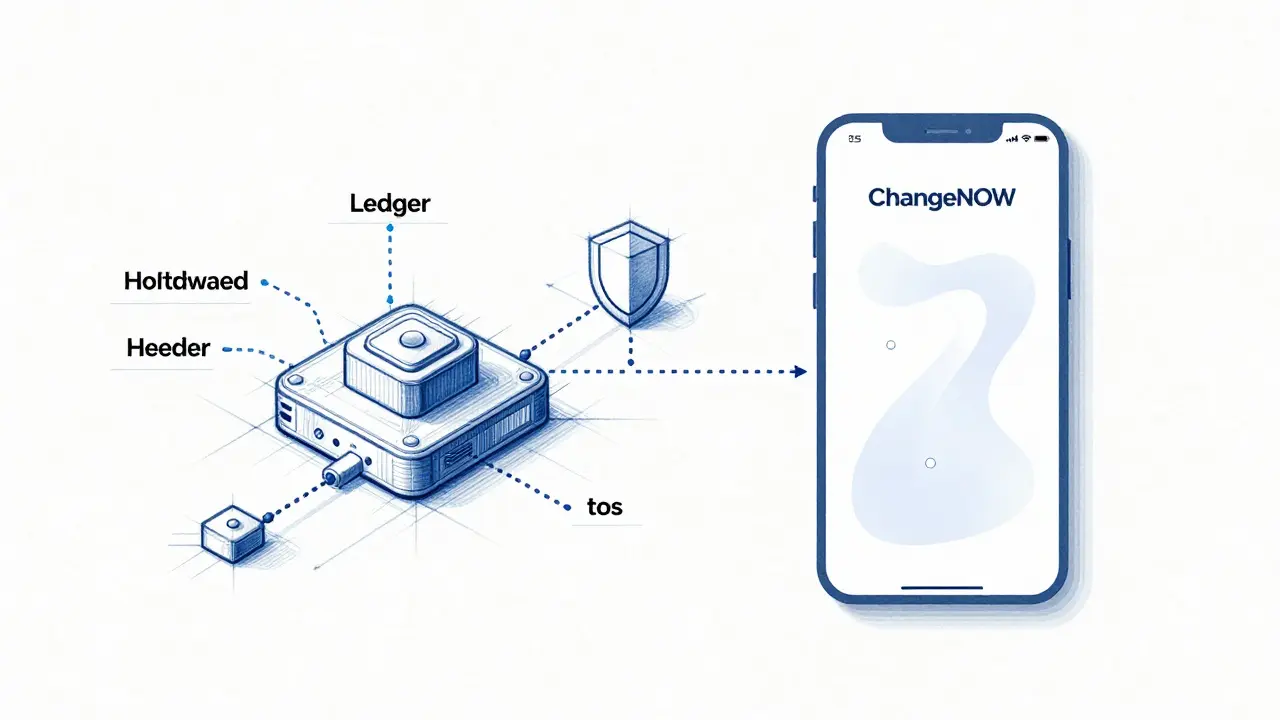
ChangeHero: The High-Risk Option
Now, let’s talk about ChangeHero is an instant cryptocurrency exchange that markets no registration requirements. On paper, it sounds perfect: no sign-up, fast swaps, 250+ coins. But reality tells a very different story.
User reports from 2024 and continuing into 2026 highlight severe operational issues. One verified user reported sending $10,000 worth of crypto to ChangeHero, only to have their funds frozen indefinitely under the guise of "KYC/AML checks." The company demanded excessive documentation: bank statements, proof of income, notarized translations, and even video calls. After months of back-and-forth and spending over $1,000 on legal and notarization costs, the user received nothing but automated responses.
This is a critical red flag. Legitimate exchanges may require KYC, but they do not freeze funds for 10 months while demanding irrelevant documents. ChangeHero’s jurisdictional ambiguity-registered in both Hong Kong and Costa Rica-makes legal recourse nearly impossible. If you value your capital, avoid ChangeHero. The risk of losing your funds far outweighs the convenience of "no registration."">
How Instant Swaps Work (And Where They Fail)
To understand why these platforms differ, you need to know how instant swaps work. Unlike centralized exchanges like Binance or Coinbase, where you deposit funds into an exchange wallet, instant swappers act as middlemen.
- You initiate the swap: You enter your destination wallet address and the amount you want to send.
- The platform generates a deposit address: This address is unique to your transaction.
- You send crypto: You transfer your funds from your personal wallet to this address.
- The platform converts: Behind the scenes, the platform sells your crypto on a liquidity pool or partner exchange and buys the target asset.
- You receive funds: The converted crypto is sent to your destination wallet.
The danger lies in step 3. Once you send funds to an untrusted address, you have no control. If the platform is fraudulent, those funds are gone. If the platform is legitimate but faces regulatory scrutiny (like ChangeHero), your funds can be locked. This is why using established platforms with transparent ownership and clear terms of service is non-negotiable.
Security Checklist: Before You Swap
Before you entrust any crypto to an instant exchange, run through this checklist. It takes two minutes and could save you thousands.
- Verify the URL: Ensure you are on the official domain. Look for HTTPS and valid SSL certificates.
- Check Recent Reviews: Don’t just look at the average rating. Read the 1-star reviews from the last 3 months. Are they complaining about frozen funds?
- Understand the KYC Policy: Does the platform require ID upfront? If so, what happens if you refuse? Avoid platforms that demand excessive documentation after you’ve already sent funds.
- Test with Small Amounts: Never swap your entire portfolio at once. Start with a small test transaction to verify the process works smoothly.
- Check Network Compatibility: Ensure the platform supports the specific blockchain network you intend to use (e.g., ERC-20 vs. BEP-20). Sending funds to the wrong network can result in permanent loss.
Alternatives to Consider
If you’re hesitant about instant swappers, consider these alternatives:
- Centralized Exchanges (CEX): Platforms like Kraken or Coinbase offer high security, insurance on custodial funds, and robust customer support. The trade-off is slower withdrawal times and mandatory KYC.
- Decentralized Exchanges (DEX): Uniswap or PancakeSwap allow you to swap tokens directly from your wallet without intermediaries. You retain full custody of your funds, but you must manage gas fees and slippage yourself.
- Hardware Wallet Integrations: Devices like Ledger and Trezor now offer built-in swap features via partners like Changelly. This adds an extra layer of security by keeping your private keys offline.
Final Verdict: Stick to the Names You Know
There is no "Changer" crypto exchange. If you encounter this name, treat it as a scam. Among the similarly named platforms, Changelly and ChangeNOW are viable options for instant swaps, provided you understand their KYC requirements and fee structures. ChangeHero, however, presents significant risks due to poor customer service and fund freezing incidents.
In 2026, the crypto market is more regulated than ever. Convenience should never come at the cost of security. Always prioritize platforms with transparent operations, responsive support, and a proven track record. Your funds are your responsibility-protect them wisely.
Is Changer crypto exchange a scam?
Yes, if you are referring to a platform specifically named "Changer," it is likely a scam or phishing site. There is no reputable exchange by this name. Be cautious of lookalike domains designed to steal your funds.
What is the difference between Changelly and ChangeNOW?
Both are instant swap services, but Changelly has deeper integrations with hardware wallets like Ledger and Trezor, while ChangeNOW focuses on a streamlined web and mobile app experience. Changelly has stricter KYC tiers, whereas ChangeNOW offers a simpler interface for smaller transactions.
Is ChangeHero safe to use?
No, ChangeHero has a history of negative user experiences, including frozen funds and excessive KYC demands. Many users report losing access to their crypto for months or permanently. It is recommended to avoid this platform.
Do I need to verify my identity to use Changelly?
Yes, for larger transactions. Basic KYC allows trades up to €10,000 per 48 hours. Higher limits require Advanced KYC, including face recognition and additional documentation. This is standard for compliance with anti-money laundering laws.
Which is safer: instant swaps or centralized exchanges?
Centralized exchanges like Kraken or Coinbase are generally safer for long-term storage due to insurance and regulatory oversight. Instant swaps are convenient for quick conversions but carry higher risks if the platform is untrusted or poorly managed. Always use reputable providers.


Bill Gunn
27 May, 2026 . 00:51 AM
Thanks for breaking this down so clearly. I’ve been using Changelly for a while now and it’s pretty solid, but the KYC stuff can be annoying if you’re just moving small amounts. ChangeNOW is my go-to for quick swaps though. The interface is clean and fast 🚀 Always double-check those URLs though! Scammers are getting smarter every day.
Diana Morris
28 May, 2026 . 15:55 PM
stop falling for these scams people it is literally obvious when a site looks fake why do we keep having to spell this out for everyone just use common sense
Dianne Wright
30 May, 2026 . 09:13 AM
i feel like i have to say something because nobody listens anyway changelly is fine but changehero is a total disaster zone and i cant believe anyone still uses it its like putting your money in a black hole
trisya hazriyana
31 May, 2026 . 08:10 AM
the whole concept of non-custodial is fascinating from a philosophical standpoint because it shifts responsibility entirely to the user which is both liberating and terrifying at the same time especially when you consider the lack of regulatory oversight in some jurisdictions
Debbie Lewis
31 May, 2026 . 08:17 AM
I just stick to hardware wallets for everything honestly. Less hassle in the long run even if the swap fees are slightly higher sometimes.
Eric Grosso
31 May, 2026 . 14:08 PM
wait so changer doesnt exist? i thought i saw it somewhere last week maybe i was looking at changer exchange or something idk crypto names are confusing af
Edith Mair
1 June, 2026 . 05:20 AM
You need to verify the SSL certificate every single time. If it's not valid, walk away immediately. There is no excuse for negligence here.
Sam Dashti
1 June, 2026 . 09:22 AM
It's like walking through a minefield blindfolded. One wrong step and boom, your funds are gone forever. I prefer DEXs like Uniswap because I keep control of my keys. It feels safer somehow, even with the gas fees.
Joe Clements
2 June, 2026 . 16:10 PM
I totally get the frustration with ChangeHero. I had a friend who lost thousands there. It’s heartbreaking to see people get trapped like that. Please stay safe everyone.
Rosie Morris
4 June, 2026 . 08:56 AM
omg i almost used changehero last month thank god someone warned me about them online their customer support is literally nonexistent
lorna erni
5 June, 2026 . 23:11 PM
Let's stop enabling these scammers by even considering them. If a platform sounds too good to be true, it is. Period. We need to be more aggressive in calling out these fake sites.
stalin brian
6 June, 2026 . 23:30 PM
hey guys just wanted to add that in india we have similar issues with fake exchanges so global awareness is key always check local forums too
kamal ifrani
7 June, 2026 . 08:51 AM
The ignorance displayed here is astounding. You people send money to random websites without checking the corporate registry? No wonder you lose money. It’s not a scam if you’re stupid enough to fall for it.
saradee dee
8 June, 2026 . 05:21 AM
Oh my goodness, this post saved me so much trouble. I was confused about all the similar names. Thank you for explaining the difference between Changelly and ChangeNOW. It’s scary how many fakes are out there.
Craig Swanson
9 June, 2026 . 07:50 AM
Listen up. If you are trading large amounts, never use an instant swapper. Use a regulated CEX. I don’t care how convenient it is. Your security should come first. Stop being lazy with your finances.
Dana Rapoport
10 June, 2026 . 04:03 AM
The philosophical implication of non-custodial exchanges is profound. We are essentially trusting code over institutions. But as this post shows, the human element of phishing remains the weakest link.
Hadleigh Edwards
11 June, 2026 . 10:14 AM
I have to say that while the technical details are important, the most critical aspect is the psychological readiness of the trader to recognize red flags. Many people ignore the warnings because they want the convenience too badly, and unfortunately, this desire often leads to significant financial loss and regret later on when they realize they have been deceived by a sophisticated phishing operation.
mark valmart
12 June, 2026 . 00:13 AM
just started using ledger live for swaps and it seems way safer than going to random websites. might switch fully to that.
Crystal Davis
12 June, 2026 . 22:09 PM
The analysis of ChangeHero is spot on. Their operational model is fundamentally flawed. They rely on fear and confusion to trap users. Anyone who falls for it lacks basic due diligence skills.
Christina Pearce
13 June, 2026 . 18:08 PM
I appreciate the detailed checklist. I usually just look at the URL, but checking recent reviews is a great tip. Thanks for sharing this.
Barclay Chantel
15 June, 2026 . 11:53 AM
Typical reddit crowd. You write a comprehensive guide and people just complain about KYC. Grow up. Regulation is necessary. If you can't handle showing an ID, you shouldn't be touching crypto.