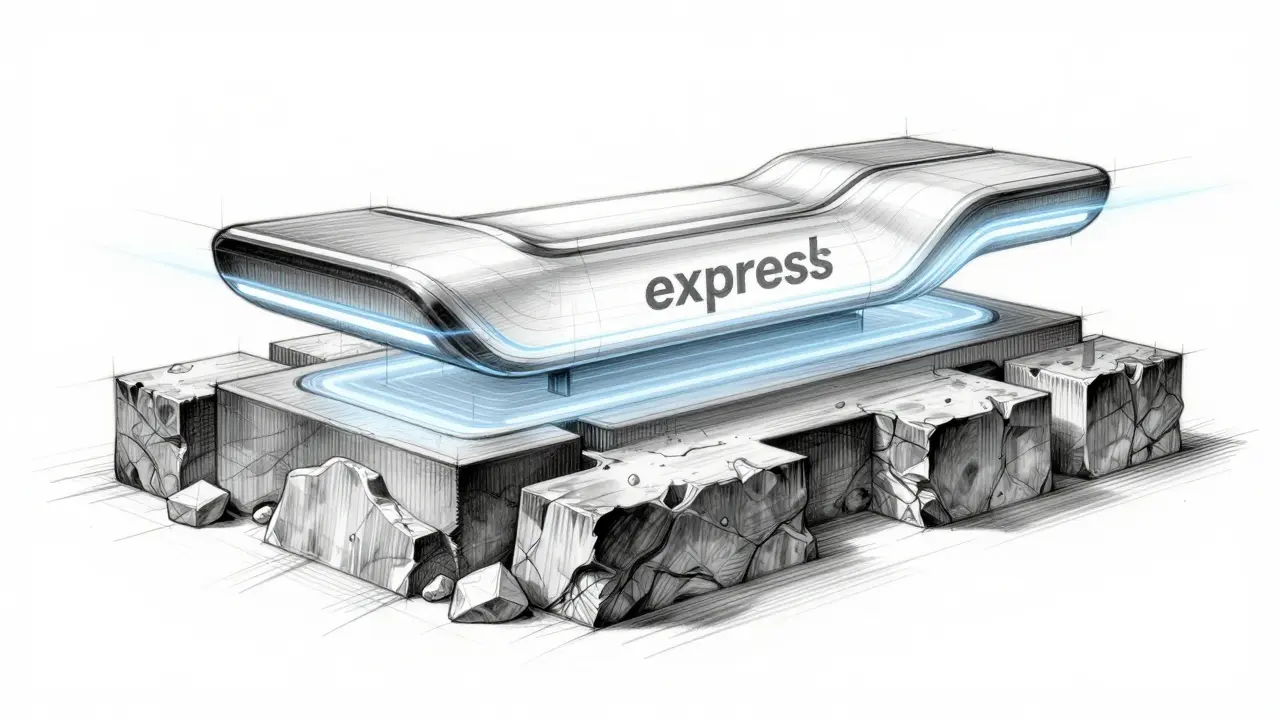
Imagine trying to buy a $5 coffee using Bitcoin, which is the world's first decentralized cryptocurrency designed as peer-to-peer electronic cash. On the main blockchain, that transaction might cost you more in fees than the coffee itself, and it could take ten minutes or longer to confirm. That friction kills everyday usability. Enter the Lightning Network, which is a second-layer payment protocol built on top of Bitcoin to enable instant, low-cost transactions. It doesn't replace Bitcoin; it sits on top of it like an express lane on a highway, handling small, frequent payments while leaving the heavy lifting to the base layer.
In 2026, the Lightning Network isn't just a theoretical experiment anymore. It’s a mature infrastructure processing billions in volume, enabling everything from tipping content creators to cross-border remittances in El Salvador. But if you’ve heard mixed reviews-some calling it revolutionary, others complaining about complexity-you’re not alone. This guide cuts through the noise to explain exactly how it works, what it costs, and whether it’s ready for your daily use.
What Is the Lightning Network and Why Does Bitcoin Need It?
Bitcoin’s main chain (Layer 1) was designed for security and decentralization, not speed. It processes about 7 transactions per second (TPS). Compare that to Visa, which handles around 24,000 TPS. When too many people try to transact at once, fees spike, and confirmation times stretch out. In peak congestion periods in previous years, simple transfers cost over $10. That makes buying groceries or sending money to a friend impractical.
The Lightning Network solves this by moving most transactions off-chain. Think of it like keeping a running tab at a bar. You and the bartender agree on a balance, update it with every drink, and only settle the final bill when you leave. Similarly, Lightning users open a “payment channel” between themselves. They lock up some Bitcoin on the main chain as collateral, then send unlimited back-and-forth payments instantly and cheaply within that channel. Only the opening and closing of the channel touch the main blockchain.
This design preserves Bitcoin’s security guarantees because the final settlement still relies on Bitcoin’s cryptography. If one party tries to cheat-like broadcasting an old state-the other can punish them and take all the funds. This mechanism, powered by Hash Time-Locked Contracts (HTLCs), ensures trustless operation without needing intermediaries.
How Lightning Network Transactions Actually Work
Let’s break down the process step-by-step so you know what happens behind the scenes:
- Opening a Channel: You deposit a certain amount of BTC into a multisignature address shared with another user or node. This requires a standard Bitcoin transaction, so it takes time and costs a fee.
- Off-Chain Payments: Once open, you can send and receive payments instantly. These updates are signed locally but not broadcast to the network. Fees here are fractions of a cent-often less than 1 satoshi.
- Routing Through Nodes: If you want to pay someone who doesn’t have a direct channel with you, the network routes your payment through intermediate nodes. Each node charges a tiny fee for forwarding the payment. This happens automatically via algorithms like SPV routing.
- Closing the Channel: When you’re done, you close the channel. The final balance is written to the Bitcoin blockchain, settling everything permanently.
The magic is in the routing. With thousands of nodes connected globally, the Lightning Network acts like a web of pipes. Your payment hops from node to node until it reaches the recipient. As long as there’s liquidity available along the path, the transfer completes in under five seconds.
| Feature | Bitcoin Main Chain (Layer 1) | Lightning Network (Layer 2) |
|---|---|---|
| Transaction Speed | 10-60 minutes | < 5 seconds |
| Average Fee | $1-$20+ (variable) | Fraction of a cent (< $0.01) |
| Throughput | ~7 TPS | Millions of TPS (theoretically unlimited) |
| Best For | Large value transfers, store of value | Micropayments, daily spending, remittances |
| User Complexity | Low (standard wallets) | Medium-High (channel management) |

Real-World Use Cases: Who Is Using Lightning Today?
The Lightning Network has moved beyond tech enthusiasts into practical applications. Here’s where it shines in 2026:
- Micropayments for Content: Platforms like Substack and Twitter allow creators to accept tips instantly. A reader can tip 500 satoshis ($0.15 at current rates) for a great article without worrying about fees eating the donation.
- Cross-Border Remittances: In countries like El Salvador, the Chivo wallet uses Lightning to let citizens send money abroad for a fraction of traditional wire fees. Reports indicate savings of hundreds of millions annually for Salvadorans.
- Everyday Commerce: Coffee shops, vending machines, and online services integrate Lightning via apps like Strike or Phoenix Wallet. A user in Wellington can buy a latte and pay in BTC with zero waiting time.
- API and Data Access: Developers charge micro-fees for API calls or data streams. Previously, charging $0.01 per call was impossible due to Bitcoin fees. Now, it’s viable.
However, it’s not ideal for everyone. If you’re sending $10,000 to a family member once a year, the overhead of opening and closing a channel might not be worth it compared to a single main-chain transaction.
Challenges and Limitations You Should Know
Despite its potential, the Lightning Network isn’t perfect. Users often hit three major hurdles:
1. Liquidity Management: To send money, you need funds in your outgoing channel. To receive, you need capacity in your incoming channel. If your channel runs dry, you can’t send until you rebalance or add more funds. This “liquidity trap” frustrates new users who expect seamless spending like credit cards.
2. Routing Failures: Payments rely on finding a path with enough liquidity across multiple nodes. During high traffic or if key nodes go offline, payments can fail. While modern wallets retry automatically, it can feel unreliable compared to instant bank transfers.
3. Technical Complexity: Managing channels, understanding HTLCs, and troubleshooting failed transactions require learning curves. A 2022 Cambridge study found 68% of average Bitcoin users found Lightning too complex. However, non-custodial wallets like Phoenix and Eclair have simplified this significantly, automating much of the background work.
Security researcher Tadge Dryja noted that liquidity distribution creates centralization pressures, with a small percentage of nodes holding most of the capacity. This means relying heavily on large hubs, which introduces slight counterparty risk if those hubs act maliciously or go offline.

Getting Started: Which Wallet Should You Choose?
If you want to try Lightning, you don’t need to run a full node or manage complex servers. Several user-friendly options exist in 2026:
- Phoenix Wallet: Best for iOS and Android users. It connects to a backend service, handling channel management invisibly. Great for beginners who just want to spend.
- Eclair Wallet: Offers more control for technically inclined users. You can connect to your own node or use public ones. Ideal for those wanting self-custody with flexibility.
- Strike App: Popular for social payments and merchant integrations. Custodial, meaning they hold your keys, but offers a smooth experience similar to Venmo.
- Zap: A browser extension for Chrome that lets you tip websites directly. Perfect for content consumers.
Setting up a basic wallet now takes about 5 minutes. You’ll need a small amount of BTC (e.g., $10-$20) to fund your initial channel. Most wallets provide QR codes for easy scanning at merchants or for peer-to-peer transfers.
Future Outlook: Where Is Lightning Headed?
The network continues to evolve. Recent upgrades like “Wumbo” channels removed the 0.1677 BTC limit, allowing larger channels for businesses. New protocols like “Taro” enable issuing assets (like stablecoins) on Lightning, expanding its utility beyond pure BTC.
Adoption is accelerating. Glassnode reported $1.2 billion in Lightning volume in 2022, with steady growth since. By 2026, we see deeper integration into financial apps, e-commerce platforms, and even traditional banking interfaces in some regions. Regulatory clarity is improving too, with FATF guidance treating Lightning nodes similarly to regular wallets, reducing legal ambiguity.
Long-term challenges remain around liquidity distribution and user education. But as wallets become smarter and networks denser, these issues are diminishing. The goal is clear: make Bitcoin usable as everyday digital cash again, fulfilling Satoshi Nakamoto’s original vision.
Is the Lightning Network safe to use?
Yes, the Lightning Network inherits Bitcoin’s security model. Funds are protected by cryptographic signatures and smart contracts (HTLCs). However, safety depends on your wallet choice. Non-custodial wallets (like Phoenix or Eclair) give you full control but require you to safeguard your seed phrase. Custodial solutions (like Strike) are easier but mean trusting a third party. Always verify wallet reputation and keep backups.
How much does it cost to use the Lightning Network?
Transactions on Lightning typically cost less than $0.01, often measured in fractions of a cent (satoshis). Opening and closing channels involve standard Bitcoin fees, which vary based on network congestion. Once open, internal payments are nearly free. For small amounts, this is vastly cheaper than main-chain Bitcoin or credit card processing fees.
Can I lose my money on the Lightning Network?
You can lose funds if you lose access to your wallet seed phrase, choose a dishonest custodian, or fail to monitor your channels for fraud attempts (though watchtowers mitigate this). Unlike main-chain Bitcoin, funds in open channels are locked until closed. If a counterparty goes offline or acts maliciously, recovery may take time. Use reputable wallets and maintain redundancy.
Do I need to run a Lightning node to use it?
No, most users don’t need to run their own node. Mobile and desktop wallets connect to existing network nodes automatically. Running a node improves privacy and network decentralization but requires technical knowledge and hardware resources. For casual spending, pre-configured wallets are sufficient.
Why do some Lightning payments fail?
Payments fail primarily due to insufficient liquidity along the routing path. If no sequence of nodes has enough balance to forward your payment, it fails. Modern wallets usually retry automatically with different routes. Other causes include outdated software versions or network congestion affecting specific hubs. Keeping your wallet updated helps minimize failures.