Have you been waiting for the Bird Finance BIRD airdrop? If so, you are not alone. The promise of free tokens has drawn thousands of eyes to this decentralized finance (DeFi) platform. But here is the hard truth: the timeline is messy, the name is confusing, and the original dates have come and gone without clear confirmation.
This article cuts through the noise. We will look at what Bird Finance actually does, how their BIRD token works, why you might be confused with other projects like Birdchain, and whether there is still a chance to get involved. No fluff, just the facts you need to protect your wallet and your time.
What Is Bird Finance?
To understand the airdrop, you first need to understand the project. Bird Finance is a decentralized lending protocol. It does not just let you lend or borrow; it uses smart algorithms to find the best yield farming opportunities automatically. Think of it as an autopilot for your crypto investments.
The platform operates across multiple blockchain networks. It supports Ethereum, Solana, HECO (Huobi Eco Chain), and OKExChain. This cross-chain approach allows users to diversify their portfolios without manually moving assets between different bridges-a process that is often risky and expensive.
The core engine of Bird Finance is its "Smart Pool" functionality. Instead of you hunting for high APY (Annual Percentage Yield) pools, the system identifies them, stakes your principal assets, and compounds returns automatically. You receive rewards in the form of Btokens, which represent your share of the underlying pool.
The BIRD Token: Economics and Utility
The native currency of this ecosystem is the BIRD token. It serves two main purposes: governance and value accrual. But its economic model is unique-and somewhat aggressive.
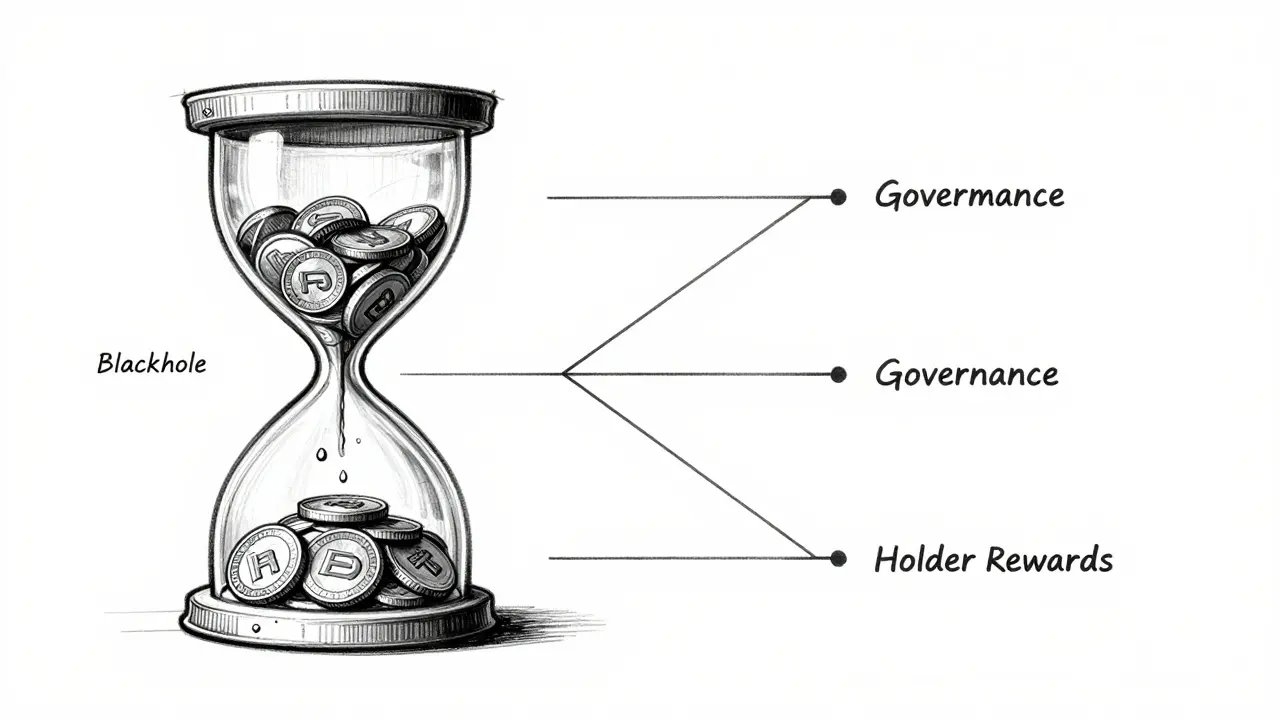
Bird Finance uses a hyper-deflationary model. When the platform launched, 50% of the total BIRD supply was sent to a blackhole address. These tokens are gone forever. They cannot be sold, traded, or recovered. This creates immediate scarcity.
Every time you buy, sell, or transfer BIRD tokens, a 6% transaction fee is charged. Here is how that fee breaks down:
- 2% to Liquidity: Added to the liquidity pool on decentralized exchanges to stabilize price.
- 2% to DAO Governance: Reserved for community decisions and development funds.
- 2% to Holders: Distributed proportionally to all existing BIRD holders. This means simply holding the token earns you more tokens over time.
Because the blackhole address holds the largest portion of the supply, it receives the biggest share of the redistribution burn. This mechanism continuously reduces the circulating supply, theoretically increasing the value of remaining tokens if demand stays steady.
The Airdrop Timeline: What Went Wrong?
This is where things get tricky. Early reports suggested an official listing and airdrop distribution around November 30, 2024. Then, announcements shifted the target to the first quarter of 2025.
As we move further into 2026, those dates are in the past. There is no definitive public record confirming that the initial airdrop was successfully distributed to the general public on schedule. Delays in DeFi projects are common-they often stem from regulatory hurdles, technical bugs, or market conditions. However, silence is not a good sign.
If you were expecting tokens in your wallet by now, you likely missed the window or the event was canceled. Always check the official Bird Finance website and their verified social media channels for any retroactive claims or new phases. Do not trust random Telegram groups promising "late entries."
Eligibility Criteria: Who Qualified?
Before the delays, the criteria for participating in the Bird Finance airdrop were specific. To qualify, users typically needed to meet several requirements:
- Wallet Connection: Link a compatible cryptocurrency wallet (like MetaMask or Phantom) to the official Bird Finance dashboard.
- Token Holding: Hold a minimum amount of specific tokens, often including $BIRD or stablecoins used in their pools.
- Social Engagement: Follow Bird Finance accounts on Twitter (X), join their Discord server, and complete simple tasks like retweeting announcements.
- Registration: Fill out a KYC (Know Your Customer) or registration form on their official portal to verify identity and prevent bot attacks.
These steps were designed to reward active community members rather than bots. If you completed these steps back in late 2024 or early 2025, you may still be eligible for future distributions, but you must monitor official communications closely.
The Confusion: Bird Finance vs. Birdchain
A major risk for investors is naming confusion. There is another project called Birdchain. This is a completely separate entity. Birdchain is a decentralized instant messaging application, not a DeFi lending platform.
Birdchain conducted its own airdrop, distributing 1,000,000 BIRD tokens to users who followed their social media and joined their Telegram group. Many people mixed up the two projects. If you participated in the Birdchain airdrop, you did not participate in the Bird Finance airdrop. They use similar names but operate in entirely different sectors-messaging versus finance.
There is also a Telegram Mini App game called "Birds" on the Sui blockchain. This game announced token distributions in December 2024. Again, this is unrelated to Bird Finance. Always double-check the contract addresses and official websites before connecting your wallet.

How to Stay Safe and Informed
In the world of crypto airdrops, scams are rampant. Here is how to protect yourself while tracking Bird Finance:
- Verify Official Channels: Only interact with links from the official Bird Finance website or their verified Twitter/Discord handles. Look for the blue checkmark.
- Check Contract Addresses: Never send tokens to a personal wallet. Legitimate airdrops are pushed to your wallet or claimed via a smart contract interface.
- Beware of Impersonators: Scammers create fake support accounts. Real support teams will never ask for your private keys or seed phrase.
- Use Reputable Wallets: Use established wallets like MetaMask, Trust Wallet, or Phantom. Avoid downloading unknown browser extensions promoted by airdrop guides.
If you are interested in Bird Finance’s technology, consider using their Smart Pool features directly. Stake assets to earn Btoken rewards, then stake those Btokens for additional BIRD incentives. This is the organic way to build exposure to the protocol, regardless of airdrop status.
Final Thoughts on Bird Finance
Bird Finance offers a sophisticated DeFi product with cross-chain capabilities and a deflationary token model. The technology behind the Smart Pools is impressive. However, the airdrop narrative has been marred by delays and confusion with similarly named projects.
Do not invest based on hope of a retroactive airdrop. Invest because you believe in the utility of the platform. If you want to engage with the ecosystem, start by joining their community discussions and testing their lending pools with small amounts. Patience and verification are your best tools in the volatile world of crypto.
Is the Bird Finance BIRD airdrop still open?
The original scheduled dates for the Bird Finance airdrop (late 2024 and Q1 2025) have passed. There is no current public announcement confirming an open registration period for a new airdrop. Check the official Bird Finance website for any updates on retroactive claims or new campaigns.
What is the difference between Bird Finance and Birdchain?
Bird Finance is a DeFi lending platform focused on automated yield farming and cross-chain integration. Birdchain is a decentralized messaging application. They are separate projects with different goals, technologies, and token distributions. Participating in one does not qualify you for the other.
How does the 6% transaction fee work on BIRD tokens?
Every transaction involving BIRD tokens incurs a 6% fee. Two percent goes to the liquidity pool, two percent to the DAO governance fund, and two percent is redistributed to existing BIRD holders. This mechanism aims to reduce supply and reward long-term holders.
Which blockchains does Bird Finance support?
Bird Finance operates on multiple chains including Ethereum, Solana, HECO (Huobi Eco Chain), and OKExChain. This multi-chain strategy allows users to access diverse yield opportunities without manual bridging.
Can I claim the Bird Finance airdrop if I missed the deadline?
Generally, no. Most airdrops have strict deadlines for snapshotting eligible wallets. However, some projects offer retroactive claims for early supporters. You should monitor official Bird Finance announcements for any such opportunities, but do not expect automatic distribution.