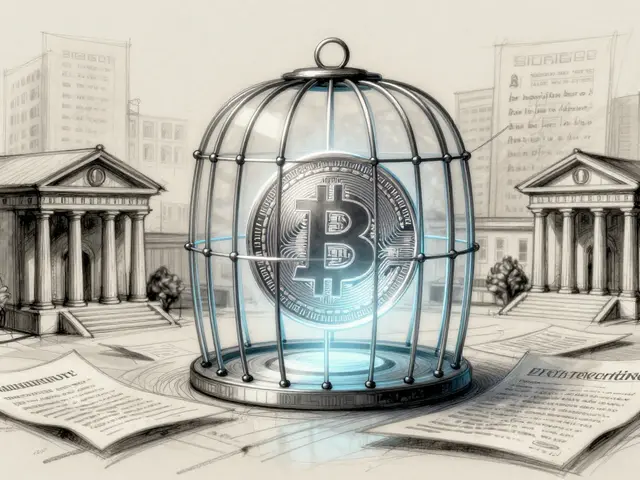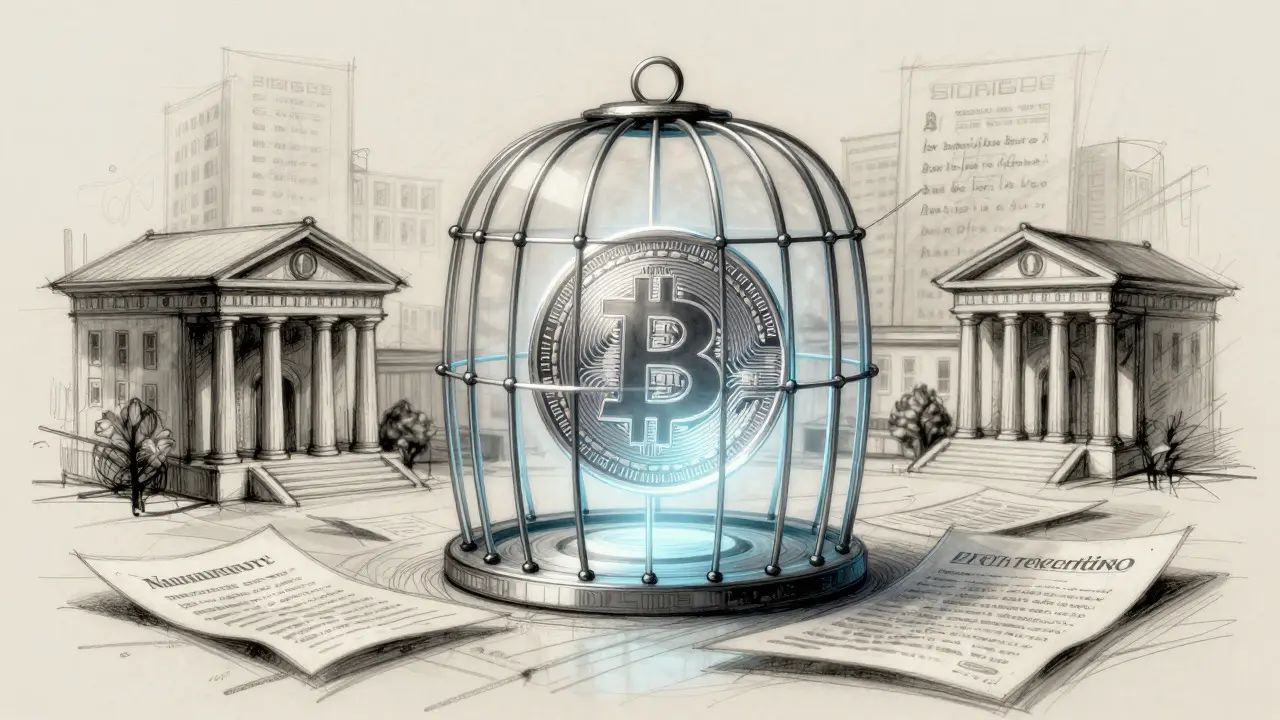
Imagine trying to send money to a relative abroad, but the bank refuses to process it because you're using a stablecoin. That is the reality for many people in Myanmar under Central Bank Directive 9/2020, which officially banned most forms of unregulated digital currencies and prohibited residents from selling, buying, or exchanging them. Issued on May 15, 2020, this directive marked a sharp turn from previous warnings to active enforcement, making Myanmar one of the few countries in Southeast Asia with a complete prohibition rather than a regulatory framework.
The core issue here isn't just about technology; it's about control. The Central Bank of Myanmar (CBM) cited its exclusive authority under the Central Bank of Myanmar Law to declare that only the kyat is legal tender. By targeting specific assets like Bitcoin, Ethereum, and Tether, the CBM aimed to stop capital flight and stabilize a fragile economy. Yet, as we'll see, the ban has done more to push trading underground than to eliminate it entirely.
What Exactly Does Directive 9/2020 Prohibit?
To understand the scope, you need to look at what was explicitly named. The directive didn't just say "no crypto"; it listed specific coins that were off-limits for general public use. These included:
- Bitcoin (BTC)
- Ethereum (ETH)
- Litecoin (LTC)
- Perfect Money (PM)
However, the practical impact extended far beyond these four names. The CBM defined "digital currencies" broadly enough to cover any unregulated asset not issued by the central bank. This meant that holding a wallet wasn't necessarily illegal on paper initially, but engaging in transactions-buying, selling, or exchanging-was strictly forbidden. Financial institutions were also barred from facilitating any crypto-related transfers, effectively cutting off the formal banking channel for anyone wanting to enter or exit the market.
A key nuance often missed is the focus on channels. The directive specifically highlighted transactions conducted through personal Facebook accounts and web pages. In 2020, social media was the primary marketplace for P2P trades in Myanmar. By targeting these platforms, the CBM signaled that informal, peer-to-peer deals were a primary target for enforcement, not just large exchange operators.
Why Did the CBM Issue This Ban?
The motivation behind Directive 9/2020 was rooted in monetary sovereignty and economic stability. Before 2020, the CBM had warned individuals that they traded at their own risk, but there was no teeth to those warnings. The 2020 directive changed that dynamic by linking crypto activity to existing laws that carried real penalties.
Three main legal frameworks supported the ban:
- Foreign Exchange Management Law: Controlled how foreign currency entered and left the country.
- Financial Institutions Law: Regulated banks and other financial entities.
- Anti-Money Laundering Law: Provided tools to freeze assets and prosecute suspicious flows.
By citing Section 40(e) and Section 62 of the Central Bank Law, the CBM asserted that only it could issue currency. Any alternative store of value, especially one moving freely across borders without permission, threatened the government's ability to manage inflation and capital controls. At the time, the kyat was already under pressure, and the rise of stablecoins offered an easy escape route for savings, which the state wanted to prevent.
Enforcement Actions and Penalties
Paper bans are easy to write; enforcing them is another story. The CBM demonstrated its commitment to enforcement through targeted actions against domestic players. One notable case involved individuals engaged in illegal currency conversion using Tether (USDT). The CBM pursued legal action against these operators, freezing their bank accounts and initiating proceedings under the Anti-Money Laundering Law.
The penalties for violations can be severe. Depending on which law is applied, violators face:
- Imprisonment
- Heavy fines
- Both imprisonment and fines
In May 2024, exactly four years after the initial directive, the CBM issued another public notice. This wasn't just a reminder; it was a warning shot. The notice reiterated that the ban was still in effect and emphasized readiness to close bank accounts and pursue legal action. This timing coincided with increased scrutiny on hundi operators (informal money transfer systems) who were increasingly using USDT to settle cross-border payments, bypassing official channels entirely.
The Underground Economy: How People Still Trade
Despite the strict legal environment, demand for digital assets in Myanmar has surged, particularly after the February 2021 military coup. As the kyat lost significant value, citizens looked for alternatives to preserve their wealth. This created a robust underground economy that operates outside the reach of traditional banking oversight.
The primary tools for this shadow market include:
- Telegram: Replaced Facebook as the main hub for P2P negotiations due to less platform moderation.
- Offshore Exchanges: Users access global platforms that don't enforce Myanmar-specific restrictions.
- Stablecoins: USDT on the Tron network dominates because it offers price stability and low transaction fees compared to volatile coins like Bitcoin.
This shift highlights a limitation of the original directive. It focused heavily on social media and local banking channels, but as users migrated to encrypted messaging apps and offshore infrastructure, the CBM's visibility decreased. The decentralized nature of crypto makes total elimination difficult, especially when the underlying problem-the collapse of the local currency-remains unsolved.

Political Fragmentation and Conflicting Policies
Myanmar's situation is complicated by political division. Following the 2021 coup, the country split into two governing entities: the military-backed State Administration Council (SAC) and the opposition National Unity Government (NUG). Their approaches to crypto are diametrically opposed.
| Entity | Stance on Crypto | Key Actions |
|---|---|---|
| State Administration Council (SAC) | Prohibition | Enforces Directive 9/2020, drafts cybersecurity laws to criminalize use, targets USDT converters. |
| National Unity Government (NUG) | Embrace | Declared USDT legal tender in controlled regions (Dec 2021), developing DMMK (Digital Myanmar Kyats). |
The NUG declared Tether as legal tender in areas under its control in December 2021, directly challenging the military government's ban. To counter this, the SAC drafted new cybersecurity laws in January 2022 to further criminalize crypto use. This dualistic approach means that the "correct" legal stance depends on which part of the country you are in and which government you recognize, creating a confusing and risky environment for anyone involved in digital asset transactions.
Regional Context and Future Outlook
Compared to neighbors like Thailand and Singapore, which have developed clear regulatory frameworks for crypto trading, Myanmar stands out for its hardline prohibition. While El Salvador and the Central African Republic embraced Bitcoin as legal tender, Myanmar chose the opposite path. However, the effectiveness of this ban is questionable. Academic analysis from Chiang Mai University suggests that Myanmar's crypto policy remains in an early stage, lacking sound implementation strategies.
A major hurdle for any future regulatory change is internet connectivity. The military government has used internet shutdowns as a tool to disrupt both protests and crypto activities. Without reliable internet, widespread adoption of even regulated digital assets becomes difficult. As of 2026, the CBM maintains its hard-line stance, but the underground market continues to grow. Whether this leads to eventual regulatory accommodation or continued escalation remains uncertain, depending on political developments and regional trends.
Frequently Asked Questions
Is holding Bitcoin illegal in Myanmar?
Holding itself is not explicitly criminalized in all interpretations, but transacting (buying, selling, exchanging) is prohibited under Directive 9/2020. The risk lies in the act of trading or converting, which can trigger enforcement under anti-money laundering laws.
Can I use USDT for remittances in Myanmar?
Officially, yes, if you are in a region controlled by the NUG where USDT was declared legal tender. Under the SAC's jurisdiction, it is considered an unregulated digital currency and its use for conversion or transfer is subject to enforcement and potential legal action.
What happened to the people fined under the 2020 directive?
The CBM has pursued cases against currency converters and hundi operators. Penalties have included frozen bank accounts, fines, and in some cases, imprisonment. Enforcement has been selective, focusing on high-volume domestic operators rather than individual retail holders.
Why did the NUG support cryptocurrency?
The NUG supported crypto as a way to bypass the military government's control over the banking system and provide a stable store of value for citizens affected by the kyat's devaluation. It was seen as a tool for financial resilience during political instability.
Will Myanmar lift the crypto ban in the future?
It is unlikely in the near term under the current SAC administration, which views crypto as a threat to monetary sovereignty. However, persistent underground usage and regional regulatory shifts could force a reconsideration, potentially leading to a regulated framework rather than a full ban.