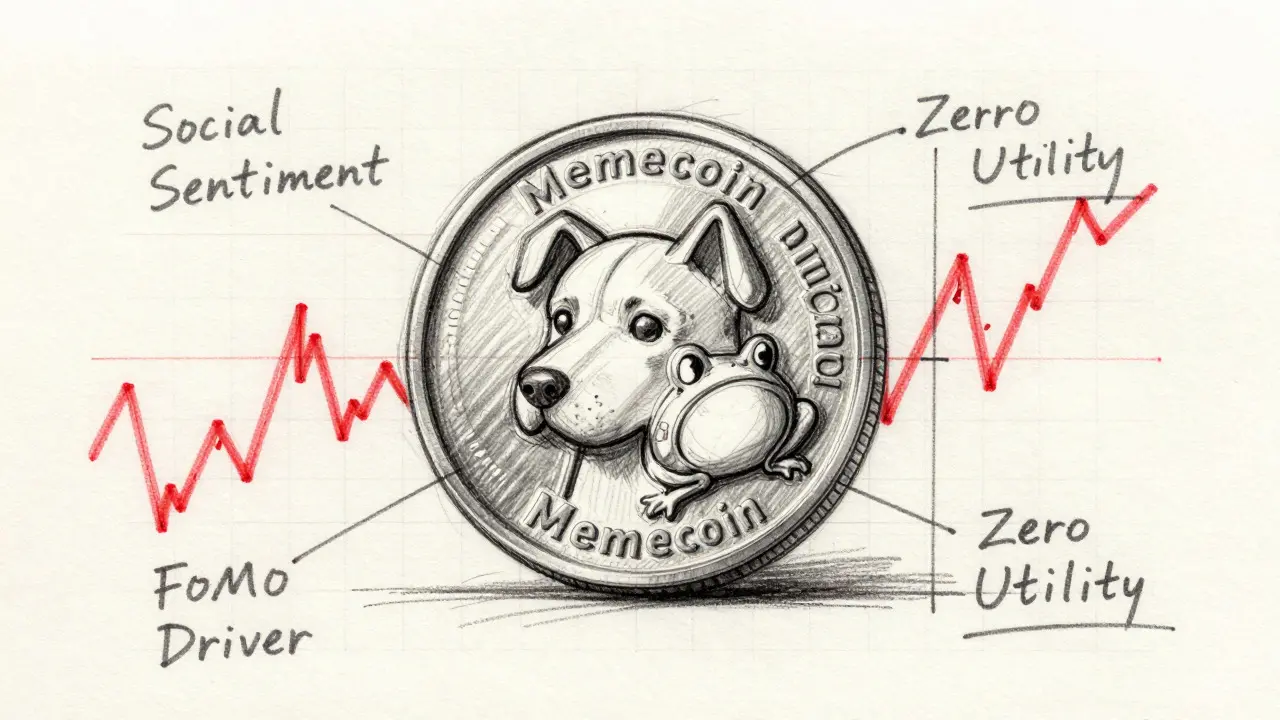
Imagine buying a digital token because of a funny picture of a dog. Now imagine that token doubling your money in an hour, only to vanish completely the next day. This isn't a glitch in the matrix; it is the daily reality of memecoin investment, a high-stakes game where culture collides with code.
In August 2026, the landscape looks very different than it did five years ago. The days of wild west anonymity are fading under heavy regulatory scrutiny, yet the allure of quick riches remains potent. You are likely here because you want to know if these viral tokens are worth your hard-earned cash or if they are just expensive entertainment. Let's cut through the hype and look at the actual mechanics, risks, and rare rewards involved in this volatile sector.
What Exactly Is a Memecoin?
To understand the risk, you first need to understand the product. Unlike Bitcoin, which aims to be digital gold, or Ethereum, which powers smart contracts, memecoins have almost no technical utility. They are social experiments wrapped in blockchain technology.
The concept started with Dogecoin in December 2013. Software engineers Billy Markus and Jackson Palmer created it as a joke to mock the speculation surrounding cryptocurrencies at the time. It was supposed to be worthless. Instead, it became a cultural phenomenon. Today, the market includes thousands of variants like Shiba Inu (SHIB), Pepe (PEPE), and various celebrity-themed tokens.
The key difference lies in value drivers. Traditional cryptocurrencies derive value from network effects, technological innovation, or scarcity. Memecoins derive value almost entirely from community sentiment, social media trends, and fear of missing out (FOMO). When the conversation stops, the price often crashes. There is no underlying business generating revenue to support the valuation.
The Regulatory Shift: From Wild West to Watchlist
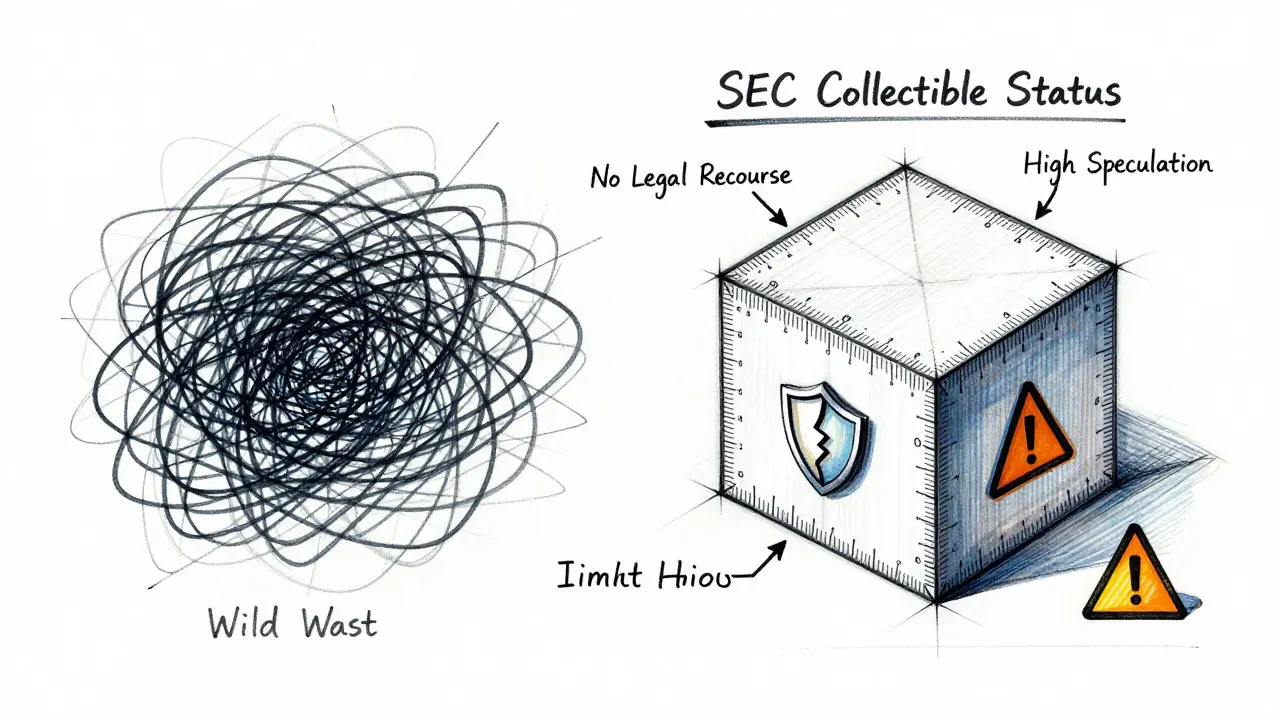
If you thought regulators were asleep at the wheel, think again. In February 2025, the U.S. Securities and Exchange Commission (SEC) released a pivotal memo that changed how we view these assets. The agency clarified that most meme coins are "akin to collectibles" rather than securities.
This sounds like good news for investors, but it comes with a catch. By classifying them as collectibles, the SEC effectively removed traditional investor protections. If you buy a stock and the company fraudulently inflates its earnings, you have legal recourse. If you buy a memecoin and the developer runs away with the liquidity pool, you are largely on your own. The SEC noted that these tokens typically have "limited or no use or functionality" and do not convey rights to future income.
This regulatory stance has led to increased investigations. As of late 2024, the SEC had opened nearly 50 investigations into celebrity-endorsed tokens. The message is clear: the government sees this sector as highly speculative and potentially predatory, especially when influencers push tokens without disclosing conflicts of interest.
Rewards: The Allure of Viral Growth
Why do people keep playing? The potential returns are staggering. We are talking about gains of 1,000%, 10,000%, or even more in a matter of weeks. While these outliers skew the average, they fuel the narrative that anyone can get rich overnight.
Consider the case of Pepe (PEPE). Early adopters who bought in during April 2023 saw their holdings multiply by hundreds of percent within months. Similarly, Dogecoin has maintained a loyal community that occasionally drives prices up through coordinated social media campaigns and merchant adoption stories.
However, these rewards come with specific conditions:
- Timing is everything: You must enter before the hype peaks. Buying after a token hits the front page of Reddit or Twitter is usually too late.
- Community strength matters: Tokens with active, organic communities tend to survive longer than those driven solely by paid promotions.
- Liquidity is key: You need enough buyers to sell your position. Many new memecoins have low liquidity, meaning you can't sell without crashing the price yourself.
Risks: Where Most Money Goes
For every success story, there are dozens of failures. The risks in memecoin investing are not just theoretical; they are structural.
Extreme Volatility
Prices can swing 50% or more in a single day. In January 2025, the $TRUMP token reached a $27 billion market cap within 24 hours of its launch, only to crash shortly after, causing billions in losses. This level of volatility makes it impossible to predict short-term movements based on fundamentals.
Scams and Rug Pulls
The barrier to creating a new token is incredibly low. Anyone can deploy a contract on Solana or Ethereum in minutes. Fraudulent projects, known as "rug pulls," involve developers abandoning the project and draining the liquidity pool. In 2024, over 3,800 fraudulent memecoin projects were documented, representing two-thirds of all crypto scams that year.
Celebrity Influence
Tokens tied to public figures carry unique risks. The Central African Republic's $CAR token collapsed by 95% in a single day in February 2025 after legitimacy concerns arose. Celebrity endorsements can drive initial hype, but they rarely provide long-term stability. If the celebrity loses relevance or faces scandal, the token often follows suit.
Memecoins vs. Traditional Cryptocurrencies
| Feature | Memecoins (e.g., DOGE, PEPE) | Utility Coins (e.g., BTC, ETH) |
|---|---|---|
| Primary Value Driver | Social sentiment, hype, community | Technology, scarcity, network usage |
| Supply Model | Often infinite or massive quadrillions | Fixed supply (BTC) or controlled issuance (ETH) |
| Volatility | Extreme (150-200% weekly swings common) | High but lower (30-40% weekly swings) |
| Regulatory Status | Collectible (limited protection) | Commodity/Security (varies by jurisdiction) |
| Use Case | Speculation, tipping, gifts | Store of value, smart contracts, DeFi |
This table highlights why financial advisors generally recommend limiting exposure to memecoins. They lack the fundamental anchors that allow traditional cryptocurrencies to retain value during market downturns.
How to Navigate the Market Safely
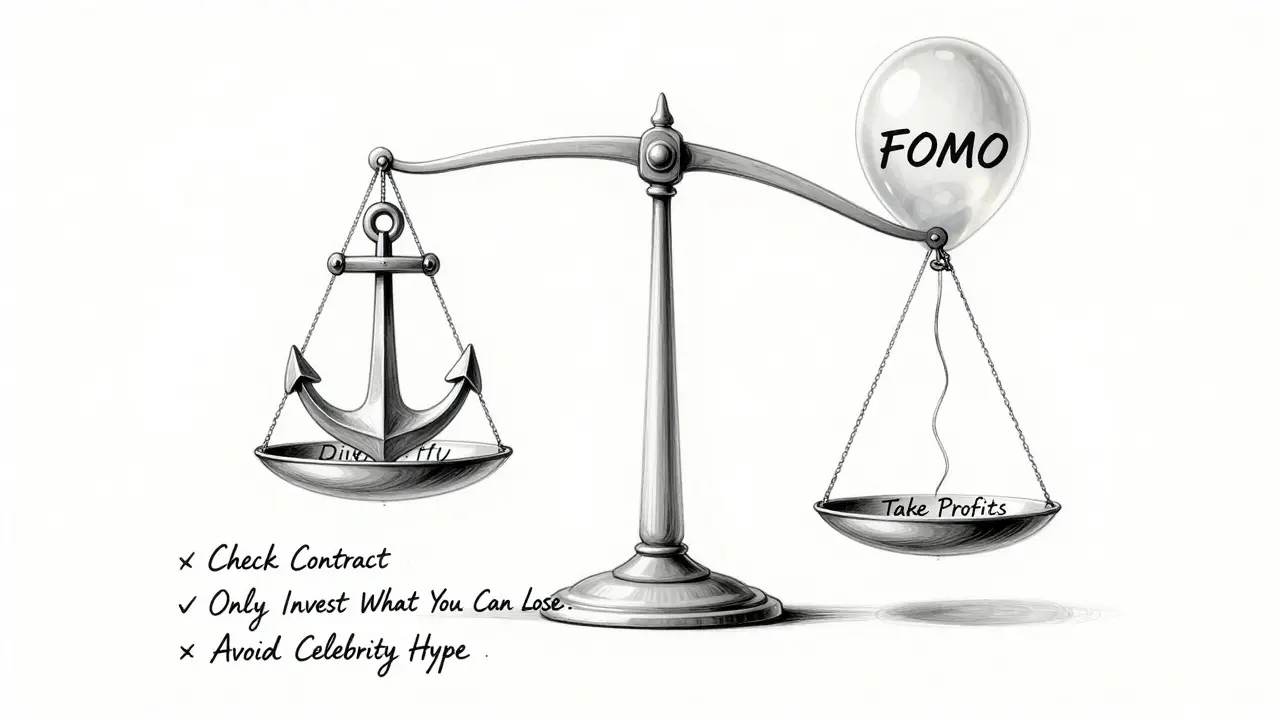
If you decide to participate, treat it like gambling, not investing. Here are practical steps to minimize disaster:
- Only invest what you can lose: Assume the entire amount will go to zero. If losing $500 would ruin your month, don't invest it.
- Check the contract: Use tools like Etherscan or Solscan to verify the token contract. Look for signs of renounced ownership and locked liquidity. If the developer still holds 50% of the supply, run.
- Avoid FOMO buys: If a token has already pumped 500% in a week, you are likely the exit liquidity for early buyers. Wait for a correction or skip it entirely.
- Diversify: Don't put all your crypto eggs in one memecoin basket. Spread small amounts across established names like Dogecoin or Shiba Inu rather than betting on unknown new launches.
- Take profits: Greed kills portfolios. Set target profit levels (e.g., 2x, 5x) and sell portions of your holdings as you reach them. Secure the bag.
The Future Outlook: 2026 and Beyond
The memecoin sector is evolving. Analysts predict a bifurcation in the market. On one side, you have pure speculation tokens that will continue to rise and fall with internet trends. On the other, a small subset may develop genuine utility.
Dogecoin, for instance, has seen increased merchant adoption, processing thousands of dollars in transactions monthly. While this is negligible compared to its market cap, it represents a step toward real-world usage. However, Gartner forecasts that memecoins will shrink to less than 5% of the total crypto market by 2027 due to regulatory pressure and maturing investor behavior.
For now, the sector remains a casino. The house doesn't always win, but the odds are stacked against the casual player. Success requires discipline, research, and the emotional resilience to watch your portfolio fluctuate wildly without panic-selling or greed-buying.
Are memecoins considered investments?
Technically, no. The SEC classifies them as collectibles. They lack the fundamental value drivers of traditional investments like cash flow or asset backing. Treat them as speculative assets with high risk of total loss.
What is the safest memecoin to buy?
There is no such thing as a "safe" memecoin. However, established tokens like Dogecoin and Shiba Inu have larger market caps and more liquid markets, making them slightly less prone to instant collapse compared to new, unknown tokens.
Can I make money trading memecoins?
Yes, but it is difficult. Most retail investors lose money. Successful traders rely on timing, deep knowledge of social media trends, and strict risk management. It is closer to professional gambling than passive investing.
Why did the $TRUMP token crash so hard?
It suffered from extreme volatility typical of celebrity tokens. Initial hype drove the price up rapidly, but without underlying utility, the momentum faded quickly. Large holders sold off, causing a cascade of losses for latecomers.
Is Dogecoin still relevant in 2026?
Yes, Dogecoin remains the largest memecoin by market cap. Its longevity, brand recognition, and occasional merchant acceptance give it a degree of stability that newer tokens lack, though it remains highly volatile.



Jay Johhnston
16 August, 2026 . 01:12 AM
It is interesting to see how culture shapes these digital assets. The community aspect is what keeps them alive, really. Without the memes, it is just code.
Jillian Groskreutz
17 August, 2026 . 03:06 AM
You are utterly mistaken if you think there is any 'community' value here. It is a pyramid scheme dressed up in cute dog pictures. The SEC memo proves they have no real utility whatsoever. Stop pretending this is investing. It is gambling for people who failed math class. You should read a book on actual economics before commenting.
michelle aguilar
18 August, 2026 . 02:34 AM
I mean... I bought some PEPE last year and now I feel like an idiot. Why does everyone act like we are all geniuses when we win but losers when we lose? It's exhausting being around these crypto bros who talk about 'diamond hands' while their portfolios bleed out. Can someone please explain why I keep doing this to myself?
Phelan Deihl
18 August, 2026 . 23:53 PM
I hear you. It’s tough when the hype dies down. Maybe just take a break from checking the charts for a bit. Your mental health matters more than a few coins.
Ami Elizabeth
19 August, 2026 . 02:40 AM
honestly its just a casino man. i lost 5k on a shiba coin that turned out to be a rug pull. dont listen to the experts they dont know shit either.
Lance Konig
20 August, 2026 . 03:16 AM
The regulatory landscape has shifted dramatically since the SEC memo. Most retail investors fail to grasp the legal implications of holding 'collectibles' rather than securities. This distinction removes critical investor protections, leaving the door wide open for fraudulent activity. One must exercise extreme caution and conduct thorough due diligence before engaging with these volatile assets.
Calliope Clio
20 August, 2026 . 21:35 PM
Ugh, another article telling us to be careful 🙄. We know it's risky! That's why we do it! If it was safe, everyone would be rich already. Just let us gamble in peace without the moralizing tone. #CryptoLife 💸🚀
Tasha Davis
21 August, 2026 . 23:32 PM
Hey guys! Don't give up hope! There are still great opportunities out there if you look hard enough. Just remember to only invest what you can afford to lose. Let's support each other through the ups and downs! You got this!
Abigail Sparks
23 August, 2026 . 10:25 AM
Listen up! If you want to survive in this market, you need to check the contract address every single time. Use Etherscan or Solscan. Verify liquidity locks. If the dev holds more than 5% of the supply, RUN. Do not hesitate. Greed will kill your portfolio faster than volatility ever will. Take profits at 2x and 5x. Secure the bag or go home crying.
Teri W
23 August, 2026 . 22:38 PM
It is morally bankrupt that celebrities endorse these tokens without disclosing conflicts of interest. They prey on the desperate and the hopeful. The $TRUMP token crash was a tragedy for many families. We need stricter laws to protect the innocent from these financial predators.
Leah Humphrey
24 August, 2026 . 13:12 PM
The alpha metrics indicate a high correlation between social sentiment spikes and subsequent price corrections. Liquidity depth is insufficient for large capex events. Rug pulls are statistically probable given the low barrier to entry for smart contract deployment. Diversification across utility-based assets is recommended over speculative meme exposure.
Nikki keller
25 August, 2026 . 20:53 PM
Perhaps the true value lies not in the currency itself, but in the shared human experience of hope and fear. It reflects our societal desire for quick fixes and connection. We must find balance between participation and detachment.
Uday N M
27 August, 2026 . 01:00 AM
Western regulators are trying to crush innovation. In India, we understand blockchain better. These memecoins are a distraction from real tech development. Focus on utility, not jokes.
Melissa G
27 August, 2026 . 07:42 AM
The cultural significance of Dogecoin cannot be understated. It bridged the gap between mainstream internet culture and decentralized finance. While financially risky, it serves as a powerful social experiment in collective belief systems.
Patrick Pat
28 August, 2026 . 07:38 AM
So the SEC says they're collectibles. Great. So if my Beanie Baby crashes, I sue the manufacturer? No. But at least Beanie Babies don't require gas fees to stare at. Brilliant regulation.
Claudio Perrone
29 August, 2026 . 14:21 PM
they are watching us. the rugs are planned by the elites to steal our money. dont trust anyone. the whole thing is a psyop to control the masses. i saw a doc about it.
Aaron Morrissey
31 August, 2026 . 10:56 AM
One might observe a fascinating dichotomy in the current market dynamics. On one hand, pure speculation reigns supreme; on the other, nascent utilities begin to emerge. It is a dramatic unfolding of technological potential versus human folly.
Patrick Quairoli
2 September, 2026 . 09:38 AM
its all rigged. the whales manipulate the charts so we buy high. they work with the exchanges. nothing is fair. just hold gold or bury cash in the backyard. crypto is dead.
Linda Leeuwesteijn
2 September, 2026 . 17:46 PM
Let's remember to be kind to each other here 😊. Everyone makes mistakes. Learning is part of the journey. Keep your heads up and stay positive! ✨💪
Shawn Schaerer
4 September, 2026 . 03:21 AM
We must interrogate the fundamental nature of value in a digital age. Is it not merely consensus? If so, then memecoins represent the purest form of this consensus, unencumbered by traditional economic constraints. Embrace the paradigm shift!
Dianne Ritter
5 September, 2026 . 16:18 PM
I think both sides have valid points. It's risky, yes, but also fun for some. Just do your own research and don't bet the farm. Peace.
Stephanie Millar
6 September, 2026 . 09:58 AM
In the UK, we tend to view these with a healthy scepticism. The lack of utility is glaringly obvious. However, the cultural phenomenon is undeniable. One must simply ensure they do not fall victim to the greed that drives the market. Caution is advised, always.
Carmene Jackson
6 September, 2026 . 22:50 PM
I'm so tired of hearing about losses. Can't we just celebrate the wins for once? My friend made 10k on a new coin yesterday and nobody wants to talk about that. They only care about the drama. It's draining being here sometimes.