Imagine a world where duplicate insurance claims vanish overnight and fake medical bills get flagged before you even see them. That’s not science fiction; it’s the reality for insurers who’ve started using blockchain is a distributed digital ledger that records transactions in an immutable, transparent manner across multiple nodes. For decades, the insurance industry has battled fraud through isolated databases and manual checks, but these methods often fail when data silos prevent cross-verification. By moving to a shared, tamper-proof record, companies can cut verification times from weeks to days and slash operational costs by up to 30%.
Why Traditional Methods Fail at Stopping Fraud
Traditional fraud prevention relies on each insurer keeping their own books. This creates a massive blind spot. According to the Coalition Against Insurance Fraud, about 12% of duplicate claims go undetected because one company doesn’t know another already paid out. It’s like trying to solve a puzzle where every person only has a few pieces and refuses to show them to anyone else. When a fraudster files a claim with Company A and then submits the same injury to Company B, both systems might approve it independently. There is no central referee checking if this claim was already processed elsewhere.
Manual audits help, but they are slow and expensive. Adjusters spend hours verifying documents, calling hospitals, and cross-referencing police reports. In complex cases, this process can take 30 to 45 days. During that time, cash flow stalls, and legitimate customers wait. More importantly, fraudsters exploit these delays. They know that by the time an auditor looks at the file, the money is already gone. The lack of real-time visibility across the entire ecosystem is the single biggest weakness in current fraud detection models.
How Blockchain Fixes the Data Silo Problem
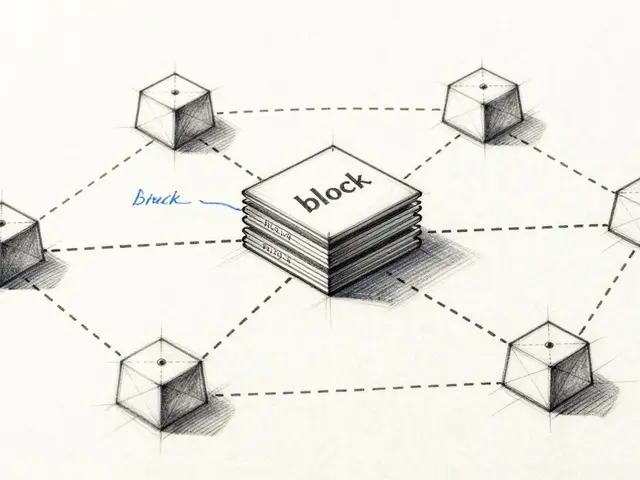
Decentralized ledgers solve this by creating a single source of truth that all authorized parties can access. In a permissioned network (often built on platforms like Hyperledger Fabric), policyholders, agents, adjusters, and healthcare providers all write to the same chain. Once a transaction is validated, it becomes permanent. You can’t delete a claim or alter a payment amount without leaving a visible trace. This immutability means that if a hospital submits a bill, that entry is locked in. If the same bill appears later under a different name, the system flags it instantly because the cryptographic hash matches a previous entry.
This transparency doesn’t mean everyone sees everything. Using privacy tools like zero-knowledge proofs, stakeholders can verify that a condition is met (e.g., "the patient is over 65") without revealing the actual age or identity. This balances the need for auditability with the legal requirements for protecting personal data. The result is a system where trust is mathematical, not interpersonal. You don’t have to trust the other insurer’s database; you trust the code and the consensus mechanism.
| Feature | Traditional Systems | Blockchain Solutions |
|---|---|---|
| Data Verification Time | 30-45 days | 2-3 days |
| Duplicate Claim Detection | ~88% success rate (12% miss) | ~99% success rate (cross-ledger check) |
| Record Tampering Risk | High (manual edits possible) | Low (immutable after validation) |
| Operational Cost Impact | High manual labor costs | 30% reduction via automation |
| Cross-Company Visibility | Limited/Siloed | Shared via consortium |
The Role of Smart Contracts in Automation
While the ledger handles the record-keeping, smart contracts are self-executing agreements stored on the blockchain that trigger actions when specific conditions are met. These programs remove human discretion from straightforward payouts. Take parametric insurance as an example. If you buy flight delay coverage, the smart contract monitors the airline’s API. If the flight is delayed by more than three hours, the contract automatically releases the funds to your wallet. No adjuster needs to review the claim, and no fraudster can argue that the delay wasn't significant enough to warrant payment.
This automation extends to life insurance, too. A recent case study showed a provider reducing death benefit payout times from 30 days to just 72 hours. How? By linking the smart contract to verified digital death certificates. Once the certificate is hashed onto the chain, the payout triggers immediately. This speed isn't just convenient; it reduces the window of opportunity for fraudulent heirs to contest or delay claims. However, smart contracts aren't magic. They execute exactly what they’re coded to do. If the input data is wrong, the output will be wrong. This leads us to the critical challenge of data quality.

Real-World Successes and Pitfalls
The results so far are promising, but not perfect. The B3i consortium, which includes over 40 global insurers, reported a 42% reduction in fraudulent marine cargo claims after implementing a blockchain platform. By sharing shipment data in real-time, they eliminated the ability for shippers to falsify delivery receipts. Similarly, Estonia’s national health system integrated blockchain into its claims processing, cutting healthcare fraud by 22% between 2020 and 2023. These numbers prove that when data flows freely and securely, fraud drops significantly.
But there are cautionary tales. A major US auto insurer abandoned a pilot program after 18 months because they couldn't scale it beyond 5% of total claims. The issue wasn't the blockchain itself, but the integration with legacy systems. One tech lead on an industry forum noted that onboarding took 11 months instead of the promised six due to compatibility issues with old software. Another common complaint is the learning curve. A survey found that 68% of insurance employees needed three to four months of specialized training to work effectively with these new tools. It’s not a plug-and-play solution; it requires a cultural and technical shift.
Addressing the 'Garbage In, Garbage Out' Problem
Blockchain ensures that once data is on the chain, it stays accurate. But it doesn't ensure the data was accurate when it went in. This is known as the oracle problem. If a doctor enters a fake diagnosis, the blockchain will faithfully record that fake diagnosis forever. To mitigate this, successful implementations use multi-signature approvals. For a high-value claim, maybe three parties must sign off: the hospital administrator, the independent verifier, and the insurer’s risk manager. This adds a layer of human oversight before the data becomes immutable.
Additionally, many insurers are now combining blockchain with AI. While blockchain handles the integrity of the data, machine learning algorithms scan for patterns. For instance, AI might flag a cluster of claims coming from the same zip code within a short timeframe. Dr. Jane Smith from Wharton School notes that blockchain eliminates information asymmetry, but it must be paired with AI analytics to catch sophisticated, coordinated fraud rings. Neither technology works perfectly alone, but together they cover most bases.

Implementation Roadmap for Insurers
If you're considering adopting blockchain for fraud prevention, don't try to boil the ocean. Start small. Most experts recommend beginning with a narrow use case, such as parametric products or simple liability claims, before expanding to complex healthcare scenarios. Here is a practical approach:
- Identify the Pain Point: Choose the area with the highest volume of low-complexity fraud (e.g., duplicate submissions).
- Form a Consortium: Join groups like B3i to share development costs and standardize data formats. Solo efforts are rarely cost-effective.
- Choose the Right Platform: For enterprise use, permissioned chains like Hyperledger Fabric offer better privacy controls and performance than public chains like Bitcoin.
- Pilot with Legacy Integration: Build robust APIs to connect your existing policy administration system to the new blockchain node. Budget extra time for this; it’s usually the bottleneck.
- Train Your Team: Invest in upskilling staff. Without buy-in from adjusters and claims handlers, the technology will sit unused.
Deployment timelines for enterprise-scale solutions typically range from 8 to 14 months. Factor in regulatory compliance, especially regarding GDPR, since immutable ledgers can conflict with the 'right to be forgotten.' New regulations, such as those proposed by the NAIC in late 2023, are helping to clarify these rules, but staying updated is crucial.
Frequently Asked Questions
Is blockchain really necessary for stopping insurance fraud?
It is highly effective for preventing duplicate claims and verifying identity, but it is not a standalone solution. It works best when combined with AI for pattern recognition. If your main fraud issue is internal embezzlement, blockchain helps by creating an immutable audit trail, but it won't stop a motivated insider from manipulating input data.
How does blockchain protect customer privacy?
Most insurance blockchains are 'permissioned,' meaning only approved participants can join the network. Furthermore, technologies like zero-knowledge proofs allow parties to verify facts (like 'age > 18') without seeing the actual data (the date of birth). This keeps sensitive details private while maintaining the integrity of the record.
What is the cost of implementing blockchain for an average insurer?
Costs vary widely depending on scale. Small insurers often join consortia to share infrastructure costs. For larger players, expect significant upfront investment in integration and talent. Specialized blockchain developers in the US earn between $130,000 and $180,000 annually. However, the long-term savings from reduced administrative overhead and fewer fraudulent payouts often offset the initial expenditure within 3-5 years.
Can blockchain handle large volumes of claims?
Current implementations handle around 1,000 to 1,500 transactions per second, which is less than traditional databases (50,000+ TPS). However, for insurance fraud prevention, you don't need to process every minor interaction on-chain. Only key events (policy issuance, claim submission, final payout) need to be recorded. This selective recording keeps performance manageable.
What happens if a data error is made on the blockchain?
You cannot simply delete the error. Instead, you add a new transaction that corrects the record. The history remains visible, showing both the error and the correction. This transparency actually deters fraud because any attempt to hide a mistake is impossible. It turns errors into auditable events rather than silent deletions.