Imagine trying to spend US dollars in a country that only accepts Euros. You don’t just walk across the border; you need an exchange, a bank, or a trusted middleman to convert your money so it works in the new system. In the world of blockchain, this is exactly what wrapped assets are. They are the digital equivalent of that currency exchange, allowing tokens native to one blockchain-like Bitcoin-to function on another, like Ethereum. But as we move through 2026, the old way of doing things is cracking under pressure. The future of wrapped asset standards isn't just about moving value faster; it's about removing the single points of failure that have plagued decentralized finance (DeFi) for years.
The Current State: A Fragile Foundation
To understand where we are going, we have to look at how broken the current model really is. Most people know Wrapped Bitcoin (WBTC), which was launched in January 2019 by Kyber Network, Ren, and BitGo. It remains the king of the hill, holding over $11 billion in total value locked (TVL). But here is the catch: WBTC relies on a centralized custodian. When you wrap your Bitcoin, you are essentially handing the keys to a group of companies. If they get hacked, go bankrupt, or decide to freeze your funds, your "decentralized" investment is suddenly very centralized.
This custodial risk is the biggest headache in the industry. Between 2020 and 2023, hackers stole over $2.1 billion from wrapped token protocols. The infamous Wormhole bridge exploit in February 2022 alone saw $325 million vanish because of a vulnerability in the smart contract logic. Users love the convenience-being able to earn yield on Bitcoin using Ethereum’s lending protocols like Aave is incredibly attractive-but they hate the trust assumption. We are currently living in a hybrid era where 78% of wrapped tokens still rely on these centralized guardians, creating a paradox in a space built on distrust.
Why Standards Matter More Than Ever
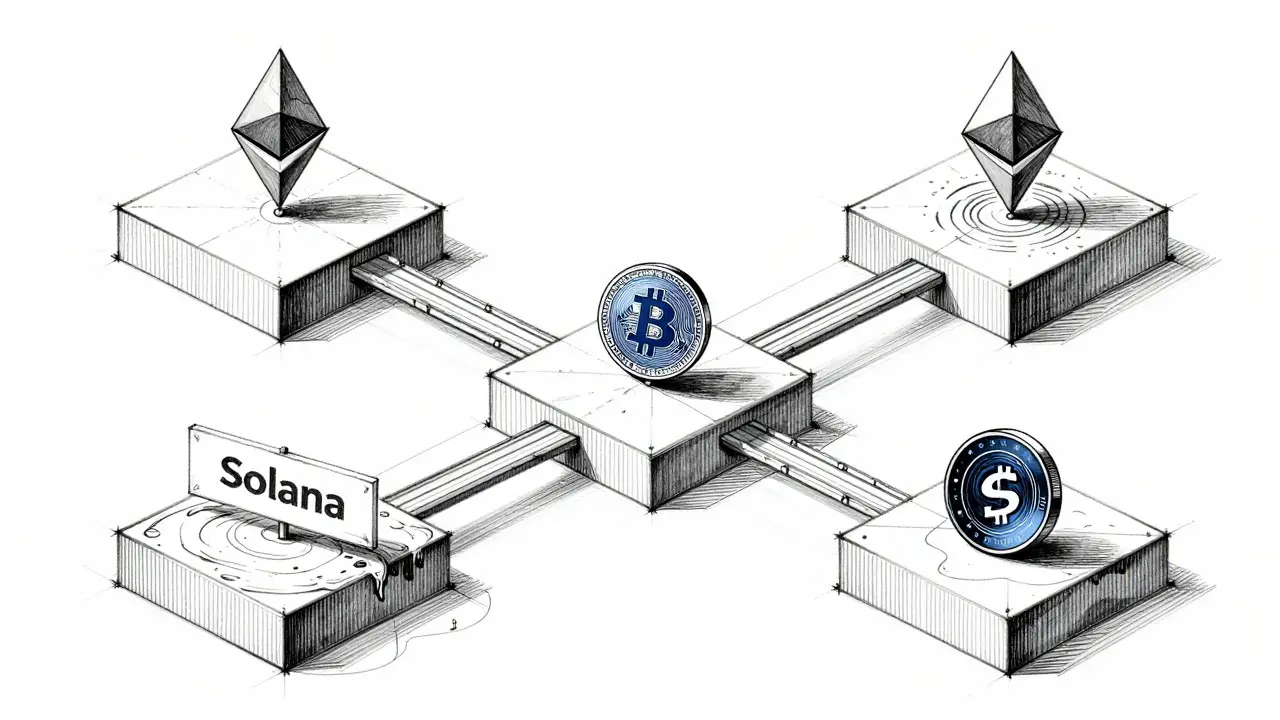
You might wonder why we can’t just let every chain do its own thing. The problem is fragmentation. Right now, there are over 87 distinct wrapped token implementations across 15 major blockchains. On Ethereum, you use ERC-20 standards. On Solana, you use SPL tokens. On Cosmos, it’s IBC. These systems don’t talk to each other natively. If you want to move wrapped Bitcoin from Ethereum to Avalanche, you aren’t just swapping tokens; you are crossing a bridge that might be built with different materials than the one connecting Ethereum to Polygon.
This lack of standardization creates massive inefficiencies. Liquidity gets splintered. Instead of having one deep pool of wrapped Bitcoin, you have shallow pools on ten different chains. Traders face higher slippage, and developers have to write custom integration code for every single chain they want to support. The industry needs a universal language. Without a unified standard for metadata, verification, and redemption, wrapped assets will remain a patchwork of risky shortcuts rather than a robust financial infrastructure.
| Feature | Custodial (e.g., WBTC) | Decentralized Oracle (e.g., sBTC) | Native Cross-Chain (e.g., LayerZero) |
|---|---|---|---|
| Trust Model | Centralized entities hold keys | Distributed oracle network | Smart contract verification |
| Security Risk | High (Single point of failure) | Medium (Oracle collusion risk) | Low (Code-based security) |
| Speed | Fast minting, slow redemption | Moderate | Near-instant atomic swaps |
| Regulatory Clarity | Unclear (Securities risk) | Better defined | Best positioned for compliance |
The Shift Toward Decentralized Architectures
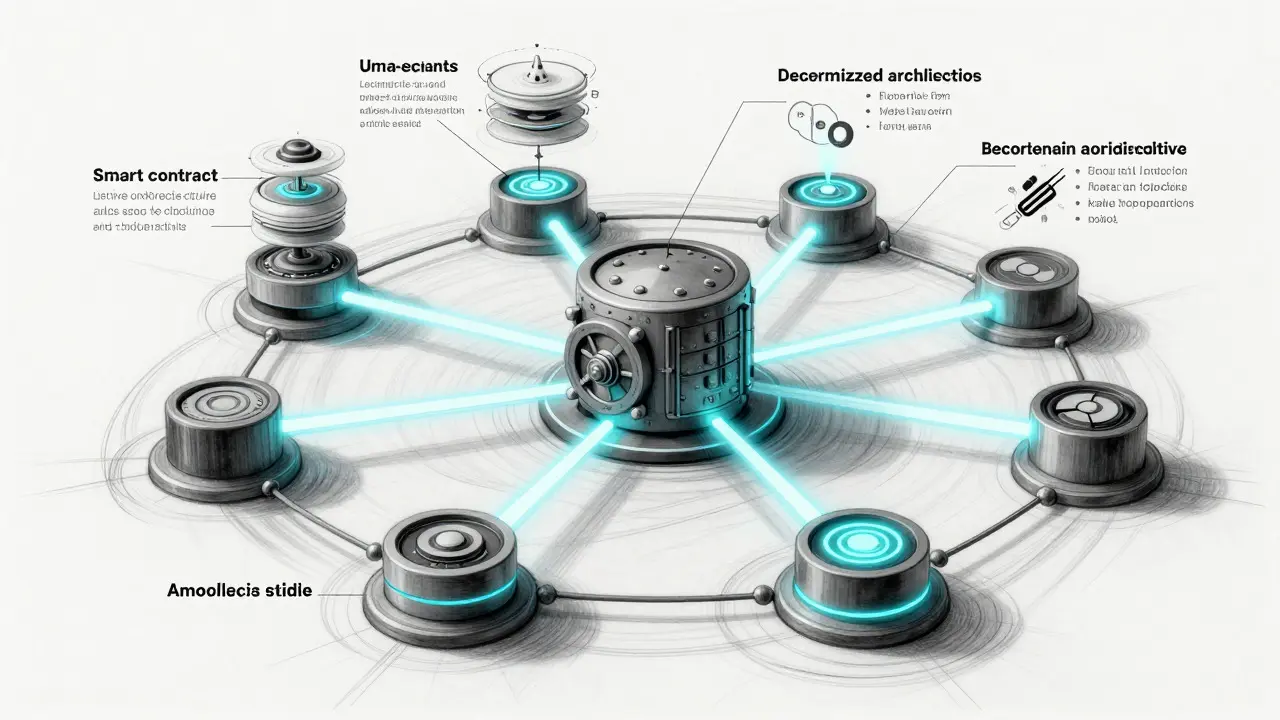
The industry is waking up to the dangers of centralization. We are seeing a clear shift toward decentralized architectures that remove the human element from custody. Projects like sBTC (secured by Keep Network) use a distributed network of nodes to sign transactions, meaning no single company controls the Bitcoin. Similarly, renBTC uses a proof-of-stake network to manage the wrapping process.
However, even these solutions have limitations. They often require complex multi-signature setups or rely on oracles that can be manipulated if enough validators collude. The next evolution is not just about who holds the keys, but how the chains communicate. This is where omnichain protocols like LayerZero come into play. Unlike traditional bridges that lock and mint tokens, LayerZero enables direct communication between contracts on different chains. This allows for "native" wrapped assets that don’t need a heavy custodial overhead. By August 2026, LayerZero and similar technologies have captured nearly 18% of the market share, signaling a major vote of confidence from users tired of bridge hacks.
Regulatory Headwinds and Accounting Realities
Technology moves fast, but law moves slower. And right now, wrapped assets are sitting in a regulatory gray area that could explode. The Financial Accounting Standards Board (FASB) issued ASU 2023-08, which changed how crypto assets are accounted for. Crucially, it excluded assets that provide enforceable rights to underlying goods. Because wrapped tokens represent a claim on a specific underlying asset held by a third party, accountants are struggling to classify them. Are they commodities? Securities? Derivatives?
In Europe, the Markets in Crypto-Assets (MiCA) regulation is forcing issuers to prove solvency and transparency. For custodial wrapped tokens, this means audits must be public and frequent. For decentralized versions, it raises questions about liability. If a decentralized bridge fails, who is responsible? The code? The validators? The user? Deloitte and Chainalysis reports from late 2023 highlighted that 63% of wrapped token volume involves activities that regulators are watching closely. As we settle into 2026, expect to see many smaller, non-compliant wrapped token projects shut down or forced to adopt stricter identity verification (KYC) for minters, which ironically goes against the ethos of privacy-focused crypto.
What the Future Looks Like: Standardization and Consolidation
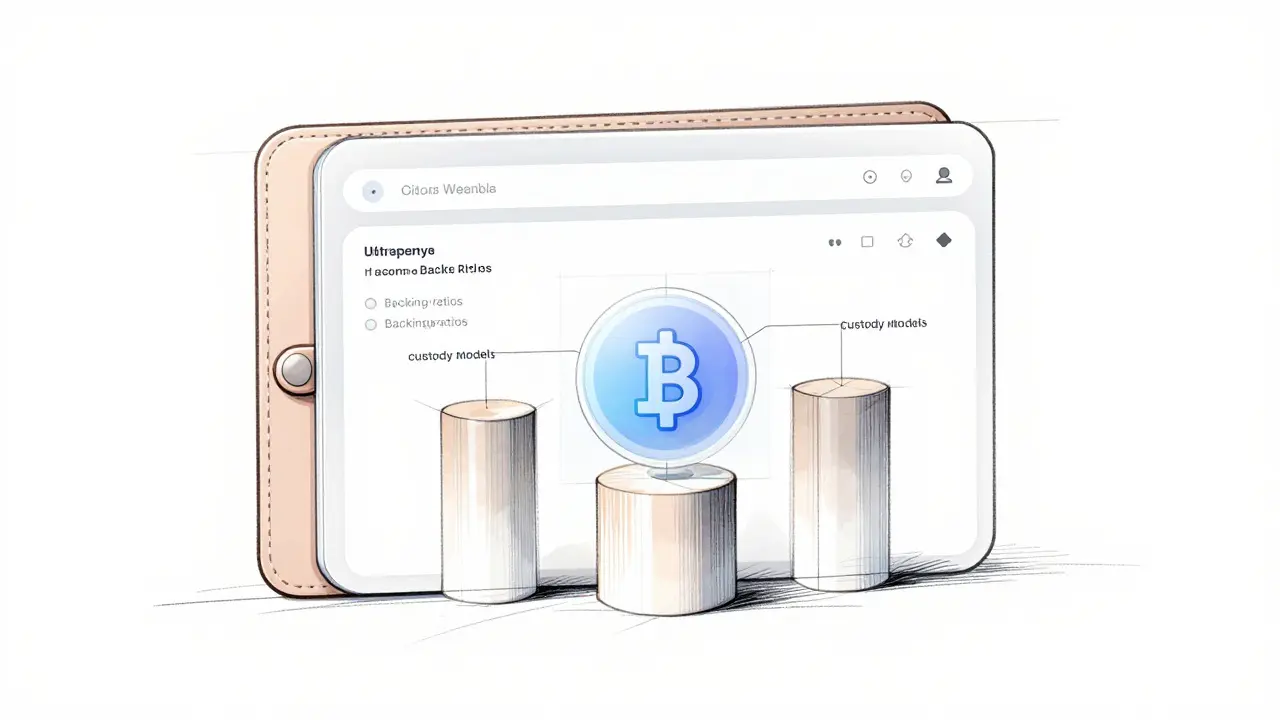
So, what does the endgame look like? Industry analysts predict consolidation. We won’t have 87 different standards forever. The market will likely converge around three to five major protocols that offer high security, low cost, and regulatory compliance. The Ethereum Foundation’s EIP-6454 proposal, which aims to standardize metadata for wrapped tokens, is a step in the right direction. Imagine a wallet that automatically recognizes a wrapped asset, displays its backing ratio, and warns you if the custody model changes. That level of transparency is coming.
We are also moving toward true atomic swaps. Instead of locking Bitcoin in a vault and minting a fake Bitcoin on Ethereum, future standards may allow for instant, trustless exchanges between chains without intermediate wrapped tokens. This reduces the attack surface significantly. While this technology is still maturing, the trajectory is clear: wrapped assets are a transitional technology. They were necessary to bootstrap DeFi, but they are not the final destination. The goal is native interoperability, where the concept of "wrapping" becomes obsolete because the chains themselves understand each other.
Practical Advice for Users and Developers
If you are a user, stop treating all wrapped tokens as equal. Check the TVL, check the auditor reports, and most importantly, check who holds the keys. Stick to established standards like WBTC or WETH for large amounts, but diversify across chains to minimize exposure to any single bridge protocol. Use hardware wallets and verify contract addresses manually. The days of blindly trusting a DApp interface are over.
For developers, build with modularity. Don’t hardcode your dApp to work only with WBTC. Design your interfaces to accept any ERC-20 compliant token and allow users to choose their preferred wrapped asset. This flexibility will make your application more resilient as standards evolve. Also, pay attention to gas costs. Wrapped token operations involve multiple transactions, which can eat into yields. Optimizing for Layer 2 solutions like Arbitrum or Optimism, where gas fees are negligible, is essential for a good user experience.
What is the main risk associated with wrapped assets?
The primary risk is custodial failure or smart contract exploits. Since wrapped assets rely on intermediaries (custodians) or bridges to maintain their peg, a hack or insolvency of the custodian can lead to total loss of funds. Over $2.1 billion has been lost to such incidents between 2020 and 2023.
Will wrapped tokens become obsolete?
Eventually, yes. Wrapped tokens are a transitional solution. As native cross-chain interoperability protocols (like LayerZero) mature, the need for locking assets in vaults and minting representations will decrease. True atomic swaps will allow assets to move directly between chains without wrapping.
How does regulation affect wrapped assets in 2026?
Regulations like MiCA in Europe and FASB guidelines in the US are forcing greater transparency. Issuers must prove full backing, and accounting treatments are becoming stricter. This may lead to fewer, more compliant wrapped token options and increased KYC requirements for minting large amounts.
Is WBTC safe to use?
WBTC is considered one of the safer options due to its high liquidity, extensive audit history, and governance by a DAO comprising 15 entities. However, it still carries custodial risk because BitGo and other partners hold the private keys. It is not fully decentralized.
What is the difference between ERC-20 and SPL wrapped tokens?
ERC-20 is the standard for tokens on the Ethereum blockchain, while SPL is the standard for tokens on the Solana blockchain. They are not interchangeable. To move value between them, you must use a cross-chain bridge, which introduces additional complexity and risk.