Imagine signing up for a new Bidesk account, excited by the promise of rock-bottom fees and a clean interface, only to find yourself unable to withdraw your money months later. That was the reality for thousands of traders when this platform abruptly announced its shutdown in October 2021. While many still search for "Bidesk crypto exchange review" to understand what went wrong or if it’s still viable, the answer is stark: Bidesk is no longer operational.
This isn't just another outdated review. It’s a case study on why low fees alone don’t make an exchange safe. If you’re looking at Bidesk now, you’re likely doing post-mortem research or comparing it against current low-cost alternatives. Let’s break down exactly what Bidesk offered, why it failed, and what red flags you should spot before trusting your next dollar to a similar offshore platform.
What Was Bidesk? The Core Proposition
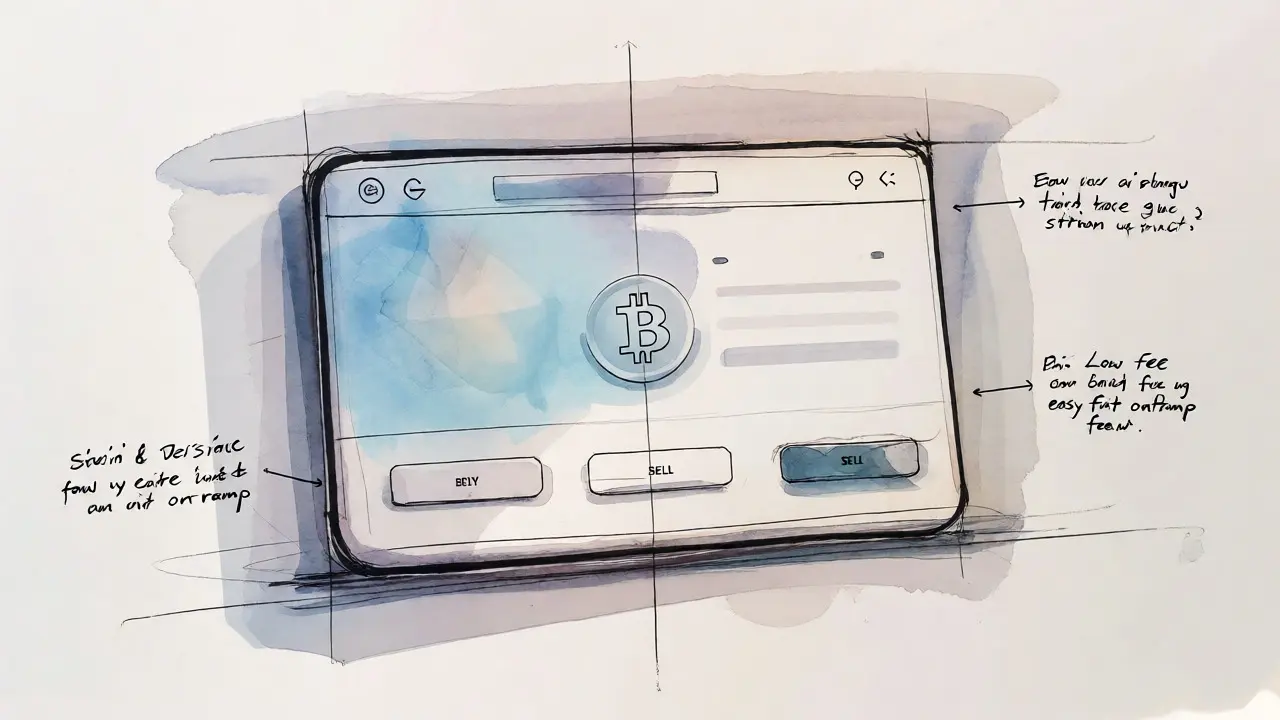
Bidesk was a centralized cryptocurrency exchange registered in the British Virgin Islands that operated from October 2019 until late 2021. Its main pitch was simplicity and cost-efficiency. Unlike complex platforms like Binance or Coinbase, which can overwhelm beginners with charts and derivatives, Bidesk kept things bare-bones. You could buy Bitcoin with a credit card, trade spot pairs, and dabble in futures without needing a finance degree.
The platform targeted entry-level traders who wanted easy fiat on-ramps. Through a partnership with Moonpay, users could deposit USD or EUR via Visa or MasterCard. This feature made it accessible to people who didn’t have crypto yet but wanted to get started quickly. However, convenience came at a price-literally. Card deposits incurred a steep 4.50% fee, while wire transfers were cheaper at 1.00%. For comparison, major exchanges often charge closer to 3.50-4.00% for cards, so Bidesk wasn’t actually the cheapest option for funding accounts, despite its low trading fees.
Fees and Token Utility: The BDK Model
The biggest draw for Bidesk was its flat trading fee structure. Whether you were a maker (providing liquidity) or a taker (removing liquidity), the fee was a fixed 0.10%. This was competitive. In 2021, industry averages hovered around 0.20-0.25%, though newer exchanges were pushing toward 0.10-0.15%. To sweeten the deal, holding their native utility token, BDK, allowed users to access exclusive features and participate in Initial Exchange Offerings (IEOs).
BDK was an ERC-20 token on the Ethereum blockchain with a fixed supply of 100 million tokens. At its peak, it traded around $0.012. The idea was that as the exchange grew, demand for BDK would rise, increasing its value. But here’s the catch: there were no robust burning mechanisms to reduce supply over time. Without deflationary pressure, the token struggled to maintain value, especially as trading volumes remained modest. Analysts noted that relying heavily on token utility for revenue generation is a risky strategy for smaller exchanges, and in Bidesk’s case, it proved fatal.

Trading Features and User Experience
Did Bidesk offer enough tools to keep traders engaged? For beginners, yes. The interface was clean, with standard order books and simple buy/sell buttons. A YouTube review from 2021 highlighted how quickly new users could onboard, noting it took about 15 minutes to complete KYC verification and start trading. The mobile app supported Android 6.0+ and iOS 12+, making it accessible on most smartphones.
However, advanced traders found the platform lacking. There were no stop-limit orders, which are essential for managing risk in volatile markets. The selection of cryptocurrencies was also limited, supporting roughly 50 trading pairs compared to Binance’s 1,000+. Futures trading was available for BTC/USDT, ETH/USDT, and BCH/USDT, placing it among the minority of exchanges offering derivatives at the time. Yet, liquidity on these pairs was thin. Order book depth averaged just 1.23 BTC equivalent, far below the industry leader average of 8.47 BTC. This meant large trades could slip significantly in price, eroding profits.
| Feature | Bidesk | Binance | Coinbase |
|---|---|---|---|
| Maker/Taker Fee | 0.10% Flat | 0.015-0.10% | ~0.50% |
| Card Deposit Fee | 4.50% | Variable (~2-4%) | Variable (~3-5%) |
| Withdrawal Fees | Network Only | Fixed + Network | Fixed + Network |
| Asset Selection | ~50 Pairs | 1,000+ Pairs | 200+ Assets |
| Regulatory Jurisdiction | British Virgin Islands | Global Licenses | US Regulated |
Security, Liquidity, and Red Flags
Security is always the elephant in the room for offshore exchanges. Bidesk claimed to use cold storage, two-factor authentication (2FA), and encryption protocols. However, detailed audits were scarce. Wallet Scrutiny’s technical audit raised concerns about "operational transparency," a common issue for exchanges based in tax-friendly jurisdictions like the British Virgin Islands. These locations often lack the stringent reporting requirements found in the US, UK, or EU.
Liquidity issues manifested in real-world problems. Users reported frequent API downtimes, which disrupted bot trading strategies. During high-volatility periods, the platform suffered from 500 errors, preventing users from executing trades when they needed them most. One Reddit thread documented 17 users unable to withdraw funds during a 72-hour outage. While these issues were eventually resolved, they signaled structural instability. Customer support response times averaged 72 hours, which is unacceptable when your money is stuck in limbo.

The Shutdown: Why Did Bidesk Fail?
On October 22, 2021, Bidesk announced its closure. No grand farewell, no detailed explanation-just a notice that services were ending. Why did it happen? Several factors converged:
- Insufficient Volume: Daily trading volume averaged $28.7 million. Industry data suggests exchanges need at least $50 million daily to be profitable without massive external funding.
- Regulatory Pressure: As global regulators tightened rules on offshore entities, operating from the BVI became harder and more expensive.
- Token Dependency: Over-reliance on BDK token sales for revenue created a fragile financial model. When token prices dropped, cash flow dried up.
- Competition: Larger exchanges like KuCoin and Gate.io offered better liquidity and more assets, drawing away Bidesk’s core user base.
Chainalysis’ 2022 Crypto Crime Report noted that 23% of exchanges active in 2019 had ceased operations by end-2021. Bidesk was part of this trend. Unfortunately, there was no official migration path for BDK holders. Tokens effectively became worthless, leaving investors with losses.
Lessons for Today’s Traders
If you’re eyeing a new, low-fee exchange today, ask yourself these questions inspired by Bidesk’s failure:
- Where is it regulated? Offshore doesn’t mean bad, but it does mean less protection. Check for licenses in major jurisdictions.
- Is liquidity deep enough? Look at the order book. Thin books mean slippage. Use tools like CoinMarketCap to check 24-hour volume per pair.
- How transparent is the team? Can you find out who runs the company? Anonymous teams are a higher risk.
- What’s the business model? If they rely solely on token sales, be wary. Sustainable exchanges earn from trading fees and lending.
Bidesk taught us that a pretty interface and low fees aren’t enough. Trust is built through consistency, transparency, and regulatory compliance. Don’t let the allure of 0.10% fees blind you to the risk of losing 100% of your capital.
Is Bidesk crypto exchange still open?
No, Bidesk officially shut down its operations in October 2021. It is no longer possible to trade or withdraw funds from the platform.
What happened to the BDK token after the shutdown?
The BDK token lost most of its value following the exchange's closure. With no buyback program or clear liquidation process, circulating tokens became effectively worthless for most holders.
Why did Bidesk close down?
Primary reasons included low trading volume ($28.7M daily), insufficient liquidity, heavy reliance on token sales for revenue, and increasing regulatory pressures on offshore exchanges in the British Virgin Islands.
Was Bidesk a scam?
Most evidence suggests Bidesk was not a deliberate scam but rather a failed business venture. It provided services for nearly two years but lacked the sustainability and liquidity to compete with larger players.
Can I still withdraw my money from Bidesk?
For most users, no. The platform ceased withdrawals shortly after announcing its shutdown. Some users may have recovered funds during the wind-down period, but the window has long passed.