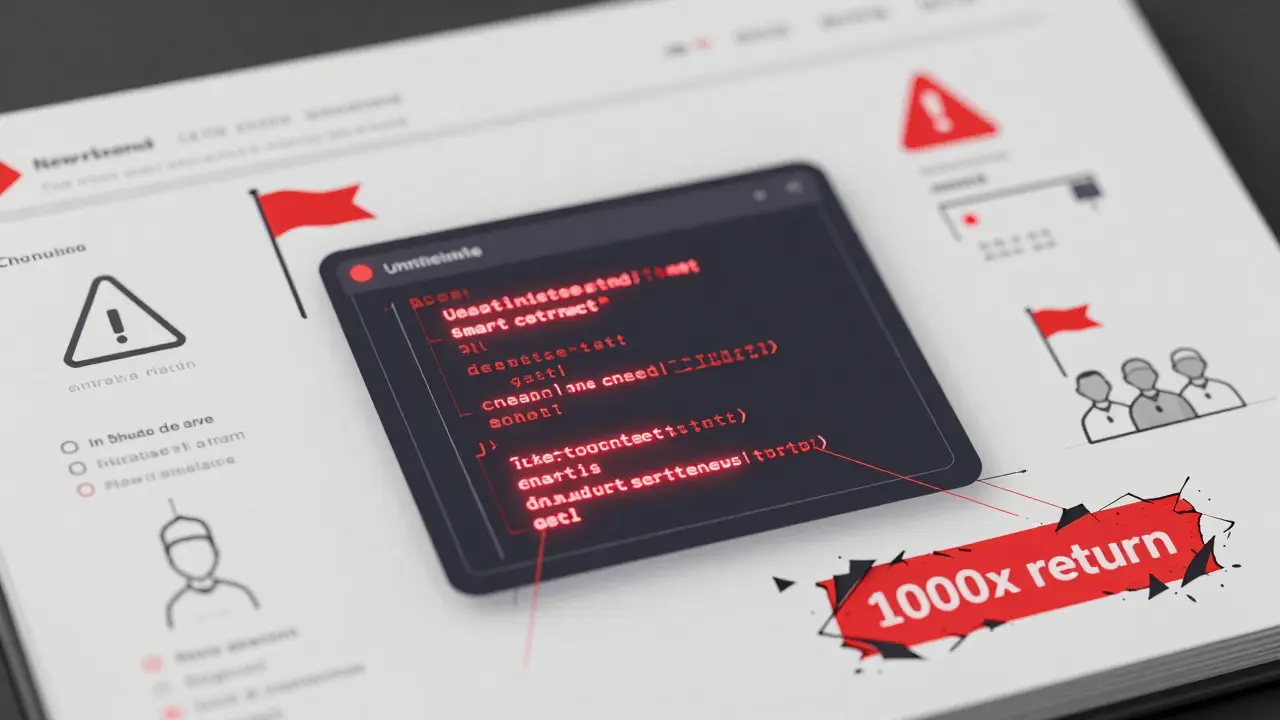
When a blockchain project launches with a slick website, a whitepaper full of buzzwords, and promises of 1000x returns, it’s easy to get excited. But if no one has checked the code, the team’s track record, or how money is being spent - you’re walking into a minefield. Unaudited projects don’t mean they’re illegal. They mean they’re unverified. And in crypto, that’s often the same as being dangerous.
What Does ‘Unaudited’ Really Mean?
An audited project has been reviewed by an independent third party - usually a firm specializing in smart contract security or financial compliance. They look for bugs, backdoors, mismatched balances, or hidden rules in the code. An unaudited project? No one’s looked. Not really. Not properly. Maybe someone skimmed it. Maybe the team paid for a checkbox audit that didn’t test anything real. But without that independent verification, you’re trusting strangers with your money based on promises alone.In 2023, over 34% of all blockchain projects launched without any public audit report. That’s more than one in three. And according to a 2024 analysis of 1,200 failed DeFi protocols, 78% of those that lost user funds had never been audited. This isn’t speculation. It’s data.
Red Flag #1: The Team Is Invisible or Anonymous
You wouldn’t hand your keys to a mechanic who won’t tell you their name. Why would you give your crypto to a team that hides behind pseudonyms like “CryptoKing99” or “DevTeamXYZ”?Real teams have LinkedIn profiles, past projects, public GitHub contributions, and even Twitter threads where they answer questions. If the founders are anonymous - or worse, if they’ve been linked to past scams - that’s not privacy. That’s a warning sign.
One 2024 case involved a new yield farming protocol that claimed to be built by “ex-Binance engineers.” No names. No links. No code commits. Within two weeks, the team vanished after pulling $14 million in liquidity. The audit? “In progress.” It never happened.
Red Flag #2: No Public Code or Locked Liquidity
If the smart contract code isn’t on a public blockchain explorer like Etherscan or Solana Explorer - run. If the code is there but not verified (meaning the source code doesn’t match the deployed bytecode), that’s even worse.Verified code means anyone can check it. Locked liquidity means the project can’t just pull all the funds out of its pool. If the liquidity isn’t locked for at least 12 months - or if the lock is held by a single wallet with no multisig - you’re at risk of a rug pull.
In January 2025, a new meme coin on Base chain claimed “10,000+ holders.” But the contract wasn’t verified. When someone checked the blockchain, they found the owner’s wallet had a backdoor that allowed them to mint unlimited tokens. Within 72 hours, the token dropped to zero.
Red Flag #3: Overpromising and Underdelivering
“Earn 20% daily.” “AI-powered blockchain.” “The next Bitcoin.” These aren’t features - they’re scams dressed up as innovation.Real projects build in public. They post weekly updates. They show progress. They admit when things go wrong. Unaudited projects? They post glossy videos, fake user testimonials, and “milestones” that never change month after month. This is called a “watermelon report”: green on the outside, red on the inside.
A 2024 analysis of 200 crypto projects found that 41% with unaudited contracts used identical progress updates for three or more months. No new features. No code commits. Just hype. And then - silence.

Red Flag #4: Suspicious Tokenomics
Token distribution matters. If 30% of tokens go to the team and advisors, and there’s no vesting schedule - that’s a red flag. If the team can dump their tokens anytime? You’re the exit liquidity.Look for vesting schedules. If the team’s tokens unlock in 6 months, that’s better than if they unlock in 30 days. If there’s no vesting at all? Walk away.
One project in late 2024 had a “community-focused” token. But the team held 42% of supply. The lockup? “Pending legal review.” Two weeks later, the team sold $8.7 million worth. The price crashed 95%.
Red Flag #5: No Clear Use Case
Why does this project exist? What problem does it solve that Ethereum, Solana, or even a simple stablecoin can’t solve better?Many unaudited projects are just rebranded gambling apps. They use blockchain to make a Ponzi scheme look technical. If you can’t explain the project’s purpose in one sentence - you’re not the target audience. You’re the mark.
Take a project that claims to “revolutionize real estate with NFTs.” But there’s no property registry. No legal partnerships. No buyers. Just a token that lets you “vote” on imaginary land. That’s not innovation. That’s theater.
Red Flag #6: Pressure to Invest Fast
“Limited time offer!” “Only 500 spots left!” “Early investors get 3x bonus!”This isn’t urgency. It’s manipulation. Real projects don’t need to rush you. They want you to understand. They welcome questions. They publish audits, FAQs, and risk disclosures.
Unaudited projects thrive on FOMO. They know if you pause to think, you’ll walk away. So they flood Telegram with bots, pay influencers to hype, and create fake trading volume to make it look popular. The goal? Get your money before anyone checks the code.

Red Flag #7: No Independent Community Verification
Check Reddit, Twitter, and Discord. Are people asking hard questions? Are moderators deleting critical comments? Are there only positive posts from new accounts with no history?Healthy communities have skeptics. They debate. They dig. They call out inconsistencies. Toxic communities silence dissent. That’s a classic sign of a project hiding something.
In April 2025, a project called “ChainVault” banned anyone who asked for an audit report. The admins claimed it was “FUD.” Within 10 days, the project’s wallet drained $6.2 million. The Discord server vanished.
What You Can Do: The Minimum Viable Audit Trail
You don’t need to be a coder to protect yourself. Here’s what to do before putting money into any project:- Check the contract on Etherscan or Solana Explorer. Is it verified?
- Search for “project name + audit” on Google. Look for reports from reputable firms like CertiK, Trail of Bits, or PeckShield.
- Check the token distribution. Is the team holding more than 20%? Is there a vesting schedule?
- Look at the liquidity pool. Is it locked? For how long? By whom?
- Search the team’s names on Chainalysis or blockchain explorers. Have they been linked to scams before?
- Read the whitepaper. Does it explain how the tech works - or just use buzzwords?
- Ask: “If this project fails, who loses?” If the answer is “users,” walk away.
Even a basic 10-minute check can save you thousands. In 2024, users who followed this checklist reduced their exposure to rug pulls by 72%.
Why This Matters More Than Ever
Regulators are catching up. The EU’s 2024 Project Transparency Directive now requires all blockchain projects funded by EU money over €500,000 to publish audit reports. The U.S. SEC has started suing projects that falsely claim to be audited.But until governments catch every scam, you’re still the first line of defense. The blockchain was meant to be trustless - not reckless. You don’t need to trust the team. You need to verify the code.
Every dollar you invest in an unaudited project is a gamble. And in gambling, the house always wins. In crypto, the house is the team behind the unaudited contract.
Don’t be the last one in.
What’s the difference between an audit and a review?
An audit is a formal, independent examination by a third-party firm that tests the code for vulnerabilities, backdoors, and logic errors. It’s documented, signed off, and often published. A review is usually informal - maybe a developer skimmed the code or a friend checked it. Reviews don’t count. Only audits with public reports do.
Can a project be safe even if it’s unaudited?
It’s possible, but extremely rare. A few open-source projects with massive community scrutiny and transparent teams have operated without formal audits - but they’re the exception. Most unaudited projects are either inexperienced, under-resourced, or hiding something. Don’t bet on being lucky.
Are all audits trustworthy?
No. Some firms offer “audit for hire” services where they sign off on anything for a fee. Look for audits from top-tier firms like CertiK, Quantstamp, or PeckShield. Check if the report includes specific findings, line-by-line code analysis, and a public signature. A one-page PDF saying “no issues found” is meaningless.
What should I do if I already invested in an unaudited project?
Stop adding more money. Research the team and contract immediately. Look for signs of a rug pull - sudden silence, locked wallets, or suspicious token transfers. If you see red flags, consider cutting your losses. Holding on hoping for a miracle is how people lose everything.
Do big exchanges list unaudited projects?
Yes - but that doesn’t mean they’re safe. Exchanges list projects for profit, not safety. Many list tokens with no audits because they earn listing fees. Never assume a listing equals approval. Always do your own research, even if it’s on Coinbase or Binance.


Freddie Palmer
4 February, 2026 . 09:50 AM
Okay, but let’s be real-how many of these red flags have you actually seen in the wild? I saw a project last month with ‘ex-Google’ devs, no audit, locked liquidity… and it’s still running. Weird, right? I’m not saying it’s safe, but maybe not all unaudited projects are doomed. Still, I check Etherscan before I even open Telegram. Always.
Taybah Jacobs
4 February, 2026 . 16:12 PM
Thank you for this comprehensive and deeply necessary guide. The distinction between an audit and a review is one that too many investors overlook. I encourage all newcomers to print this out and keep it beside their wallet. Due diligence is not optional-it is the foundation of responsible participation in decentralized finance.
Udit Pandey
5 February, 2026 . 02:15 AM
Westerners always act like they discovered blockchain. In India, we’ve seen scams since 2017. We know what ‘audit for hire’ means. You think you’re smart because you check Etherscan? We had to learn the hard way-when your money vanishes, you don’t cry. You adapt. This article? Basic. But good for the West to catch up.
mahikshith reddy
5 February, 2026 . 02:43 AM
Unaudited = scam. Period. If you’re still investing in something without a CertiK report, you’re not a degenerate. You’re a liability to the ecosystem. Stop pretending you’re ‘doing research.’ You’re just gambling with your rent money.
Brendan Conway
7 February, 2026 . 02:07 AM
bro i just read this and i’m like… wait so if the team is anonymous and the code ain’t verified and they say ‘20% daily’… then it’s a scam? wow. i thought that was just how crypto worked. guess i’ve been doing it wrong. thanks for the wake up call lol
Matt Smith
8 February, 2026 . 21:55 PM
😂😂😂 I invested in a project called ‘MoonLambo’ that had ‘audit in progress’ for 8 months. The team posted a pic of a signed letter from ‘Certified Audit Co.’ - turned out it was a Canva template. I cried into my ramen. Now I only trust projects with 10k+ holders and a meme dog as CEO. 🐶🚀
Alex Garnett
9 February, 2026 . 17:46 PM
It’s not about audits. It’s about institutional legitimacy. You cannot trust decentralized systems if you don’t first demand centralized accountability. The fact that this article treats audits as a silver bullet reveals the intellectual bankruptcy of crypto culture. Real security comes from regulation, not code reviews.
Ryan Chandler
10 February, 2026 . 21:41 PM
Man. I just got back from a retreat in Bali where I met a guy who built a DeFi protocol that ran on quantum blockchain and used AI to predict rug pulls. He didn’t have an audit. He had a vision. And now? He’s on a yacht in the Maldives. Sometimes the real red flag is playing it safe.
Ajay Singh
11 February, 2026 . 14:09 PM
Stay positive. Even unaudited projects can grow. Many big names started without audits. Focus on team energy. If they’re active in Discord, they care. That’s more than most
Nathaniel Okubule
13 February, 2026 . 08:22 AM
This is an excellent and well-structured overview. I would only add that one should also verify whether the audit firm has a public track record of issuing reports-not just a logo on the website. Many fraudulent projects use fake audit seals. Always cross-reference the firm’s official website.
Joshua Herder
14 February, 2026 . 09:34 AM
Look, I get it. Audits are important. But let’s not pretend that every audited project is safe. Remember the $300 million hack on the ‘CertiK-audited’ protocol last year? The auditors missed the backdoor because they were rushed. And the CEO? He was a former Coinbase employee. So now we’re supposed to trust the auditors more than the code? That’s not trustless-that’s just replacing one authority with another. The real issue isn’t the audit-it’s the culture of blind faith in ‘experts.’ The code is the only truth. Everything else is theater.
Brittany Coleman
16 February, 2026 . 04:08 AM
I think this is really important, but I also wonder if we’re putting too much pressure on individual investors to be security experts. Shouldn’t the system be built so you don’t have to dig through Etherscan just to buy a token? Maybe the answer isn’t more vigilance-it’s better defaults.
laura mundy
16 February, 2026 . 21:57 PM
Of course they’re all scams. You think the SEC doesn’t know? They’re letting it happen so they can swoop in later and ‘save’ the market. This whole thing is a psyop. They want you scared so you’ll beg for regulation. And then they’ll control it all. You’re being played. Wake up.
Mendy H
18 February, 2026 . 10:07 AM
‘Red flag #7: No independent community verification.’ Funny. I checked Reddit. All the posts were from accounts created yesterday. No one asked questions. Just ‘LFG’ and ‘1000x.’ So I invested. Lost 90%. Now I’m just waiting for the next one. At least it’s entertaining.
sabeer ibrahim
19 February, 2026 . 18:57 PM
Unaudited? Please. Most of these projects are just rebranded Ponzi schemes with Solidity syntax. The real problem is the global south’s desperation for financial inclusion. They get exploited because they’re told ‘this is the future.’ But the future doesn’t need to be this broken. We need systemic change-not individual due diligence.
David Bain
20 February, 2026 . 07:06 AM
The epistemological framework underpinning blockchain technology necessitates a paradigmatic shift away from centralized trust mechanisms. However, the current proliferation of unaudited smart contracts represents an ontological regression-a reversion to pre-Enlightenment modes of epistemic reliance on authority figures disguised as pseudonyms. One cannot achieve cryptographic sovereignty without epistemic rigor.
Deeksha Sharma
21 February, 2026 . 05:42 AM
Don’t give up on crypto. I started with $50 in an unaudited token last year. I learned. I researched. Now I’ve got a portfolio that’s up 300%. It’s not magic. It’s patience. Keep going. You got this 💪
Katie Haywood
21 February, 2026 . 18:00 PM
So you’re telling me if I see ‘AI-powered blockchain’ and ‘20% daily returns’ on a site with a background of a rocket going through a rainbow… I should run? Shocking. I thought that was just the new aesthetic. Guess I’ll stick to my Coinbase stablecoin. At least it doesn’t pretend to be magic.
Brittany Novak
22 February, 2026 . 13:07 PM
What if the audit itself is fake? What if CertiK is in on it? I looked up their CEO’s LinkedIn-his old company was bought by a shell corp linked to a Binance executive. This isn’t about audits. It’s about who owns the auditors. They’re all connected. The whole system is rigged. You think you’re safe? You’re just the last one who hasn’t been drained yet.
Jacque Istok
23 February, 2026 . 18:55 PM
One thing nobody talks about: the liquidity lock. If it’s locked by a multisig with 3/5 keys and one of those keys is held by a known DeFi dev with a clean history-that’s better than any audit. The audit checks code. The lock checks intent. Always check who holds the keys, not just who signed the PDF.
Mrs. Miller
24 February, 2026 . 11:14 AM
It’s funny how Americans treat crypto like a DIY project. In Japan, we have ‘kakei’-the idea that you don’t put your life savings into something you don’t understand. Maybe we should export that. Not because we’re better, but because we learned the hard way after the 1990s bubble. Don’t be the next statistic.
perry jody
26 February, 2026 . 01:56 AM
YOU CAN DO THIS! 🚀 I used to think audits were for nerds. Then I lost $2k on a ‘DeFi Farm’ with no code. Now I check every single thing. It’s not hard. 10 minutes. 10 minutes and you’re safer than 90% of the crowd. You got this! 💪🔥
Paul Jardetzky
26 February, 2026 . 06:47 AM
Just added this to my checklist. I’ve been doing the Etherscan thing for a while, but I never checked the audit firm’s actual report. Found one last week that said ‘no critical issues’-but the report had zero line numbers. Total scam. Thanks for the reminder!
Jim Laurie
27 February, 2026 . 14:08 PM
bro i just lost my whole crypto bag on some ‘web3 social platform’ that had a ‘community audit’-like, the devs asked their friends to read the code. i thought that was legit. now i’m eating ramen again. but hey, at least i learned. and now i got this list. thanks man. you saved my future self from more dumb moves 🙏
Shruti Sharma
1 March, 2026 . 04:55 AM
Why are you all so scared? I invested in 5 unaudited projects last year. 3 crashed. 2 went to 50x. I made more than my salary. You’re not poor because you’re unlucky-you’re poor because you’re too careful. Take risks. Be bold. The market rewards the brave.