Imagine waking up to find that the digital assets you’ve been quietly accumulating are now technically contraband. That’s the reality for anyone holding Bitcoin or Ethereum in Algeria today. It isn’t just a gray area anymore; it’s a hard line drawn by Law No. 25-10, which criminalizes virtually every aspect of cryptocurrency activity within the country's borders. If you’re an Algerian resident, a business owner operating there, or even a developer building blockchain tools accessible from Algiers, the stakes have shifted dramatically from "unclear" to "criminal." This article breaks down exactly what the law prohibits, how severe the punishments are, and why this move stands in stark contrast to the rest of the Middle East and North Africa (MENA) region.
The Shift From Ambiguity to Criminal Liability
For years, Algeria existed in a regulatory limbo. The 2018 Financial Law mentioned restrictions on virtual currencies but lacked teeth. There were no clear enforcement mechanisms, no defined penalties, and honestly, not much policing. People traded peer-to-peer, used stablecoins for savings against inflation, and operated in a shadow economy. That changed on July 24, 2023. Parliament passed Law No. 25-10, formally titled the "Amendment to Regulations Aimed at Combating Terrorism and Money Laundering."
This wasn't just a tweak; it was a comprehensive crackdown. The law explicitly defines cryptocurrencies as "virtual instruments used as means of exchange via a computer system, without support from a central bank." More importantly, it states that the purchase, sale, use, and holding of these currencies are strictly prohibited. Unlike its predecessor, Law No. 25-10 codifies specific criminal liabilities. Authorities now have broad powers to monitor digital transactions, turning what was once a risky hobby into a potential legal nightmare. The government framed this as necessary alignment with the Financial Action Task Force (FATF) guidelines to combat money laundering and terror financing, though critics argue it stifles financial innovation.
What Exactly Is Banned?
You might think the ban only applies if you’re running a crypto exchange in downtown Algiers. Think again. The scope of Law No. 25-10 is exceptionally broad. It doesn’t just target active traders; it targets passive holders, promoters, and facilitators. Here is what falls under the hammer:
- Issuance and Mining: Creating new tokens or mining existing ones like Bitcoin is illegal.
- Possession and Holding: Simply owning crypto in a wallet can be construed as a violation.
- Purchase and Sale: Any transaction involving the exchange of fiat currency for digital assets.
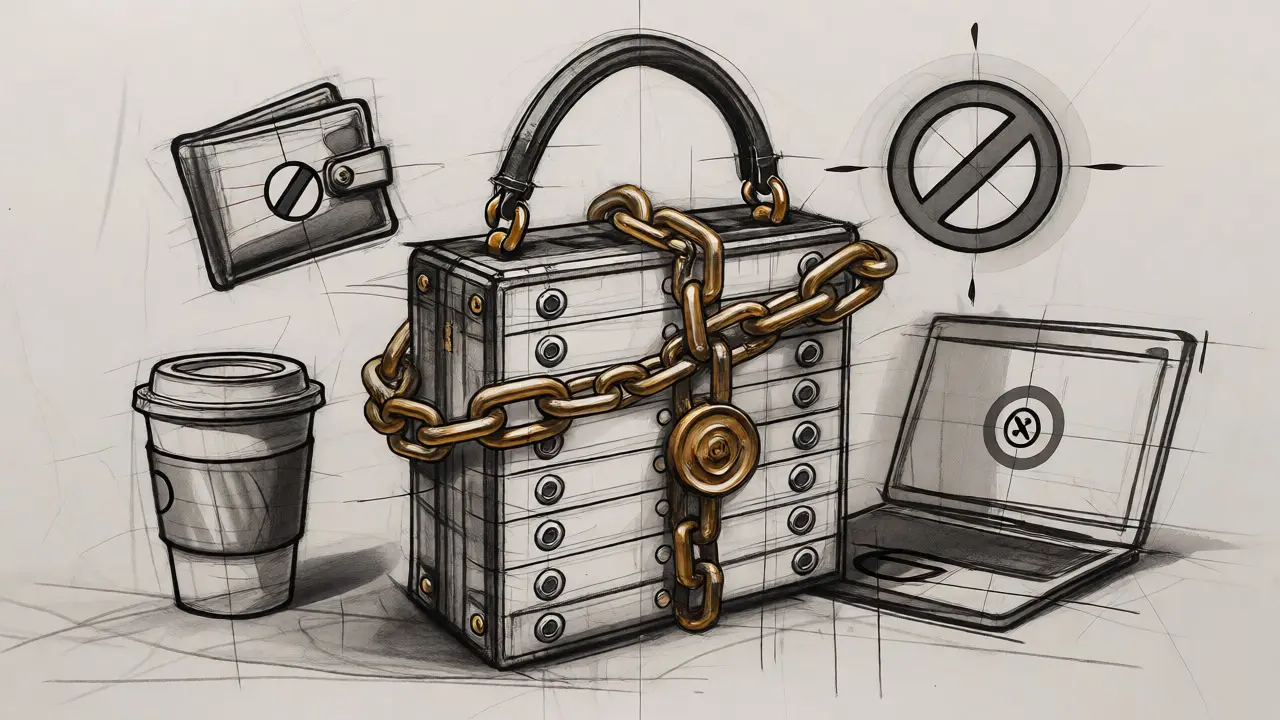
- Services and Infrastructure: This includes hosting blockchain nodes, providing crypto wallets, and operating payment gateways linked to crypto assets.
- Promotion and Education: This is the tricky part. Influencers, advertisers, content creators, and educators who discuss or promote crypto could face liability. Even software developers building blockchain-based tools accessible from Algeria are in the crosshairs.
Essentially, if your activity supports the ecosystem-from buying a coffee with Bitcoin to posting a YouTube video explaining DeFi-you are potentially breaking the law. The inclusion of affiliate marketing for foreign platforms means that earning a commission by referring users to Binance or Coinbase is also prohibited.
Understanding the Penalties: Fines and Prison Time
So, what happens if you get caught? The penalties are structured to be severe enough to deter participation but flexible enough for courts to apply based on context. Reports vary slightly on the exact upper limits due to different interpretations of aggravated cases, but the core structure is consistent across major legal analyses.
| Offense Type | Prison Sentence | Fine Range (DZD) | Fine Range (USD Approx.) |
|---|---|---|---|
| Standard Violation (Trading/Holding) | 2 months to 1 year | 200,000 - 1,000,000 | $1,540 - $7,700 |
| Aggravated Cases / Repeat Offenses | Up to 2 years (doubled terms) | 500,000 - 2,000,000 | $3,700 - $14,700 |
| Linked to Organized Crime/Laundering | Significantly Enhanced | Maximum Fine + Imprisonment | Varies by Case Severity |
Courts have the discretion to impose both imprisonment and the maximum fine simultaneously. For repeat offenders, penalties are often doubled. While a one-year prison sentence might seem manageable for some, the financial hit is substantial relative to average incomes in Algeria. Enforcement bodies may prioritize financial penalties over jail time for smaller infractions, using fines as an administrative tool to discourage widespread adoption without clogging the prison system. However, if your crypto activity is linked to larger schemes-like moving capital out of the country during high inflation-the consequences escalate quickly.
Why Did Algeria Go Hardline?
It’s easy to look at this ban and call it backward, especially when neighbors like the United Arab Emirates and Bahrain are rolling out red carpets for crypto firms. But the Algerian government has specific motivations rooted in economic stability. With high inflation rates and concerns about capital flight, authorities view cryptocurrencies as a threat to monetary policy. They fear that citizens bypassing the banking system to hold dollars or Bitcoin undermines the national currency, the Algerian Dinar.
Furthermore, the lack of regulation made it difficult to track where money was going. By banning it entirely, the state removes the complexity of creating a regulatory framework they feel ill-equipped to manage right now. It’s a blunt instrument approach: if you can’t control it, ban it. This stance aligns Algeria with other restrictive jurisdictions like China and Egypt, placing them in a small minority globally. According to the Cambridge Centre for Alternative Finance, only 8 out of 138 surveyed countries maintain complete bans.
The Economic and Social Fallout
The impact hasn’t been theoretical. Before the ban, Algeria was ranked among the top five fastest-growing crypto markets in the MENA region by Chainalysis. Peer-to-peer trading was vibrant, with thousands of individuals using crypto to hedge against local currency devaluation. Now, that market has effectively evaporated from the public eye.
We are seeing a tangible "brain drain." Skilled blockchain developers and entrepreneurs are packing their bags. Some are relocating to Tunisia or Morocco, where sandbox frameworks allow for experimentation. Others are leaving for Europe or the Gulf. Industry analysts predict that up to 40% of Algeria’s blockchain talent could leave within 18 months of the law’s implementation. For students specializing in this tech, career prospects at home have dimmed significantly. Local startups that relied on crypto funding or services have either shut down or moved operations abroad.
Socially, the community has gone underground. Online groups have disbanded, and content creators are self-censoring. The fear of prosecution creates a chilling effect on education and discussion. You can’t teach a class on smart contracts if mentioning them in a promotional context carries a risk of fines.
Compliance Risks for Businesses and Creators
If you run a business in Algeria, your compliance checklist just got longer. It’s not just about financial audits anymore. Marketing materials, partnerships, and third-party affiliations need scrutiny. Are you accepting payments via a gateway that touches crypto? Are you sponsoring a podcast that talks about Bitcoin? These indirect links can now create liability.
The National Agency for the Fight Against Money Laundering and the Financing of Terrorism (ANLCCFT) has established specialized units to enforce this. They are deploying blockchain analysis tools similar to those used by the US IRS to trace suspicious flows. This means anonymity is less of a shield than it used to be. If you are a digital marketer, influencer, or educator, you need to be extremely careful about how you frame any mention of digital assets. Avoid calls to action that encourage purchasing or holding. Stick to technical explanations if you must, but even that is a gray zone.
How Does This Compare Globally?
To understand the severity, look at the regional landscape. The UAE has the Virtual Assets Regulatory Authority (VARA), offering clear licensing. Saudi Arabia is developing its own framework through the Saudi Central Bank. Morocco and Tunisia are exploring sandboxes. Algeria chose isolation. This divergence creates arbitrage opportunities for investors willing to navigate the risks, but for the average citizen, it means missing out on global financial trends. While the rest of the world moves toward regulated integration, Algeria remains one of the few places where the simple act of holding a digital coin is a crime.
Is it illegal to simply own Bitcoin in Algeria?
Yes, Law No. 25-10 explicitly prohibits the possession and holding of virtual currencies. While enforcement may focus more on active trading, mere ownership is technically a violation subject to fines and potential imprisonment.
What is the maximum fine for crypto violations?
Fines can range from 200,000 to 1,000,000 Algerian Dinars for standard offenses. In aggravated cases or for repeat offenders, fines can reach up to 2 million DZD (approximately $14,700 USD).
Can I still mine cryptocurrency in Algeria?
No, mining is explicitly banned under Law No. 25-10. The law prohibits the issuance and generation of digital assets, which covers all forms of mining activities.
Are educational discussions about crypto illegal?
The law prohibits "promotion," which is vaguely defined. Educational content might survive if it is purely academic and does not encourage purchase or investment, but influencers and content creators face significant uncertainty and risk.
Which agency enforces the crypto ban?
The National Agency for the Fight Against Money Laundering and the Financing of Terrorism (ANLCCFT) is the primary body responsible for monitoring and enforcing the regulations set forth in Law No. 25-10.