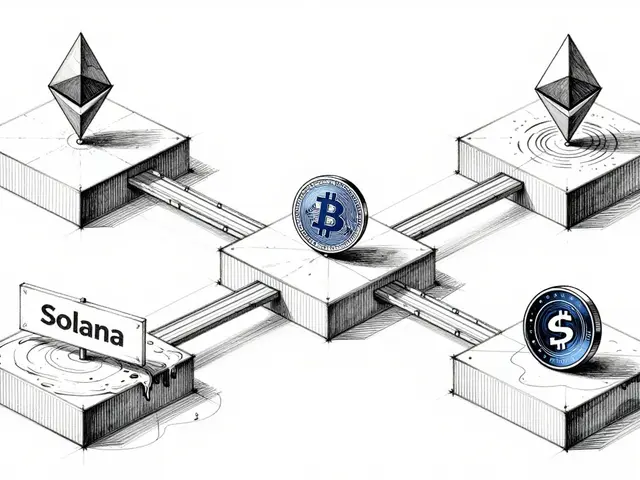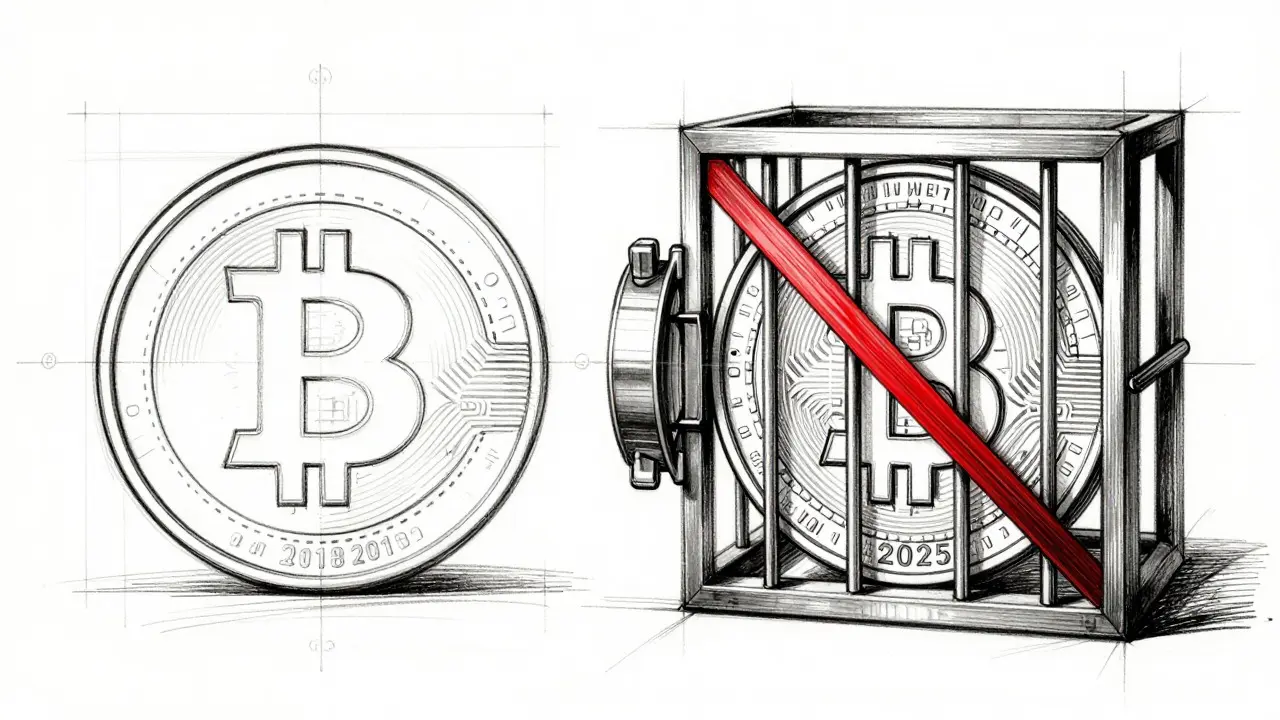
Imagine holding a digital asset that the government technically banned years ago, only to find out it is now a criminal offense punishable by prison. That is the reality for many in Algeria today. While the country first restricted Cryptocurrency is a decentralized digital currency that uses cryptography for security and operates independently of central banks. usage back in 2018, the rules were vague. But as of July 2025, the ambiguity is gone. The new legal framework has turned what was once a gray area into a strict black-and-white prohibition, fundamentally changing how Algerians interact with Digital Assets are assets whose value is stored and verified digitally, often on blockchain technology..
The 2018 Financial Law: A Vague Starting Point
To understand why the current situation feels so sudden, you have to look at where it all began. In 2018, Algeria passed its Financial Law, which introduced the first formal restrictions on virtual currencies. On paper, it prohibited the purchase, sale, and use of these assets. However, the legislation had significant gaps. It did not clearly define penalties or set up specific enforcement mechanisms. This created a confusing landscape where users could technically be breaking the law, but there was little clarity on what "breaking" actually meant in practice.
For several years, this vagueness allowed a discreet crypto community to thrive. Many Algerians continued using cryptocurrencies, driven by high inflation and strict state controls on capital flows. Since the 2018 law lacked teeth, enforcement was inconsistent. People bought, sold, and held coins, knowing the risk existed but assuming they were unlikely to face immediate consequences. It was a period of uncertainty that kept the market alive, albeit underground.
The 2025 Shift: Law No. 25-10 Changes Everything
Everything changed on July 24, 2025, when Algeria enacted Law No. 25-10. Published in the Official Journal, this law was described by local media as a "thunderbolt" hitting the crypto sector. Unlike its predecessor, this legislation leaves no room for interpretation. It establishes a comprehensive criminal prohibition that covers every conceivable interaction with digital assets.
The scope of the ban is unprecedented. It does not just stop trading; it criminalizes almost any involvement with crypto. Here is what is now explicitly prohibited:
- Issuance: Creating new coins or tokens.
- Trading: Buying or selling on any platform.
- Payment: Using crypto as a means of payment.
- Possession: Simply holding virtual assets, whether for investment or casual use.
- Speculation: Betting on price movements.
- Promotion: Advertising, content creation, or even educational discussions about crypto.
- Mining: Using computational power to validate transactions.
This list highlights a key difference from other jurisdictions. Most countries regulate exchanges or miners. Algeria regulates the user. If you hold a wallet with a small amount of Bitcoin, you are technically violating the law. If you post a YouTube video explaining how blockchain works, you might be seen as promoting an illegal activity.

Penalties and Enforcement Mechanisms
The government has made its zero-tolerance stance clear through harsh penalties. Individuals convicted of crypto-related offenses face prison sentences ranging from two months to one year. Fines can range from 200,000 to 1,000,000 Algerian dinars, which translates to approximately $1,540 to $7,700 USD. These figures represent some of the harshest cryptocurrency penalties globally, applying equally to large-scale exchange operators and individual holders of small amounts.
Enforcement is not left to chance either. Multiple government agencies work in coordination to detect and prosecute violations. The Bank of Algeria oversees compliance within the financial system, ensuring banks do not facilitate crypto transactions. The Banking Commission monitors banking institutions, while judicial authorities handle prosecution. Security agencies conduct both digital and physical monitoring to catch illegal activities, particularly those linked to organized crime or terrorism financing. This multi-agency approach creates a dense surveillance network that makes hiding difficult.
| Feature | 2018 Financial Law | 2025 Law No. 25-10 |
|---|---|---|
| Status | Restriction (Vague) | Total Criminal Prohibition |
| Scope | Purchase, Sale, Use | Issuance, Possession, Promotion, Mining, Trading |
| Penalties | Unclear / Undefined | 2 Months - 1 Year Prison; $1,540 - $7,700 Fine |
| Enforcement | Inconsistent / Passive | Active Multi-Agency Coordination |
| User Risk | Low to Moderate | High (Includes Passive Holders) |
Why Did Algeria Go So Hard?
You might wonder why a country would go to such lengths to ban something that is growing globally. The official justification centers on safeguarding national monetary sovereignty. The Algerian Dinar must remain the sole legal tender, and unregulated digital assets are seen as a threat to this control. Beyond sovereignty, the Financial Action Task Force (FATF) guidance on combating money laundering and terror financing played a role. Authorities positioned the ban within a broader anti-money laundering (AML) and counter-terrorist financing (CTF) framework.
Energy consumption is another factor. Algeria relies heavily on energy subsidies, and the high power requirements of proof-of-work mining were viewed as a strain on infrastructure. Finally, there is a deep-seated unease over financial stability. The government views cryptocurrencies as volatile and potentially destabilizing, preferring the predictability of traditional finance over the uncertainty of decentralized markets.

Global Context and Regional Isolation
Algeria’s approach stands in stark contrast to global trends. While Europe refines frameworks like the Markets in Crypto-Assets (MiCA) regulation to integrate crypto into mainstream finance, Algeria has chosen complete prohibition. Even in the Middle East and North Africa (MENA) region, neighbors like the United Arab Emirates and Bahrain have embraced cryptocurrencies with comprehensive regulatory frameworks. The United States has moved toward clearer regulations rather than blanket bans.
This places Algeria in a small group of highly restrictive nations, comparable to China’s earlier stance. However, even China has shown some nuanced exemptions in recent years, whereas Algeria’s law explicitly rejects flexibility. As global adoption expands and institutional investment reaches new highs, Algeria risks becoming increasingly isolated in its financial policies. Local business relationships may suffer as international commerce integrates cryptocurrency options more deeply.
Practical Implications for Users
For the average person in Algeria, the practical implications are severe. The dream of seamless, borderless finance has hit a solid wall. The 2025 law eliminates all legal avenues for participation. Even educational content is targeted, effectively criminalizing the sharing of information about blockchain technology applications. This raises questions about digital rights and the freedom of information in the digital age.
However, enforcement challenges remain. Banning information sharing in a connected world is difficult. The broad scope of the law, targeting passive possession, may prove hard to enforce consistently without creating widespread resentment. Yet, for now, the message is clear: stay away from crypto if you want to avoid legal trouble. The era of the gray market in Algeria is officially over.
Is it illegal to hold cryptocurrency in Algeria in 2026?
Yes. Under Law No. 25-10, enacted in July 2025, the simple possession of virtual assets is a criminal offense. Penalties include fines and potential prison time.
What happened to the 2018 Financial Law restrictions?
The 2018 law was replaced by the much stricter Law No. 25-10 in 2025. The 2018 law was vague and inconsistently enforced, while the 2025 law defines specific criminal penalties for a wide range of activities.
Can I discuss cryptocurrency on social media in Algeria?
It carries risk. The 2025 law prohibits the promotion or advertising of virtual assets in any form. Educational content or information sharing can be interpreted as promotion, making it a potential violation.
Why did Algeria ban cryptocurrency completely?
The main reasons include protecting the Algerian Dinar's status as the sole legal tender, combating money laundering, reducing energy consumption from mining, and maintaining financial stability.
How does Algeria's ban compare to other countries?
Algeria is one of the few countries with a total criminal prohibition. Most other nations, including regional neighbors like UAE and Bahrain, have adopted regulatory frameworks that allow for legal crypto usage.