MiCA Regulation: What It Means for Crypto in Europe and Beyond
When you hear MiCA regulation, the European Union’s landmark framework for crypto assets. Also known as Markets in Crypto-Assets Regulation, it’s the first time a major economy has laid out clear, binding rules for everything from Bitcoin to stablecoins and DeFi platforms. Before MiCA, crypto in Europe was a patchwork of conflicting national laws. Some countries welcomed it. Others banned it. Now, MiCA wipes that chaos away—and it’s not just for Europe. If you trade, hold, or build crypto anywhere, this rule affects you.
MiCA doesn’t just target big exchanges like Binance or Kraken. It covers stablecoins, digital currencies pegged to the euro, dollar, or other assets. Also known as asset-referenced tokens, they must now prove they hold enough reserves to back every coin—no more Terra-style collapses. Then there’s crypto service providers, anyone offering trading, custody, or issuance of digital assets in the EU. Also known as VASPs, they need licenses, audits, and clear terms. No more fly-by-night platforms hiding behind anonymity. And it’s not just about safety. MiCA forces transparency: projects must publish whitepapers, explain risks, and stop misleading marketing. If you’re holding a token that doesn’t meet these standards, it might vanish from EU exchanges by 2025.
What does this mean for you? If you’re in Europe, you’ll see fewer shady tokens, clearer fees, and real accountability. If you’re outside Europe, you’ll still feel the ripple. Most global exchanges will apply MiCA rules everywhere because it’s easier than running two systems. Countries like Switzerland and Japan are already borrowing from MiCA’s playbook. Even the U.S. is watching closely—because when the EU sets the standard, the rest follow. This isn’t just another regulation. It’s the moment crypto grew up.
Below, you’ll find real-world examples of how MiCA is already changing crypto: from how stablecoins are backed, to how exchanges handle user funds, to what happens when a project ignores the rules. Some posts dive into how Iran and the U.S. are reacting differently. Others show you how DeFi platforms are adapting—or failing to. This isn’t theory. It’s what’s happening right now.
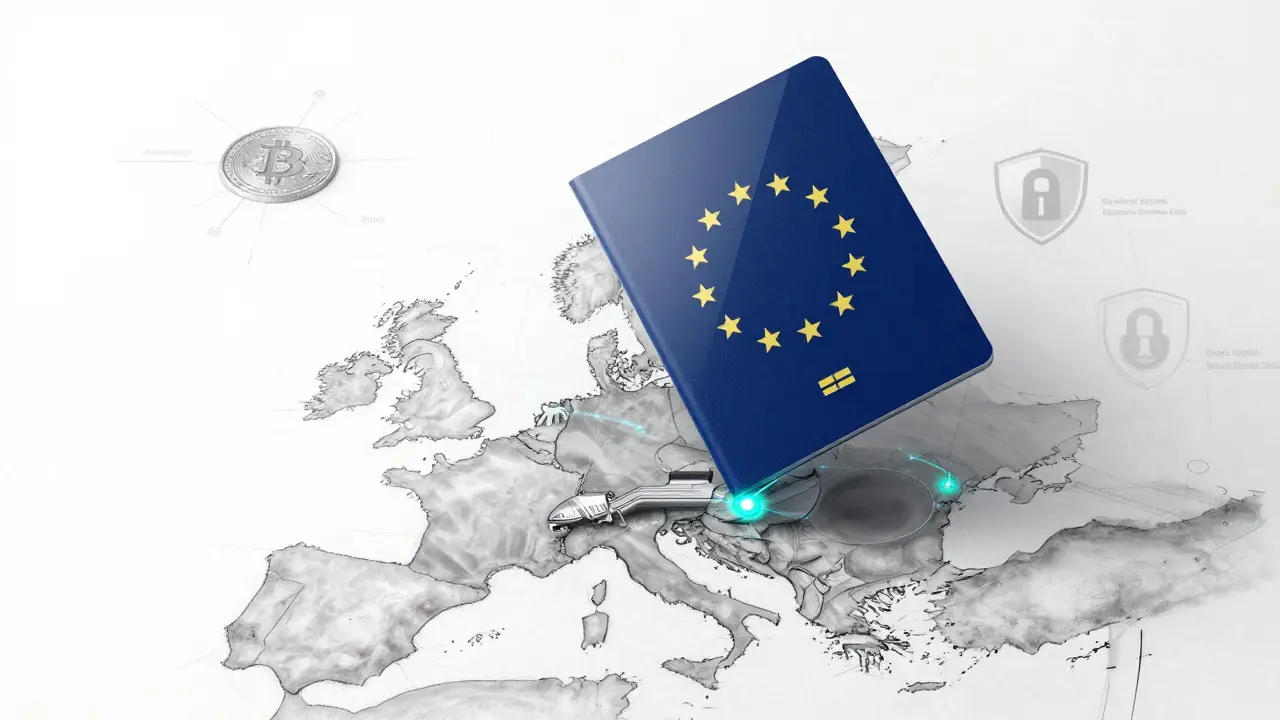
Cross-Border Crypto Services in the EU Under MiCA: What You Need to Know in 2025
MiCA regulation now governs cross-border crypto services across the EU, requiring all providers to get licensed and follow strict rules on transparency, asset protection, and AML. Here’s what businesses and users need to know in 2025.
View More
International AML Standards for Crypto: What You Need to Know in 2025
International AML standards for crypto now require exchanges to share user data on transactions over $1,000. Learn how FATF rules, MiCA, and the Travel Rule shape global compliance in 2025 - and what it means for users and businesses.
View MoreLatest Posts